

Review · SORRENTO
Sorrento: Lemon Garden Guided Tour with Tastings
Fresh citrus, old family recipes. This short farm visit takes you five minutes by car from Sorrento into the hills, where a fourth-generation family business grows lemons and olives. I like the personal family setting and the chance to taste products made on the farm, especially the olive oil, limoncello, and marmalade.
I also like that the tour gets you away from Sorrento’s crowded center without taking half a day. The main consideration is transport: you must arrange your own taxi, car, or scooter, and the 30-minute visit may feel brief if you want a full working demonstration of olive-oil production.
Key points to know before you go
- A fourth-generation family farm: You visit Le Colline di Sorrento, a working lemon and olive farm rather than a city tasting room.
- Only five minutes from central Sorrento by car: The location is close, but walking is not presented as the normal way to arrive.
- A compact 30-minute experience: The visit focuses on the gardens, olive mill, family methods, and tastings.
- Three local products to taste: You sample extra-virgin olive oil, marmalade, and limoncello made with family recipes.
- A personal guide-led visit: English-speaking hosts explain how the lemons and olives are cared for. Christian is one guide specifically praised for his warm, detailed approach.
- A tour with one clear limit: You learn how the farm produces olive oil, but you may not see the full process in operation.
A quick escape from Sorrento’s center
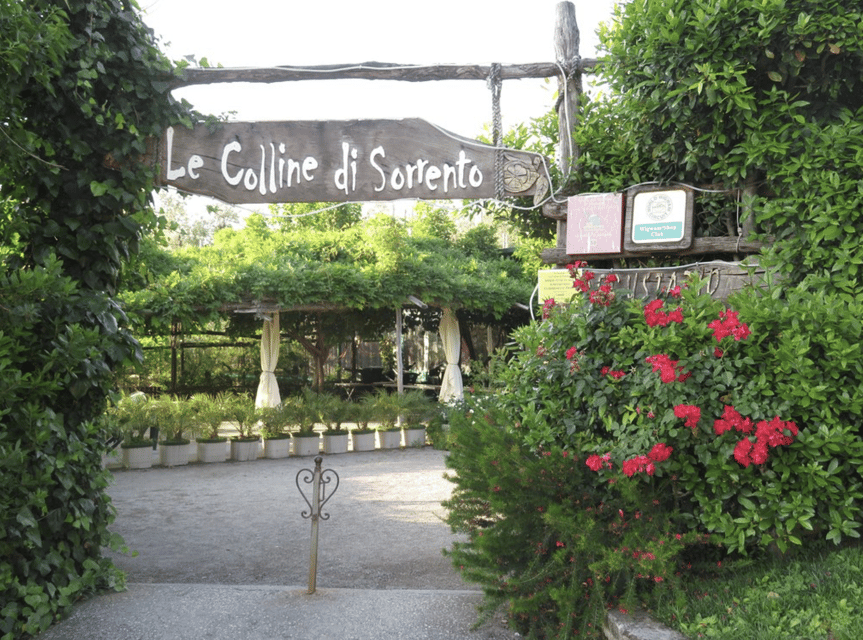
Le Colline di Sorrento sits on the Sorrento hills, about five minutes by car from the city center. That short ride changes the mood quickly. Instead of shops, traffic, and packed lanes, you arrive at a family farm surrounded by lemon gardens and an old olive grove.
I like this setup because it gives you a small slice of rural Campania without requiring a full-day excursion. You do not need to travel deep into the countryside or give up an entire morning. The trade-off is that the farm is close by car, not necessarily easy to reach on foot.
You meet directly at the entrance to the farm. A taxi is the simplest choice if you are staying in central Sorrento, though the fare is not paid by the farm and the taxi operates on a meter. You can also drive your own car or scooter. Plan to arrive at least 10 minutes before the scheduled start, since a late arrival could matter on such a short visit.
One useful point is that transport is not included. You should build the taxi cost into the total price before deciding if the experience fits your budget.
More Garden Tours in Italy:
- Florence: Reserved Entry Ticket to the Boboli Gardens
★ 4.4 · 5,275 reviews - Rome: Borghese Gallery and Gardens Guided Small-Group Tour
★ 4.6 · 2,783 reviews - Rome: Borghese Gallery & Gardens Small Group Guided Tour
★ 4.5 · 2,190 reviews
Lemon gardens with a family story
The tour begins among the lemon gardens, where a family member explains how the farm cares for its citrus trees. This is not just a quick photo stop. The focus is on the daily work and traditions behind the products you later taste.
The family has operated the farm for four generations, which gives the conversation a strong sense of continuity. You hear about methods and recipes passed down within the family, rather than receiving a generic introduction to southern Italian food.
The supplied details do not give a precise month-by-month description of the lemon harvest, so you should not expect a formal lesson on every stage of the growing cycle. Still, the garden visit helps connect the tasting to the place where the ingredients are grown.
Sorrento is strongly associated with lemons, and this tour lets you see that connection in practical terms. You are not simply buying a bottle of limoncello from a shop shelf. You are visiting the farm that grows some of the raw material and hearing how the family uses it.
The atmosphere seems especially suited to you if you enjoy food with a story. It is less suitable if you want a large attraction with elaborate displays, many stops, or a long guided walk.
Among the century-old olive trees

After the lemon gardens, the visit moves into a century-old olive grove. Here, the guide explains how the farm produces extra-virgin olive oil using a cold-press method.
That detail matters. Cold-pressed oil is a familiar phrase on Italian food labels, but hearing it explained at the farm gives you a better sense of what the producer is trying to preserve: the character of the olives and the flavor of the finished oil.
The experience also includes a visit to an authentic olive mill. You should read that carefully. The tour explains the production of the oil, but it may not show the complete working process at the time of your visit. One person specifically wished there had been a chance to see the actual olive-oil production.
That is the main limitation for food-minded visitors. If you want machinery running, every production stage demonstrated, and a technical lesson on pressing, you may find the visit too short. If you mainly want to understand the family’s approach and taste the result, the mill and explanation should be enough.
The olive grove itself adds value. It gives you a physical sense of the farm’s age and scale, and it makes the oil tasting more meaningful. You are tasting something connected to the trees around you, not just sampling an imported product in a restaurant.
Three tastings made on the farm
The visit ends with a tasting of olive oil, marmalades, and limoncello. The products are made by the family with old recipes, so the tasting is the practical payoff of the garden walk and the olive-mill explanation.
Same place, a different sort of green day out:
- Rome: Bioparco di Roma Zoological Garden Entry Ticket
★ 4.6 · 1,414 reviews - Florence: Pitti Palace and Boboli Gardens Ticket & eBook
★ 4.5 · 835 reviews - Caserta Royal Palace & Gardens Small Group Tour with Shuttle
★ 4.9 · 632 reviews - Florence: Pitti Palace, Boboli Garden, Palatine Gallery Tour
★ 4.9 · 558 reviews
Extra-virgin olive oil
The olive oil is the most closely connected to the farm’s agricultural side. You learn where the olives grow, how the oil is produced, and then taste the finished product.
For you, this is a useful way to think about extra-virgin olive oil beyond the label. Pay attention to its aroma, peppery finish, and freshness as the guide explains the family’s method. The exact tasting format is not specified, so do not expect a formal class with printed tasting notes.
Marmalade
The marmalade brings the lemons into the tasting. It is a simple product, but it shows how the farm uses the fruit beyond limoncello.
This can be one of the more enjoyable parts for anyone who likes edible souvenirs. The products are made at the farm, and one person described taking home delicious and attractive items. You may be able to buy products after the tasting, but the supplied information does not promise a shop or specify what is available for purchase.
Limoncello
Limoncello is the best-known of the three products, and tasting it at a lemon farm gives it more context. You learn that it comes from a family recipe and is part of the farm’s own production rather than simply being a regional drink served for effect.
The visit does not state the alcohol content or provide a cocktail demonstration. This is a tasting, not a mixology lesson. If you are driving, keep that in mind before sampling alcohol.
The food is where the family character comes through most clearly. The products are not described as factory-made or mass-market, and the strongest praise centers on their flavor and the warmth of the people presenting them.
What the 30-minute length means
Thirty minutes is both a strength and a limitation. I like the short format if you have a busy Sorrento schedule. You can fit it between sightseeing, lunch, and a train or ferry plan more easily than a longer farm excursion.
The visit also works well as a break from the town center. Several people appreciated the quiet setting and the escape from crowds. You get fresh air, a bit of countryside, and local food without committing to a major outing.
But the schedule leaves little room for delays or long questions. The tour covers the lemon gardens, the olive grove, the mill, the farming traditions, and three tastings in half an hour. That is a lot of ground.
You should think of it as a focused introduction, not a slow agricultural workshop. If you are interested in asking detailed questions about pruning, harvesting, storage, milling temperatures, or recipe proportions, you may want more time than the standard visit allows.
The short duration also explains why the experience feels concise. One French-speaking participant described the visit as brief but very well explained, which is a fair way to view it. The host has to keep the pace moving.
The guide makes the difference
This is a small, personal experience, and the guide matters more here than on a large group tour. The information identifies English as the tour language. Christian is specifically praised for walking through the farm and explaining not only the lemons and olives but also other parts of the family-run property.
That kind of personal attention is one of the tour’s best features. A large group would make the garden and tasting feel more organized and less intimate. Here, the appeal comes from hearing the family’s own traditions and asking questions directly.
The guide’s role is not limited to reciting production facts. The best version of this visit connects the trees, the mill, the recipes, and the final tasting. The available comments suggest that the hosts are friendly and that the visit can feel like a one-on-one experience rather than a standard commercial presentation.
Still, the tour is offered in English, so you should book it only if that language works for you. The supplied details do not list other tour languages.
Is $35 a fair price?
At $35 per person, the price is reasonable if you value a small farm visit plus three tastings. You are paying for more than a sample of limoncello. The fee covers a guided walk through the gardens, an introduction to the olive mill, family explanations, and tastes of olive oil, marmalade, and limoncello.
The value is strongest for you if you would otherwise spend money on separate food souvenirs in Sorrento without knowing where they came from. The visit gives those products a place and a story.
The value is weaker if you expect a long tour, a full olive-oil production demonstration, or transportation from your hotel. The taxi, car, or scooter is extra, and the farm does not provide pickup or drop-off.
A useful way to judge the cost is to compare it with your interests. If you care about local food and family agriculture, $35 is a fair spend for a compact experience. If you mainly want scenic photos, you can find cheaper ways to enjoy views around Sorrento. If you want a full culinary class, this is not the right product.
Getting there from Sorrento
The meeting point is the entrance to Le Colline di Sorrento. You are responsible for reaching it.
A taxi from central Sorrento is the clearest option described. The farm works with taxis using a taximeter, and the ride takes about five minutes by car. The taxi is not covered by the activity price.
You may also arrive by your own car or scooter. The information does not give parking details, so you should confirm those arrangements before setting out rather than assume a parking space is guaranteed.
One useful practical lesson comes from the return trip. A person staying in central Sorrento needed a taxi to reach the farm and a bus to return. That suggests you should plan both directions, not only the outward journey. The farm is close by car, but close does not always mean effortless by public transport.
Arrive at least 10 minutes early. With a half-hour tour, the hosts have less flexibility than they might on a longer excursion.
Who will enjoy this farm visit?
I would recommend it most strongly to:
- Couples looking for a quiet food-focused stop near Sorrento
- Families interested in how lemons and olives become finished products
- People who prefer personal hosts to large commercial groups
- Anyone who wants to taste limoncello, marmalade, and olive oil in one visit
- Visitors with a free 30-minute window in their Sorrento schedule
- Food lovers who enjoy buying local products after learning how they are made
You may want to choose a different activity if you need hotel pickup, a full meal, a long countryside walk, or a working olive-oil demonstration. The visit is also not ideal if your schedule is so tight that a taxi delay would cause trouble.
The personal nature is a real advantage. The drawback is that the experience depends on reaching the farm yourself and accepting a compact format.
A practical booking decision
You should book this tour if you want a short, friendly introduction to Sorrento’s lemon and olive traditions, with products to taste at the end. The strongest reasons are the fourth-generation family setting, the century-old olive grove, and the chance to connect the farm’s ingredients with its recipes.
You should skip it if the words olive mill make you expect to watch every stage of oil production. The visit explains the process, but the actual machinery may not be operating during your time there.
Before booking, check the starting time, arrange your taxi or driving plan, and leave a little extra time before and after the 30-minute visit. At $35 per person, it is a good-value add-on for a food-focused Sorrento day, especially if you prefer a personal farm visit over another tasting counter in town.
FAQ
Where is the lemon garden tour located?
It takes place at Le Colline di Sorrento on the Sorrento hills, about five minutes by car from Sorrento city center.
How do I reach the farm?
You can reach the farm by taxi, your own car, or scooter. Pickup and drop-off are not included.
Is the taxi fare included?
No. The taxi is paid separately, and the farm’s taxi partners use a taximeter.
How early should I arrive?
You should arrive at least 10 minutes before the scheduled starting time.
How long does the tour last?
The guided visit lasts 30 minutes.
What products are included in the tasting?
The tasting includes olive oil, marmalade, and limoncello made with family recipes.
Is the tour offered in English?
Yes. An English-speaking guide leads the tour.
Can I cancel for a refund?
Yes. You can cancel up to 24 hours in advance for a full refund. You can also reserve now and pay later.
Just added around Italy
- Lake Maggiore Gourmet: Gardens, Lake Cruise, & Food Tasting★ 4.5 · 19 reviews
- Venice: Convent Garden of Redentore Entry Ticket★ 4.3 · 5 reviews
- Vatican Gardens & Castel Sant’Angelo Skip-the-line tickets★ 4.3 · 20 reviews
- Vatican: Gardens, Museums and Sistine Chapel Guided Tour★ 4.2 · 98 reviews
- Valley of the Temples: Kolymbethra Garden Entry Ticket★ 3.5 · 43 reviews
- Varenna: Villa Cipressi Gardens Entry Ticket on Lake Como★ 4.6 · 39 reviews
- Typical Apulian menù in the garden of an ancient Trullo★ 5.0 · 11 reviews
- Hidden Verona & Giusti Garden- 3 hour private walking tour★ 5.0 · 2 reviews
Sorrento Garden Tours, compared.

Shared Cooking Class with Fresh Garden Ingredients in Sorrento
Read our review →
Sorrento Ape Tour, Lemon Garden, Mozzarella Show & Pizza Class
Read our review →

Farm-to-Table Experience: Olive Oil, Garden Tour & Nonna’s Lunch
Read our review →
Private Cooking Class in Sorrento & garden visit.
Read our review →
Ischia and Mortella Gardens Full-Day Tour from Sorrento
Read our review →Browse the lists this tour appears in