
Review · UK
Barbara Hepworth Museum & Sculpture Garden: entry to site.
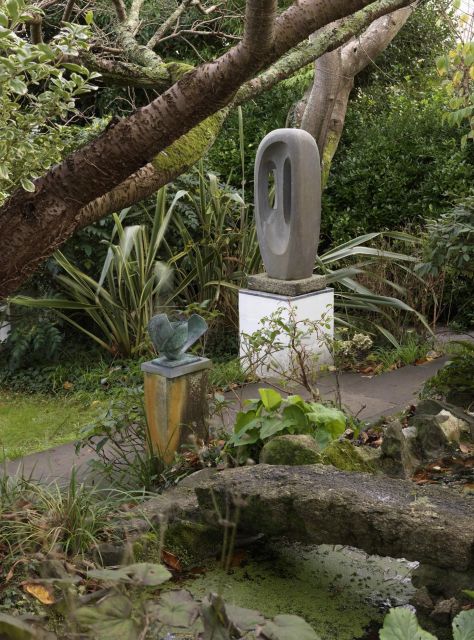
Art feels different when you see where it was made. Barbara Hepworth’s former home in St Ives gives you that rare chance, with her rooms, studios, sculptures, drawings, and garden still arranged as a working artist’s world. I love the connection between the art and the place, especially the way large sculptures sit among subtropical planting rather than behind glass.
I also like the visit’s compact scale. You can take in the museum and garden without giving up half a day, and the site feels personal rather than grand or heavily polished. The main drawback is practical: there is no café, only one toilet, and very little room for large bags, so you should arrive prepared.
Key points to know before you go
- The original home remains central: You see Hepworth’s former living areas, studios, and garden rather than a modern gallery built around her work.
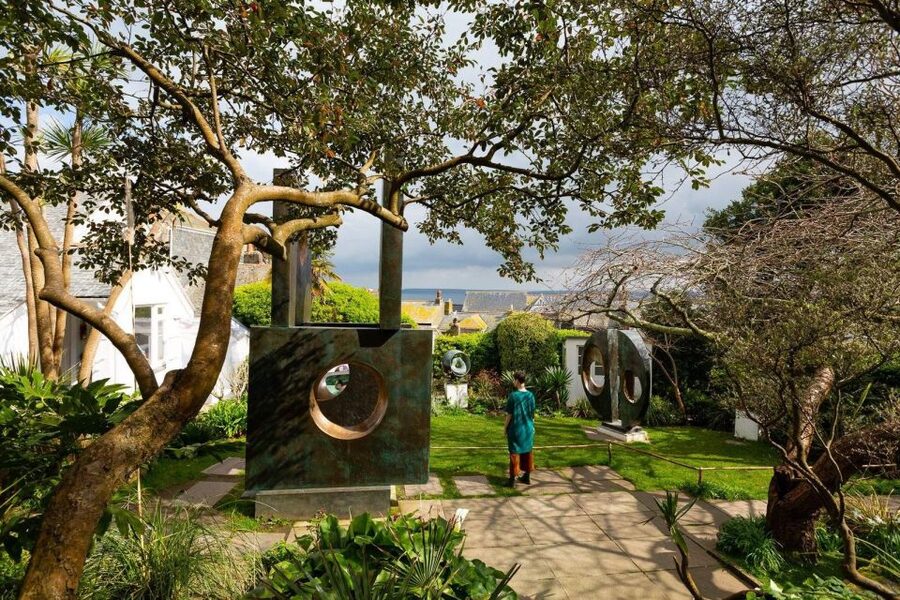
- The garden is part of the artwork: Larger sculptures are placed among subtropical plants, making the outdoor visit as important as the indoor rooms.
- The opening display sets the scene: Chronological photographs, archive material, and objects introduce Hepworth’s career before you reach the main collection.
- The visit is easy to fit into a St Ives day: Your ticket is valid for one day, and one recent visitor found an hour both magical and satisfying.
- The site has firm restrictions: Food, drinks, large bags, professional cameras, tripods, flash photography, drones, bicycles, and pets are not allowed, except for assistance dogs.
- Access needs advance planning: Wheelchair users can enter through a side-street entrance by arrangement before the visit.
Entering Barbara Hepworth’s St Ives home
Your visit begins in the admission area, where archive photographs and objects trace Hepworth’s career in chronological order. This is a useful first stop, not a room to rush through. The material gives you a basic timeline and helps you see how her work developed before you meet the sculptures in person.
I find this kind of introduction particularly helpful if you know Hepworth mainly by reputation. Her abstract forms can look simple at first glance, but the photographs and career material give the art a human setting. You begin to understand that this is not only a collection of finished objects. It is also the preserved working world of an artist.
The opening area is compact, so you will not be faced with a long museum-style survey. Instead, you get enough information to orient yourself. That balance suits the site. You can read carefully, or move on to the living rooms and return to a detail that catches your eye.
The archive display also prepares you for the house itself. The property has been kept close to the way it was when Hepworth lived and worked in St Ives. That continuity is the main reason to visit this site rather than seeing her sculptures in an unrelated gallery.
More Museum Visits in the UK:
- Natural History Museum e Kensington Garden
★ 3.3 · 3 reviews - Vienna: Skip-the-Line Sisi Museum, Hofburg and Gardens Tour
★ 4.8 · 5,918 reviews - Marrakech: Majorelle Garden, YSL, and Berber Museum Entry
★ 4.6 · 5,168 reviews
Upstairs among the paintings and drawings
From the admission area, you head upstairs into the museum rooms, which occupy Hepworth’s former living area. Here you see a selection of abstract sculptures alongside paintings and drawings.
The setting changes how you look at the work. In a conventional gallery, you might study each sculpture as an isolated object. Here, the pieces are connected to the rooms, the house, and the rooms where Hepworth actually lived. The experience is less about covering every stage of her career and more about meeting a focused group of works in a personal setting.
The indoor collection includes smaller-scale sculpture, paintings, and drawings. That mix matters. Drawings can show ideas in a more immediate form, while the sculptures give those ideas physical weight and shape. Seeing both in the same visit helps you compare Hepworth’s lines and forms across different media.
You should not expect a huge collection or a large modern exhibition hall. The museum is relatively small, and the selection is limited by the size and character of the house. For some people, that is the point. You can spend time with individual works without the fatigue that often comes with a large institution.
The rooms may be most rewarding if you slow down and look at how each object relates to its surroundings. The house is not simply a container for the art. It gives you a sense of proportion and context. The work belongs here in a way it could not quite belong in a neutral white room.
The studios and the working life behind the art
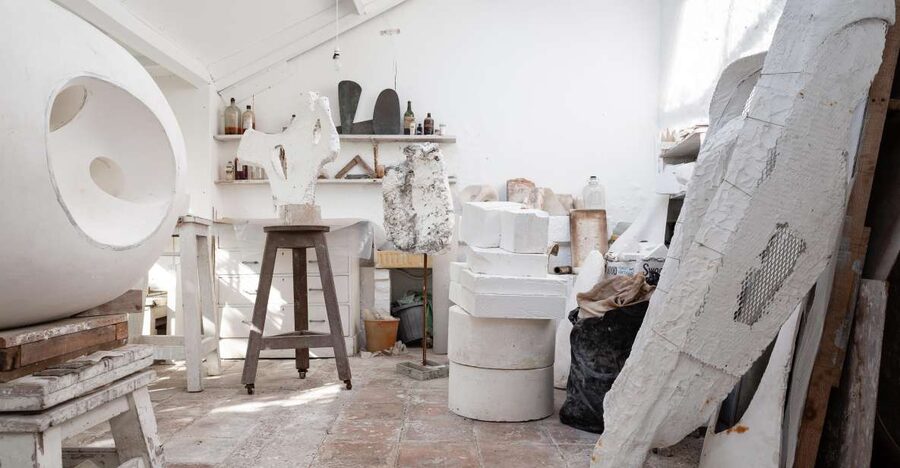
The ticket also includes views of Hepworth’s work studios. These spaces help turn the visit from an ordinary art display into a look at an artist’s daily environment.
You will not just see finished pieces. You will also see the places associated with the process of making them. That distinction is important. It is easy to admire polished sculpture without thinking about the physical work, planning, and decisions behind it. The studios provide a reminder that these works came from an active working life.
The information in the admission area includes archive images from across Hepworth’s career, while the studios give that story a physical setting. Together, they help link the public artist with the private home and workplace.
If you have a strong interest in modern art, you will probably want more time here than someone making a quick stop between other St Ives sights. The site does not force you into a long guided schedule, so you can set your own pace. A short visit can cover the key rooms, but a slower visit gives the studios and individual works more weight.
The limited size also means the museum can feel intimate. That is an advantage for visitors who prefer a quieter, more direct connection with art. It may feel less satisfying if you are looking for a broad survey of every period or a large number of major pieces.
The sculpture garden is the real highlight
Outside, the visit opens up. Larger sculptures are placed throughout a beautiful subtropical garden, and this is where the relationship between Hepworth’s work and its setting becomes clearest.
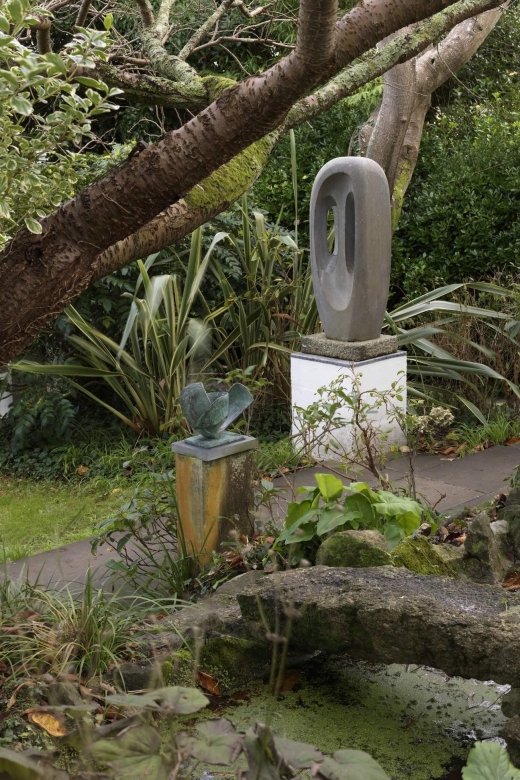
I like the fact that the garden is not an afterthought. The planting frames the sculptures, softens their edges, and changes how you approach them. You see a work from different angles as you move through the garden, rather than meeting it only from one fixed viewing point.
The combination of abstract sculpture and planting also gives the visit a welcome change of pace. The indoor rooms ask for close attention. The garden lets you step back, move around, and consider scale. A piece that seemed modest upstairs may feel much more powerful outdoors.
The garden’s subtropical character adds another layer. You are not walking through a plain lawn with sculptures placed at regular intervals. The plants create a more sheltered, personal setting, and the site retains the feel of a home and working garden rather than a formal sculpture park.
One recent visitor especially praised the way the planting complemented the sculptures. That is a useful way to approach this part of the visit. Do not look only at the sculpture. Notice how leaves, paths, open spaces, and nearby forms affect what you see.
You should also expect an outdoor visit that requires sensible clothing. The supplied information does not give weather advice, but a garden visit in South West England is best treated as an outdoor activity. Comfortable shoes will make it easier to move between the indoor rooms and the garden.
More Garden Tours in the UK:
- London: Kew Gardens Admission Ticket
★ 4.6 · 3,252 reviews - Kew Gardens Entrance Ticket
★ 4.0 · 1,055 reviews - The Kensington Palace Gardens Royal High Tea
★ 4.5 · 934 reviews - London: Kensington Palace Gardens Tour with Royal High Tea
★ 4.6 · 325 reviews
Why the unchanged setting matters
The strongest feature here is the sense that the site has not been stripped of its original character. The home, garden, and studios remain connected, and that gives the visit a level of authenticity that a standard exhibition cannot provide.
You are not merely looking at objects once owned by Hepworth. You are seeing them in the setting associated with her life and work in St Ives. That makes the museum especially worthwhile for anyone already interested in her art, modern sculpture, or the history of artists working in this part of England.
At the same time, I would not oversell the experience. The preserved setting means the museum is smaller and less equipped than a major art institution. There is no café or refreshment facility, the souvenir range is limited, and the site has only one toilet.
Those limits are easy to manage if you plan ahead. Eat and drink before or after your visit, keep your luggage elsewhere, and allow time for the garden without expecting a full-day attraction. The ticket is valid for one day, but the visit itself is compact enough to fit around other plans in St Ives.
Price and value at $13 per person
At $13 per person, admission offers good value if you care about the connection between an artist and her working environment. You receive access to the original home and garden, archive material, sculptures, paintings, drawings, and views of the studios. That is a strong package for the price.
The value is less about the number of objects and more about the quality of the setting. You are paying for a focused encounter with Hepworth’s work in the place where her life and practice were joined together.
A person with only a passing interest in modern art may feel the visit is brief. There is no café, no large shop, and no long list of visitor facilities to pad out the stop. But if you want a thoughtful art visit that does not consume an entire day, the compact format works in your favor.
The overall rating is 4.7 out of 5 from 28 ratings, and the strongest praise centers on the staff, the presentation of Hepworth’s life, the sculptures, and the garden. One visitor described spending a magical hour here, while another highlighted the way the planting and sculpture design work together. Those points match the practical value of the visit: it is short, focused, and memorable for the right reasons.
Who will enjoy this visit most
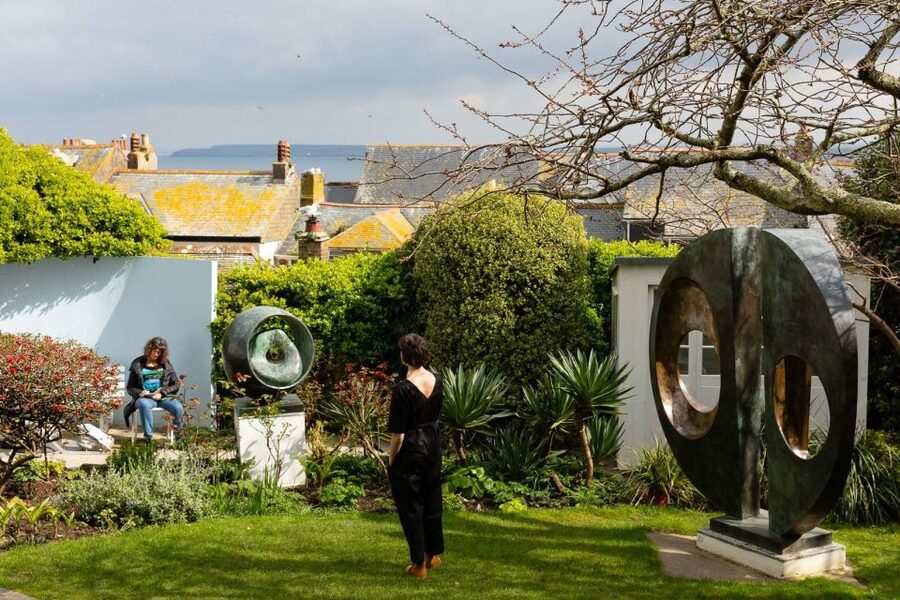
I would recommend the museum first to people who already like Barbara Hepworth, abstract sculpture, or modern art. The combination of original rooms, studios, archive material, and outdoor works gives you more than a simple gallery display.
It also suits garden lovers. You do not need to be an art expert to enjoy the subtropical planting and the way it shapes your view of the sculptures. The garden provides a clear reason to visit even if you are still learning about Hepworth.
This is a good stop for independent visitors who prefer to set their own pace. The experience is not described as a guided tour, and the small-group booking limit is nine participants. That keeps the setting from feeling like a large organized crowd, although the small size also means you should respect the quiet character of the rooms and garden.
Families with very young children may find the strict rules harder to manage. Touching exhibits, climbing, food, drinks, speakers, and party groups are not allowed. Unaccompanied minors cannot enter, and pets are not permitted except for assistance dogs.
Wheelchair users can visit, but access must be arranged ahead of time through the side-street entrance. Mobility scooters are not allowed. If you need step-free access, make this request before arriving rather than assuming the main entrance will work.
Practical details that shape the visit
Your ticket is valid for one day, with starting times subject to availability. You can cancel up to 24 hours before the visit for a full refund, and a reserve-now, pay-later option is available. These terms are useful if your St Ives schedule depends on weather or other plans.
The site has no meeting point because this is an entry ticket rather than a group excursion. You make your way to the museum and garden on your own.
Pack lightly. Large bags, oversize luggage, coolers, surfboards, bikes, skateboards, skates, and similar items are not allowed. Food and drinks are also prohibited, as are alcohol, vaping, smoking, drones, professional cameras, tripods, flash photography, and red wine.
The rules may seem unusually long, but they protect a small historic home and a collection that visitors must not touch. You should arrive with a phone or standard camera only if permitted by the site, and do not count on setting up a tripod or carrying a picnic inside.
Is Barbara Hepworth Museum & Sculpture Garden worth booking?
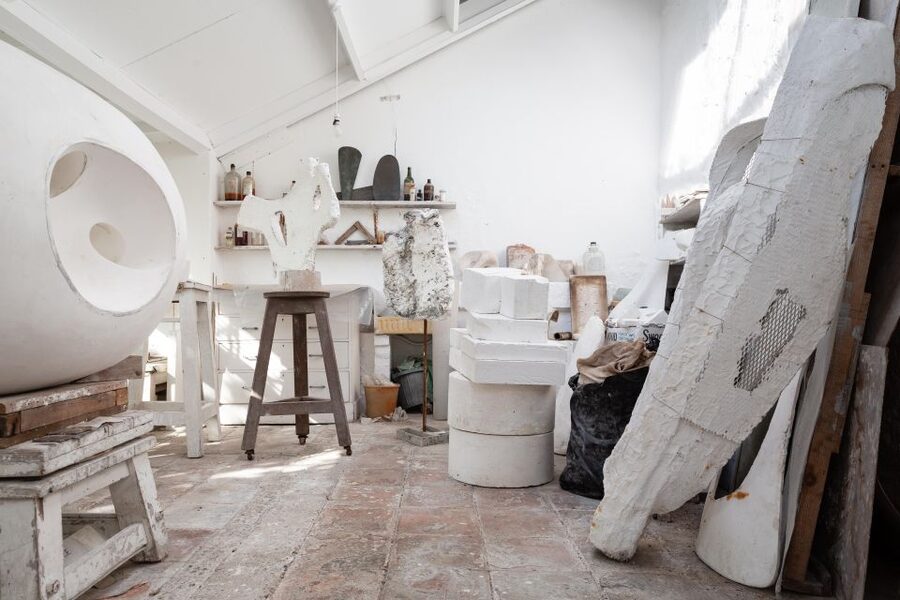
Yes, if you want to see Barbara Hepworth’s work in a personal setting rather than a large public gallery. The original home, studio views, archive material, and subtropical sculpture garden make the $13 admission worthwhile, especially for art lovers and garden enthusiasts.
I would skip it only if you need a full-service attraction with refreshments, extensive facilities, or a large collection. For everyone else, allow around an hour or more at your own pace, plan food elsewhere, arrange wheelchair access in advance if needed, and save your best attention for the garden. That outdoor section is where the visit’s pieces come together.
FAQ
How much does admission cost?
Admission costs $13 per person.
How long is the ticket valid?
The ticket is valid for one day.
What does the ticket include?
It includes entry to Barbara Hepworth’s original home and garden, archive information and images, abstract sculptures, paintings, drawings, the subtropical garden, and views of the work studios.
Is there a café at the museum?
No. The site has no café or refreshment facilities, and food and drinks are not allowed.
Is the museum wheelchair accessible?
Yes, but wheelchair access is through a side-street entrance and must be arranged before your visit.
Are pets allowed?
Pets are not allowed. Assistance dogs are permitted.
Can I take professional photographs or use a tripod?
No. Professional cameras, tripods, and flash photography are not allowed.
Can I cancel my booking?
Yes. You can cancel up to 24 hours in advance for a full refund.
Just added around the UK
- Royal Horticultural Society: Harlow Carr Garden Ticket★ 4.7 · 14 reviews
- York: Castle Howard House and Gardens – Self-Guided★ 4.8 · 120 reviews
- York: Castle Howard Gardens and Grounds Entry Ticket★ 4.5 · 23 reviews
- Woking: Royal Horticultural Society Wisley Garden Ticket★ 4.7 · 24 reviews
- London: Westminster Walking Tour and Visit to Kew Gardens★ 4.7 · 7 reviews
- ULLAPOOL PORT Cruise Ship Tour, Ardvreck Castle, Rocks & More★ 5.0 · 5 reviews
- RHS Garden Wisley and Tea in the Garden Entry Ticket★ 4.0 · 10 reviews
- RHS Garden Wisley Entry Ticket★ 4.0 · 86 reviews
Museums, compared.

Skip-the-Line Sisi Museum, Hofburg and Gardens Tour
Read our review →
Majorelle Garden, YSL, and Berber Museum Entry
Read our review →
Borghese Gallery and Gardens Guided Small-Group Tour
Read our review →
Borghese Gallery & Gardens Small Group Guided Tour
Read our review →
Pitti Palace, Boboli Garden, Palatine Gallery Tour
Read our review →
Tremezzina: Villa Carlotta Museum and Garden Entry Ticket
Read our review →
Tulip Experience Ticket with Tulip Garden and Museum
Read our review →
Skip-the-Line Sisi Museum, Hofburg and Gardens Tour Vienna
Read our review →Browse the lists this tour appears in