
Review · BUSAN
Gyeongju Cherry Blossom Day Tour from Busan (2~3 spring spots)
Spring turns Gyeongju into a postcard. This full-day trip from Busan is appealing because it combines two or three major blossom sites with Korea’s ancient Silla-era sights, tiled Hanok buildings, and easy transport between locations. I especially like the flexible routing, which changes with the daily flower conditions, and the chance to visit several famous places without piecing together local buses or taxis yourself. The main trade-off is simple: the exact stops are not fixed, and traffic or weather can change the plan.
I also like the practical setup. You can join from several pickup points in Busan, English and Chinese-speaking staff are available, and transportation is included in the $55 price. The day lasts roughly nine to eleven hours, so you get a full spring outing, but it will feel long if you want a slow visit at one site rather than a moving tour.
Key points to know before booking
- Two or three Gyeongju blossom sites: The route may include Bomun Lake, Daereungwon Stone Wall Road, Woljeonggyo Bridge, Bulguksa Temple, Hwangnidan-gil, and other popular spring locations.
- The route follows flower conditions: Stops are arranged day by day, so the tour can chase better blooms instead of following one rigid path.
- A full-day trip from Busan: Expect about nine to eleven hours, with around five hours listed for sightseeing in Gyeongju.
- Transportation and possible admission fees are included: Meals, personal spending, and travel insurance are not included.
- A medium-to-large group: The maximum is 43 people, which keeps the price low but may make the day less intimate.
- Guides add history and humor: Guides named Lucy, David, Danny, and Bobby have been associated with the tour, with Lucy praised for being informative, funny, and punctual.
Why Gyeongju makes a fine spring day trip
Gyeongju was the capital of the Silla kingdom, and its appeal comes from the way old Korea sits beside modern streets and cafés. During cherry blossom season, the trees soften the city’s historic sites without hiding them. You may frame a blossom branch with a Hanok roof, photograph a bridge beside the water, or walk a road lined with trees and old stone walls.
That mix is the real reason to choose Gyeongju over a simple park visit. You are not only looking at flowers. You are seeing spring scenery around royal tombs, observatories, temple grounds, forests, bridges, and restored historic areas.
The tour does not promise one fixed route. Instead, the staff choose from a long list of possible stops based on the day’s blossom conditions, traffic, weather, and attraction locations. That flexibility matters because cherry blossoms have a short and uneven season. A tree-lined road can look excellent one day and past its best a few days later.
The cost is $55 per person. For a long day with transportation from Busan, English or Chinese-speaking staff, and possible admission fees included, that is a sensible price for people who value convenience. You will still need to pay for lunch, snacks, souvenirs, and any personal purchases. Since the route can hold up to 43 people, you are paying for access and organization rather than a private guide.
More Cherry Blossom Tours in South Korea
- Jeju East: Cherry Blossom Early Bird Tour with Hotel Pickup
★ 4.8 · 21 reviews - Jinhae Cherry Blossom Day trip from Busan – A Spring Adventure!
★ 4.5 · 13 reviews - Jinhae Cherry Blossom Festival Gyeonghwa Stn Day Tour from Busan
★ 4.5 · 13 reviews
Starting from Busan and settling into the day
The tour departs from multiple convenient locations in Busan. The supplied details do not specify each pickup point or the exact departure time, so you should check your confirmation carefully and arrive early. A mobile ticket makes the meeting process easier, but it does not remove the need to confirm the correct location.
The trip is designed for a broad range of participants. Most people can take part, and public transportation is nearby at the departure points. A family with a three-year-old child found the organized format helpful, and the guide David reportedly provided a calling card with contact information. That is a small but useful touch when you are managing a young child in a busy day trip.
You should still think about the length of the day. The total time is approximately nine to eleven hours, while the Gyeongju sightseeing portion is listed at about five hours. The remaining time is taken up by travel, pickup arrangements, and the movement between places. That is normal for a Busan to Gyeongju outing, but you should not expect an unhurried afternoon at one attraction.
Hwangnyongwon and the view of old Gyeongju
Hwangnyongwon is one of the possible blossom stops. Its name connects the place with Hwangnyongsa, an important Silla Buddhist site, and the setting gives the tour a strong link to Gyeongju’s ancient past. The supplied information does not promise a specific activity or admission arrangement here, so treat it as one possible photo and sightseeing stop rather than a guaranteed long visit.
This is the kind of location that benefits from a flexible spring route. If the flowers are in good condition, the area can add a historic backdrop to the usual blossom photographs. If the day’s route changes, you may visit another site instead. That uncertainty is a fair exchange for better flower timing.
Bomun Lake and the Bomun Tourist Complex
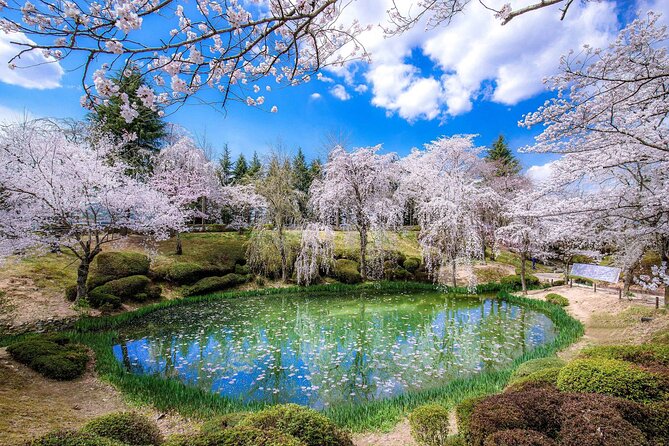
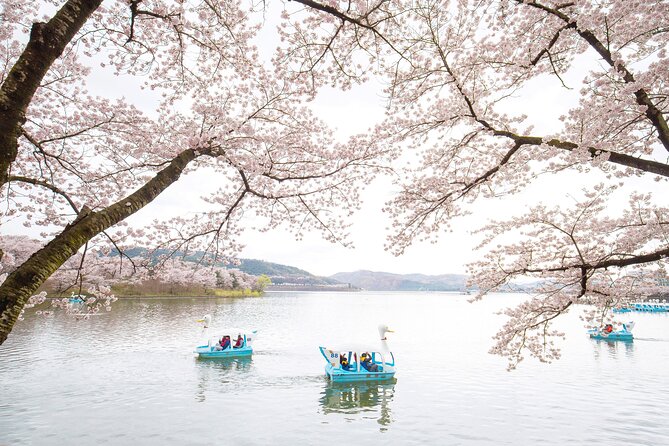
Bomun Lake is another likely choice on the menu of spring sites. The lake gives you a different view from the old city center, with open water and a broad setting for cherry blossom scenery. It is a useful counterpoint to the tighter lanes, stone walls, and historic buildings found elsewhere in Gyeongju.
The nearby Bomun Tourist Complex may also appear in the plan. Since the attraction list includes both the lake and the wider complex, the exact stop may depend on conditions and traffic. You might find stalls, snacks, or small souvenirs around popular areas, but personal spending is your responsibility.
These stops are particularly suitable if you want a relaxed visual break during a day that also includes historical sights. The drawback is that a lake and tourist complex can feel less intimate than a quiet old road or temple setting. Your experience will depend heavily on the day’s crowd and the precise area chosen by the guide.
Same place, a different sort of green day out:
- Mt. Seorak+Nami Island+Garden of Morning Calm Day Trip from Seoul
★ 5.0 · 959 reviews - Seoul: Nami Island and Garden of Morning Calm opt Railbike
★ 4.6 · 907 reviews - From Seoul: Nami Island, K-drama Garden & Rail Bike Day Tour
★ 4.6 · 724 reviews - Seoul: Mt.Seorak, Nami Island & Korean Garden, No Shopping
★ 4.8 · 614 reviews
Daereungwon Stone Wall Road and Silla Wanggyeong Forest
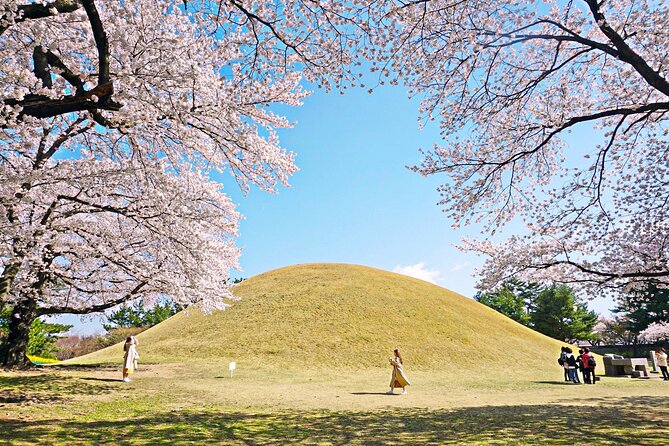
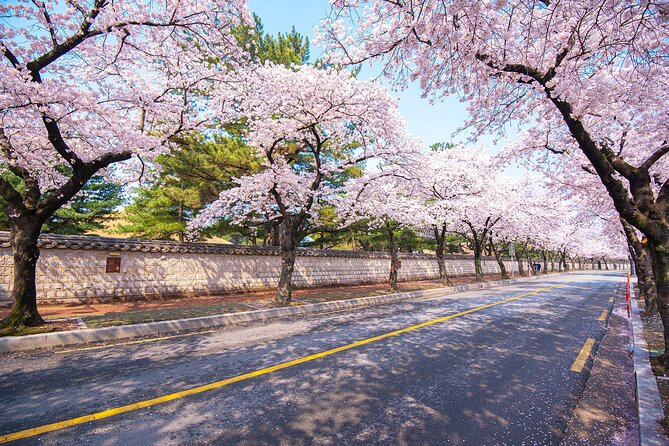
Daereungwon Stone Wall Road is one of the most photogenic names on the possible route. The road pairs cherry trees with stone walls and the historic atmosphere of Daereungwon, an area associated with royal tombs. You can expect this stop to appeal to anyone who wants photographs that show both flowers and Gyeongju’s past.
Silla Wanggyeong Forest offers another historic setting with trees and open space. The name refers to the old Silla capital, so the stop can help connect the pretty spring views with the wider story of Gyeongju. The information provided does not specify the exact walking distance or time at either place, so keep your schedule flexible.
I would rank these stops among the best options for people who want a quieter sense of place rather than only a famous landmark. They also show why comfortable shoes matter. Even when a tour uses transportation between sites, you will want to walk around each area and stop for photographs.
Cheomgseongdae Observatory and Gyerim Forest
Cheomgseongdae Observatory is one of Gyeongju’s best-known historic landmarks and another possible cherry blossom stop. The observatory is tied to the Silla period, giving you a compact piece of ancient history within a spring sightseeing route. The surrounding area can make a strong photo stop because the low historic structure contrasts with flowering trees and open sky.
Gyerim Forest adds a more wooded setting. It is connected with early Silla stories and gives the route a change of pace from roads, walls, and lake views. You might find the blossoms framed by branches and pathways rather than by buildings.
The main point to understand is that these are not guaranteed as individual stops. The operator may choose them, or may use other locations from the list. If you have one particular landmark at the top of your wish list, this is not the right tour for a guaranteed visit.
Woljeonggyo Bridge and Heungmu-ro
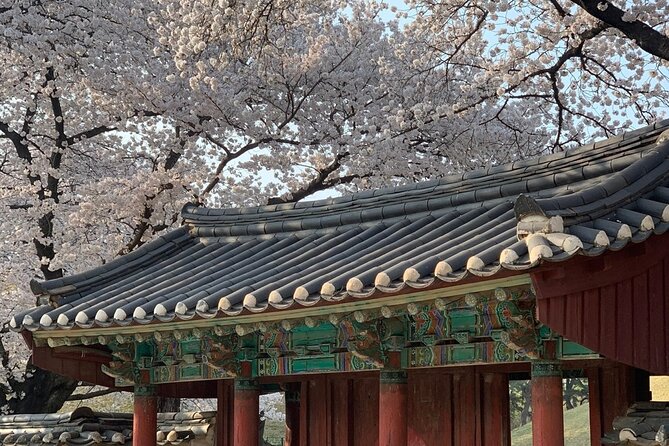
Woljeonggyo Bridge is a strong choice for combining architecture and spring scenery. The bridge is known for its traditional Korean form and its connection to the Silla era. Cherry blossoms can add color around the structure, while the bridge itself gives your photographs a clear focal point.
Heungmu-ro is another possible blossom road. Roads like this are often the reason people book a seasonal tour: you can see long lines of trees without spending the day planning which street has the best bloom. Still, the exact condition of the flowers can vary, and traffic may affect how long you stay.
These stops show the practical benefit of a moving coach or group vehicle. You can cover several areas in one day instead of trying to work out a route between scattered attractions. The cost is less freedom. You will need to return to the meeting point or vehicle at the appointed time, even if you want another ten minutes with your camera.
Bulguksa Temple and the mix of blossoms and architecture
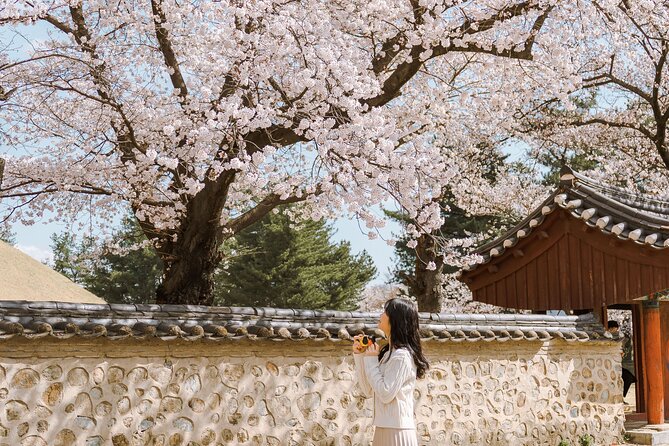
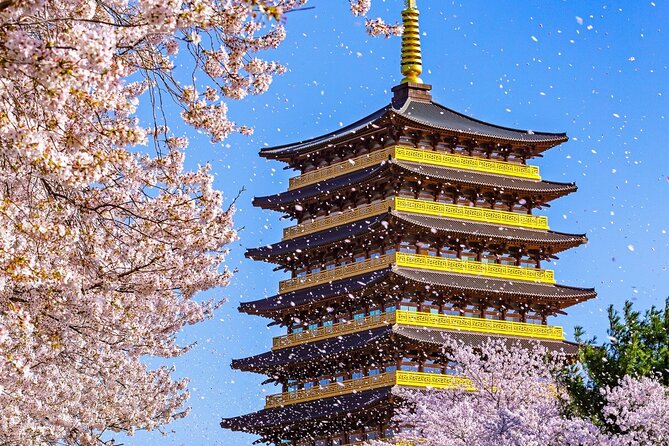
Bulguksa Temple is the most clearly temple-focused option in the possible route. It adds stone terraces, traditional buildings, and a major religious site to the day’s flower views. The temple is also associated with Silla-era Korea, so it fits the tour’s larger theme of moving between modern Busan and ancient Gyeongju.
The inclusion of admission fees, if any, is listed among the tour benefits. That wording matters. It means you should not assume every attraction has a separate paid ticket or that every possible stop carries the same admission arrangement. Ask the staff if you need certainty about a particular site.
Bulguksa can be a valuable stop if you want more than roadside blossom photographs. At the same time, it may require more walking and may feel rushed if the group has several other locations to cover. The flexible route is built for seeing a selection of places, not for a detailed temple study.
Hwangnidan-gil, stalls, Hanok, and snack time
Hwangnidan-gil is one of the more modern-feeling choices on the list. Its appeal comes from the mix of older-style buildings, Hanok design, cafés, shops, and food places. It can give you a taste of how Gyeongju combines historic visual style with current Korean street life.
Around the blossom areas, you may find stalls selling snacks and cute souvenirs. These purchases are not included, but they can make the day feel more local and less like a string of formal monuments. Bring a little spending money if you enjoy trying small foods or browsing inexpensive gifts.
Meals are not included, and the tour does not promise a specific restaurant or lunch stop. That is worth planning for. You may need to buy food during a break or carry something with you, depending on the route. Do not assume the five-hour sightseeing period includes a long sit-down meal.
What the guides add to the outing
A good guide matters on a day built around changing stops. Lucy has been praised for being informative, funny, and punctual, and for explaining Korea and the Silla kingdom in a way that adds meaning to the scenery. That combination is useful because the tour could otherwise become only a photo chase.
The guide team has also included David, Danny, and Bobby. Danny and Bobby have been singled out for making the outing more enjoyable, while David’s contact card was helpful to a family traveling with a toddler. These details suggest an attentive style, though the guide assigned to your departure is not guaranteed.
English and Chinese-speaking staff are included. That makes the tour easier for visitors who want basic historical context and clear instructions without arranging a separate private guide. You should still expect group-tour commentary rather than a long specialist lecture at every landmark.
Group size, timing, and the price question
The maximum group size is 43 people. That is large enough to keep the price at $55, but it can affect how quickly the group gathers and how personal the guiding feels. If you prefer quiet walks, flexible meal times, and long photography sessions, a private or smaller tour would suit you better.
For most people, the value is strongest in three areas:
- You avoid planning transport between Busan and several Gyeongju sites.
- You get a route adjusted to daily blossom conditions.
- You receive staff support and possible admission coverage for one straightforward price.
The day is booked, on average, 19 days ahead, which suggests that spring demand can be strong. If your dates are fixed, booking early is sensible. The operation period can change because of weather, and the route can shift because of traffic or attraction conditions, so keep your wider Busan plan flexible.
Free cancellation is available if you cancel at least 24 hours before the start time. Changes made inside that window are not accepted, and the amount paid is not refunded for a late cancellation. That is a useful safety net when you are watching the forecast, but it does not cover a last-minute change of mind.
Who should choose this Gyeongju spring tour?
I would choose this tour if you are staying in Busan, want to see Gyeongju in blossom season, and would rather let someone else handle the transportation. It is especially suitable for first-time visitors, families who value an organized day, and photographers who want several possible flower settings.
It also suits you if you like a blend of scenery and history. The route can include a lake, forest, temple, bridge, observatory, royal-tomb area, Hanok district, or blossom road, so the day should not feel limited to one kind of attraction.
I would hesitate if you need a guaranteed visit to Bulguksa, Woljeonggyo Bridge, or any other single site. I would also think twice if you dislike large groups, fixed return times, or a long day with traffic. The flexible plan is designed to improve the odds of good blossoms, not to promise a precise checklist.
Should you book it?
Book this Gyeongju Cherry Blossom Day Tour if your priority is easy access from Busan and a strong chance to see several spring sites in one day. The $55 price is fair for transportation, staff support, and a route that can respond to weather and flower timing.
Skip it if you want a slow, self-directed visit or need every stop confirmed in advance. For everyone else, this is a practical way to see Gyeongju at its most photogenic, with enough history to make the blossoms feel part of a place rather than just seasonal decoration.
FAQ
Where does the Gyeongju Cherry Blossom Day Tour depart from?
The tour departs from multiple convenient locations in Busan. The exact pickup details should be checked in your booking confirmation.
How long does the tour last?
The full experience lasts approximately nine to eleven hours. The Gyeongju sightseeing portion is listed at about five hours.
How many cherry blossom sites will I visit?
You will visit two or three popular cherry blossom locations in Gyeongju. The exact sites are arranged according to daily blossom conditions, traffic, weather, and attraction locations.
Which Gyeongju locations may be included?
Possible locations include Hwangnyongwon, Bomun Lake, Daereungwon Stone Wall Road, Cheomgseongdae Observatory, Woljeonggyo Bridge, Bulguksa Temple, Bomun Tourist Complex, Hwangnidan-gil, Heungmu-ro, Gyerim Forest, Silla Wanggyeong Forest, and Hwangnyongsa Maru-gil.
Is transportation included?
Yes. Transportation is included in the tour price.
Are attraction admission fees included?
Admission fees are included if applicable. The exact fee arrangement can depend on the attraction selected for the day.
Are meals included?
No. Meals are not included. Personal expenses, including snacks and souvenirs, are also separate.
What languages do the tour staff speak?
English and Chinese-speaking staff are available.
Can I cancel the booking for a full refund?
Yes, if you cancel at least 24 hours before the experience start time. Cancellations or changes made less than 24 hours before the start time are not accepted for a refund.
Just added around South Korea
- Seoraksan and Cherry Blossom Lake 1 day trip from Seoul★ 5.0 · 4 reviews
- Taean Tulip Festival and Strawberry Picking Day Tour from Seoul★ 4.5 · 3 reviews
- Eobi Ice Valley& Nami Island with Garden of Morning Calm Trip★ 4.5 · 9 reviews
- Scenic Escape: Nami Island, Garden of Morning Calm, and Rail Bike★ 3.0 · 2 reviews
- Strawberry & Eobi Valley & Nami Island & Garden of Morning Calm★ 4.5 · 2 reviews
- Full Day Private Tour Nami Island, Garden & Petite France★ 5.0 · 57 reviews
- (Private tour) Nami Island + Railbike + Garden of morning calm★ 5.0 · 7 reviews
- Alpaca, Nami, Petite Fr, Italian Village, Garden of Morning Calm★ 3.5 · 5 reviews
Cherry Blossom Tours, compared.

The DC Cherry Blossom Bus Tour with Tidal Basin Guided Walk
Read our review →
National Mall & Cherry Blossoms Tour with Optional Museum Tickets
Read our review →


Nagano: 1-Day Snow Monkey & Cherry Blossom Tour in Spring
Read our review →
Nagano Spring: 1-Day Cherry Blossoms & Snow Monkeys Guided Tour
Read our review →Browse the lists this tour appears in