
Review · SHANGHAI
4-Hour Shanghai Best Garden and Temple Tour with Tea Tasting
Shanghai reveals itself in layers. This four-hour tour moves from quiet Buddhist halls to old lanes, a classical garden, and a traditional tea table. I like the private English-speaking guide, which gives you room to ask questions, and I like the smart mix of major sights and small cultural details, especially the tea ceremony and Old Town Bazaar. The main consideration is pace: four hours is enough for the highlights, but not enough for a slow, lingering visit at every stop.
I also appreciate that pickup and drop-off are included within downtown Shanghai, with a choice of private car or local Uber and metro arrangements. Guides named Ruby, Sunny, Mabel, and Sammi have received especially warm praise for their clear explanations and helpful service. Still, you should expect walking around temples, markets, and gardens, and lunch is not included.
Key points at a glance
- Four major Shanghai experiences in four hours: Visit the Jade Buddha Temple, Old Town Bazaar, Yu Garden, and a tea house in one compact outing.
- A private English-language guide: Ask about Buddhist customs, garden design, local history, and tea instead of simply following a crowd.
- Two striking jade Buddha statues: The temple’s jade figures came from Burma and give the first stop a clear focus.
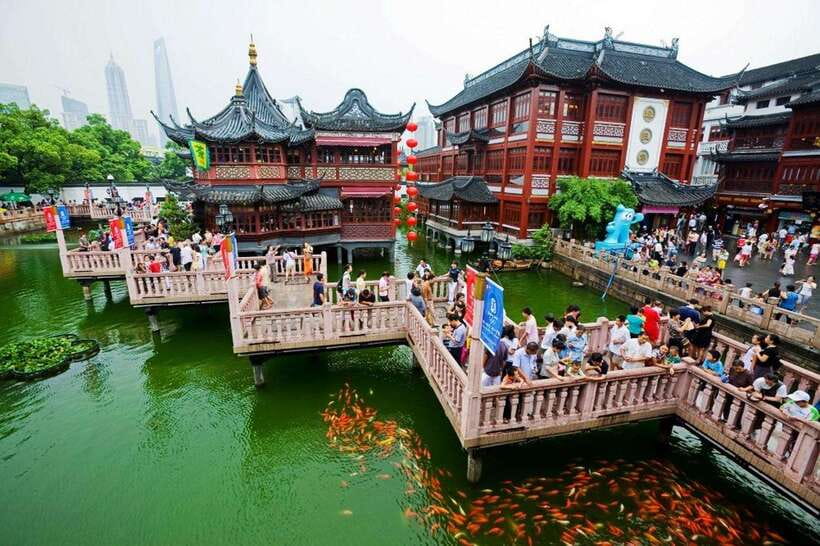
- Old Town details beyond the shops: Look for Qing Dynasty-style buildings, the nine lucky bridge, local stalls, and a 400-year-old tea house.
- A five-tea tasting: The tasting can include five different teas, with explanations of local tea-drinking customs.
- Flexible transport choices: Book a private air-conditioned car, or choose the Uber and metro option if that suits your plans and budget.
Why this half-day tour works in Shanghai
Shanghai can feel huge, especially when you are trying to fit temples, gardens, markets, and food traditions into a short stay. This route makes sense because the stops show four different sides of the city without asking you to spend a full day on one district.
I like the balance. The Jade Buddha Temple gives you a quiet start and a look at living religious practice. Old Town brings more movement, shopping, old-style streets, and local color. Yu Garden then slows the pace again with ponds, rockeries, chambers, and pavilions. Tea ties the whole visit together.
The format is a private group tour, not a large coach outing. That matters in places such as a temple or classical garden, where it is easier to hear your guide and pause when something catches your eye. Sunny, Ruby, Mabel, and Sammi are named among the guides who have led this experience, and the praise centers on friendliness, useful explanations, and practical help.
The drawback is the fixed four-hour window. You will see a good selection of Shanghai, but this is not a tour for spending an hour at every market stall or studying every garden doorway. If you like a brisk route with a guide keeping the day organized, the timing works well. If you prefer to wander with no clock, you may want to visit one of the sites separately.
More Garden Tours in Shanghai:
- Shanghai: Zhujiajiao Private Tour w/ Boat Ride & Garden
★ 5.0 · 460 reviews - Best of Shanghai Day Tour, including Jade Buddha Temple & Bund & Yuyuan Garden
★ 4.0 · 338 reviews - Shanghai: Yu Garden Admission Ticket
★ 4.6 · 260 reviews
Jade Buddha Temple: a calm first stop
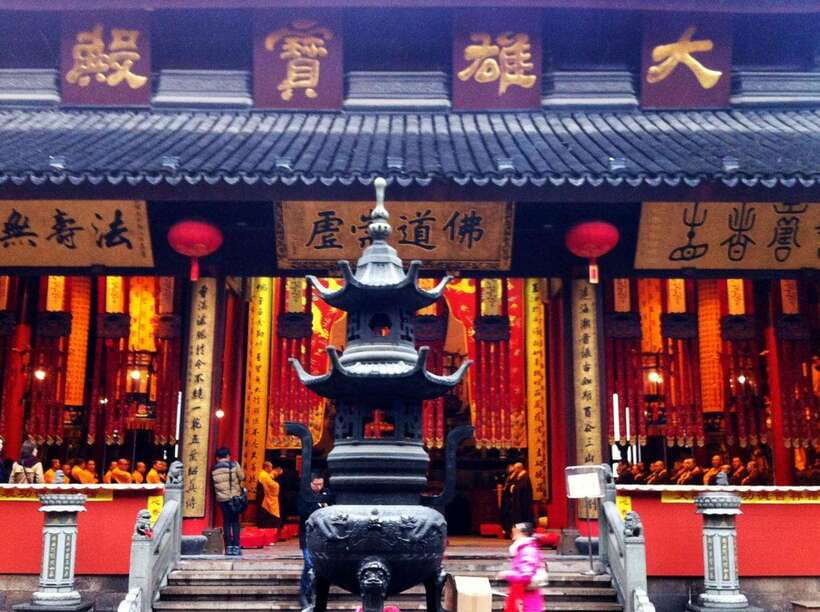
The Jade Buddha Temple is the tour’s most peaceful opening. Your guide leads you through areas including the Hall of Four Heavenly Kings and the Grand Hall, explaining the setting and the religious ideas connected with it.
The focus is the pair of jade Buddha statues brought from Burma. Their material and origin give your visit a clear point of reference. Instead of moving through a temple and wondering what matters, you can ask your guide why the statues are important and how they fit into Chinese Buddhist practice.
I like beginning here because the temple offers a change of mood from Shanghai’s busy streets. The courtyards and halls provide a quieter setting, and the tour gives you time to look rather than treating the temple as a quick photo stop.
You should dress and behave with respect in an active religious site. The experience includes cultural explanation, but it is still a functioning temple, not simply a museum. Keep your voice low in the halls and follow any posted rules about photography.
One practical point comes from the way the tour can operate: one itinerary began with a walk to the nearby temple before the group used a vehicle for the next stop. Your exact transport order can depend on the option you book and your pickup point. Ask the operator if the walking and driving sequence matters to you.
Old Town Bazaar and the nine lucky bridge
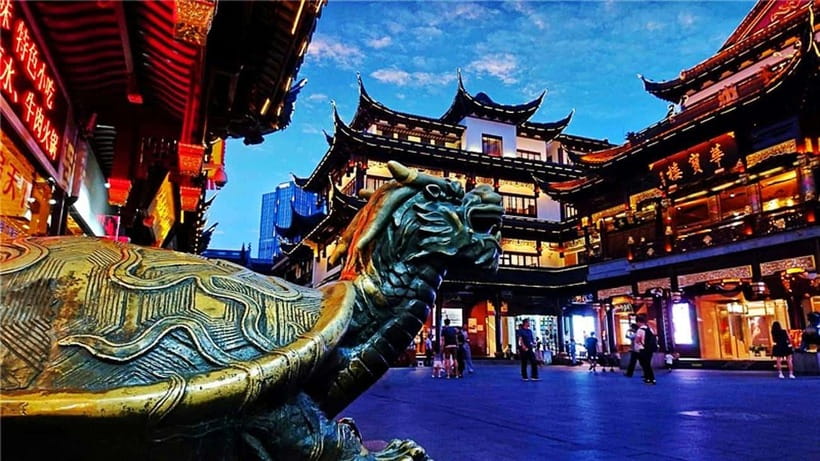
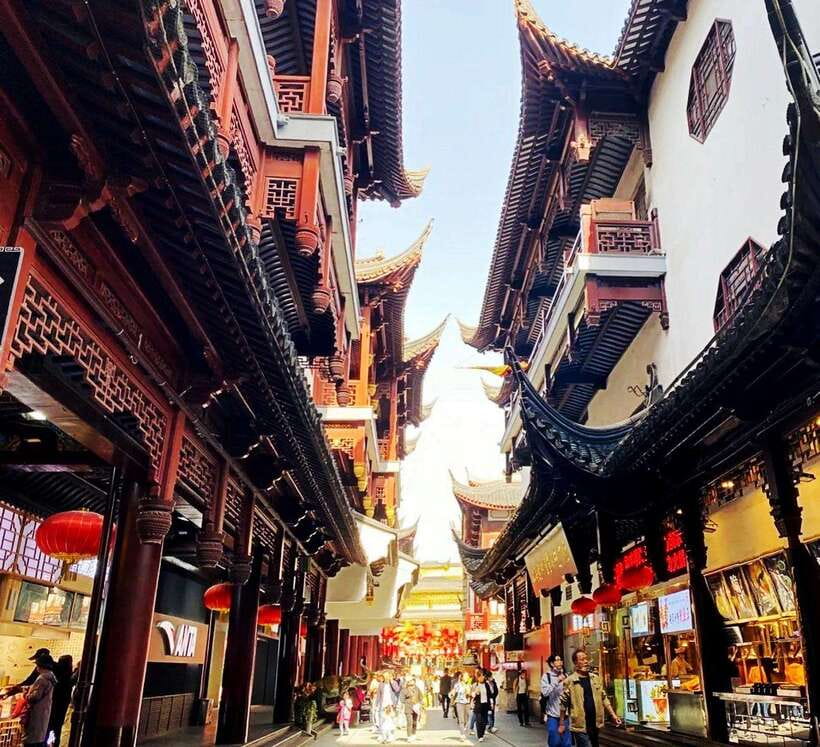
After the temple, the route shifts toward Shanghai’s Old Town. This is where you get a taste of the city’s older commercial character, with market stalls, local vendors, crafts, small souvenirs, and traditional-style buildings.
The Old Town Bazaar is not only about buying something. Your guide can point out the architectural details and explain how the area connects with Shanghai’s past. You might find the stalls useful for browsing small gifts, but the main value is seeing how commerce, old buildings, and street life sit together.
The nine lucky bridge is another small detail that makes this stop more memorable. It is easy to rush past a bridge or doorway when you are exploring alone. With a guide, you have a better chance of learning why a feature matters instead of treating the whole area as a general shopping street.
The route also passes a tea house said to be 400 years old. That detail prepares you for the final tasting, giving the tea portion a sense of place rather than making it feel like an unrelated stop added at the end.
Keep your expectations sensible. Old Town is a popular area, and market stalls can feel more commercial than the temple or garden. The tour does not promise a long shopping session, so I would treat purchases as optional and focus on the buildings, bridge, and local atmosphere.
Yu Garden and its careful design
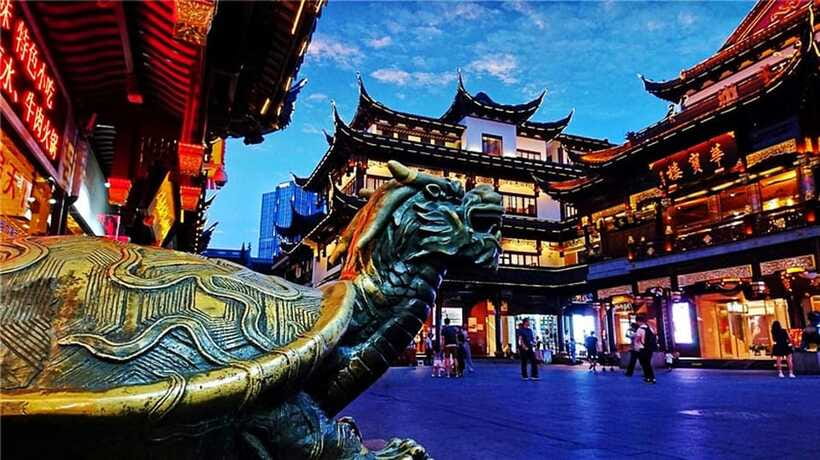
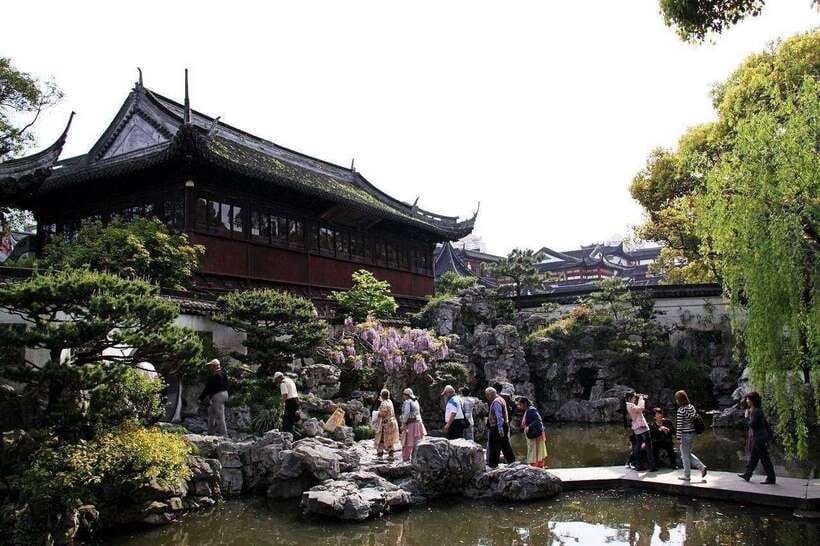
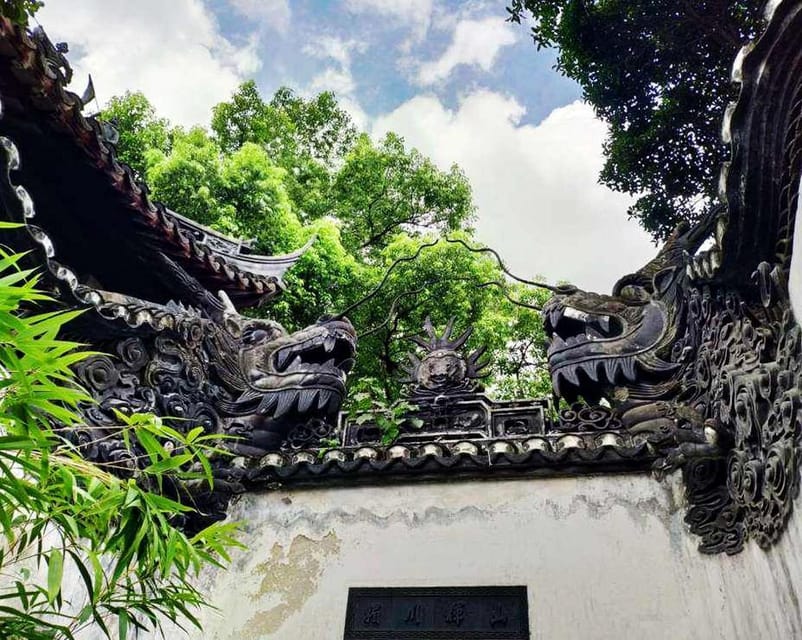
The 500-year-old Yu Garden is the visual center of the tour. It was designed as a classical garden, with pavilions, ponds, rockeries, chambers, green plantings, and decorative walls.
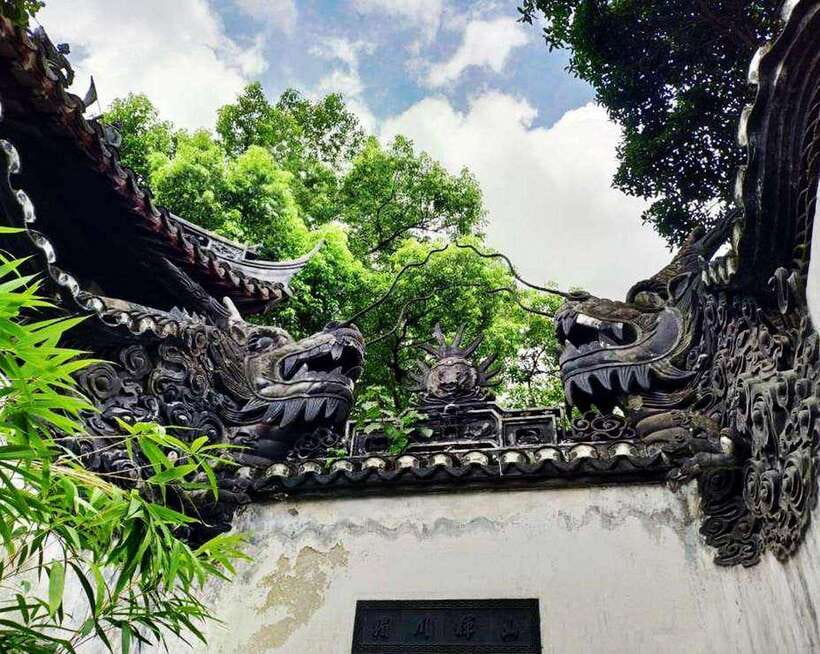
The famed dragon wall is one feature to watch for. Garden walls here are not just barriers. They shape the way you move through the space, hide and reveal views, and separate one small scene from another. A guide can help you notice how the garden uses turns, openings, water, and stone to create variety in a compact area.
I like the contrast with the temple. The temple is about worship and religious art. Yu Garden is about designed space, private retreat, and the Chinese tradition of making a garden feel larger and more layered than it really is. You move through a sequence of viewpoints rather than walking across one open park.
The garden can be a busy place, so the private format helps. You can stay with your guide and hear the explanation without trying to catch every word across a large group. You will still need to share the site with other people, and the four-hour schedule means the visit will focus on the principal sections rather than every corner.
Wear comfortable shoes. The tour combines temple grounds, market streets, and garden paths, and the day is better when you are ready to walk at an easy but steady pace.
Same place, a different sort of green day out:
- Yu Garden, Old Street, Bund & Zhujiajiao Water Town Bus Tour
★ 4.7 · 244 reviews - Shanghai Day Tour to Zhujiajiao Water Town, Yu Garden, Bazaar, Bund
★ 5.0 · 162 reviews - Private Yu Garden, The Bund, French Concession, Pudong Half-Day Tour
★ 5.0 · 51 reviews - Shanghai: Yu Garden Ticket+Lantern Festival Entry combo
★ 3.7 · 49 reviews
Tea tasting: five cups with a cultural lesson
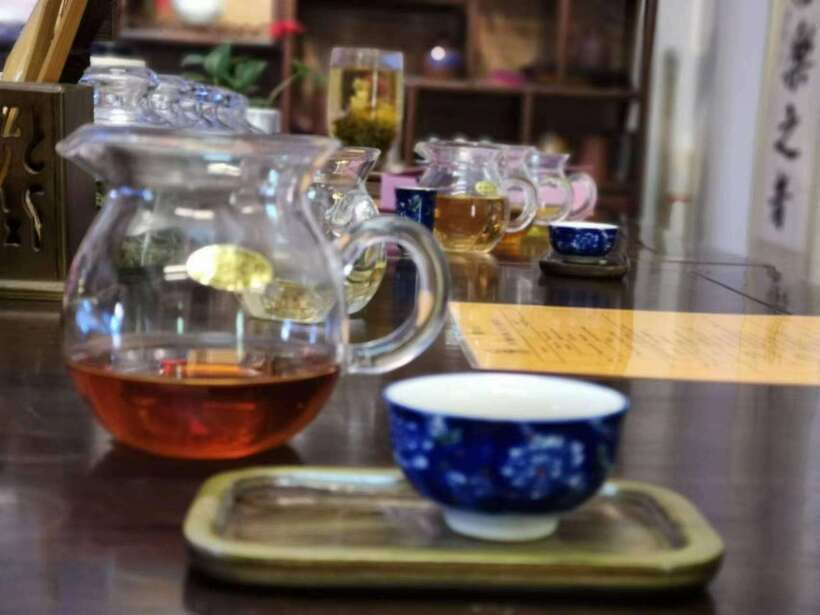
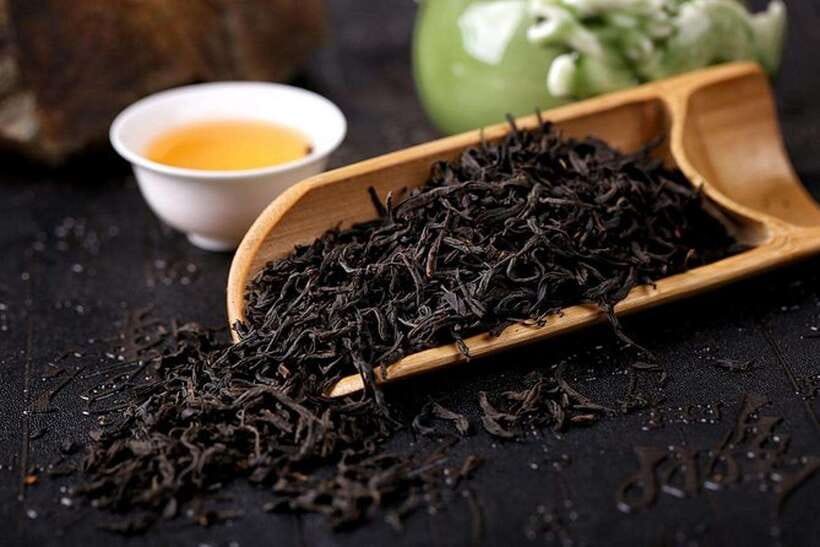
The final stop is a tea house or tea-tasting setting, where you sit down and sample tea according to your preference. One detailed account described trying five different teas, each explained during the tasting.
This is more useful than simply being handed a cup. You get a chance to compare flavors and learn about how tea is served and enjoyed locally. The guide can explain the customs behind the ritual, which gives context to an everyday part of Chinese life.
The tea tasting also works as a natural pause after the walking portions. Instead of ending at the garden gates, you have time to sit, ask questions, and reflect on what you have seen.
Your choice of tea matters here. If you have a preference, tell the guide. The experience allows you to select according to your taste, though the available choices are not specified in detail. Do not assume the tasting is a full meal. Lunch and dinner are not included, so plan a meal before or after the tour.
Tea purchases are also not listed as part of the package. If you enjoy the tasting and want to buy something, ask clearly about the price and what is included before making a purchase.
Guide quality makes the difference
The guide is the main reason to consider this experience instead of visiting the same places alone. At the temple, a guide can explain the halls and jade statues. At Yu Garden, the guide can connect the dragon wall, rockeries, ponds, and pavilions to the garden’s design. At the tea house, the guide can turn a tasting into a cultural lesson.
The named guides receive strong praise for different reasons. Ruby is described as professional and friendly, while Sunny is praised for explaining Chinese culture and traditional tea. Mabel provided a well-organized route with historical background at both the temple and garden. Sammi is described as attentive, pleasant, and generous with details about Shanghai and Chinese culture.
One especially useful point is the practical support offered during a phone problem involving a Didi ride. That suggests the guide may be able to help when a small travel mishap threatens to derail your plans. It is not a promise of technical support, but a friendly guide can be valuable in a city where transport apps and language can sometimes complicate simple tasks.
The tour is conducted in English. Since the group is private, you can ask for slower explanations or more detail on the subjects that interest you most. That is a better fit for curious visitors than for people who only want quick photo stops.
Transport, timing, and what the $99 covers
At $99 per person, the value depends on how many people are in your private group and which transport option you choose. The price includes the English-speaking local guide, entrance fees to both Yu Garden and the Jade Buddha Temple, the tea ceremony, and downtown pickup and drop-off.
The private car option includes a private driver and an air-conditioned vehicle. That is the more comfortable choice if you want door-to-door service or prefer not to manage city transport between stops. The Uber and metro option uses local transport instead. It may suit you if you want a lower-key way to move around, but the available details do not specify the exact price difference between the options.
You are paying for more than entry tickets. You are also paying for route planning, interpretation, transport arrangements, and a small private setting. For a first visit to Shanghai, that can be good value, especially if you have only one free morning or afternoon.
The price does not include lunch or dinner. Four hours is not a long enough block to require a meal break, but you should plan food around the start or end of the tour. Pickup is available from downtown Shanghai, and you wait in your hotel lobby at the stated start time. If you are staying outside the downtown area, confirm whether your address qualifies before booking.
Free cancellation is available up to 24 hours before the start time, and you can reserve now and pay later. Those terms are helpful if your Shanghai schedule may change, but check the booking details for the exact meeting time and transport selection.
Who should book this Shanghai tour?
I would recommend it to a first-time visitor who wants a clear introduction to Shanghai’s temples, old town, classical gardens, and tea customs. It also suits people with a short stay who want several major cultural stops without planning each transfer themselves.
Families and older visitors may appreciate the private car option and the ability to keep the group together. The guide can also adjust the conversation toward history, religion, architecture, or tea, depending on what interests you.
It is a good fit for couples and small private groups who want personal attention. If you are traveling alone, $99 is a higher per-person cost than it would be for a larger private group, so compare the convenience against the price.
I would be more cautious about recommending it to a serious garden photographer or a dedicated shopper. The four-hour route gives you an introduction, not an extended study session. You will see the key areas, but you may wish for more time at Yu Garden or Old Town if you enjoy slow exploration.
Should you book it?
Book this tour if you want a well-organized cultural sampler with a private guide, included admissions, downtown transportation, and a real tea tasting. The combination of the Jade Buddha Temple, Old Town, Yu Garden, and five possible teas gives you a useful first picture of Shanghai.
Choose the private car option if comfort and simple transfers matter most. Choose the Uber and metro option if you prefer local transport and want to keep the outing more flexible. Either way, allow extra time around the four-hour schedule for your own meal and any shopping.
I would skip it only if you want an unhurried day at one site, or if you dislike guided visits. For everyone else, the route offers a sensible amount of Shanghai in a short block, with guides such as Ruby, Sunny, Mabel, and Sammi adding the explanations that make these places easier to understand.
FAQ
How long is the Shanghai garden and temple tour?
The tour lasts four hours.
What sites are included?
The route includes the Jade Buddha Temple, Old Town Bazaar, the 500-year-old Yu Garden, and a tea-tasting experience.
Is the tour private?
Yes. It is offered as a private group tour.
Is an English-speaking guide included?
Yes. The tour includes a live English-speaking local guide.
Is transportation included?
Downtown Shanghai pickup and drop-off are included. A private air-conditioned car is available with the private-car option, while the Uber and metro option uses local transport.
Are entrance fees included?
Yes. Admission to Yu Garden and the Jade Buddha Temple is included.
Is food included?
No. Lunch and dinner are not included, although a tea ceremony and tea tasting are part of the experience.
Just added around Shanghai
- Yu Garden Shanghai Entry Tickets Booking And Trip★ 3.6 · 9 reviews
- Tongli Water Town Private Day Trip from Shanghai with Tuisi Garden and Boat Ride★ 5.0 · 7 reviews
- Shanghai Yu Garden Admission Ticket★ 4.0 · 16 reviews
- Private Tour of Shanghai Museum the Bund Yu Garden and Cruise on Huangpu River★ 4.0 · 2 reviews
- Explore Suzhou’s Hidden Gardens&Enchanting Tongli Ancient Town★ 5.0 · 3 reviews
- Private Suzhou Day Tour from Shanghai to Classical Gardens and Tongli Water Town★ 5.0 · 6 reviews
- Private Yu Garden, The Bund, French Concession, Pudong Half-Day Tour★ 5.0 · 51 reviews
- Private Zhujiajiao Ancient Town and Harmony Garden Day Tour with Gondola Ride★ 5.0 · 7 reviews
Shanghai Garden Tours, compared.

Best of Shanghai Day Tour, including Jade Buddha Temple & Bund & Yuyuan Garden
Read our review →
Yu Garden, Old Street, Bund & Zhujiajiao Water Town Bus Tour
Read our review →
Shanghai Day Tour to Zhujiajiao Water Town, Yu Garden, Bazaar, Bund
Read our review →
Private Yu Garden, The Bund, French Concession, Pudong Half-Day Tour
Read our review →

Browse the lists this tour appears in