Review · PRAGUE
Prague Renaissance & Baroque Gardens Walking Tour
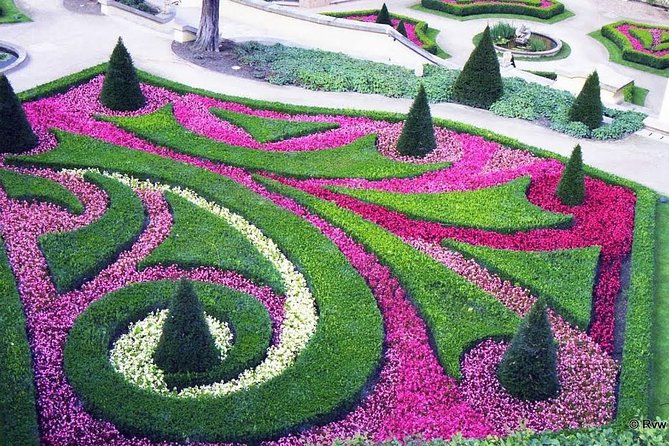
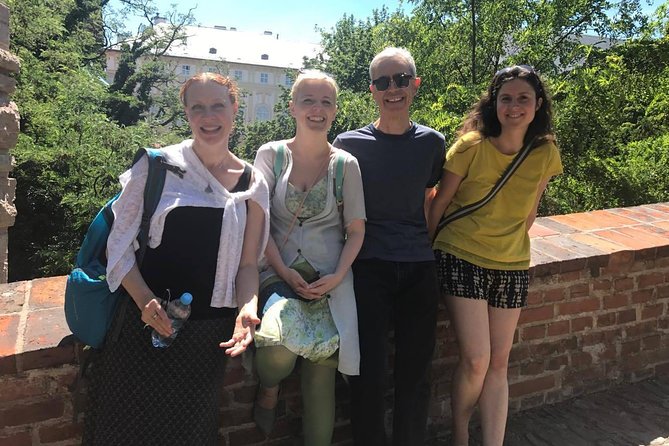
Prague’s gardens tell the city’s quietest stories. This three-hour walk links royal grounds, myth-filled statues, fountains, rare plants, and a small Baroque garden with superb views. I like the small group of no more than eight and the way the route reaches places many first-time visitors miss. I also like that guides such as Bonita bring art, politics, and mythology together instead of simply pointing out flowers.
The main drawback is cost. At $126.03 per person, this is not a cheap stroll, and you still pay separate admission to Vrtba Garden and the gardens under Prague Castle. You should also be ready for steep stairs at Vrtba Garden, though you can wait on a lower terrace if needed.
Key points to know before you book
- The group takes tram 22 together: You meet at Malostranská Metro station and ride to Prague Castle’s gardens as part of the tour.
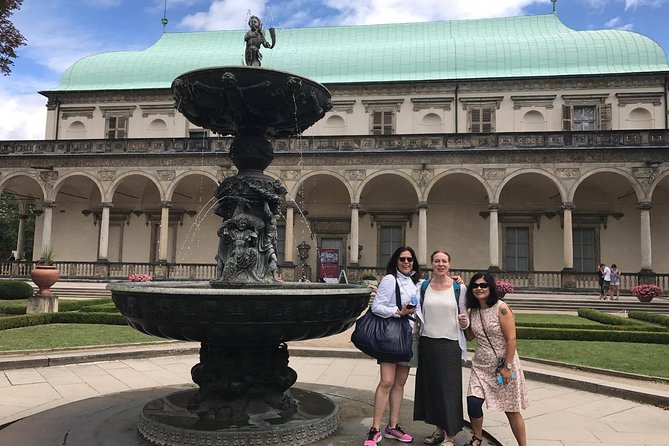
- Queen Anne’s Summer Palace anchors the Renaissance section: Its Italian-inspired design, decorative frieze, and mythological reliefs give the walk a strong architectural focus.
- The Fig House and Orangery add unusual detail: You hear how figs, almonds, oranges, and lemons were grown in central Europe, along with the story of tulips reaching Prague.
- Wallenstein Garden is full of theatrical details: Look for the grotto, aviary, peacocks, mythological statues, and Adrian de Vries fountain.
- Vrtba Garden requires extra payment and stair climbing: The final terrace offers some of the best city views, but the route upward is steep.
- Two departure times make planning easier: You can choose 10 a.m. or 2 p.m., depending on how you want to arrange your day.
Why Prague’s gardens are worth three hours
Most people come to Prague for churches, bridges, and castle interiors. This walk shows you another side of the city, one shaped by gardens, outdoor sculpture, royal ambition, and private power.
I like the basic idea because the gardens are not treated as decoration. A statue of a Greek god, a clipped hedge, or an artificial grotto becomes part of a political story. The people who built these places wanted to show taste, learning, wealth, and control. Your guide explains how those messages worked.
The tour also gives you a break from Prague’s busiest streets. Even during the high season, these gardens can feel quiet. That matters if you want a slower afternoon after the Charles Bridge and Old Town crowds.
The route is especially strong for anyone interested in art, architecture, gardening, or European court life. It is less suitable if you want a fast checklist of major sights or a casual walk with little commentary. The guides, including Bonita and Vadim, are praised for taking ideas seriously and for telling stories that help you look again at places you may already know.
More Garden Tours in the world:
- Paris: Versailles Palace and Gardens Full Access Ticket
★ 4.6 · 41,579 reviews - Versailles: Skip-the-Line Tour of Palace and Gardens Access
★ 4.7 · 10,429 reviews - Marrakesh: Majorelle Garden Entry Tickets
★ 4.5 · 9,651 reviews
Meeting at Malostranská and riding tram 22
The tour begins at Bagel Lounge Malostranská, at Letenská 118/1, near Malostranská Metro station. You meet your guide and group there before taking tram 22 together toward Prague Castle’s gardens.
That shared tram ride is useful. You do not have to work out the first transfer on your own, and the guide can begin setting the scene before you reach the first garden. The meeting point is also close to public transportation, which makes it practical for a morning or afternoon start.
The group size is capped at eight people. That is a meaningful advantage here. Garden tours involve small details, from carvings on a balustrade to the meaning of a particular statue, and a compact group makes it easier to hear and ask questions. The guide can also adjust the discussion to your interests.
You can choose a 10 a.m. or 2 p.m. departure. The morning option leaves more of your afternoon free, while the later departure works well if you want to spend the morning at Prague Castle or in the Old Town.
The Royal Garden and Queen Anne’s Summer Palace
The first major section takes you into the Royal Garden at Prague Castle. It was established in the 16th century on land that had once held medieval vineyards. From the beginning, it was more than a pleasant green space. It was a royal setting for rare plants, imported specimens, and carefully planned display.
The garden became known for unusual plants from distant places. That detail helps explain why Renaissance gardens were so exciting to their owners. A rare plant was not just pretty. It showed access to trade, money, science, and faraway connections.
The centerpiece is Queen Anne’s Summer Palace, also called the Belvedere. It was completed in the middle of the 16th century and is often described as one of the finest examples of Renaissance architecture outside Italy.
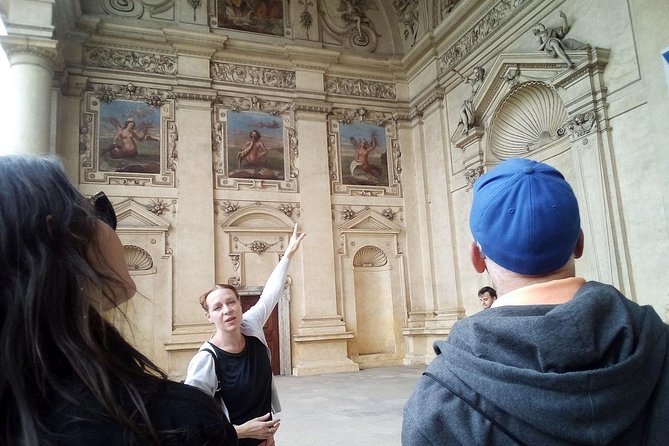
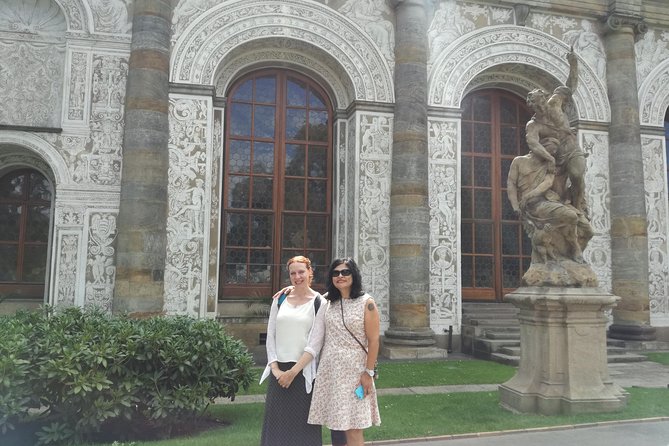
You will not spend a long time inside the building on this walk, but the exterior rewards close attention. The palace has arcades with decorated Tuscan columns and an ornamental frieze running around the structure. Reliefs show scenes of mythology, hunting, and war. One image presents Ferdinand I with the Order of the Golden Fleece, offering Queen Anna a fig blossom.
That small fig detail leads naturally into the garden’s plant stories. It also shows how the building blends personal symbolism, classical design, and royal identity. I find this kind of explanation more useful than a list of dates because it tells you why the place looks the way it does.
The Fig House, Orangery, and Prague’s early exotic plants
The walk continues through the Fig House and Orangery on the estate. These structures recall an era when growing figs, almonds, oranges, and lemons in central Europe required skill, labor, and protection from the climate.
For you, this is one of the tour’s more unusual stops. It connects grand court culture with the practical work of keeping plants alive. The garden was not simply planted and forgotten. It required systems, staff, and a desire to display plants that were not ordinary in Prague.
You also hear how tulips first reached Prague. That story adds a little trade and fashion to the walk. Tulips became a powerful symbol of status in European gardens, and their arrival helps show how quickly plant tastes could cross borders.
The tour does not treat botany as a separate subject. Plants, architecture, and politics sit side by side. That combination is one reason this experience works well for curious people who already know the city and want a fresh way to read it.
Same place, a different sort of green day out:
- Vienna: Schönbrunn Palace & Gardens Skip-the-Line Tour
★ 4.7 · 7,739 reviews - Granada: Alhambra & Gardens Tour w/Nasrid Palaces Option
★ 4.2 · 7,022 reviews - From Paris: Versailles Palace & Gardens with Transportation
★ 4.6 · 6,222 reviews - Vienna: Skip-the-Line Sisi Museum, Hofburg and Gardens Tour
★ 4.8 · 5,918 reviews
The Ball Game Hall above the Stag Moat
Near the south side of the Royal Garden, you pass the Renaissance Ball Game Hall. Built in the middle of the 16th century directly above the Stag Moat, it was first used for ball games.
The building later served as a riding school and stables. Those changing uses give you a quick glimpse of how royal buildings were adapted over time. A structure that began as a place for sport could later support horses and court life.
You spend only a short time here, about five minutes according to the planned itinerary. That is enough to understand its purpose and position without turning the walk into a long architectural lecture.
The Ball Game Hall is a good example of the tour’s rhythm. Some stops receive a full explanation, while others work as brief visual pauses between the larger gardens.
Wallenstein Garden and its mythological theater
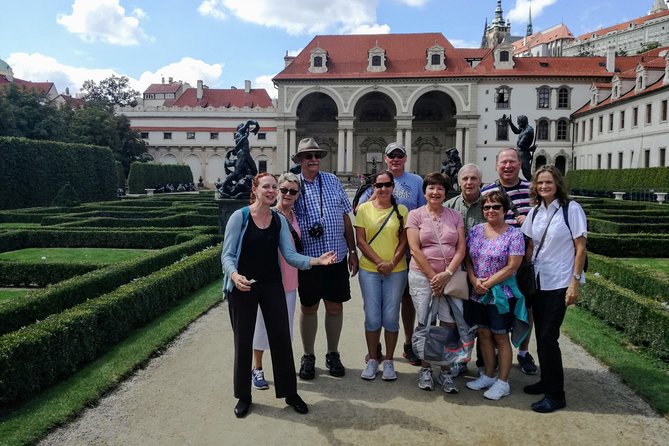
The route then brings you toward Wallenstein Garden, also called Waldstein Garden, beside the Senate of the Czech Republic. The gardens were built in the 17th century for Wallenstein Palace and are now open to the public.
This is where the Baroque mood becomes clear. The Italian-style garden includes an aviary, an artificial grotto, a sculptural gallery of mythological heroes, and a fountain by Adrian de Vries.
The grotto is especially enjoyable because it looks intentionally strange and theatrical. Rough stone forms contrast with the formal geometry around them. The effect is not natural in the modern sense. It is a carefully designed fantasy.
The statues also deserve time. Guides explain how Greek and Roman myths were selected to support political messages. A hero or god could represent strength, victory, wisdom, or military power. Once you understand that, the statues stop being background decoration.
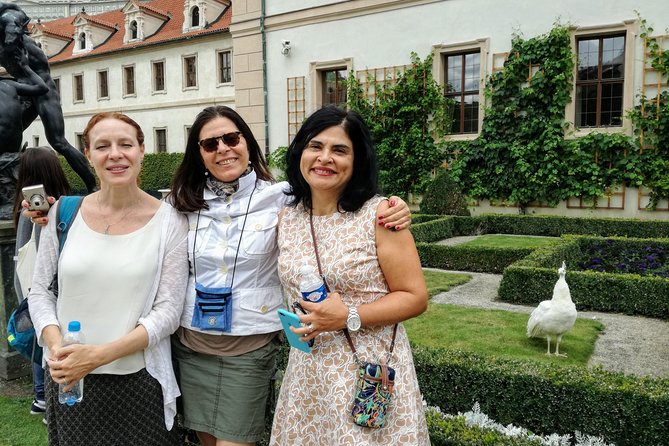
Peacocks add a lively touch, and you may see them moving through the grounds. Their bright color fits the garden’s display-minded character. You should bring a camera, but keep your attention on the sculpture and layout too. The best part of this stop is learning how the pieces work together.
You spend roughly 25 minutes here. That gives you time to see the main features, though anyone who wants long photography stops may wish for more time.
Vrtba Garden and the best city views

The final garden is Vrtba Garden, often written as Vrtbovská or Vrtba Garden. This walled Baroque garden dates from 1720 and occupies a compact site in Malá Strana.
It is a very different experience from the broad Royal Garden. Vrtba rises in terraces, and the design makes clever use of the slope. Original statues and sculptural decoration give each level a sense of ceremony. The garden is small, but it feels carefully composed.
The upper terrace is the reward. From there, you can look across Prague toward the city and Prague Castle. The view is one of the strongest reasons to include this tour in your plans. You get the city from a quieter, elevated setting rather than from another crowded street.
There is a practical catch. The route to the highest terrace includes steep stairs. If climbing is difficult, you can wait on the second terrace while the group continues upward, then rejoin them about ten minutes later. A private version can modify this part for your own group, according to the tour information.
Admission to Vrtba Garden is not included. The stated fee is CZK 130 for an individual, or CZK 100 for students and seniors. The itinerary allows about 25 minutes here, so you should expect a focused visit rather than a long free period.
The route information also lists an admission charge for the gardens under Prague Castle: CZK 90 for individuals, or CZK 60 for students and seniors. Since the tour description also says garden admission is included except for Vrtba Garden, I would confirm exactly which entrance fees are covered when you book. That small check avoids an awkward surprise at the gate.
What the guide adds to the experience
The guide is the reason to choose this walk instead of visiting the gardens alone. You can admire the fountains and terraces by yourself, but the tour gives you the symbols behind them.
Bonita receives repeated praise for her storytelling and her ability to make familiar Prague feel fresh, even for people who have lived in the city for years. The comments also highlight her interest in Greek and Roman mythology, which is especially useful at Wallenstein Garden and Vrtba Garden.
This is not a tour built around a few quick facts. You should expect discussion of art, rulers, classical stories, garden design, and the way powerful people used visual culture. If you enjoy asking why a statue is there, why a building uses a certain style, or how a garden was meant to impress its audience, you will get more from the experience.
I would not book it if you prefer to wander silently or spend most of the time taking photographs. The pace is guided, and the value comes from interpretation.
Price, timing, and overall value
The price is $126.03 per person. That is a serious amount for a three-hour walking tour, especially once you add the Vrtba entrance fee and possibly the Prague Castle garden admission.
The value comes from the small group and the specialist focus. With no more than eight people and a professional scholar guide, you are paying for access to a particular way of seeing Prague, not simply for transportation between gardens. A larger general city tour could cost less, but it would be unlikely to spend this much time on plant history, sculpture, Renaissance design, and Baroque symbolism.
The tour is often booked about 48 days in advance, so I would not leave it until the last few days of a Prague visit. Free cancellation is available if you cancel at least 24 hours before the start time. Changes made inside that period are not accepted, and the stated local cut-off time applies.
The published meeting details say the activity ends back at the meeting point. The route description also places the guide’s departure at Vrtba Garden after the final stop. Because those details do not fully match, confirm the end point before you plan a dinner reservation or another timed activity.
Who should book this garden walk?
I would recommend it most strongly to:
- First-time visitors who want more than the standard castle route
- Repeat visitors looking for less familiar corners of Prague
- People interested in garden design, sculpture, Renaissance buildings, or Baroque art
- Students and adults who enjoy history explained through objects and places
- Local residents who want a new reading of familiar sites
- Anyone who appreciates a small group and plenty of time for questions
You need moderate physical fitness, mainly because of walking and the steep stairs at Vrtba Garden. If stairs are a concern, the lower terrace option makes the tour more manageable, but you should decide in advance how much of the upper section you want to attempt.
Should you book the Prague garden tour?
Book it if you want Prague explained through its gardens, statues, plants, and royal ambitions. The strongest features are the eight-person limit, the guide’s art and mythology focus, Wallenstein Garden’s unusual details, and the view from Vrtba Garden.
Skip it if $126.03 feels too high for three hours, if you want a completely self-guided visit, or if steep stairs would make the final garden stressful. For the right person, this is a thoughtful and unusually focused way to see Prague. It replaces a standard sightseeing checklist with a closer look at how the city’s rulers used beauty to tell their own stories.
FAQ
How long is the Prague Renaissance and Baroque Gardens Walking Tour?
The tour lasts approximately three hours.
Where does the tour begin?
You meet at Bagel Lounge Malostranská, Letenská 118/1, near Malostranská Metro station in Prague’s Malá Strana district.
What departure times are available?
You can choose between a 10 a.m. departure and a 2 p.m. departure.
How many people can join the tour?
The group has a maximum of eight people.
Is transportation included during the tour?
The group takes tram 22 together from the Malostranská meeting area to the gardens at Prague Castle.
Is admission to the gardens included?
The tour information states that garden admission is included except for Vrtbovská Garden. It separately lists Prague Castle garden admission as CZK 90 for individuals and CZK 60 for students and seniors, so confirm what is covered at booking.
How much does admission to Vrtba Garden cost?
The stated fee is CZK 130 for an individual, or CZK 100 for students and seniors.
Do I need to climb stairs at Vrtba Garden?
The route to the highest terrace includes steep stairs. If climbing is difficult, you can wait on the second terrace while the group continues, then rejoin them about ten minutes later.
Just added around the world
- Royal Horticultural Society: Harlow Carr Garden Ticket★ 4.7 · 14 reviews
- Zanzibar: Jozani Monkeys, Butterfly Garden & Reptile Park★ 5.0 · 2 reviews
- Yu Garden Shanghai Entry Tickets Booking And Trip★ 3.6 · 9 reviews
- York: Castle Howard House and Gardens – Self-Guided★ 4.8 · 120 reviews
- Xochimilco floating gardens, Coyoacan and UNAM murals★ 4.0 · 6 reviews
- York: Castle Howard Gardens and Grounds Entry Ticket★ 4.5 · 23 reviews
- Woodside: Filoli Historic House and Garden Entry Ticket★ 4.9 · 9 reviews
- Woking: Royal Horticultural Society Wisley Garden Ticket★ 4.7 · 24 reviews
Tours, compared.
Skip-the-Line Tour of Palace and Gardens Access
Read our review →
Schönbrunn Palace & Gardens Skip-the-Line Tour
Read our review →
Alhambra & Gardens Tour w/Nasrid Palaces Option
Read our review →
Skip-the-Line Sisi Museum, Hofburg and Gardens Tour
Read our review →
Skip-the-Line Schönbrunn Palace & Gardens Tour
Read our review →
Cooking Class, Market & Thai Herbs Garden Tour
Read our review →
Versailles Palace Guided Tour & Gardens Access
Read our review →