
Review · SEOUL
Donghaksa Temple Cherry Blossom and Jeonju Hanok Village
Two Korean highlights, one long day. This tour pairs Donghaksa Temple’s famous cherry-blossom path with Jeonju Hanok Village, where more than 800 traditional Korean houses create a setting unlike modern Seoul. I like the easy round-trip transport and the chance to visit two major sights without arranging separate train or bus connections. I also like the contrast: quiet temple paths in the morning, then old houses, cafés, shops, and Korean snacks in Jeonju.
The main drawback is the schedule. At roughly 13 to 14 hours, with more than six hours spent moving between Seoul, Donghaksa, and Jeonju, this is a full day. You should also remember that meals are not included, so you will need to use your free time in Jeonju for food.
Key Points Before You Book
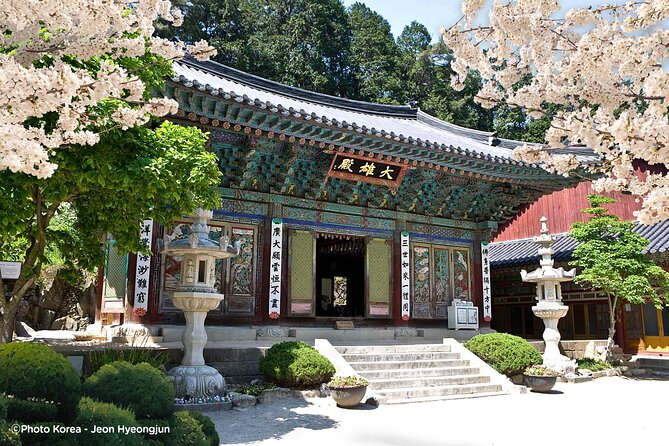
- Donghaksa gives you a two-hour cherry-blossom walk along a scenic spring path leading through the temple area.
- Jeonju Hanok Village contains more than 800 traditional houses, making it the longer and more varied stop.
- The tour lasts about 13 to 14 hours, including roughly six and a half hours of transport.
- English-speaking staff and round-trip transportation make this easier than planning two distant destinations yourself.
- Andrew, the guide praised in the tour feedback, is noted for being kind and helpful.
- The vehicle may change with group size, and the group can include up to 100 people.
Why This Tour Works as a Seoul Day Trip
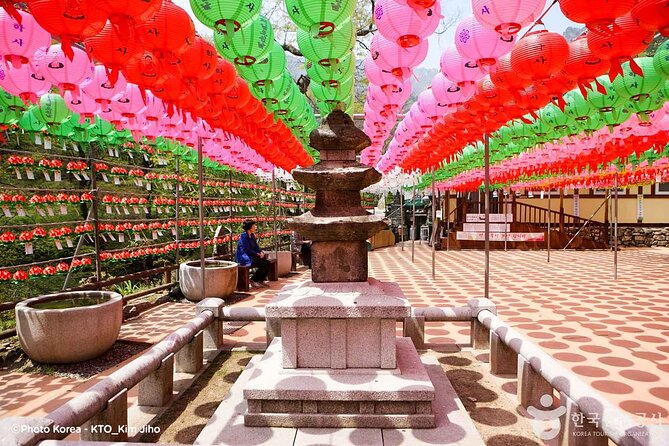
South Korea gives you very different travel experiences within a few hours of Seoul. Donghaksa offers a calm spring setting with flowers and temple buildings. Jeonju offers old-style homes, food, cafés, and streets shaped by Korean tradition.
What I like here is the pairing. If you visited only Donghaksa, you would get a beautiful but fairly focused nature and temple outing. If you visited only Jeonju, you would spend more time exploring a historic urban district. Together, the stops give you two distinct sides of Korea in one booking.
The price is $66.96 per person. That is a reasonable figure for a day that includes an English-speaking driver, air-conditioned transport, and travel from Seoul to two destinations and back again. The value depends on how much you dislike long-distance planning. You are paying for convenience as much as for the places themselves.
This is not a small private excursion by definition. The maximum group size is 100, and the type of vehicle can change depending on how many people book. If you prefer quiet, flexible travel with no fixed departure rhythm, this may feel too structured. If you want to see both places without studying Korean transport connections, the fixed plan is useful.
More Cherry Blossom Tours in Seoul
- Chasing Cherry Blossom & Spring Flowers Day Tour from Seoul
★ 5.0 · 11 reviews - Maisan Cherry Blossom and Jeonju Hanok Village
★ 5.0 · 8 reviews - Jinhae Cherry Blossom Festival Gyeonghwa Stn Day Tour from Seoul
★ 4.0 · 8 reviews
Leaving Seoul for Donghaksa Temple
The first drive from Seoul to Donghaksa takes about two hours. That is early enough to make the temple the first major sight of the day, before the schedule moves on to Jeonju.
The transport is by air-conditioned vehicle, with an English-speaking staff member who also serves as the driver. This matters on a day with several long road sections. You do not need to change trains, find a regional bus, or work out how to connect the temple with Jeonju afterward.
The first stop is listed as Donghaksa, in the Gongju area. The travel time from Seoul is included in the day, and there is no separate admission fee listed for the stop. Since the vehicle type can change with the number of participants, you should think of the transport as practical rather than fixed to one particular coach.
Two hours on the road can feel long, especially when the full return trip includes another three hours and ten minutes from Jeonju to Seoul. Still, the journey gives you access to places that are not simple short hops from central Seoul. I would bring water and keep your morning expectations realistic: this is a destination day, not a quick outing.
Walking Donghaksa’s Cherry-Blossom Tunnel
Donghaksa is the visual opening act of the tour. The main draw in spring is the cherry-blossom tunnel, a flower-lined route where the trees frame the walk toward the temple area.
The description promises a path where each step offers a photo opportunity, and that is the right way to think about the stop. You are not being sent into a museum with a long list of displays. You are given about two hours to walk, take photographs, enjoy the flowers, and spend time around the temple.
The temple setting adds something that a city cherry-blossom road cannot. The blossoms are paired with quiet paths and a religious site, so the mood is more peaceful than a typical urban flower-viewing area. I like that this stop is not overloaded with activities. Two hours gives you time to appreciate the season without turning the morning into a race.
The timing of the flowers matters. The tour is specifically a spring cherry-blossom outing, and the strongest experience depends on visiting when the trees are in bloom. The supplied tour details do not guarantee exact bloom dates, so you should treat the flowers as seasonal rather than guaranteed. The April 8 experience described in the feedback had the blossoms in full bloom, which suggests that early April can be a strong period, but conditions vary by year.
You should also expect this to be a walking stop. The most rewarding part is the path itself, not simply arriving at the temple and looking around for a few minutes. Comfortable shoes will help, though no special equipment is listed.
The Long Transfer From Gongju to Jeonju
After Donghaksa, the schedule allows about one hour and 20 minutes to move toward Jeonju. This is a practical connection that lets you see both destinations without organizing the route yourself.
It is also one of the less exciting parts of the day. The tour has a great deal to cover, and the road time is the price of fitting two regions into one outing. If you enjoy looking out the window and resting between stops, this transfer gives you a useful break. If you want a slow visit with no time in the vehicle, you should choose one destination instead.
The route arrangement makes sense geographically for the day: Seoul to Donghaksa, Donghaksa to Jeonju, then Jeonju back to Seoul. You are not returning to Seoul between the two attractions, which saves time and makes the pairing more practical.
More Cherry Blossom Tours in South Korea
- Jinhae’s Cherry Blossoms Shuttle Bus depart from Seoul/Busan
★ 4.5 · 8 reviews - From Seoul: Korea Spring Cherry Blossom Day Tour
★ 4.8 · 6 reviews - Jinhae Cherry Blossom + Busan Sunrise from Seoul
★ 4.5 · 5 reviews - Seoraksan and Cherry Blossom Lake 1 day trip from Seoul
★ 5.0 · 4 reviews
Three Hours and 40 Minutes in Jeonju Hanok Village
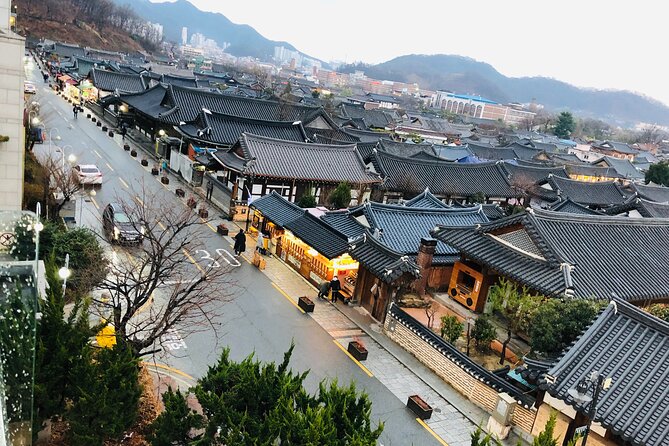
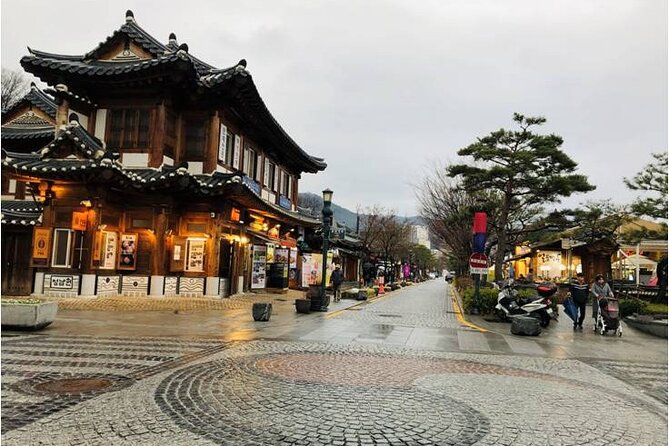
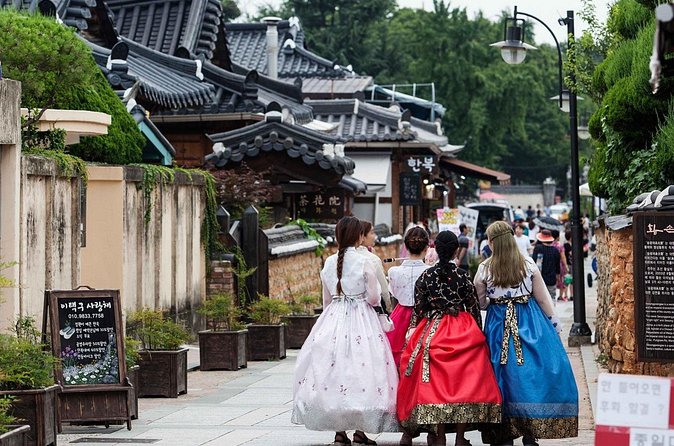
Jeonju Hanok Village is the longer stop, with about three hours and 40 minutes to explore. More than 800 hanok, or traditional Korean houses, give the district its special look.
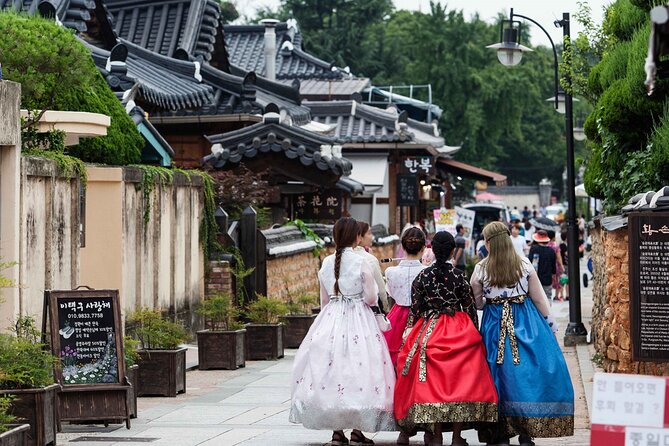
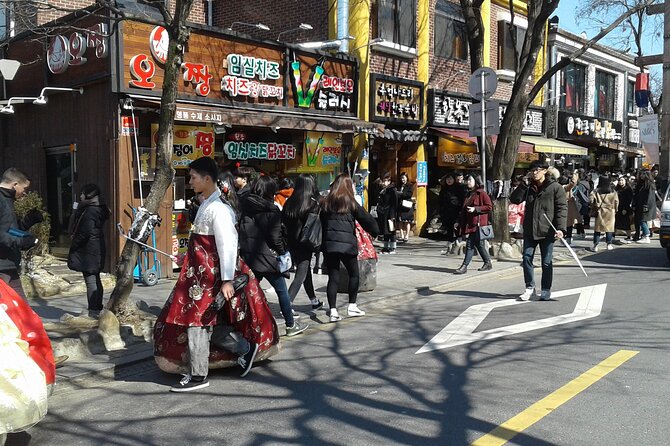
The village retains traditional forms and older character while also offering places to eat, cafés, shops, and snacks. That mix is important. You are not simply walking past preserved buildings. You can use the time to look at the architecture, try local food, browse small shops, and pause at a café.
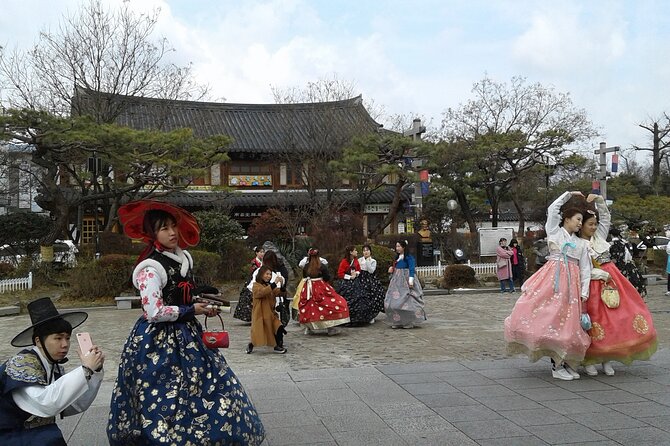
I would treat Jeonju as the part of the day where you set your own pace. Donghaksa has a clear central theme, cherry blossoms and temple scenery. Jeonju is more open-ended. You might spend your time photographing tiled roofs and wooden details, then stop for a snack. You might prefer to wander the streets and look for a café. The tour gives you enough time for a broad sample, though not enough for a detailed exploration of every lane.
The traditional houses are the real reason to visit. Hanok architecture creates a strong sense of place, especially after the modern city environment of Seoul. The village also gives you a direct way to see how historic Korean design is presented within a living district rather than behind a single museum entrance.
Food is another part of the appeal, but meals are not included. That is not necessarily a weakness. You can choose what suits your appetite and budget instead of being tied to a group meal. Still, remember to plan your time. With only three hours and 40 minutes, you will want to balance lunch or snacks with walking.
The village has enough variety for different kinds of visitors. If you like photography, the traditional roofs and narrow streets provide plenty of subjects. If you prefer food, the snacks and cafés add a second reason to explore. If you want cultural context, the hanok architecture gives the stop more depth than a standard shopping district.
What Andrew Adds to the Day
The English-speaking staff member is also the driver, and Andrew receives specific praise for being kind and helpful. That personal touch can matter on a schedule this long.
A guide who keeps the day moving without making it feel stressful is especially useful when the group must leave two different destinations on time. You will want to listen carefully to meeting instructions at both stops, since a delay in Jeonju affects the long return to Seoul.
The information provided does not promise a private guide, extended historical talks, or a formal walking tour at each location. You should therefore book this for transport, basic English support, and a well-planned route rather than for an intensive lecture about Korean history.
The Return to Seoul Takes Three Hours and 10 Minutes
The final drive from Jeonju to Seoul takes about three hours and 10 minutes. This is the longest single transfer in the itinerary, and it comes after a full day of walking.
That return makes the tour demanding. You may be tired by the time you leave Jeonju, but the air-conditioned vehicle gives you a chance to rest. I would avoid booking another fixed evening activity in Seoul unless you are comfortable with the possibility of a long day and a later arrival.
The reward is that you do not need to make your own way back from Jeonju. The transport stays with the tour, and the day ends where it began, in Seoul. For many people, that convenience is the central reason to choose this experience.
Price, Group Size, and Practical Value
At $66.96 per person, the tour includes round-trip transportation, movement between the destinations, an air-conditioned vehicle, and English-speaking staff. Admission to the listed stops is free, so the main cost covers logistics and staff rather than entrance tickets.
That is good value if you want to see both locations in one day. Buying separate transport could require more planning, and a mistake on one connection could affect the whole schedule. The tour removes that problem.
The group limit is 100 people, which is a wide range. The actual vehicle can change according to the number of participants, so you should not assume a particular bus or van. A larger group can mean less flexibility, but it can also keep the price lower than a private day trip.
This experience is usually booked about 29 days ahead. That suggests you should not leave spring planning until the last minute, particularly if the cherry blossoms are your main reason for going. The exact flower timing remains seasonal, but early planning gives you more choice.
Confirmation is provided at booking, and the tour is listed as near public transportation. Most people can participate according to the supplied information. The experience also has free cancellation up to 24 hours before the start time. If you cancel later, changes and refunds are not accepted. The tour requires a minimum number of participants, so a cancellation by the operator for that reason results in another date or experience, or a full refund.
Who Will Like This Day Most
I would recommend this tour to you if you want a simple way to reach two major sights outside Seoul. It suits first-time visitors who want flowers, temples, traditional architecture, food, and cafés without arranging several regional connections.
It also works well for photographers and spring visitors. Donghaksa supplies the blossom setting, while Jeonju offers a different set of images through its hanok streets and traditional details.
Families and mixed-interest groups may find the combination useful because the stops are not identical. One person can enjoy the temple walk while another looks forward to Jeonju snacks and cafés. Most people can participate, but the schedule still involves walking and a long day in transit.
I would think twice if you dislike early starts, long drives, or group schedules. I would also avoid it if you want several hours at one destination with time for side streets and unplanned stops. Jeonju deserves more time than this tour can provide, and Donghaksa is best enjoyed without rushing.
Should You Book Donghaksa and Jeonju?
Book it if your priority is seeing two distinctive Korean destinations from Seoul in one organized day. The cherry-blossom tunnel at Donghaksa, the 800-plus hanok houses in Jeonju, and Andrew’s kind guiding style give the trip real appeal.
Skip it if you want a slow, independent visit or if you find six-plus hours of road travel too tiring. At $66.96, the value is strongest for people who see transport and planning help as worth paying for. For a spring sampler of temple scenery, traditional homes, cafés, and Korean snacks, this is a practical and memorable choice.
FAQ
How long does the tour last?
The experience lasts approximately 13 to 14 hours.
How much does the tour cost?
The listed price is $66.96 per person.
What is included in the tour?
The tour includes an English-speaking staff member who serves as the driver, round-trip transportation, transport between destinations, and an air-conditioned vehicle.
Are meals included?
No. Meals are not included.
How much time is spent at Donghaksa?
The scheduled visit to Donghaksa lasts about two hours.
How much time is spent at Jeonju Hanok Village?
The scheduled visit to Jeonju Hanok Village lasts about three hours and 40 minutes.
Can the tour be canceled for a full refund?
Yes. You can cancel up to 24 hours before the experience starts for a full refund. Cancellations or changes made less than 24 hours before the start time are not accepted for a refund.
Just added around Seoul
- Seoraksan and Cherry Blossom Lake 1 day trip from Seoul★ 5.0 · 4 reviews
- Taean Tulip Festival and Strawberry Picking Day Tour from Seoul★ 4.5 · 3 reviews
- Eobi Ice Valley& Nami Island with Garden of Morning Calm Trip★ 4.5 · 9 reviews
- Scenic Escape: Nami Island, Garden of Morning Calm, and Rail Bike★ 3.0 · 2 reviews
- Strawberry & Eobi Valley & Nami Island & Garden of Morning Calm★ 4.5 · 2 reviews
- Full Day Private Tour Nami Island, Garden & Petite France★ 5.0 · 57 reviews
- (Private tour) Nami Island + Railbike + Garden of morning calm★ 5.0 · 7 reviews
- Alpaca, Nami, Petite Fr, Italian Village, Garden of Morning Calm★ 3.5 · 5 reviews
Cherry Blossom Tours, compared.

The DC Cherry Blossom Bus Tour with Tidal Basin Guided Walk
Read our review →
National Mall & Cherry Blossoms Tour with Optional Museum Tickets
Read our review →
Nagano: 1-Day Snow Monkey & Cherry Blossom Tour in Spring
Read our review →
Nagano Spring: 1-Day Cherry Blossoms & Snow Monkeys Guided Tour
Read our review →Browse the lists this tour appears in