
Review · SINGAPORE
Peranakan Cooking Class in Singapore, near Lavender MRT Station
Food tells Singapore’s story. This private cooking class offers a friendly way to taste that story while preparing it yourself, with Peranakan recipes shaped by Chinese and Malay traditions. I especially like the hands-on format, and I like that you can request a dish such as Nyonya laksa before arrival. The main catch is that Colin may not be your host, and the menu changes with the season.
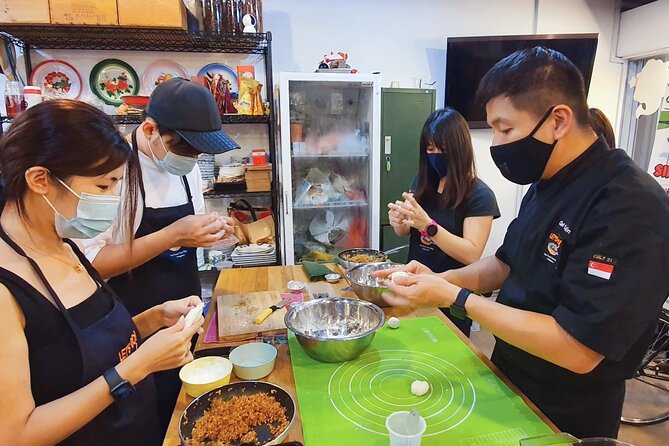
The class takes place in a small studio hidden inside a bicycle tour shop on Crawford Lane. That odd entrance adds a little local color, while the tidy kitchen, pastel pots, and wall mural make the working space cheerful and easy to use. You should also know that the advertised experience lasts about three hours, but the hands-on cooking portion is described as about 1.5 hours.
Key points to know before booking
- The kitchen sits inside a bicycle tour shop: You pass through the bicycle area before reaching the well-lit cooking studio.
- You prepare two or three dishes: Possible recipes include Hainanese chicken rice, ngoh hiang, Nyonya kueh dadar, Hokkien noodles, and Nyonya laksa.
- Chef Colin may not host every class: Colleagues lead the session when he is unavailable, and the menu may change with the host.
- Request your preferred dish in advance: Laksa and other specific recipes are not guaranteed unless you include the request while booking.
- The class is private: Only your own group participates, which makes it easier to ask questions and work at a comfortable pace.
- Lunch is part of the experience: After cooking, you eat the dishes with your host rather than simply leaving with a recipe sheet.
Peranakan food in a small Singapore kitchen
Peranakan cooking grew from the meeting of Chinese and Malay food traditions. It is not simply Chinese food with a few local ingredients added. The style has its own methods, flavors, and family recipes, and it helps explain why Singapore’s food culture feels so varied in such a small country.
This class gives you a useful introduction without turning the lesson into a lecture. Your host talks about the culture and history behind the dishes as you cook. That context matters. You learn not only what goes into a recipe, but also why the food belongs to Singapore’s story.
The focus is practical. You do not sit at a demonstration table while someone else handles every important step. The host shows you parts of the process, then gives you a chance to try the work yourself. That may include preparing ingredients, shaping food, mixing components, or following the steps needed to finish the dish.
The exact recipes depend on the day. A sample menu could include Hainanese chicken rice, ngoh hiang, and Nyonya kueh dadar. Other possibilities include Hokkien noodles or Nyonya laksa. The menu is based partly on seasonal ingredients, so you should treat those examples as possibilities rather than promises.
More Lavender Field Tours in Singapore:
- Nice: Gorges of Verdon and Fields of Lavender Tour
★ 4.5 · 2,707 reviews - Aix-en-Provence: Lavender Fields Visit
★ 4.1 · 421 reviews - Nice: Gorges of Verdon and Fields of Lavender Tour
★ 4.0 · 342 reviews
Finding the studio on Crawford Lane
The meeting point is on Crawford Lane, with the class beginning at 10:00 a.m. The cooking studio is located inside a bicycle tour shop, so do not expect a large sign announcing a cooking school from the street.
You pass through the bicycles before reaching the kitchen. It is an unusual setup, but the studio itself is described as well lit and carefully arranged. Pastel-colored pots and a mural give the room a warm, casual feel. This is not a grand culinary school with rows of stainless-steel workstations. It is a private working kitchen designed for a small group.
That setting suits the class. You get a more personal visit than you would in a large commercial cooking school, and the space keeps the focus on the food and conversation. The tradeoff is that the arrival may feel slightly confusing if you are expecting a separate storefront. Give yourself enough time to find the bicycle shop and enter through it.
The class ends back at the same meeting point. Hotel pickup and drop-off are not included, so you arrange your own way to Crawford Lane. The nearby Lavender MRT Station makes this part of Singapore reasonably convenient for visitors staying in the central area, though the supplied information identifies the meeting point by street rather than giving a precise station exit.
What happens during the cooking lesson
The full experience is listed at about three hours, while the hands-on Singapore cooking class is described as about 1.5 hours. The remaining time likely allows for introductions, cultural discussion, finishing the meal, and sitting down to eat, but the exact timing can vary.
At the start, your host introduces the dishes and the methods you will use. Colin is the main named host, and he has experience working in airlines, restaurants, and hotels. His approach is described as friendly and hands-on, with food history included along the way.
When Colin leads the session, you can expect plenty of opportunity to ask questions. He has been praised for giving useful cooking tips and for connecting traditional recipes with local culture. That combination is one of the strongest reasons to choose this class. You are not just following instructions from a recipe card. You are learning how the host thinks about the food.
If Colin is unavailable, Denise or another colleague may lead the class. The colleagues are described as equally passionate about food, but the experience can differ depending on who is present. If meeting Colin is important to you, understand that it is not guaranteed.
The cooking itself is designed for participation. The host demonstrates certain steps, then you repeat them. That arrangement works well for people who want to learn through their hands rather than watch a polished performance. It also means the final dishes may reflect your own work, not just the chef’s skill.
The possible dishes, from ngoh hiang to kueh dadar
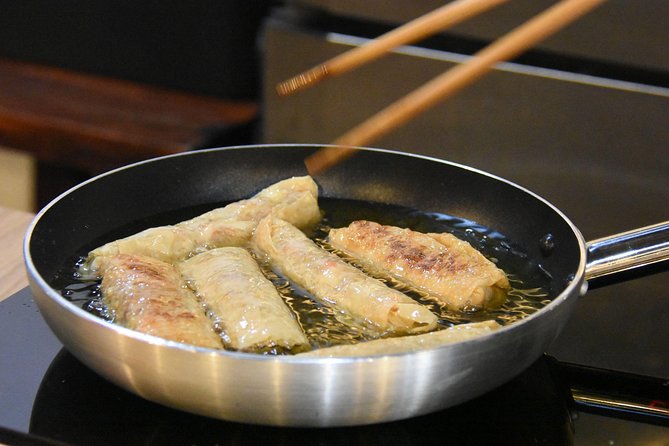
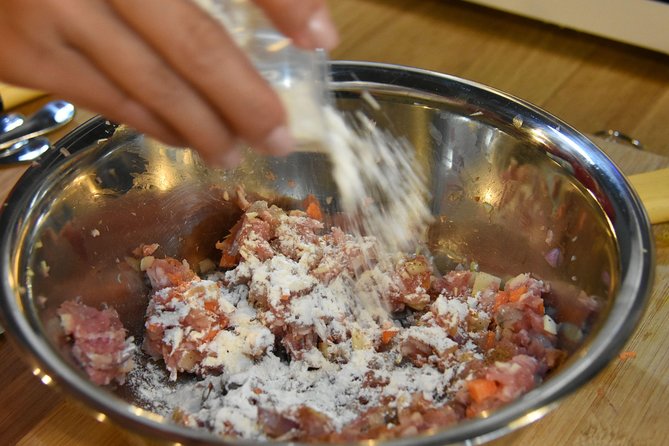
The sample dishes give you a good sense of the class’s range. Ngoh hiang combines minced meat and vegetables in a bean curd wrapper. It is a useful dish for a cooking lesson because it involves preparation, mixing, and shaping rather than a single simple cooking step.
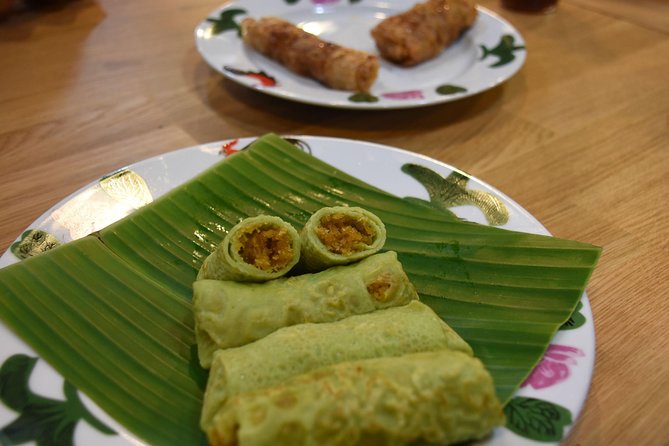
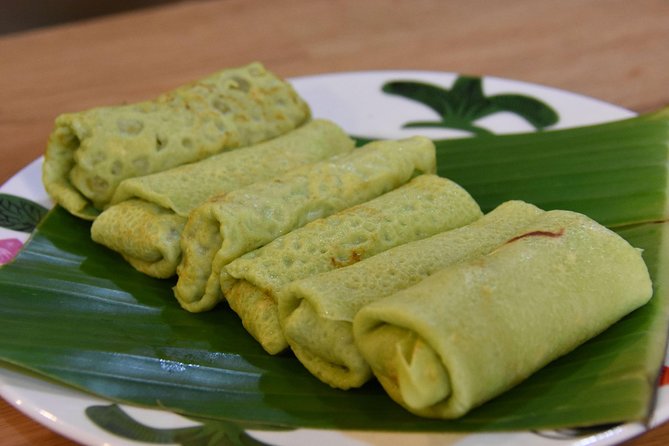
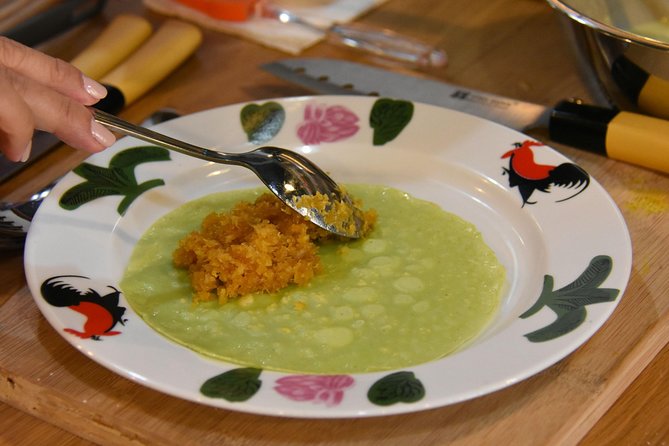
Nyonya kueh dadar takes the class in a sweeter direction. This pandan-flavored crepe is filled with freshly grated coconut. The contrast with a savory dish helps show how broad Peranakan cooking can be. You may work with fragrant pandan, coconut, and crepe-making techniques in the same class.
Hainanese chicken rice is another possible menu item. It is closely associated with Singapore’s food culture and gives you a chance to learn one of the country’s best-known comfort foods. Hokkien noodles may also appear, offering a different style of dish and another window into local cooking.
Nyonya laksa is the dish most likely to require advance planning. It may be offered, but it is not guaranteed as the standard menu. If you have your heart set on laksa, write the request in the booking form. The same advice applies to any other particular dish you want to prepare.
This is important because the host may otherwise select the menu based on the ingredients available that day. A seasonal menu can be a strength, since it keeps the cooking connected to what is fresh and practical. It can also disappoint someone who arrives expecting one exact recipe.
More Cooking Classes in Singapore:
- Chiang Mai: Cooking Class, Market & Thai Herbs Garden Tour
★ 4.9 · 4,824 reviews - We Cook Thai Home Garden Cooking School
★ 4.9 · 378 reviews - Anggrek Putih Lombok Cooking Class
★ 5.0 · 253 reviews - Thai Cooking Class with Market & Garden Tour
★ 4.9 · 249 reviews
Eating lunch with the host
After the cooking, you eat the dishes with your host for lunch. This is more satisfying than leaving with a few samples in a plastic container. You get time to taste the finished food, discuss what you made, and continue the conversation about Singaporean cuisine and culture.
The shared meal is also where the class feels most personal. One of the strongest comments about the experience described time to talk about local history in addition to cooking. That is the kind of detail that helps the class feel like a visit with a local food expert rather than a basic recipe lesson.
Do not expect a restaurant-style tasting menu. You are there to cook, and the dishes may look different depending on your group’s pace and experience. The point is to understand the work behind the food and enjoy the result with the person who guided you.
The class includes gratuities, so you do not need to calculate a tip at the end. Drinks and any extras are not specified, so I would not book this expecting a full restaurant service.
What the $128 price means
At $128 per person, this is not a budget food activity. The price makes more sense if you value a private lesson, a local host, a meal, and cultural conversation in one package.
You are paying for more than ingredients. The class is private, which means your group has the host’s attention instead of sharing the kitchen with a large crowd. You can also request a specific dish and ask questions as you work. For a couple or small group that wants a personal experience, those features add real value.
The price is harder to justify if you only want to eat Peranakan food. Singapore has many less expensive ways to sample local dishes. This class earns its cost through participation and access to a host who can explain the recipes and their place in local culture.
The experience is booked, on average, 39 days in advance. That suggests you should plan ahead, especially if you want a particular date or dish. Confirmation is sent within 48 hours of booking, subject to availability.
The cancellation policy is strict. The experience is non-refundable and cannot be changed for any reason. I would only book once your Singapore schedule is firm.
The Colin question and the menu warning
Two details deserve special attention before you pay. First, Colin is not guaranteed to teach every class. Colleagues take over when he is unavailable. The class can still be worthwhile, but you should not assume you are booking a private lesson with one specific chef unless the provider confirms that directly.
Second, the menu is flexible and seasonal. One person arrived expecting Colin and hoping to make laksa, then found that neither expectation matched the class. That disappointment could have been avoided by reading the host details carefully and placing the request in advance, though even a request may depend on availability.
This is not a reason to reject the class. It is a reason to book with clear expectations. If you care most about learning Peranakan cooking in a private kitchen, the changing host and menu may be acceptable. If you want one named chef and one exact recipe, contact the provider before booking or choose a more fixed-format class.
Vegetarian and gluten-free options are available on request. Include dietary needs when you book rather than raising them for the first time at the kitchen.
Who will enjoy this private class
I would recommend this experience to couples, families, and small groups who like to cook together. The private format is especially useful for people who prefer to ask simple questions without feeling self-conscious in front of a large class.
It also suits anyone who wants cultural context with a meal. The food is the main event, but the discussion of Singapore’s history and Peranakan traditions gives the recipes a wider meaning.
The class may not suit you if you want a fast, highly polished demonstration with a guaranteed menu. It is also not the best choice if your schedule is tight enough that a seasonal change or host substitution would ruin the plan.
People with dietary needs can request vegetarian or gluten-free dishes. Families should confirm whether the proposed recipes and cooking tasks suit their children, since no specific age information is provided.
Should you book the Peranakan cooking class?
Book it if you want to make and eat local food, not simply taste it. The private studio, direct coaching, cultural conversation, and shared lunch offer a personal look at Singapore’s food traditions. Colin’s friendly teaching style has been particularly well received, with practical tips and local food history adding value to the kitchen work.
Book with care if you have your heart set on Nyonya laksa or on meeting Colin. Put every request in the booking form, then remember that the host and menu can still vary. At $128, the class is best for people who value a small-group experience and are comfortable paying for the lesson as well as the meal.
For most food-focused visitors, I think it is a good choice, provided you arrive flexible and allow the full three-hour window.
FAQ
Where does the Peranakan cooking class meet?
The class meets on Crawford Lane in Singapore. The cooking studio is inside a bicycle tour shop, and you pass through the bicycle area before entering the kitchen.
What time does the class start?
The stated start time is 10:00 a.m.
How long does the experience last?
The overall experience lasts approximately three hours. The hands-on cooking portion is described as about 1.5 hours.
Which dishes will I cook?
The menu may include two or three dishes such as Hainanese chicken rice, ngoh hiang, Nyonya kueh dadar, Hokkien noodles, or Nyonya laksa. The menu is seasonal and may vary.
Can I request Nyonya laksa or another specific dish?
Yes. Include your request in the booking form when you reserve the class. The menu is not fixed, so a request does not mean the dish is guaranteed.
Will Colin teach every class?
No. Colin may be unavailable, in which case a colleague will conduct the cooking lesson. The menu may also vary when a different host leads the class.
Are dietary options available?
Vegetarian and gluten-free options are available on request. State your needs while booking.
Just added around Singapore
- Singapore Gardens by the Bay with Flower Dome and Cloud Forest★ 5.0 · 5 reviews
- Small Group Singapore Morning City Tour with Gardens By The Bay★ 4.5 · 46 reviews
- Singapore light to night : River Cruise & 02 Stunning Light Shows★ 5.0 · 33 reviews
- Singapore: Gardens by the Bay Admission E-Ticket★ 4.0 · 100 reviews
- Singapore River Cruise with Spectra & Garden Rhapsody Light Show★ 4.5 · 68 reviews
- Singapore OCBC Skyway Flower dome Cloud Forest Garden by the Bay★ 5.0 · 31 reviews
- Singapore River Cruise, Night Garden Rhapsody and Spectra Tour★ 4.5 · 14 reviews
- Admission E-Ticket to Gardens by the Bay Singapore★ 3.5 · 39 reviews
Lavender Field Tours, compared.

Gorges of Verdon and Fields of Lavender Tour
Read our review →

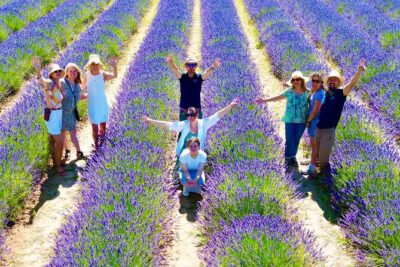
Provence Lavender Fields Tour from Aix-en-Provence
Read our review →

Browse the lists this tour appears in