

Review · ITALY
Guided visit to the Medieval Gardens of Ostuni
Ostuni’s best stories grow below the walls. This small-group visit to the Giardini della Grata leads you through medieval vegetable gardens, old irrigation channels, dry stone terraces, and rare Apulian crops that are still grown today. I like the direct connection to local food, and I like that the tour supports a real agricultural and social project rather than simply showing you another viewpoint. The main consideration is timing: the guided walk lasts 1.5 hours, while the tasting is planned for about an hour, so you should allow roughly 2.5 hours in total.
I also like the human touch. Guides Antonio and Deborah have been praised for their warmth and passion, and the visit can include freshly cut vegetables, explanations of seed saving, and a small gift of olive oil or tomatoes. The route is easy but uneven, with stone terraces and outdoor paths, so it is not suitable for wheelchair users or anyone who has trouble walking on rural ground.
Key points to know before you book
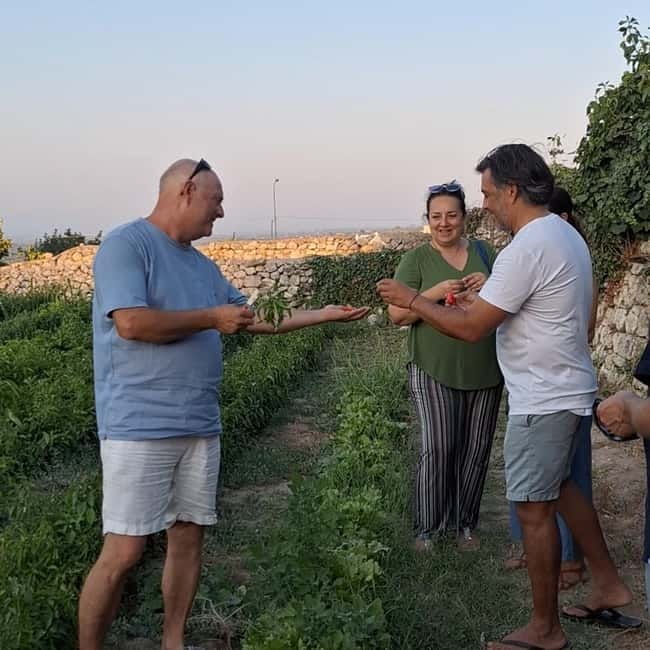
- Rare Ostuni vegetables: You may taste and learn about local varieties, including the distinctive violetta di Ostuni.
- A working garden, not a museum: The project uses organic and biodynamic methods and protects seeds suited to Apulia’s dry conditions.
- A hands-on visit: Tools and containers are provided so you can recognize and harvest vegetables.
- Food is part of the tour: The final tasting includes acquasale, seasonal produce, and a traditional hot dish.
- A different view of Ostuni: The garden provides a special panorama of the White City from below.
- Plan for outdoor conditions: Wear comfortable shoes, arrive 10 minutes early, and expect stone paths, shade, sun, and possible weather changes.
Why Ostuni’s gardens matter
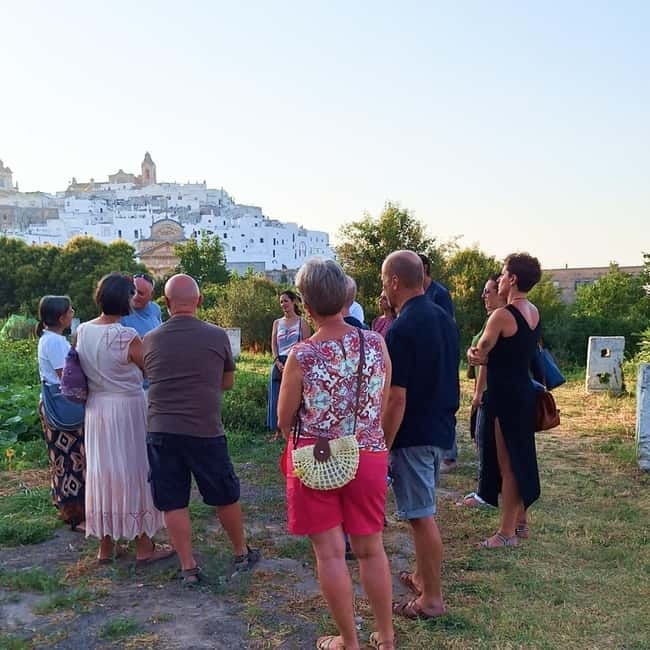
Ostuni is famous for its whitewashed hilltop center, but its old rural life is easy to miss. Below the town, the Giardini della Grata preserve a different side of the city: vegetable plots, wells, channels, stone walls, and practical farming methods shaped by limited water and hot summers.
That makes this visit useful for understanding how people lived around Ostuni, not just how the town looks from a postcard viewpoint. The gardens connect the city’s medieval past with a current effort to protect local crops and farming knowledge.
I find the focus on biodiversity especially worthwhile. The project is not simply growing vegetables for the table. It is also keeping regional varieties alive, including crops selected over generations because they can cope with dry weather. For you, that means the food tasting has a story behind it. A freshly cut vegetable is not just a snack. It is part of a wider effort to prevent local seeds and farming customs from disappearing.
More Garden Tours in Italy:
- Florence: Reserved Entry Ticket to the Boboli Gardens
★ 4.4 · 5,275 reviews - Rome: Borghese Gallery and Gardens Guided Small-Group Tour
★ 4.6 · 2,783 reviews - Rome: Borghese Gallery & Gardens Small Group Guided Tour
★ 4.5 · 2,190 reviews
Finding the green gate on Via Salvatore Tommasi
The meeting point is the entrance to the Giardini della Grata on Via Salvatore Tommasi. Look for the green gate in front of which the guide will wait. The entrance is within walking distance of central Ostuni and close to a paid parking lot.
I would not leave this until the last minute. Ostuni’s streets can be confusing, and the garden entrance is not described as a major landmark. Arrive 10 minutes before your booked time, as requested, and allow extra time if you are walking from the old town.
Transportation is not included. Parking is available nearby for a fee, but the walk from the center may be simpler if you are already sightseeing in Ostuni. Bring outdoor clothing and shoes with a good grip. This is a garden visit, not a polished city pavement stroll.
Walking the medieval terraces and old waterworks
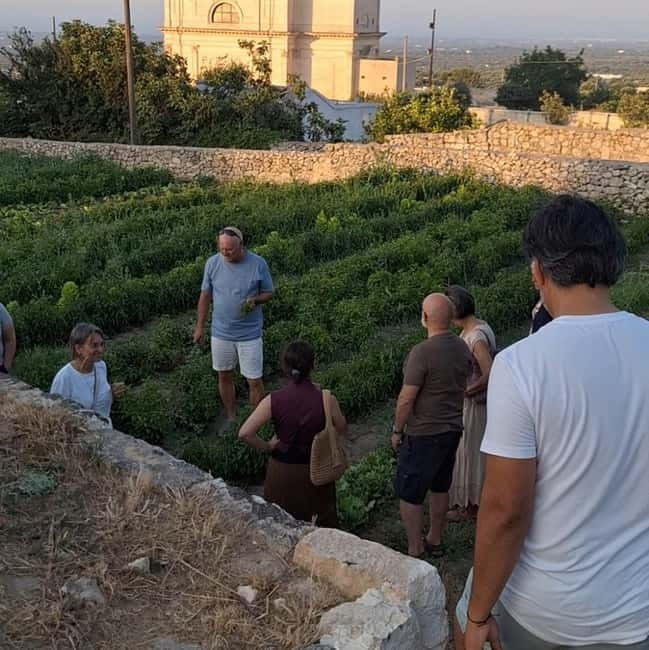
The first part of the experience is the guided walk through the gardens. You pass dry stone walls, terraces, canals, and wells cut into the rock. These features show how farming once worked here, with water directed and stored carefully rather than used freely.
The irrigation systems are one of the most interesting parts of the visit. In a dry part of Apulia, water management was not a minor detail. It shaped where crops could grow and how people organized their daily work. A guide can point out the old channels and explain how these structures served the gardens.
You will also hear about the social history connected to the site. The project has brought a neglected part of Ostuni back into use, giving the gardens a role in the local community again. That gives the visit more weight than a simple walk among plants. You are seeing a place being cared for in the present, while learning how it worked in the past.
The route is described as easy, but do not read that as fully accessible. Rural paths, stone terraces, and uneven ground can be difficult for anyone with reduced mobility. Wheelchair users should choose another activity.
Learning to recognize and harvest local vegetables
This is an interactive tour. The guide provides tools and containers for recognizing and harvesting vegetables, so you are not limited to looking over a wall or listening to a speech. The activity is suitable for adults and children, especially if your family enjoys food, plants, or practical experiences.
The rare regional varieties are the heart of the visit. The guides explain how seeds are chosen and saved, and how certain plants cope with the local climate. One especially distinctive crop is the violetta di Ostuni, a local variety that is difficult to understand from a restaurant menu alone. Seeing it in the soil and hearing why it matters gives the name real meaning.
Fresh samples may be offered during the walk. You might taste vegetables raw, shortly after they have been picked. This is a simple pleasure, but it also shows the difference between produce eaten at its source and produce that has spent days in storage or transit.
Guides Antonio and Deborah have been praised for making the experience warm and personal. Their family connection to the project helps explain why the tour feels more like a visit to a working place than a formal lecture. The best parts are likely to come through conversation: questions about seeds, farming, the gardens, and the future of local crops.
Same place, a different sort of green day out:
- Rome: Bioparco di Roma Zoological Garden Entry Ticket
★ 4.6 · 1,414 reviews - Florence: Pitti Palace and Boboli Gardens Ticket & eBook
★ 4.5 · 835 reviews - Caserta Royal Palace & Gardens Small Group Tour with Shuttle
★ 4.9 · 632 reviews - Florence: Pitti Palace, Boboli Garden, Palatine Gallery Tour
★ 4.9 · 558 reviews
The tasting: acquasale, seasonal produce, and a hot dish
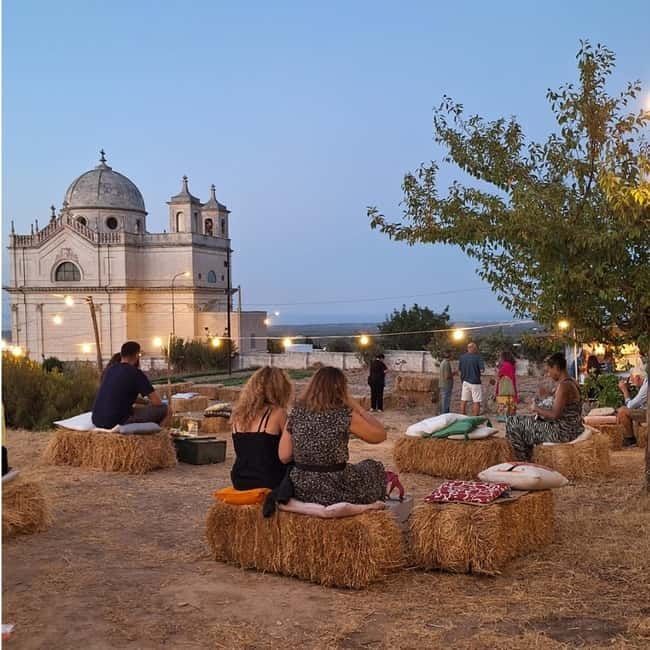
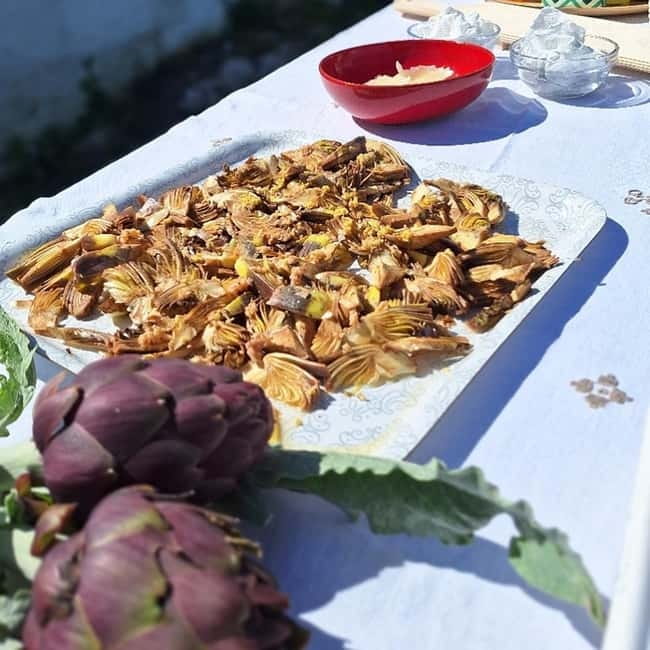
After the walk, you sit in a shaded area for a tasting of local products. The listed food includes acquasale, seasonal vegetables, and a traditional hot dish. The exact selection will depend on what is growing and available, which is fitting for a garden-based experience.
Acquasale is a simple Apulian preparation built around bread, water, vegetables, and local flavors. It reflects the practical cooking traditions of the region, where everyday food made good use of modest ingredients. The tasting is not presented as a large restaurant meal, so you should arrive expecting a generous sample of local food rather than a full lunch or dinner.
The shade matters in Apulia, particularly during warmer months. You get time to sit, taste, and take in the view without rushing straight back onto the path. Additional drinks are not included, so budget separately if you want anything beyond the included food.
Some evening experiences may offer a larger meal and wine for an additional charge. One particularly extensive version included vegetarian specialties prepared by a chef, local wine, and a marmalade tart served outdoors under the night sky. That extra arrangement is not part of the standard $83 price, so confirm what is included for your chosen time before you count on it.
The White City from a quieter angle
Ostuni’s old center is usually admired from its streets and viewpoints. Here, you see the town from the gardens below, with the white buildings rising above the rural terraces.
This viewpoint is not the only reason to book the visit, but it adds a visual payoff to the agricultural story. The panorama helps you understand the relationship between the city and the land that supported it. Bring a camera, but keep it secondary. The gardens, irrigation works, and crop varieties are the main attraction.
The setting also changes the pace of a day in Ostuni. After narrow lanes, shops, and busy piazzas, the garden offers open air and a slower rhythm. You are still close to the town, yet the experience feels separate from the usual sightseeing route.
What the $83 price includes

At $83 per person, this is not a cheap way to spend 90 minutes. It becomes more reasonable if you use the whole experience: the guided garden walk, hands-on harvesting, food tasting, panoramic viewpoint, small gift, and the chance to support the project that maintains the gardens.
The small take-home gift is either a 100 ml can of extra virgin olive oil or a cioppa of tomatoes. That is a modest item, but it gives you something tangible from the visit. More important is the access to a place and project you would not easily understand by walking around Ostuni alone.
The value is strongest for you if you care about food, local farming, sustainability, or less familiar sides of popular towns. If your main goal is a long historical tour of Ostuni’s churches and palaces, this will not replace a city walk. It covers one focused subject and does so through plants, food, and place.
Remember that the advertised headline duration is 1.5 hours, while the schedule also allows one hour for the tasting. I would reserve about 2.5 hours, especially if you want time to ask questions and enjoy the food without hurrying.
Who will enjoy this experience most
I would recommend the visit to:
- Couples who want a quiet activity outside the busiest old-town streets
- Families with children interested in growing and tasting food
- Small groups looking for a local project rather than a standard monument tour
- Food-focused visitors who want context for Apulian ingredients
- Garden lovers and anyone curious about dry-climate farming
- People staying in Ostuni who have already seen the main churches and streets
It is less suitable if you dislike outdoor walking, uneven paths, or food-based activities. It is also not the right choice for a fully accessible outing.
The experience is offered in English, French, and Italian. Some content may be presented in its original language, so English speakers should confirm the language arrangement when booking if that matters to you.
Weather, timing, and practical planning
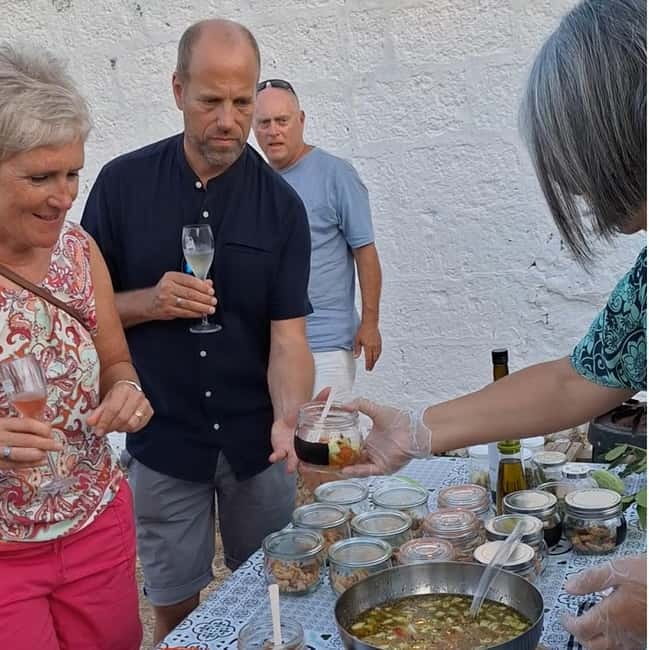
The tour takes place outdoors among vegetable beds and stone terraces. Wear comfortable shoes and clothing suited to the weather. A hat, water, and sun protection are sensible additions, although only shoes and outdoor clothing are specifically required.
Rain can change the plan. The visit may be rescheduled or converted into an alternative version, with follow-up communication by WhatsApp or email. Keep an eye on those messages before setting out.
The tour has received an overall rating of 4.4 from nine ratings, with most scores giving full marks for the warmth of the guides, the rare vegetables, and the personal nature of the visit. There has also been a serious service problem: one booked participant arrived, but the guide did not appear, and a refund was promised. That appears to be an isolated failure rather than the main pattern, but it is a fair reason to keep your booking messages and check for confirmation on the day.
Free cancellation is available up to 24 hours before the visit, and you can reserve now and pay later. Those options help if your Ostuni schedule depends on weather or changing day plans.
Should you book the Giardini della Grata visit?
I would book this if you want to understand Ostuni through food, farming, and local effort rather than monuments alone. The rare vegetables, old water systems, personal guiding, tasting, and view work well together, and the small gift adds a pleasant final touch.
At $83, it is a considered purchase, not an automatic bargain. You get the best value when you stay for the full tasting and take time to ask questions. Confirm the start time, language, and tasting details, arrive early at the green gate, and allow around 2.5 hours if the full food portion is included.
Skip it if you need wheelchair access, want a conventional sightseeing tour, or have only a short window in Ostuni. Choose it if you are curious about how Apulia grows food, saves seeds, and keeps old rural practices alive. That is where this experience earns its price.
FAQ
Where does the tour start?
It starts at Bio Solequo Coop, at the entrance to the Giardini della Grata on Via Salvatore Tommasi in Ostuni. The guide waits in front of the green gate.
How long does the experience take?
The guided garden walk lasts 1.5 hours. The schedule also includes about one hour for the food tasting, so you should allow roughly 2.5 hours in total.
What food is included?
The tasting includes acquasale, seasonal vegetables, and a traditional hot dish. Additional drinks are not included.
Is the tour offered in English?
Yes. The experience is available in English, French, and Italian. Some content may be presented in its original language.
Is transportation included?
No. You must make your own way to the gardens. The entrance is within walking distance of central Ostuni, and paid parking is available nearby.
What should I wear?
Wear comfortable shoes and outdoor clothing. The route passes through rural gardens, stone terraces, and outdoor areas.
Is the tour suitable for wheelchair users?
No. The rural route and stone terraces are not suitable for wheelchair users.
What happens if it rains?
The tour may be rescheduled or changed to an alternative version. The organizers may contact you through WhatsApp or email after booking.
Can I cancel for a refund?
Yes. You can cancel up to 24 hours in advance for a full refund. You can also reserve now and pay later.
Just added around Italy
- Lake Maggiore Gourmet: Gardens, Lake Cruise, & Food Tasting★ 4.5 · 19 reviews
- Venice: Convent Garden of Redentore Entry Ticket★ 4.3 · 5 reviews
- Vatican Gardens & Castel Sant’Angelo Skip-the-line tickets★ 4.3 · 20 reviews
- Vatican: Gardens, Museums and Sistine Chapel Guided Tour★ 4.2 · 98 reviews
- Valley of the Temples: Kolymbethra Garden Entry Ticket★ 3.5 · 43 reviews
- Varenna: Villa Cipressi Gardens Entry Ticket on Lake Como★ 4.6 · 39 reviews
- Typical Apulian menù in the garden of an ancient Trullo★ 5.0 · 11 reviews
- Secret gardens of Venice in the Dorsoduro district with Cichetti tasting★ 3.0 · 2 reviews
Italy Garden Tours, compared.


Borghese Gallery and Gardens Guided Small-Group Tour
Read our review →
Borghese Gallery & Gardens Small Group Guided Tour
Read our review →
Bioparco di Roma Zoological Garden Entry Ticket
Read our review →

Caserta Royal Palace & Gardens Small Group Tour with Shuttle
Read our review →
Pitti Palace, Boboli Garden, Palatine Gallery Tour
Read our review →
Tremezzina: Villa Carlotta Museum and Garden Entry Ticket
Read our review →Browse the lists this tour appears in