
Review · FLORENCE
Florence: Boboli The Medici Gardens & Hidden Messages
Florence reveals itself from above. This 90-minute guided walk through the Boboli Gardens combines Medici power, sculpture, fountains, woodland paths, and a fine view over the city. I like the way the tour explains the meanings behind the statues and garden design, and I like that skip-the-line admission is included. The main drawback is that Boboli covers several kilometers of paths and slopes, so you need comfortable shoes and a willingness to keep walking.
A guide makes a real difference here. Without context, Boboli can look like a pleasant old park with scattered statues. With a good guide, Hercules, Demeter, Tyndareus, Neptune, the Secret Garden, and the Tunnel of Love become parts of a larger story about the Medici family and the people who shaped Florence. Guides including Alessandra, Guido, Ivano, and Anna Maria have received especially warm praise for their clear explanations and personal approach.
Key points to know before booking
- The tour begins at Pitti Palace: Meet at the main entrance, on the Oltrarno side of Florence.
- The gardens are built around allegory: Statues and fountains represent gods, heroes, virtues, power, and desire.
- Skip-the-line entry is included: You do not need to arrange a separate Boboli Gardens ticket.
- The upper terraces bring the best city view: The walk climbs toward a broad panorama of Florence.
- The experience lasts 1.5 hours: One past outing lasted closer to two hours, so avoid scheduling a tight appointment afterward.
- It suits families and nature lovers: It also works well for couples, though the walking and uneven ground matter.
Starting at Pitti Palace in Florence
Your meeting point is the main entrance to Pitti Palace. This is a useful starting place because Boboli was created as the palace garden of the Medici family, not as a separate public park. The palace gives you an immediate sense of scale and status before you even reach the greenery.
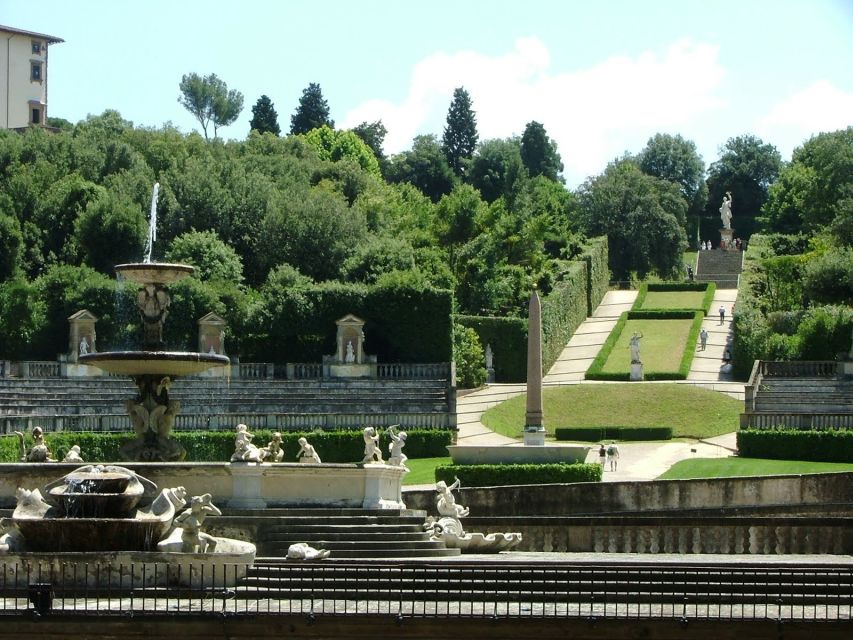
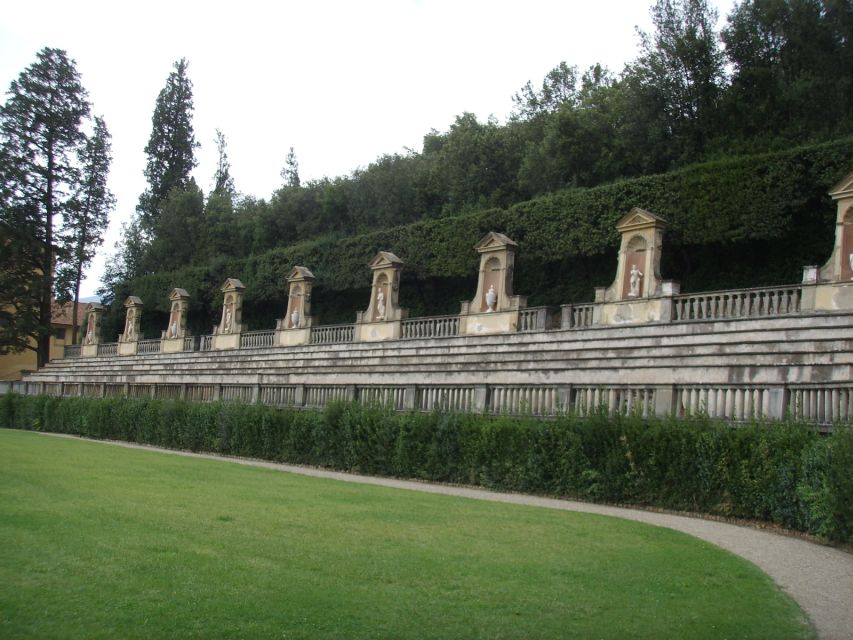
Cosimo I de’ Medici commissioned the gardens in 1562. Over time, Boboli grew into a model for European royal gardens. Its design uses terraces, long paths, sculpture, fountains, grottoes, and carefully arranged views. The goal was not simply to create a pretty place for a stroll. The garden expressed authority, learning, taste, and control over nature.
That context is important. You are not walking through a single-period garden with one fixed style. Artists from ancient Roman times through the modern era contributed to the collection. The result is a place where classical mythology, Medici ambition, Italian garden design, and later additions overlap.
The guide leads the walk in English or Italian. Since the tour is focused on Boboli rather than the palace interiors, remember that your admission does not include the Palatine Gallery or any other museum inside Pitti Palace. If you want to see the palace collections, plan that as a separate visit.
More Palace and Castle Gardens in Florence
- Florence: Pitti Palace and Boboli Gardens Ticket & eBook
★ 4.5 · 835 reviews - Florence: Pitti Palace, Boboli Garden, Palatine Gallery Tour
★ 4.9 · 558 reviews - Pitti Palace, Boboli Garden & Palatina Gallery Guided Tour
★ 5.0 · 264 reviews
Why Boboli makes more sense with a guide
Boboli is full of objects that can look decorative at first glance. A statue of Hercules may seem like one more classical figure. A fountain may appear to be a grand piece of plumbing. The guide gives you the stories that turn these details into a visual language.
This is the central idea behind the tour’s title. The garden contains messages that are not written out in a guidebook on the path. Gods and heroes represent ideas about strength, fertility, loyalty, love, military success, and royal authority. The Medici family used art to show how it wanted to be seen.
I especially like this approach for first-time visitors. You do not need a background in Renaissance art or Italian politics. The guide points out what matters, explains who the figures are, and links the objects to the larger story of Florence.
Past visitors have praised guides such as Alessandra, Guido, Ivano, and Anna Maria. Alessandra was described as warm as well as highly informed, while Guido was praised for taking the group to the most interesting and beautiful parts of the garden. Ivano’s tour made the Medici family and the connection between Pitti Palace and Boboli easier to understand, even in unpleasant weather.
That personal guiding matters because the garden is large. A guide helps you spend your limited time on the best-known sights instead of wandering without a plan.
Hercules, Demeter, and Tyndareus
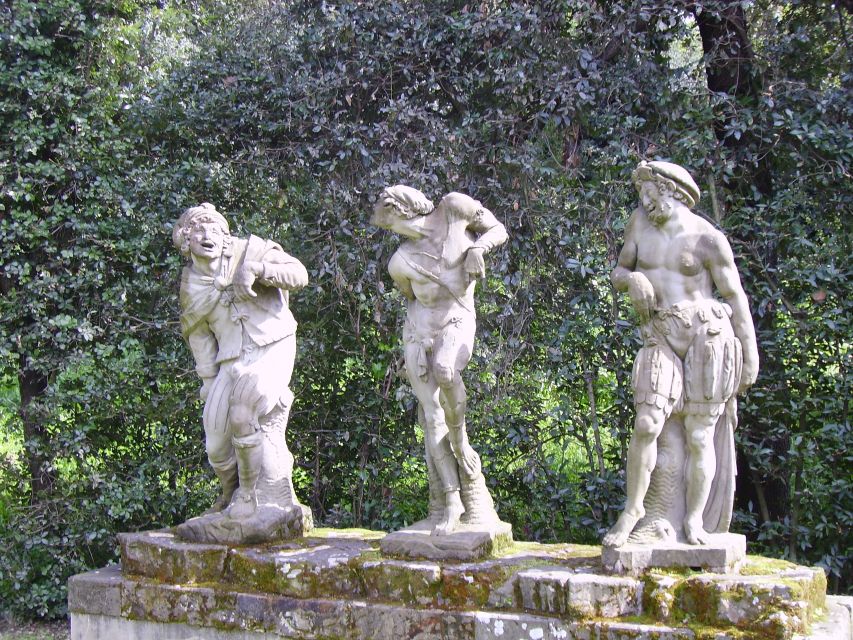
The sculptures provide some of the tour’s strongest historical and mythological moments. Hercules is a natural fit for a royal garden. His strength and victories offered a visual language of power, endurance, and triumph.
Demeter brings a different message. As a figure associated with agriculture and fertility, she connects the garden to the natural world. Boboli is not only about political display. Its plants, trees, terraces, and fountains also create a setting where fertility, seasonal change, and human control over nature are always in view.
The Spartan King Tyndareus adds another layer. You are seeing figures drawn from different stories and traditions, placed together in a setting designed to stimulate the mind as much as the eye. That mixture is part of the pleasure of Boboli. It is not a simple line from ancient Rome to the Medici period. It is a conversation between old myths and later political ideas.
Your guide should help you notice how the sculptures relate to their surroundings. A statue placed beside a path, fountain, terrace, or grotto was not positioned at random. The setting affects how you read the figure.
Fountains that turn water into theater
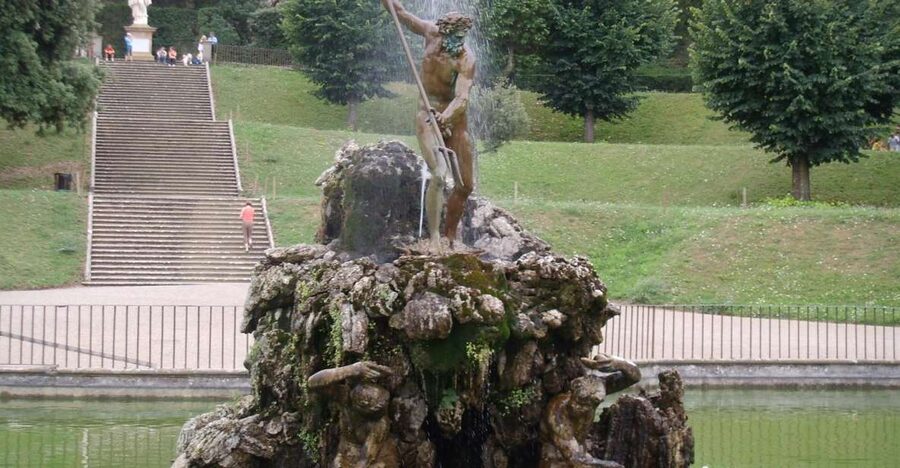
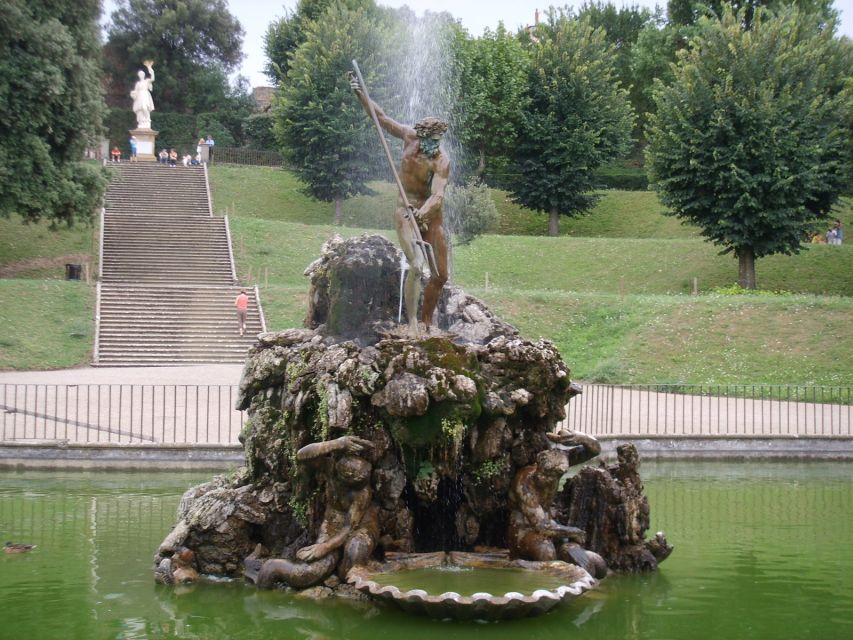
The Fountain of the Artichoke and the Fountain of Neptune are among the named highlights. These fountains show how water became part of the garden’s performance.
The Fountain of the Artichoke has a playful name and decorative character. It belongs to the tradition of turning useful water systems into visual spectacles. The Fountain of Neptune carries a more classical tone, tying the garden to Roman mythology and the power of the sea.
You will see more than water flowing through stone. You will see how the Medici used fountains to make the garden feel controlled, ordered, and theatrical. Water moves through a place full of clipped greenery, terraces, sculpture, and paths. The effect is both natural and carefully planned.
Do not expect every fountain to look perfect at every moment. Boboli is an historic garden exposed to weather, seasons, and constant foot traffic. One critical account found the grounds less carefully maintained than expected. That is a fair point to keep in mind. The appeal is the overall design, the art, and the setting, not the flawless condition of every planted area.
More Palace and Castle Gardens in Italy
- Florence: Pitti Palace and Boboli Gardens Walking Tour
★ 4.6 · 182 reviews - Florence: Museum Pass–David, Uffizi, Pitti Palace & Gardens
★ 4.2 · 134 reviews - Timed Entry Ticket to Pitti Palace and Boboli Gardens in Florence
★ 3.5 · 118 reviews - Florence: Boboli Gardens Guided Tour
★ 4.5 · 69 reviews
The Secret Garden and Tunnel of Love
The Secret Garden is one of the more intriguing stops because the name itself suggests privacy and symbolism. In a court garden, secluded areas could offer a quieter retreat from the grand public routes. Your guide can explain how such spaces fit into the life and image of the Medici court.
The Tunnel of Love adds a romantic note. It is a good reason for couples to choose this walk, but you do not need to be on a romantic trip to enjoy it. The appeal lies in the contrast between the formal garden and the more intimate spaces hidden among the paths and vegetation.
These areas also show why you should not judge Boboli from the entrance alone. The first views near Pitti Palace give you architecture and scale. Deeper into the garden, the mood changes. You move among trees, sculptures, fountains, and enclosed spaces where the garden feels less like a palace forecourt and more like a world built for stories.
The exact experience can depend on weather and the garden’s condition. On a rainy day, paths may feel less comfortable, and the garden may look more subdued. Still, one past tour continued through poor weather and remained enjoyable because the guide kept the focus on the art, history, and people connected with the site.
Climbing toward Florence’s best Boboli view
The tour goes toward the top of the gardens, where you can look across Florence. This is one of the clearest practical reasons to choose a guided visit rather than simply entering and wandering.
Boboli rises above the palace, so the walk is not flat. The upper areas reward the effort with a broad view of the city. You can pause there and understand how the gardens relate to Pitti Palace, the surrounding Oltrarno district, and Florence beyond.
The panorama also explains why Boboli was such a powerful setting for the Medici. From above, the garden is not just a collection of paths and monuments. It becomes part of a larger view that links palace, city, hills, and territory.
For you, the view provides a natural high point near the end of the tour. It is also a useful place for photographs. Still, I would not book this experience if you want a completely easy stroll. The garden includes slopes, uneven surfaces, and several kilometers of routes. The tour is only 1.5 hours, but it is active time.
What the $93 price includes
At $93 per person, this is not a bargain admission ticket. You are paying for three things: entry, a skip-the-line ticket, and a live guide in English or Italian.
The value depends on how much you want from Boboli. If you only want to walk through greenery and see a few fountains, entering on your own may be enough. If you want to understand why the statues are there, how the garden served the Medici, and how mythology shaped the design, the guide adds much more than simple directions.
Skip-the-line access also matters in Florence, where popular sights can consume time before you even enter. The exact benefit can vary with crowd levels, but having admission arranged removes one task from your day.
I would consider the price easier to justify if Boboli is a major part of your Florence plans and you are unlikely to return. It is less compelling if you already know the garden well or mainly want a quiet, unstructured walk.
The booking terms add flexibility. You can reserve now and pay later, and cancellation is allowed up to 24 hours before the activity for a full refund. That is helpful when your Florence schedule depends on weather, museum reservations, or arrival times.
How to prepare for the 90-minute walk
Wear comfortable shoes. This advice is not filler. Boboli includes slopes, paths, and several kilometers of garden routes, so footwear will affect your enjoyment.
Bring a passport or identity card, as this is listed among the required items. Leave large bags and luggage elsewhere, since they are not allowed. Pets and smoking are also not permitted.
The tour is described as green and eco-friendly, with walking as its main activity. No transport is included or needed for the garden itself. You meet at Pitti Palace and continue on foot.
The stated duration is 1.5 hours. One account described a particularly enjoyable visit lasting two hours, so I would leave some space around the booking in case the guide spends extra time explaining the gardens or weather changes the pace. Do not schedule a train, museum entry, or meal reservation immediately afterward.
Who will enjoy Boboli Gardens most
I would recommend this tour to you if you enjoy outdoor sights but want more than a simple stroll. The combination of plants, fountains, sculpture, myths, and Florence views gives the garden several points of interest.
Families can find plenty to discuss, especially with the gods, heroes, grottoes, and Tunnel of Love. The tour is also a good match for nature lovers who want a cultural layer added to the greenery.
Couples may enjoy the secluded areas and the panorama, while art lovers will appreciate the connection between sculpture and garden design. First-time visitors to Florence benefit most because the guide helps place Boboli within the Medici story.
I would be more cautious if you dislike walking, uneven ground, or outdoor sightseeing in uncertain weather. The garden is not a compact indoor museum where every object is close to the entrance. Its scale is part of the attraction, but it also asks more from your legs.
The Anna Maria Luisa connection
One especially meaningful detail is the role of Anna Maria Luisa de’ Medici. She helped ensure that the Medici collections and properties remained accessible to the public rather than being scattered elsewhere.
That decision gives Boboli added importance. You are not only seeing a former family garden. You are seeing part of the cultural inheritance that remained connected to Florence. A guide can make this point feel personal and political at once: the garden reflects private wealth, but its survival also depends on a decision to preserve it for future generations.
This is one reason I prefer seeing Boboli with a guide. The physical garden is easy to admire. The questions around ownership, preservation, taste, and public access are harder to notice on your own.
Should you book the Boboli Gardens tour?
Book it if you want the Medici garden explained rather than simply photographed. The tour’s best features are the guide’s storytelling, the mythological sculptures, the fountains, the quiet garden spaces, and the view across Florence.
The $93 price is reasonable for you if skip-the-line admission and a focused English or Italian walking tour save time and add meaning. It is less convincing for an experienced Boboli visitor who prefers exploring alone.
Go prepared for slopes, outdoor conditions, and a brisk 90-minute route. If you do that, this is a strong choice for families, couples, art lovers, and anyone who wants to see a different side of Florence beyond its crowded central streets.
FAQ
Where does the Boboli Gardens tour meet?
The meeting point is the main entrance to Pitti Palace.
How long does the tour last?
The stated duration is 1.5 hours. One past visit lasted about two hours, so allowing extra time afterward is sensible.
What languages are available?
The live guide is available in English or Italian.
Does the price include admission to Boboli Gardens?
Yes. Entrance fees with skip-the-line tickets are included.
Does the tour include the Palatine Gallery?
No. Tickets to the Palatine Gallery and other museums inside Pitti Palace are not included.
What should I bring?
Bring a passport or identity card and wear comfortable shoes.
Can I bring luggage or a large bag?
No. Luggage and large bags are not allowed.
Can I cancel the booking?
Yes. You can cancel up to 24 hours in advance for a full refund. You can also reserve now and pay later.
Just added around Florence
- Timed Entry Ticket to Pitti Palace and Boboli Gardens in Florence★ 3.5 · 118 reviews
- Timed Entry Ticket to the Boboli Gardens★ 3.5 · 50 reviews
- Pitti Palace and Boboli Gardens Private Tour★ 4.5 · 38 reviews
- Market Tour & Traditional Tuscan cooking class in a garden★ 5.0 · 4 reviews
- Private Tour of Pitti Palace with Boboli Garden★ 5.0 · 28 reviews
- Florence Cooking Class with Wine Pairing in Mirella’s Garden Home★ 5.0 · 29 reviews
- Pitti Palace – Private Tour At Galleria Palatina Incl. Tkts To Boboli Gardens★ 4.5 · 7 reviews
- Palazzo Vecchio, Palazzo Pitti and Boboli gardens private tour★ 5.0 · 18 reviews
Palace and Castle Gardens, compared.

Versailles Palace and Gardens Full Access Ticket
Read our review →
Skip-the-Line Tour of Palace and Gardens Access
Read our review →
Alhambra & Gardens Tour w/Nasrid Palaces Option
Read our review →
Versailles Palace & Gardens with Transportation
Read our review →

Versailles Palace Guided Tour & Gardens Access
Read our review →
Versailles Palace and Gardens Tour from Paris
Read our review →
Versailles Full Day Bike Tour with Palace, Gardens, & Picnic
Read our review →Browse the lists this tour appears in