
Review · INDONESIA
Spice Garden, Jamu & Cooking Class in Bali Village
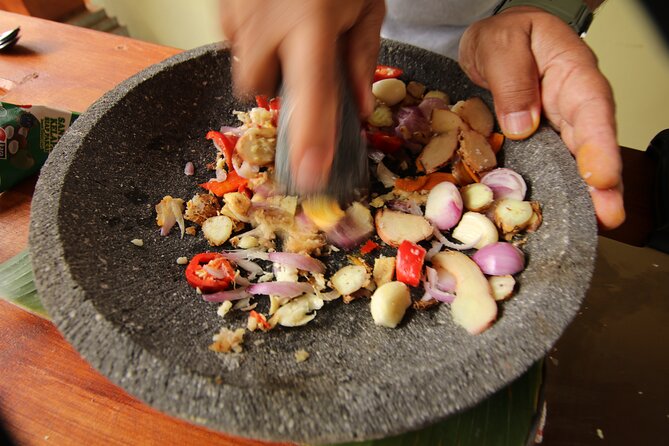
Bali tastes better when you help make lunch. This four-and-a-half-hour experience near Mt. Batukaru combines a spice garden walk, Jamu making, bamboo-fire cooking, and a visit to a real mountain village. I especially like the chance to pick herbs with local farmers and cook dishes such as Sate Lilit and Lak Lak in an open-air kitchen. I also like that the money supports families from the surrounding village rather than offering a polished show built only for visitors. The main consideration is the meeting point in Mengesta, Tabanan, so you need to arrange your own way there unless your booking includes a separate transport plan.
You begin at 9:00 a.m. and return to the same meeting point. The group can have up to 12 people, which should keep the cooking fairly personal without making the day feel like a private tour. Just bring a respectful attitude, suitable clothing, and a healthy appetite. The meal is generous, and one past participant wisely warned that you should arrive hungry.
What Makes This Experience Special
- Herbs picked from the garden: You learn about ingredients where they grow, not only from a cutting board.
- Two Jamu drinks made by hand: The class connects ancient herbal traditions with fruit tasting and everyday Balinese wellness.
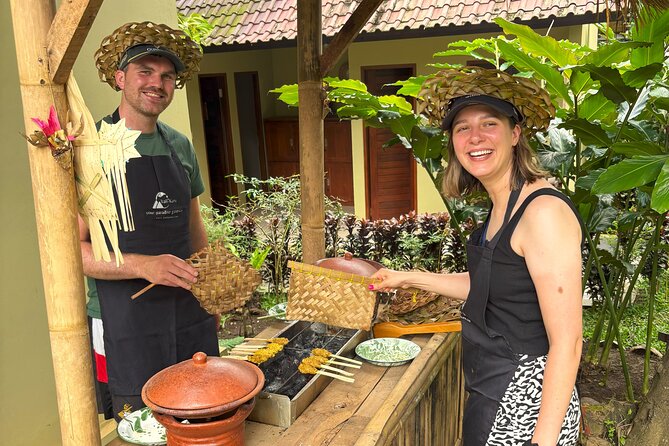
- Cooking over bamboo and clay: Sate Lilit is grilled at the live bamboo Gerobak, while Lak Lak is cooked in a clay pot.
- A real village setting: Rice terraces, farmers, a Balinese compound, animals, and family-run spaces give the day a local focus.
- More than a meal: You can play the Rindik, help plant rice, feed the cow Manis, and see Trigona stingless-bee hives.
- A small-group format: With a maximum of 12 people, you should have room to ask questions and take part rather than watch from the side.
Arriving Near Mt. Batukaru at 9:00 a.m.
The experience starts at BalikaruBelulang Bali in Mengesta, in the Tabanan region. This is not a central Kuta or Seminyak pickup point. The exact meeting address is BalikaruBelulang Bali, Mengesta, Penebel, Belulang, Bali 80152.
That detail matters. The booking information gives a start and end point, but it does not list hotel pickup. You should plan your route to the meeting point before the morning of the class. A mobile ticket is provided, and confirmation arrives when you book.
The setting is part of the appeal. You are not cooking in a city restaurant or a purpose-built classroom. You enter a mountain village near Mt. Batukaru, where the day follows the pace of gardens, farms, family compounds, and outdoor work.
You receive a welcome drink before the activities begin. It is a small touch, but it sets the tone: this is designed as a hosted visit rather than a quick lesson followed by lunch.
More Spice and Herb Gardens in Indonesia:
- Ella : Cooking class with amazing Spice Garden Tour
★ 5.0 · 239 reviews - Alcamo Farm Animals and Aromatic Garden
★ 4.0 · 45 reviews - Day Tour to Elephant Orphanage / spice garden
★ 5.0 · 20 reviews
Walking Through the Spice and Herb Garden
The garden tour gives you a useful start because it puts the ingredients in context. You can walk among the herbs and spices, meet farmers, and pick fresh plants for the cooking session.
I like this part because it helps you understand Balinese food as a system of fresh ingredients rather than a list of recipes. A spice that seems mysterious in a restaurant becomes easier to recognize once you have seen it growing and handled it yourself.
The pace should suit people who want to learn by doing. You are not only told what goes into a dish. You get to see the plants, hear about their use, and connect them with the food you later prepare.
There is also a short soft trek of about 30 minutes downhill with mountain views. The word downhill is worth noting. The walk is not presented as a demanding hike, but comfortable shoes still make sense. The route adds fresh air and scenery to the morning, though anyone with mobility concerns should ask for more details before booking.
Learning the Rindik Before Cooking
Before the food preparation, you learn to play the Rindik, a traditional bamboo instrument associated with farmers. This is a pleasant change of pace from the garden and kitchen.
You will not need to arrive with musical experience. The value is in trying an everyday cultural object and hearing its sound in the place where it belongs. It also gives the group a relaxed way to get to know the local hosts before the cooking begins.
This is one of the details that separates the experience from a standard cooking lesson. You are not simply moved from one food station to another. The class makes room for music, farming, plants, and conversation.
Making Two Kinds of Jamu
Jamu is an Indonesian herbal drink with a long place in daily life. Here, you prepare two kinds of Jamu and take part in fruit tasting.
The experience describes Jamu as a healthy herbal drink, but it is best to think of the class as a cultural and practical introduction rather than a medical treatment. You learn how the drinks are made and how herbs and fruit can be used in familiar household ways.
The fruit tasting is another welcome feature. A past participant specifically enjoyed trying mangosteen and another Balinese fruit on arrival. The second fruit was not identified, so the exact tasting selection may vary.
I would pay attention during this section if you enjoy bringing food ideas home. The recipe book sent by email after the class gives you a chance to repeat some of the preparation later, although the supplied details do not specify every recipe included.
More Cooking Classes in Indonesia:
- Anggrek Putih Lombok Cooking Class
★ 5.0 · 253 reviews - Balinese Vegan Cooking Class with Fresh Harvesting & Garden Tour
★ 5.0 · 86 reviews - From Garden to Table: Indonesian Cooking Class in Yogyakarta
★ 4.9 · 24 reviews - Chiang Mai: Cooking Class, Market & Thai Herbs Garden Tour
★ 4.9 · 4,824 reviews
Cooking Lunch in Paon Bali
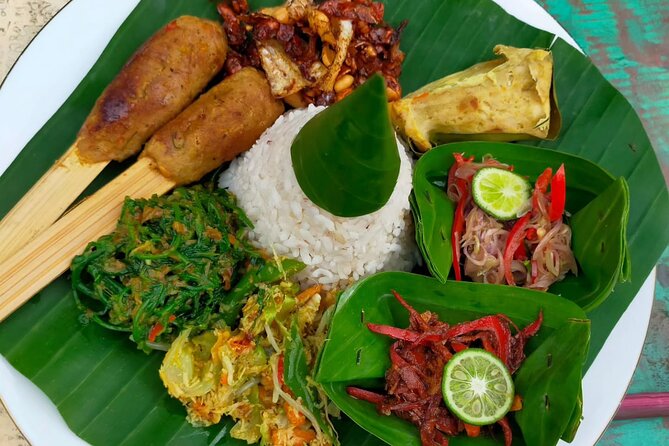
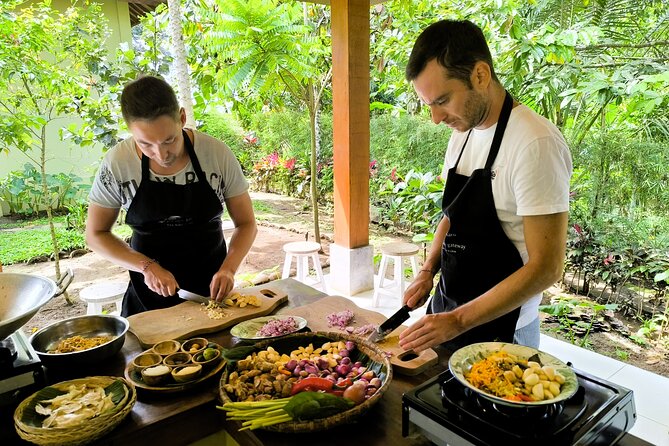
The main class takes place in Paon Bali, an open-air kitchen guided by the chef. You prepare a full Balinese meal and later eat what you have made.
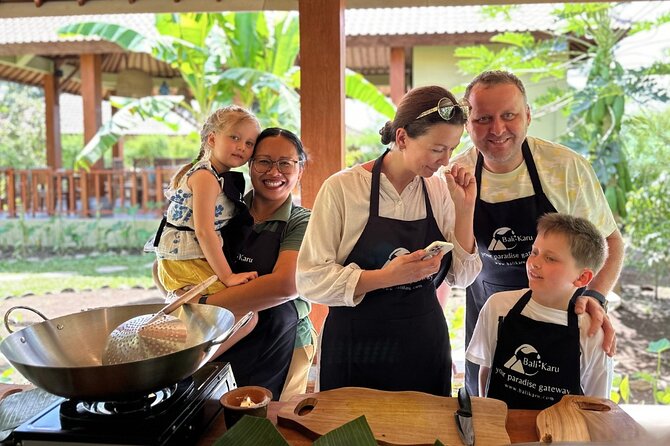
The open-air design fits the setting. Cooking beside nature, with family members nearby and the sounds of the village around you, feels less formal than a restaurant kitchen. It also makes the class social. The tone described by the host responses is warm and playful, with plenty of support while you work.
The meal includes Nasi Campur Tumpeng and dessert. Nasi Campur is a mixed rice meal with several accompaniments, while the Tumpeng presentation traditionally gives the rice a special shape and place on the plate. The information provided does not list every side dish, so you should not expect a fixed restaurant menu with each item announced in advance.
You also prepare Sate Lilit. This Balinese specialty is grilled at Gerobak, the live bamboo grill. Cooking it over an open fire gives the lesson a hands-on feel that a modern indoor stove cannot match.
Dessert is Lak Lak, a traditional Balinese treat cooked in a clay pot. Having a dessert included is useful because the meal feels like a complete introduction to Balinese home cooking, not just a lesson in one famous dish.
The portions appear generous. If you enjoy tasting everything, you will want to save room. The class is built around eating your own lunch, so this is not a tiny demonstration plate.
Visiting the Farm, Animals, and Stingless Bees
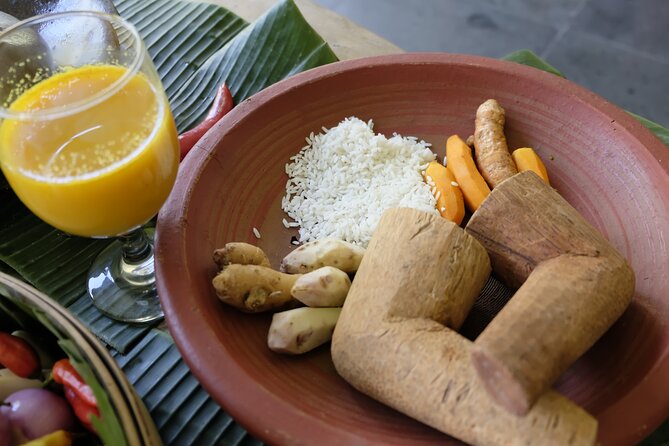
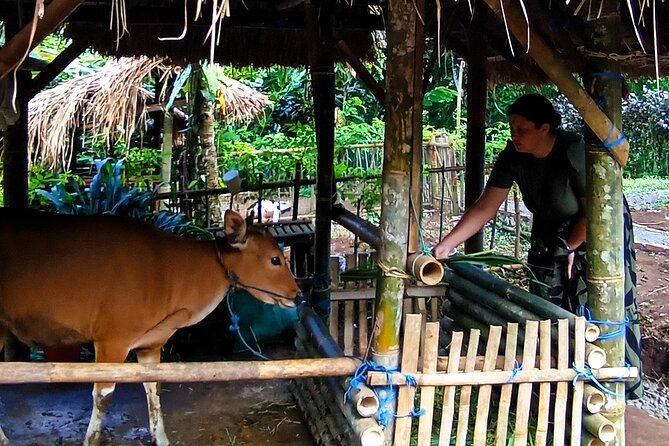
After lunch, you visit the Balikaru farm. The visit includes animals and Trigona beehives, home to stingless bees known for their unusual honey.
This section gives the day a wider purpose. Food is not treated as something that begins in the kitchen. You see part of the farm setting that supports the local way of life and learn about a type of bee many people have never encountered.
You may also feed the cow Manis. The experience includes the chance to help with rice planting, too. These activities are optional parts of the day, so the exact amount of time you spend on them may depend on conditions and the group.
Planting rice is particularly useful for visitors who have only seen Bali’s terraces from a road or viewpoint. It gives you a small sense of the physical work behind the scenery. Do not expect to become a farmer in one afternoon, but the activity can make those terraces feel less like a postcard and more like working land.
Entering an Authentic Balinese Compound
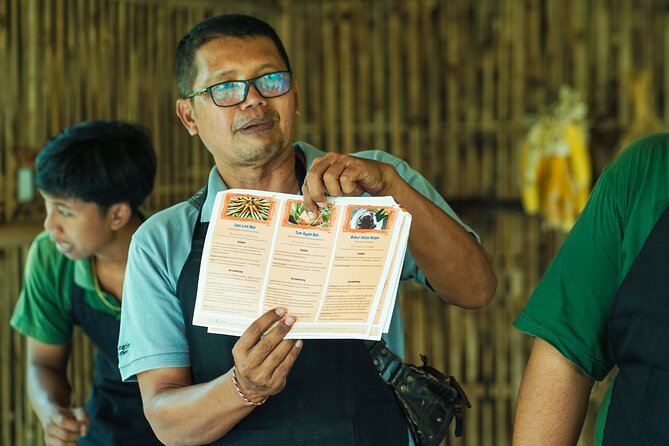
The visit to an authentic Balinese compound in the mountain village adds another layer to the experience. You are seeing a family and village setting rather than only a cooking venue.
The hosts are families from the surrounding area. That matters because the day is built around people who live with these traditions, not performers brought in for a cultural show. The stated aim is to help support the village community and keep these practices in use.
You should still behave as you would in any family home or sacred setting. Dress modestly, listen to instructions, and avoid treating the compound as a photo backdrop. The dress code specifically rules out topless clothing and beachwear. Shirts, pants, and slippers are acceptable, though practical walking shoes are a better choice for the garden and downhill route.
Optional Belulang Hot Spring Visit
The day can include a visit to Belulang Hot Spring, with an optional bath. Since bathing is optional, you can choose based on your comfort, time, and what you have packed.
The supplied information does not give water temperature, changing facilities, towel arrangements, or bathing rules. If the hot spring is important to you, ask the provider about those details before the day begins. Otherwise, treat it as an extra rather than the main reason to book.
The cooking, village visit, and farm activities form the core of the experience. The hot spring is a useful bonus, not a substitute for the class.
How Much Value Do You Get for $55?
At $55 per person, this is priced above a simple restaurant meal but includes much more than lunch. The fee covers the welcome drink, garden tour, English-speaking guide, Rindik lesson, two Jamu preparations, fruit tasting, cooking instruction, lunch, dessert, farm visit, animals, beehives, rice planting opportunity, village compound visit, short trek, and possible hot spring stop.
You also receive a farewell gift, a personal cooking class certificate, and a recipe book by email after the tour. Tips, drinks, and personal expenses are not included.
I see the strongest value in the range of activities. You get food, music, farming, nature, and family contact in one morning. If you only want to learn a few recipes and leave, you may find the four-and-a-half-hour format longer than necessary. If you want a broader view of mountain village life, the price is easier to justify.
Group discounts are available. With a maximum of 12 people, the class should remain small enough for direct help, though the experience will feel different depending on how many spaces are filled.
Who Will Enjoy It Most?
I would recommend this for people who want a cultural activity with real participation. You will get the most from it if you enjoy asking questions, trying unfamiliar ingredients, and taking part in simple farm work.
It suits couples, families, food-focused visitors, and small groups. Vegetarian dietary needs can be accommodated if you state them in the special requirements section when booking. Other dietary needs should also be declared in advance rather than explained only after you arrive.
It may be less suitable if you want a polished, air-conditioned cooking studio, a short activity close to the beach, or a tightly timed schedule with no optional stops. The mountain village setting is the point, and the day includes walking, outdoor cooking, animals, and changing conditions.
The experience requires good weather. If poor weather forces cancellation, you are offered another date or a full refund. You can cancel for a full refund up to 24 hours before the start time, but cancellations or changes made inside that window are not accepted.
Practical Tips for a Better Morning
- Wear a shirt and pants or another modest outfit suitable for a traditional village.
- Choose footwear that can handle a 30-minute downhill walk.
- Arrive hungry, since you prepare and eat a full lunch.
- Tell the provider about vegetarian or other dietary needs at booking.
- Bring only what you need for the morning, especially if you plan to use the hot spring.
- Confirm your route to Mengesta because hotel pickup is not stated.
- Keep your schedule flexible enough for the farm, village, and optional bathing stop.
- Bring curiosity. The best parts are the small activities, such as playing Rindik, feeding Manis, and handling garden herbs.
Should You Book the Balikaru Village Cooking Class?
Book it if you want your Bali food experience to include people, farms, music, and village life. The strongest parts are the open-air kitchen, the Jamu preparation, the generous meal, and the chance to step beyond sightseeing into simple local activities.
I would skip it if your priority is convenience from a beach resort or a quick cooking demonstration with no walking. The meeting point takes planning, and the day asks you to be comfortable outdoors.
For $55, the experience offers a broad and personal morning near Mt. Batukaru. The certificate and recipe book are pleasant extras, but the real value is learning how food connects with gardens, farms, family, and place.
FAQ
Where does the experience start?
It starts at BalikaruBelulang Bali, Mengesta, Tabanan Region, Mengesta, Kec. Penebel, Belulang, Bali 80152, Indonesia.
What time does the experience begin?
The start time is 9:00 a.m.
How long does the experience last?
It lasts approximately four hours and 30 minutes.
Where does the experience end?
It ends back at the meeting point.
What is included in the price?
The price includes a welcome drink, herb and spice garden tour, English-speaking guide, Rindik lesson, two Jamu preparations, fruit tasting, cooking class, lunch, dessert, farm visit, animals, Trigona beehives, rice planting opportunity, village compound visit, short trek, optional hot spring visit, farewell gift, certificate, and recipe book by email.
Is lunch included?
Yes. You prepare and eat a Nasi Campur Tumpeng meal with dessert during the cooking class.
Can vegetarian dietary needs be accommodated?
Yes. You should provide dietary requirements in the special requirements section when booking.
What should I wear?
Beachwear and topless clothing are not allowed in the traditional village setting. Shirts, pants, and slippers are acceptable.
How many people can join the experience?
The maximum group size is 12 people.
What happens if the weather is poor?
The experience requires good weather. If it is canceled because of poor weather, you are offered a different date or a full refund.
Just added around Indonesia
- Famous East Bali Temples; Mother Temple, Heavens Gate & The Royal Water Garden★ 4.0 · 2 reviews
- Candlelight Dinner in Ubud Garden★ 5.0 · 2 reviews
- Bali White Water Rafting Yellow Garden★ 5.0 · 7 reviews
- Bali Orchid Spa 1 Hour Relaxing Massage★ 5.0 · 4 reviews
- Royal Orchid Spa Package★ 5.0 · 2 reviews
- Royal Orchid Spa 90 Minutes Relaxing Massage.★ 4.5 · 3 reviews
- Bogor Botanical Garden & Rainforest Trekking to Hidden Waterfall★ 5.0 · 58 reviews
- Full Day Bogor Botanical Garden And Puncak Highland Tour★ 3.5 · 3 reviews
Spice and Herb Gardens, compared.
Ella : Cooking class with amazing Spice Garden Tour
Read our review →
Penang Round Island Tour With Tropical Spice Garden & Entopia Butterfly Farm
Read our review →
Penang: Tropical Spice Garden Entrance Ticket & Guided Tours
Read our review →
Kobe: Guided Tour of Nunobiki Waterfalls and Herb Garden
Read our review →
Grenada: Spice and Herb Garden Tour with Beach Visit
Read our review →
Aromatic Experience in the Medicinal Garden in Ibiza
Read our review →Browse the lists this tour appears in