

Review · CANADA
Halifax Churches, Gardens & Graveyards: a Smartphone Audio Walking Tour
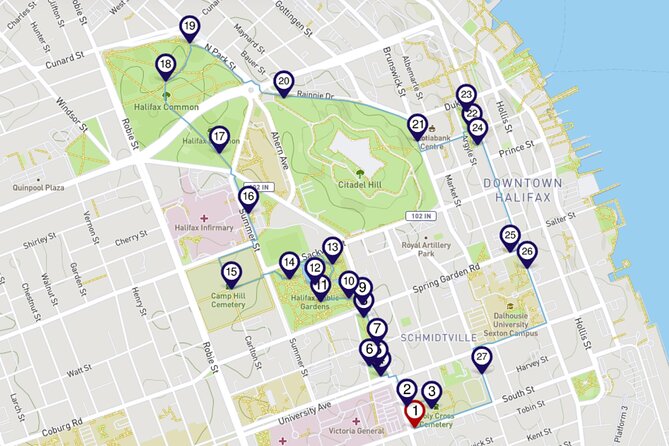
Halifax tells its stories on foot. This 5-kilometre audio walk links churches, gardens, cemeteries, statues, military sites, and city squares in about 90 minutes to two hours. I like the self-paced format, which lets you pause for photos, coffee, or a closer look, and I like the GPS narration that begins as you approach each stop. The main drawback is that the route includes hills and uneven paths, while the app has occasionally been prone to crashes or imperfect mapping.
At $8.98 per person, this is a low-cost way to get oriented before exploring Halifax on your own. You download the tour over Wi-Fi, then use the live map and stored commentary without mobile data. Just remember that this is an audio guide, not a person walking beside you, so you must watch your route and manage your own timing.
Six useful things to know before you start

- The route covers about 5 kilometres: Allow 90 minutes to two hours, longer if you enter sights or linger in the gardens and cemeteries.
- GPS starts the narration for you: Commentary plays as you reach each point, though you should keep the phone charged and the app open.
- You get 27 points of interest: The route includes the Public Gardens, Citadel Hill, Old Town Clock, Grand Parade, churches, and several burial grounds.
- The walk is free once booked: The $8.98 fee covers the audio experience, but attraction admission is not included.
- The route is not flat: Expect uphill walking around Citadel Hill and uneven paths in some cemetery and park areas.
- You can add a trivia game: After some commentary, the app lets you answer location-based questions for a bit of extra fun.
South Park Street gives you a useful starting point
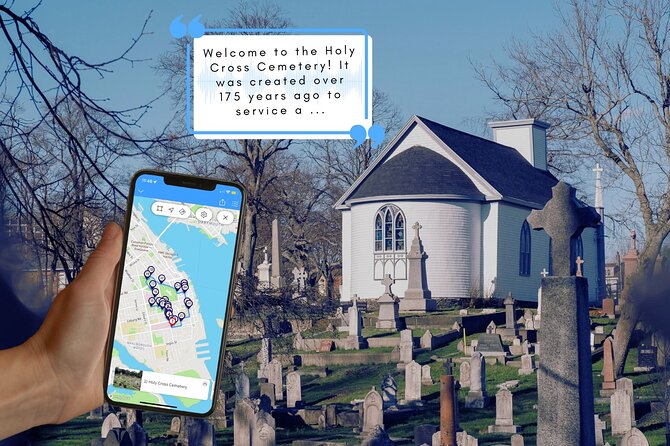
The walk begins near South Park Street and South Street, at 1193 South Park Street. This puts you beside an important cluster of Halifax sights rather than in a distant meeting area. You can begin any time, since the tour is available every day from midnight to 11:30 p.m.
The opening section introduces the character of central Halifax through public spaces, old buildings, monuments, and religious sites. You are not simply walking from one famous attraction to another. The route shows how churches, cemeteries, military grounds, gardens, and civic buildings fit together in the city center.
The app displays your location and the next point on a live GPS map. As you approach a stop, the narration should begin automatically. That is useful because you can keep your eyes on the streets and buildings instead of constantly checking a list.
Still, give yourself a few minutes at the beginning to understand the map. One useful habit is to download everything on Wi-Fi before leaving and keep the route open while walking. The commentary does not require a signal or mobile data once downloaded, but the phone itself remains your navigation tool.
A few more gardens around Canada worth a look
- From Paris: Versailles Palace Self Guided & Gardens tickets
★ 4.4 · 1,100 reviews - Avery Island Experience- Tabasco & Jungle Gardens Self-guided tour
★ 4.5 · 297 reviews - Self-Guided Bike Tour of Killarney National Park, Muckross Gardens & Waterfall
★ 5.0 · 223 reviews
Holy Cross Cemetery starts the quieter part of the walk
The early stops lead into Holy Cross Cemetery, including a section at 1259 South Park Street. Here, the focus shifts from large public landmarks to individual people and forgotten corners of Halifax.
The audio discusses residents of the cemetery and the lost grave of William Condon. That kind of story gives the walk a human scale. You are not just looking at old stones. You are being asked to notice who is remembered, who has disappeared from the record, and how a small burial ground fits into the city around it.
Cemeteries also change the pace of the tour. After city streets and traffic, you get a quieter place to listen. Take care on the paths, since the route can be harder for anyone with limited mobility. The walk is manageable for most people, but it is not a polished pavement loop from start to finish.
Victoria Park combines monuments, trees, and small surprises
Victoria Park brings you into one of the more pleasant sections of the route. It is an urban garden with several points of interest, so this is a good place to pause rather than rush from one GPS trigger to the next.
The narration points out the Oland Memorial Fountain and explains what it commemorates. Across the street, you hear about All Saints Cathedral and its unusual mouse problem. That small detail gives the audio guide a lighter touch and keeps the tour from becoming a list of dates and official names.
You also meet the Sir Walter Scott Memorial and the Robert Burns statue. The Burns stop includes a playful twist in which Burns himself tells you about Burns. It is a simple bit of theatre, but it helps vary the voices and tone of the walk.
These stops are a good example of the tour’s strengths and limits. The guide can point out details you might otherwise pass without noticing. At the same time, some monuments may matter more to you than others, so the ability to pause or skip ahead is useful.
The Halifax Public Gardens reward a slower pace

The Halifax Public Gardens are among the best reasons to choose this walk. You enter through tall wrought-iron gates into a formal Victorian-style garden, designated a National Historic Site. This is not just a patch of grass for crossing on the way to the Citadel. It has planned paths, planted beds, fountains, water, and buildings worth examining.
The audio explains the design of a Victorian garden and introduces Richard Power, an Irish horticulturist and landscape gardener who was given responsibility for designing the gardens. That context helps you read the space. You begin to notice the formal layout rather than seeing only flowers and paths.
The Horticultural Hall is described as the oldest building in the park. It was also used as a cold cellar. Nearby, the old bandstand adds another layer to the garden’s public life. The narration gives you reasons to look around, but you should allow extra time here if the weather is good.
Griffin’s Pond offers a quieter stop. Ducks and geese may be nearby, and you can sit while learning how the area changed from swampy wasteland into a public garden feature. The tour works best here when you treat the commentary as a prompt to observe, not as something to hurry through.
Two fountains continue the garden section. The Boer War Memorial Fountain, erected in 1903, honors Canadian soldiers who fought and died in the Boer War. The Victoria Jubilee Fountain marks Queen Victoria’s 60th year as monarch. Together, they show how public gardens can also serve as places of memory and ceremony.
Same place, a different sort of green day out:
- Victoria & Butchart Gardens Tour with Ferry from Vancouver
★ 4.5 · 2,703 reviews - Victoria and Butchart Gardens Day Trip from Vancouver
★ 4.5 · 2,242 reviews - Vancouver: Victoria, Gulf Islands Cruise, & Butchart Gardens
★ 4.7 · 1,165 reviews - The Butchart Gardens Express Shuttle from Downtown Victoria
★ 4.5 · 616 reviews
Camp Hill Cemetery and the Commons explain Halifax’s open spaces

The route next reaches the Protestant Camp Hill Cemetery near Robie Street and Veterans Memorial Lane. The audio explains why the cemetery was created on old Commons ground and encourages you to look at the older stones.
This is one of the places where you should slow down. Old inscriptions can be hard to read, and the experience depends on paying attention to the stones rather than simply waiting for the next instruction. The cemetery helps explain how burial grounds were placed within the city as Halifax expanded.
The walk then points out the Nova Scotia Museum of Natural History. From the outside, it may look like a plain modern brick building, but the narration directs your attention to what is inside. Admission is not part of the tour, so treat it as an optional nearby stop rather than a scheduled visit.
The South Commons and North Commons follow. The guide explains why the Commons name appears several times and how these open areas have served Halifax for more than 250 years. The South Commons is described as Canada’s oldest urban park.
These stops may be less instantly dramatic than the Citadel or Public Gardens. You might simply see a broad public park. The value is in understanding how the Commons functioned as shared ground for the community over a long period. If you prefer only major monuments, this section may feel slow. If you like seeing how a city is organized, it adds useful context.
The Armoury and Citadel Hill bring military Halifax into view

Armoury Place introduces the large Halifax Armoury, built in 1895 as a drill hall for volunteer militia. The narration also explains its present use. Its scale makes more sense once you understand the role of Halifax as a military and naval center.
The next major stop is Halifax Citadel National Historic Site. Citadel Hill is the highest point in Halifax, which explains why it was chosen for a fort. The guide covers who the fort was meant to protect the city from and why this hill mattered.
This is one of the route’s more demanding sections. You will be walking uphill, and the earlier cemetery and park paths may already have taken some energy. If you have limited mobility, plan extra time and consider stopping for breaks. One advantage of the private, self-guided format is that nobody is waiting for you to catch up.
You can spend additional time at the Citadel if it is open and you choose to enter, but admission is separate. Seasonal access and opening conditions can change, so do not assume every recommended attraction will be open.
The Old Town Clock and Grand Parade show Halifax’s civic core
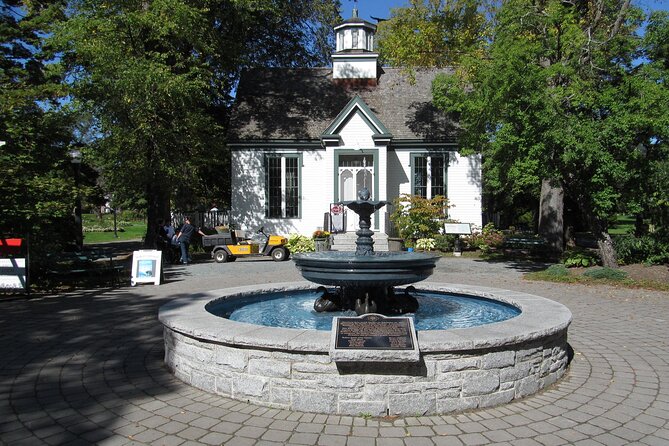
From Citadel Hill, the Old Town Clock becomes the next major marker. The clock was commissioned by Prince Edward, Commander in Chief of the military. Its location makes clear why it has become one of Halifax’s most recognizable sights.
The route then moves toward Grand Parade, described as the heart of the city. The narration covers how the square was built and points out the Halifax War Memorial Cenotaph. This is a good moment to look beyond the obvious photo stop and notice how government, military memory, and public ceremony meet in one place.
Halifax City Hall follows. The audio explains why the building received National Historic Site of Canada designation in 1997. It also points out the Memorial to Fallen Peace Officers.
This stretch is easier to appreciate if you know what to look for. The buildings are not isolated museum pieces. They form a civic center where public authority, remembrance, and daily city life overlap.
Four churches and two burial grounds close the historical loop

St. Paul’s Anglican Church is one of the final major stops. You hear about its age, long history, and connection to slavery. That last subject matters because it keeps the tour from presenting Halifax’s past as only military success and orderly civic growth.
St. Mary’s Cathedral Basilica offers a different architectural experience. The Gothic Revival cathedral also connects to the Halifax Explosion of 1917, whose effects can still be seen and felt in the city’s story. The stop gives you a chance to consider how a major disaster affected buildings, residents, and memory.
The Old Burying Ground is a small cemetery covering about one hectare. Its stones carry tributes to people who died centuries ago. This is a compact site, but it carries considerable weight because it sits amid the modern city. Give yourself time to walk among the stones after the commentary ends.
The final listed stop is Fort Massey Cemetery. The audio connects the cemetery to the American Revolutionary War, which began in 1775, and to Britain’s use of Halifax as an important naval base. It is a fitting finish because the cemetery brings together military history, imperial politics, and personal remembrance.
What the app does well, and where it needs patience
The strongest feature is the automatic audio. When it works properly, you arrive at a site and the narration begins without needing to search through a menu. The map also helps you keep your bearings, and the stored download means you do not need a signal or data during the walk.
The flexible timing is equally useful. You can stop for a break, replay a section, explore a nearby sight, or listen later. The tour is yours to use beyond the selected date, and the number of people booked determines how many devices can download it.
The app is not perfect. Some users have found the map a little buggy, and one report describes frequent crashes that required reopening the app. Downloading over Wi-Fi first is sensible, and I would bring a charged phone and avoid relying on the app as your only source of directions.
The audio plays from the phone speaker, so headphones are optional. Headphones may help near traffic, but using the speaker lets you hear your surroundings and discuss the stops with your group. The location-based trivia game is optional, so you can ignore it if you want a quieter, more traditional walk.
Is $8.98 good value for Halifax?
For $8.98 per person, the tour offers a lot of coverage. You get roughly 27 narrated stops across a 5-kilometre route, GPS guidance, commentary, the trivia option, and flexible use. A private walking experience at this price is hard to criticize, especially if you are comparing it with a more expensive organized excursion.
The value depends on what you want. You are paying for orientation and storytelling, not entrance to the Citadel, museum, cathedral, or other attractions. Some stops are major sights, while others are small monuments or public spaces that may interest you less.
The format can also save money for cruise passengers or independent visitors who do not want a group excursion. It works well if you want to stop for lunch, split the route into sections, or repeat parts later.
Who should choose this walk?
I would choose it for a solo visitor, couple, or small group that likes freedom and does not need a live guide. It is also useful for people who want an introduction before returning to the Public Gardens, Citadel, or churches for a longer visit.
The walk suits anyone comfortable using a smartphone and following a GPS map. It is less suitable if you want detailed personal answers, a fixed pace, or guaranteed access inside every building.
The route is free to cancel up to 24 hours before the start time. Service animals are allowed, public transport is nearby, and most people can take part, but hills and uneven paths are worth taking seriously.
Should you book the Halifax Churches, Gardens & Graveyards walk?
Book it if you want a cheap, flexible introduction to central Halifax with strong coverage of the Public Gardens, Citadel Hill, cemeteries, churches, and civic sights. The automatic audio and pause-anywhere format are the main reasons to choose it.
Skip it if you dislike phone-based navigation, want a live guide, or plan to see only Halifax’s biggest attractions. In that case, you may prefer to walk directly to the Public Gardens and Citadel and spend your time there.
For most independent visitors, this is a practical way to get your bearings fast, learn the stories behind ordinary-looking places, and decide which parts of Halifax deserve a longer visit.
FAQ
How long does the Halifax audio walking tour take?
The tour takes approximately 1 hour 30 minutes to 2 hours. You may need longer if you pause, take breaks, explore attractions, or spend extra time in the gardens and cemeteries.
Where does the tour begin and end?
It begins at 1193 South Park Street in Halifax. The activity ends back at the meeting point.
Does the tour require mobile data?
No. You can download the tour using Wi-Fi before you start, then use the commentary without a signal or mobile data during the walk.
Are attraction entrance fees included?
No. Admission tickets are not included. The route points out attractions and landmarks, but you pay separately if you choose to enter them.
Do I need headphones?
No. Headphones are optional. The audio can play through your smartphone or tablet speaker.
Can I pause or use the tour on another date?
Yes. You can begin, pause, stop, and restart the tour at your own pace. The tour is yours to keep and use anytime through Tripvia Tours.
Just added around Canada
- Victoria, BC: City Tour and Butchart Gardens Combo Tour★ 4.8 · 71 reviews
- Victoria: Butterfly Gardens Admission Ticket★ 4.2 · 44 reviews
- Victoria’s Butchart Gardens & City Highlights Private Tour★ 5.0 · 2 reviews
- Victoria City and Butchart Gardens Private Tour★ 5.0 · 2 reviews
- Christmas in Victoria and the Butchart Gardens★ 5.0 · 6 reviews
- Victoria Butterfly Gardens Ticket★ 4.5 · 74 reviews
- Private Tour Countryside Drive to Butchart Gardens & Victoria★ 4.5 · 6 reviews
- Private Deluxe Tour of Victoria & to Butchart Gardens (5 hrs)★ 5.0 · 32 reviews
Self-Guided Tours, compared.

Versailles Palace Self Guided & Gardens tickets
Read our review →
Avery Island Experience- Tabasco & Jungle Gardens Self-guided tour
Read our review →
Self-Guided Bike Tour of Killarney National Park, Muckross Gardens & Waterfall
Read our review →
Tulip Fields near Keukenhof – Self-Drive Audio Tour for 2 People
Read our review →
York: Castle Howard House and Gardens – Self-Guided
Read our review →

Papal Palace and Secret Garden Ticket and Audio Guide
Read our review →
Browse the lists this tour appears in