
Review · ISLAMABAD
Cherry Blossoms Trip to Northern Areas of Pakistan 2020 (8D 7N)
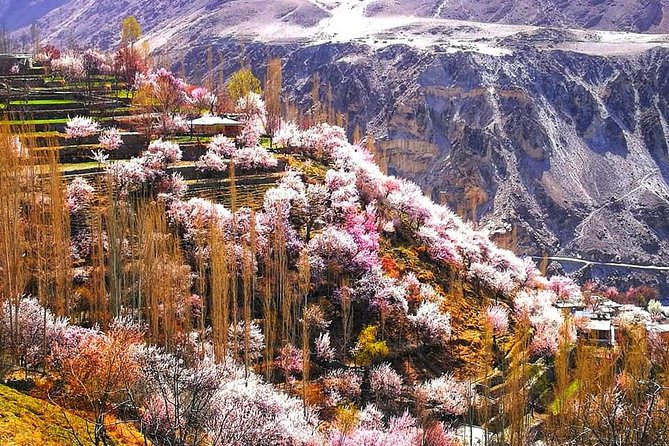
Cherry blossoms meet giant peaks. This eight-day journey from Islamabad takes you along the Karakoram Highway to Hunza, with stops at Attabad Lake, Passu Cones, Hooper Glacier, and the Khunjerab Pass. I like the all-inclusive structure, which covers hotels, meals, transport, and airport transfers, and I like the mix of mountain scenery, local food, music, archaeology, and town visits. You get more than a quick photo stop.
The trade-off is the amount of time spent in the vehicle. The drives to Chilas and Hunza can run 12 hours, while the return through Gilgit and Besham takes about 10 hours. I also like that the plan includes a half-day at Hooper Glacier and free time in Hunza, but you should be ready for a fast-moving schedule and long road days.
Five things to know before you book
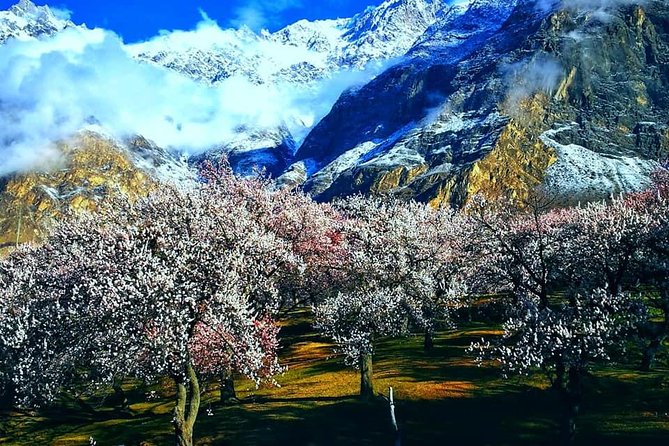
- The Karakoram Highway is the main event: Much of the trip follows one of the world’s great mountain roads, with regular stops for photos.
- Cherry blossoms are part of a spring-focused trip: The timing is designed around flower blossom season, though exact bloom conditions depend on weather.
- Hunza gets the best balance of scenery and culture: You have time for food, music, local towns, wandering, and a glacier walk.
- The Khunjerab Pass reaches about 16,000 feet: This is a high-altitude border area, not a casual roadside viewpoint.
- The price includes most daily costs: At $1,150 per person, the package covers accommodation, transport, meals, entrance fees, and taxes.
- The group may reach 50 people: Ask about the expected group size if you prefer a quieter, more personal trip.
Islamabad begins the journey with useful simplicity
The trip starts with pickup at Islamabad International Airport and transfer to a designated hotel in the capital. That first transfer matters. After an international flight, having the arrival ride and first night arranged saves you from handling local transport while tired.
The package includes a letter of invitation, which may be useful for the arrangements connected with your visit. All fees and taxes are included, as are the air-conditioned vehicle and accommodation. The exact hotel names are not provided for every night, but the itinerary identifies Shangrila Chilas Hotel for the second night.
You may have little time in Islamabad at the beginning. The city is mainly the starting point, while the main scenery lies far to the north. The final day gives you a better chance to see the capital, depending on your flight departure time.
More Cherry Blossom Tours in the world:
- Cherry Blossom Highlights, Asakusa, Ueno, Imperial Palace Garden
★ 4.5 · 4 reviews - Mt. Fuji, Cherry Blossom & Shiba Sakura Pvt. Day Tour
★ 5.0 · 326 reviews - The DC Cherry Blossom Bus Tour with Tidal Basin Guided Walk
★ 4.5 · 151 reviews
Day two: twelve hours toward Chilas
After breakfast, you leave Islamabad for Chilas on the Karakoram Highway. The drive is listed at almost 12 hours, with short stops for photographs along the way.
This is not a transfer to treat as dead time. The road is the thread holding the trip together, and the changing views are a major part of the experience. Still, twelve hours in a vehicle is a serious commitment. I would bring water, personal snacks, a phone charger, and anything that helps you stay comfortable during a long road day.
You spend the night at Shangrila Chilas Hotel. Because the drive ends in the evening, this night is mainly a practical rest stop before the next long push toward Hunza. The package includes dinner, as well as breakfast and lunch during the trip.
Day three: the high mountain meeting point and Hunza
Breakfast is followed by another eight to ten hours on the Karakoram Highway. The route reaches Hunza, with important viewpoints along the way.
One highlight is the junction of three major mountain ranges: the Karakoram, the Himalayas, and the Hindu Kush. This is the sort of geographic detail that gives the road journey a sense of place. You are not simply passing through mountains. You are moving through a meeting point of some of Asia’s most famous ranges.
The route also includes views of Nanga Parbat and Rakaposhi. Nanga Parbat is later identified as the Killer Mountain, rising to 8,126 meters. Rakaposhi is another major peak connected with the Hunza region. These stops are designed for viewing and photography, so keep your camera ready and expect conditions to change with weather and road timing.
By the time you reach Hunza, the trip becomes more settled. You spend several experiences in and around the valley rather than changing destinations every night. That gives you a better chance to enjoy the area without treating every stop as a rushed checklist.
Day four: Attabad Lake, Passu Cones, and Khunjerab Pass
The fourth day heads toward the Pakistan-China border and Khunjerab Pass, listed at about 16,000 feet. The route includes Attabad Lake, Passu Cones, and Sost Bazaar before returning to Gulmit.
Attabad Lake is one of the key scenic stops in Hunza. Passu Cones provide another strong mountain viewpoint, with their sharp, recognizable peaks. Sost Bazaar brings the road trip back to daily life, shops, and local activity rather than only grand scenery.
The itinerary gives just one hour for the Khunjerab National Park stop, despite the full day of sightseeing around it. That suggests you should think of the day as a road excursion with several brief visits, not a long walk at every location. The high altitude is also worth taking seriously. The schedule does not provide medical or acclimatization advice, so you should ask the operator about current road conditions and how the day is managed before departure.
The return to Gulmit keeps you within the Hunza area. This is useful because the day involves a long outward route and several photo stops.
Same place, a different sort of green day out:
- Paris: Versailles Palace and Gardens Full Access Ticket
★ 4.6 · 41,579 reviews - Versailles: Skip-the-Line Tour of Palace and Gardens Access
★ 4.7 · 10,429 reviews - Marrakesh: Majorelle Garden Entry Tickets
★ 4.5 · 9,651 reviews - Vienna: Schönbrunn Palace & Gardens Skip-the-Line Tour
★ 4.7 · 7,739 reviews
Day five: Hooper Glacier and a slower half-day in Hunza
After breakfast, you head to Hooper Valley in Nagar. The plan allows time to explore the valley and trek to Hooper Glacier, then return to Hunza for lunch.
This is one of the strongest days for active sightseeing. The glacier visit gives the trip a walking element, while the surrounding valley offers the flower and mountain scenery that makes spring in the north so appealing. The listed activity time is about two hours, so this is better understood as a short trek than a full-day expedition.
After lunch, you have the second half of the day to wander independently and meet local people. This unstructured time is valuable. A packed tour can show you viewpoints, but free time lets you notice ordinary details, visit a local area at your own pace, or simply rest after the road journeys.
The package also includes Hunza traditional music and food. This is a useful cultural touch because meals and music can give you a clearer connection to the region than a string of scenic stops. Eight lunches, seven breakfasts, and eight dinners are included, so you do not need to budget separately for most meals.
Day six: Gilgit, Jaglot, and the Killer Mountain viewpoint

After breakfast, you leave the Hunza area and travel toward Besham. The day includes a visit to Gilgit City, time for walking and photography, lunch at Resham Restaurant in Jaglot, and a viewpoint for Nanga Parbat.
The total drive is listed at about 10 hours. Gilgit gives you a city stop in the middle of the mountain route, while Jaglot adds a planned meal break. The lunch location is named, which makes the schedule easier to picture than a simple drive with no stated stops.
The Nanga Parbat viewpoint is one of the major visual moments of the trip. At 8,126 meters, the mountain has a powerful presence even from a distance. Its nickname, Killer Mountain, reflects its demanding reputation, but the itinerary only promises a viewpoint, not a climb. You can enjoy the sight without needing mountaineering experience.
This is another long day, and the timing may feel tiring after the glacier outing. I would treat the road itself as part of the trip rather than expect a relaxed arrival in Besham.
Day seven: Taxila and the route back to Islamabad
After breakfast, you continue toward Islamabad on the Karakoram Highway. The route goes through Hassan Abdal, where you visit Panja Sahib, then continues on the Grand Trunk Road and Khanpur Road toward Taxila.
Taxila Museum and the surrounding archaeological sites change the tone of the trip. After several days of peaks, lakes, glaciers, and high passes, you get a look at the region’s ancient cultural remains. The itinerary lists about one hour for the Taxila stop, so you should expect an introduction rather than a detailed archaeological tour.
The short duration is the main limitation. Taxila has enough importance to reward more time, but this trip is built around northern Pakistan and the return route must fit into eight days. If archaeology is your main interest, you may want extra time in the area before or after the organized trip.
You reach Islamabad in the evening. This gives you a final night in the capital before your departure, assuming your flight schedule permits it.
Day eight: Faisal Mosque, the Pakistan Monument, and Margalla Hills
The final day includes Islamabad sightseeing before airport drop-off. The named attractions are Faisal Mosque, the Pakistan Monument, and Margalla Hills.
Faisal Mosque is one of the city’s best-known landmarks, while the Pakistan Monument provides another major urban viewpoint and cultural stop. Margalla Hills add an outdoor setting close to the capital. The order and amount of time depend on your flight departure, so do not count on a full city tour if you have a morning or early afternoon flight.
Airport drop-off is included. That makes the final day easier, but you should confirm the pickup and departure timing when booking, since the published starting time is shown as 12:00 am and the city sightseeing is specifically subject to flight time.
What the $1,150 price really covers
At $1,150 per person, this is not a low-cost independent road trip. It is a package built around convenience and long-distance transport.
The price includes:
- Air-conditioned vehicle
- Accommodation
- Airport pickup and drop-off
- Breakfast, lunch, and dinner as specified
- Entrance fees
- All fees and taxes
- Letter of invitation
- Hunza traditional music and food
That is a strong list of inclusions for an eight-day trip through remote mountain areas. You avoid paying separately for nearly every meal, major transfer, and listed admission. The value improves if you want one company to coordinate the route rather than arrange hotels, drivers, meals, and border-area visits yourself.
The value is less clear if you prefer slow travel, independent hotel choice, or short driving days. Much of your holiday takes place on the road, and the group can be as large as 50 people. Ask about vehicle size, hotel names, and the likely group size before you commit. Those details will shape the experience more than the attractive headline price.
The guide and driver can shape the whole trip
The available information names Saleem as the tour manager and identifies Ali as a responsible driver. Communication with Saleem before the trip included customized planning around spring flowers and places of interest, which is especially useful for a seasonal tour.
That personal planning is worth asking for. Cherry blossom timing can vary, and the best flower views may depend on the dates you choose. Ask Saleem what is normally flowering during your travel window and how much flexibility exists if weather changes the road schedule.
A careful driver matters on a route with long hours and mountain roads. Ali is specifically praised for responsible driving, but you should still confirm who will drive your departure and return legs if the group uses more than one vehicle.
Who will enjoy this eight-day route?
I would recommend this trip to you if you want a first visit to northern Pakistan with the major arrangements handled. It suits people who value scenery, photography, local meals, mountain viewpoints, and a taste of cultural sites.
It also suits families and solo visitors who prefer a planned route. The itinerary includes enough variety to keep the journey from becoming only a mountain tour: you get archaeology at Taxila, city stops in Islamabad and Gilgit, local food and music, a glacier walk, and high-altitude viewpoints.
I would hesitate to recommend it to you if you dislike long drives or need a relaxed pace. Two days run close to 12 hours, another takes about 10 hours, and several sightseeing stops are brief. You should also consider the high elevation at Khunjerab Pass and the possibility of a larger group.
The free half-day in Hunza helps, but this remains a road-heavy tour. Pack for comfort, keep your schedule flexible, and treat the views from the highway as part of the experience.
Should you book the Hunza cherry blossom trip?
Book it if you want a well-organized introduction to Hunza during the spring flower season, with transport, meals, accommodation, airport transfers, and major sightseeing included. The strongest reasons are the range of scenery, the chance to see Hooper Glacier and the mountain viewpoints, and the cultural additions of Hunza food and music.
Before paying, confirm the expected blossom dates, group size, hotel details, vehicle arrangement, and the plan for high-altitude travel. If you accept the long drives and fast pace, $1,150 can be reasonable for the amount covered. If you want quiet roads, long walks, or several nights in one place, a slower custom itinerary would suit you better.
Cancellation is free up to 24 hours before the experience begins. Poor weather or failure to reach the minimum number of participants can lead to a new date, another experience, or a full refund.
FAQ
Where does the tour start?
The tour starts at Islamabad International Airport in Islamabad, Pakistan.
How long is the experience?
The trip lasts eight days and seven nights.
Is airport pickup included?
Yes. Round-trip airport transfers are included, with pickup at Islamabad International Airport and drop-off there on the final day.
What meals are included?
The package includes eight lunches, seven breakfasts, and eight dinners.
What are the main mountain attractions?
The route includes Hunza Valley, Hooper Glacier, Nanga Parbat viewpoints, Rakaposhi Peak viewpoints, Attabad Lake, Passu Cones, and Khunjerab Pass.
How many people can join the tour?
The maximum group size is 50 people.
What happens if bad weather cancels the trip?
If poor weather causes cancellation, you will be offered a different date or a full refund.
Just added around the world
- Zanzibar: Jozani Monkeys, Butterfly Garden & Reptile Park★ 5.0 · 2 reviews
- Royal Horticultural Society: Harlow Carr Garden Ticket★ 4.7 · 14 reviews
- Yu Garden Shanghai Entry Tickets Booking And Trip★ 3.6 · 9 reviews
- York: Castle Howard House and Gardens – Self-Guided★ 4.8 · 120 reviews
- Xochimilco floating gardens, Coyoacan and UNAM murals★ 4.0 · 6 reviews
- York: Castle Howard Gardens and Grounds Entry Ticket★ 4.5 · 23 reviews
- Woodside: Filoli Historic House and Garden Entry Ticket★ 4.9 · 9 reviews
- Woking: Royal Horticultural Society Wisley Garden Ticket★ 4.7 · 24 reviews
Cherry Blossom Tours, compared.

The DC Cherry Blossom Bus Tour with Tidal Basin Guided Walk
Read our review →
National Mall & Cherry Blossoms Tour with Optional Museum Tickets
Read our review →


Nagano: 1-Day Snow Monkey & Cherry Blossom Tour in Spring
Read our review →
Nagano Spring: 1-Day Cherry Blossoms & Snow Monkeys Guided Tour
Read our review →Browse the lists this tour appears in