
Review · TOKYO
Cherry Blossom Highlights, Asakusa, Ueno, Imperial Palace Garden
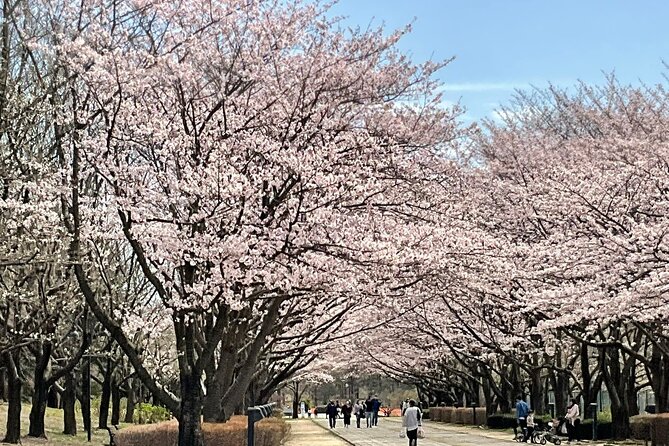
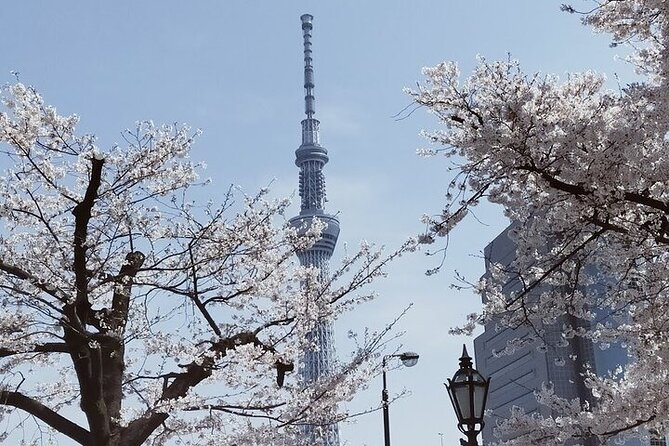
Tokyo turns pink, and the city keeps moving. This private six to seven-hour tour combines cherry blossom viewing with old temples, palace gardens, Tsukiji food stalls, and a sushi stop. I like the flexible route and the chance to learn Tokyo’s public transportation with a local guide. I also like that the private format lets you ask cultural questions and adjust the day to your interests.
The main drawback is the spring timing. Blossoms can fade early, and the guide’s English may vary. One guest found the guide, though kind and helpful, difficult to understand, while other guests praised guides Hiroko and Nobuko Akimoto for their time, insight, and willingness to adapt. Lunch is not included, and you pay for trains, food, and gratuity separately.
Key points to know before booking
- Private, customizable sightseeing: Your group has the guide to itself, so the pace and emphasis can change during the day.
- Five distinct Tokyo stops: The route links the Imperial Palace East Gardens, Tsukiji, Senso-ji, Ueno Park, and Ameyoko Shopping Street.
- Cherry blossom timing matters: The route can change with seasonal conditions. A late-blooming garden may replace a less successful blossom stop.
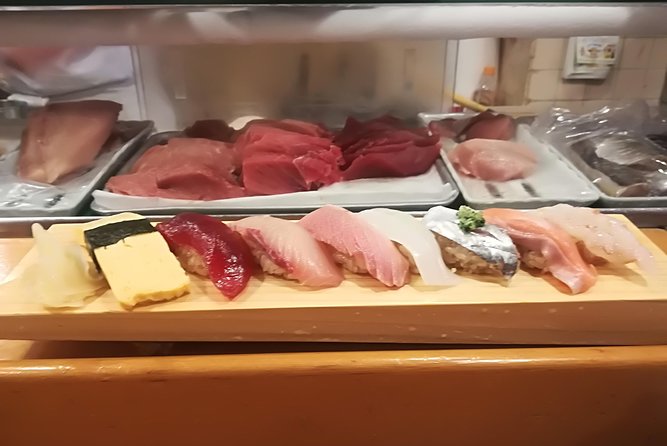
- Tsukiji adds a food break: You can explore the outer market and choose sushi or other Japanese snacks at your own cost.
- Public transportation is part of the lesson: Private transportation is not included, so the guide helps you use Tokyo’s transit system.
- A full day for $221.12 per person: The price makes better sense for couples, families, or small groups who value a private guide.
Why this private Tokyo tour works
This is not just a blossom walk. It is a first-day orientation to several sides of Tokyo: imperial grounds, traditional religion, old downtown shopping streets, and food culture.
The private setup matters. You are not tied to a large group’s pace, and you can ask questions when something catches your eye. One highly positive experience came from Nobuko Akimoto, who adjusted the day around a guest’s cultural questions instead of sticking rigidly to a fixed script. That kind of flexibility is the strongest reason to choose this tour over a standard sightseeing bus.
I also like the practical transportation lesson. Since private transport is not included, you move around by public transportation with help from the guide. That may feel less polished than riding in a private vehicle, but it gives you a useful skill for the rest of your stay.
The day begins at 9:00 a.m. and lasts about six to seven hours. The listed stops account for roughly six hours, before adding the time needed to move between them. You should expect a good deal of walking, stairs, station movement, and standing at food stalls. A moderate level of fitness is recommended.
More Cherry Blossom Tours in Japan
- Mt. Fuji, Cherry Blossom & Shiba Sakura Pvt. Day Tour
★ 5.0 · 326 reviews - Mt. Fuji & Hakone Cherry Blossom private One Day Tour
★ 4.5 · 35 reviews - Tokyo Cherry Blossoms blooming spots E-bike Tour, 3hrs
★ 5.0 · 27 reviews
Starting at the Imperial Palace East Gardens
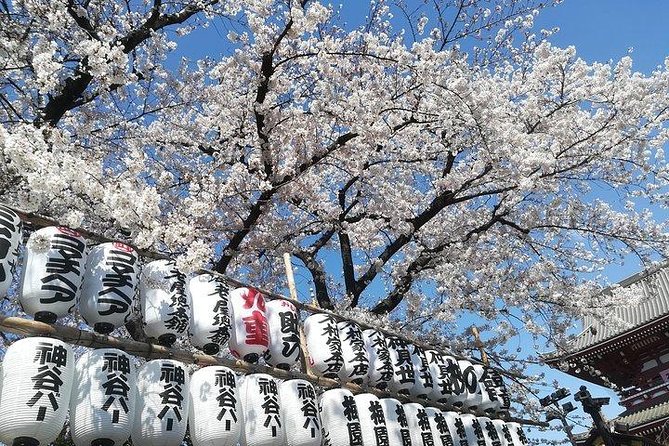
The first stop is the East Gardens of the Imperial Palace, built on the former site of Edo Castle. Moats and stone walls frame a large green area in the middle of Tokyo, making this a calm opening to a busy day.
You can stroll through the grounds and see the remains of the old castle area while your guide explains the connection between present-day Tokyo and the city’s former political center. The gardens cover about 90 hectares of woodland and open space, a striking amount of greenery for a central capital.
This is scheduled for about one hour, which is enough for an introduction but not a long garden visit. If cherry blossoms are at their best here, the setting gives you a pleasant mix of flowers, stonework, water, and formal grounds.
The season can be unpredictable. On one April 4 visit, the blossoms at the Imperial Palace had nearly finished earlier than expected. The guide substituted Hama-Rikyu Garden, where later blossoms were still in bloom. That decision showed useful flexibility, though it also points to a practical truth: the exact blossom route is not guaranteed.
I would book this tour for the overall spring experience, not for a promise that every named garden will be at peak bloom.
Tasting Tokyo around Tsukiji’s outer market
Tsukiji is scheduled for about one hour and adds a very different mood. The old wholesale market’s outer streets are lined with food stalls and small shops selling ingredients, prepared foods, souvenirs, and kitchen goods.
At midday, you may find grilled chicken, tuna, scallops, egg rolls, and other Japanese foods being prepared close to the street. Sushi is a key part of the experience, but lunch is not included in the tour price. Bring extra money and be ready to choose what you want rather than expecting a set meal.
I like this stop because it gives the day a strong food component without turning the entire tour into a formal restaurant visit. You can ask the guide what looks appealing, learn how certain foods fit into Japanese cooking, and sample several small portions if you prefer.
There is a tradeoff. One hour goes quickly, especially if you stop to eat. If you want a long sushi lunch or careful shopping, you may feel rushed. The tour is designed to give you a taste of Tsukiji, not an extended food crawl.
Because the route includes public transit and several major sights, Tsukiji works best as a lively pause between garden and temple visits. Keep your morning meal modest if you want to sample food here.
Walking through Senso-ji and Nakamise Street
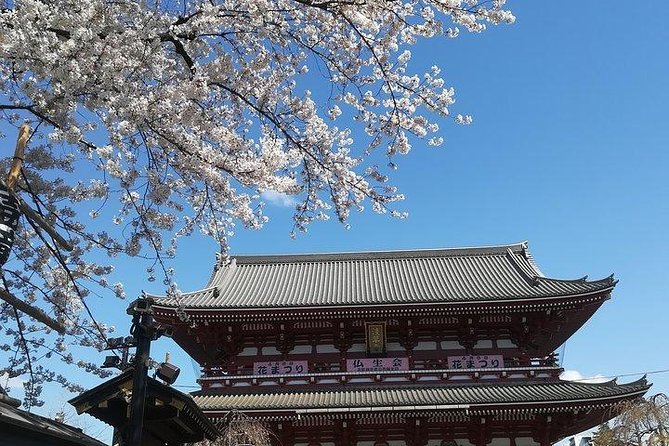
Senso-ji receives the longest scheduled visit, about two hours. That makes sense. This is one of Tokyo’s oldest temples and one of the most visually memorable stops on the route.
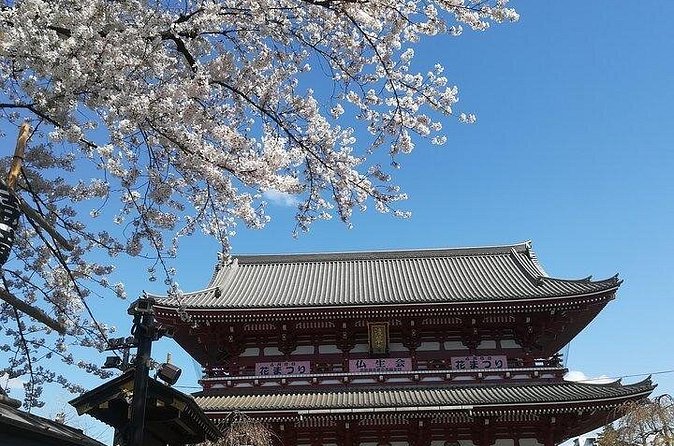
You enter through the Thunder Gate and walk along Nakamise Street toward the temple. Shops sell traditional souvenirs, snacks, and small Japanese goods. The approach is part of the experience, not simply a path to the main building.
During cherry blossom season, the temple grounds add flowers to the traditional gates, rooflines, lanterns, and nearby streets. I like this pairing because it puts seasonal beauty into a living neighborhood rather than a quiet botanical setting.
Two hours gives you time to walk, pause for photographs, browse the shops, and ask the guide about what you are seeing. The private format is useful here. You can stop for a cultural question without holding up a busload of people.
Senso-ji can also be the most crowded stop of the day. Nakamise Street is commercial, and the temple area is a major Tokyo sight. If you want a peaceful shrine visit, this may not be it. If you want an accessible introduction to Tokyo’s religious traditions and street life, it is a strong choice.
I would use this part of the tour to ask specific questions. The positive experience with Nobuko Akimoto shows why this can work well: the guide’s value is not just pointing out buildings, but helping you understand what you are observing.
More Cherry Blossom Tours in Tokyo
- Cherry Blossom Private Tour
★ 4.5 · 18 reviews - Licensed Guide Tokyo Meguro Cherry Blossom Walking Tour
★ 4.5 · 13 reviews - Evening Hanami (Cherry Blossom) Experience with a Local
★ 3.5 · 10 reviews - Tokyo: Mt. Fuji & Hakone Cherry Blossoms Private Day Tour
★ 3.5 · 9 reviews
Cherry blossoms and old temples at Ueno Park
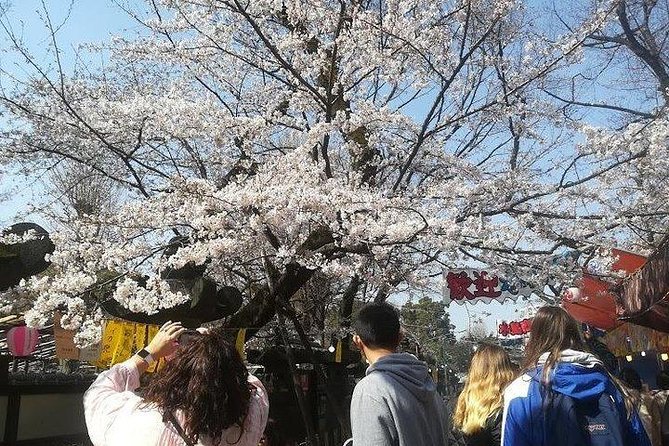
Ueno Park is scheduled for one hour. Its main spring attraction is a long line of more than a thousand cherry trees, but the park also connects you with remnants of the Tokugawa family’s religious complex.
You may see Ueno Toshogu, Kiyomizu Kannon Temple, and Shinobazu Pond during the visit. The mix gives you more than a standard flower walk. You get blossom-lined paths, temple architecture, and a pond in one central park.
One hour is enough to see the main areas with a guide, but not enough for a slow exploration of everything Ueno offers. If you want museums, a longer pond walk, or extended time at the temples, you will need to return on your own.
I like Ueno as a second blossom stop because it gives you a comparison. The Imperial Palace area is broad and formal, while Ueno feels more tied to Tokyo’s public park life and older religious sites.
Peak bloom is the key issue. Spring conditions change quickly, and the tour provider may adjust the route when one garden has passed its best. The experience is strongest when you treat the itinerary as a flexible search for good blossoms, not a fixed checklist.
Exploring Ameyoko Shopping Street
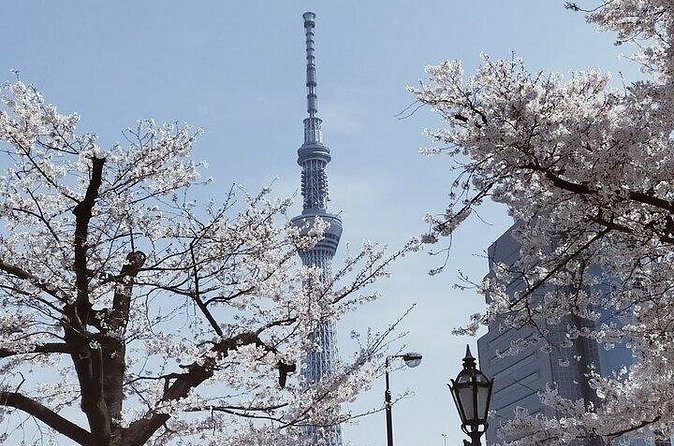
The final listed stop is Ameyoko Shopping Street, with about one hour to explore. This shopping arcade sells fresh fish, food, daily goods, souvenirs, and other inexpensive items.
Ameyoko gives the day a more ordinary downtown feel. People eat and drink at food stands, shops crowd the street, and the setting is less formal than the Imperial Palace or Senso-ji. I like ending here because it brings you back to everyday Tokyo after a morning of gardens and temples.
This is also a useful place to browse for small gifts or snacks. The guide can help explain what you are seeing, though the tour does not include purchases.
As with Tsukiji, one hour limits how much you can do. If you enjoy shopping, you may want to stay longer after the tour. The stop is best understood as an introduction to the area rather than a full shopping session.
What the guide adds to the day
The guide is the most important variable in this experience. The route itself is appealing, but a private guide determines how much context you receive and how smoothly the day feels.
Hiroko received strong praise for helping a group see a lot of Tokyo during cherry blossom season. Nobuko Akimoto was praised for her generosity with time and her ability to answer cultural questions without making the guest feel awkward. Those are useful qualities for a tour that crosses religion, food, history, and daily life.
English ability may not be perfectly consistent. One person found the guide’s English hard to follow, despite appreciating her kindness and the extra sights she introduced. If clear spoken English is especially important to you, keep that limitation in mind when booking.
The best use of a private guide is to ask questions early and often. Ask why a site matters, how to behave at a temple, what food to try, and how to use the train system later. The more specific your interests, the more useful the customizable format becomes.
Getting around without private transportation
The tour includes a licensed guide, but not private transportation. You should expect to use Tokyo’s public transport system between stops, with the guide helping you along the way.
That arrangement keeps the experience connected to the city. You see how the stops relate to one another and gain confidence for later independent outings. It also means the day is affected by station walking, train connections, crowds, and the time needed to move between neighborhoods.
For some people, this is a major benefit. If Tokyo’s trains seem intimidating, a guide can provide a practical introduction. For others, the lack of a private vehicle may feel like a weakness, especially after several hours on foot.
Wear comfortable shoes and plan for a moderate physical effort. The tour is not presented as difficult, but five stops, public transport, and several hours outside add up.
Is $221.12 per person a fair price?
At $221.12 per person, this is not a cheap sightseeing day. The price includes a licensed private guide, but not lunch, train fares, shopping, or gratuity.
The value depends on your group. For one person, the cost may feel high for a day with mostly free-admission sights. For a couple or small family, the private format becomes easier to justify because everyone receives the guide’s attention and can shape the discussion.
You are paying mainly for orientation, flexibility, and time saved in planning. The guide connects five major areas and helps with transportation. That can be worthwhile at the start of a Tokyo visit, especially during cherry blossom season when finding the best current viewing spots takes effort.
Budget for lunch at Tsukiji and a tip. Suggested gratuity guidance is 10 percent, 15 percent, or 20 percent of the tour cost, listed as approximately $12, $18, or $24 per person. Tipping is not compulsory, but the provider says it is expected as an expression of satisfaction.
The tour has an average rating of 4.5 from four published ratings, with three especially positive experiences and one mixed experience. I would read that as a good but guide-dependent result, not a guarantee of a perfect day.
Who should book this cherry blossom tour?
I would recommend it to first-time visitors who want a quick, useful introduction to Tokyo. It is also a good fit if you care about cultural explanation, want help with trains, or prefer a private day instead of a large group.
Families and small groups can benefit from the customizable route. You can ask the guide to spend more time on food, temples, gardens, or transportation, within the limits of the day.
I would be more cautious if you want a relaxed pace, a guaranteed peak-bloom location, a long sushi meal, or private car service. You may prefer to visit fewer places independently and spend more time at each one.
The tour requires good weather. If poor weather cancels the experience, you are offered another date or a full refund. You can also cancel for a full refund up to 24 hours before the start time.
Should you book it?
Book this tour if you want a private Tokyo orientation built around cherry blossoms, with food, temples, shopping, and practical train help in one day.
Skip it if the price feels steep for free-admission sights or if you prefer to set your own pace. The strongest reason to book is the guide, especially if you receive the kind of adaptable service described by Hiroko or Nobuko Akimoto. The main risk is also the guide: communication skill and personal style can shape the day.
For the best value, book near the start of your Tokyo stay, keep your schedule flexible, budget separately for food and gratuity, and treat the blossom route as seasonal rather than fixed.
FAQ
How long does the tour last?
The experience lasts approximately six to seven hours.
What time does the tour start?
The stated start time is 9:00 a.m.
Is this a private tour?
Yes. Only your group participates in the activity.
Is pickup offered?
Pickup is offered, according to the tour features.
Is public transportation included?
Private transportation is not included. The guide helps you use public transportation between locations.
Is lunch included?
No. Lunch is not included in the tour price.
Can I eat sushi during the tour?
Yes. The experience includes time at Tsukiji, where you can enjoy sushi and other food options, but you pay for the food separately.
Which places are included?
The listed stops are the East Gardens of the Imperial Palace, Tsukiji, Senso-ji Temple, Ueno Park, and Ameyoko Shopping Street.
Can the cherry blossom route change?
Yes. The exact route can change because of timing and seasonal conditions. A different garden may be used if blossoms have passed their best.
What is the cancellation policy?
You can cancel for a full refund up to 24 hours before the experience starts. Changes or cancellations made less than 24 hours before the start time are not accepted, and poor weather may lead to a different date or a full refund.
More Palace and Castle Gardens in Tokyo
- Paris: Versailles Palace and Gardens Full Access Ticket
★ 4.6 · 41,579 reviews - Versailles: Skip-the-Line Tour of Palace and Gardens Access
★ 4.7 · 10,429 reviews - Granada: Alhambra & Gardens Tour w/Nasrid Palaces Option
★ 4.2 · 7,022 reviews - From Paris: Versailles Palace & Gardens with Transportation
★ 4.6 · 6,222 reviews
Just added around Tokyo
- Private tour – Scenic Fuji Escape: Hakone, Peace Park & More★ 5.0 · 4 reviews
- TOKYO: Tailored Gardens tour with Pro Gardener by E-bike -BASIC★ 5.0 · 2 reviews
- Tsukiji Food Strolling and Hama Rikyu Garden Walking Tour★ 5.0 · 7 reviews
- Tokyo: Serene Sakura & Sake: An Exclusive Brewery Pairing Lunch★ 5.0 · 2 reviews
- Tokyo Cherry Blossom Half Day Walking Tour with a Local Guide★ 3.5 · 4 reviews
- Full Guided Mt. Fuji & Shiba-Sakura Festival One Day Pvt.Tour★ 5.0 · 6 reviews
- Licensed Guide Tokyo Meguro Cherry Blossom Walking Tour★ 4.5 · 13 reviews
- Tokyo: Kimono Experience inside Shinjuku Gyoen National Garden★ 5.0 · 3 reviews
Cherry Blossom Tours, compared.

The DC Cherry Blossom Bus Tour with Tidal Basin Guided Walk
Read our review →
National Mall & Cherry Blossoms Tour with Optional Museum Tickets
Read our review →


Nagano: 1-Day Snow Monkey & Cherry Blossom Tour in Spring
Read our review →
Nagano Spring: 1-Day Cherry Blossoms & Snow Monkeys Guided Tour
Read our review →Browse the lists this tour appears in