
Review · USA
Botanical Tour (by Walk With Me Savannah Tours)
Plants tell Savannah’s story. This two-hour walk turns the city’s famous squares into an open-air classroom, pairing flowers, trees, cemetery growth, and ironwork with the streets and landmarks you came to see. I especially like the way the tour connects botany to local history, and I like that it finishes in Forsyth Park rather than circling back to the start. The main consideration is simple: you walk for two hours, often in warm weather, so good shoes, water, and sun protection matter.
Guide Sargon receives especially warm praise for her enthusiasm, clear explanations, and ability to adjust the discussion to what is blooming. You do not need to be a plant expert. The tour works for curious gardeners, history fans, and even people who normally walk past a shrub without wondering what it is. The drawback is that the Andrew Low House garden can occasionally be closed because of the house schedule, though you can still see some of it from outside the fence.
Key points at a glance
- A botanical tour with a history lesson attached: Plants are explained alongside Savannah’s squares, cemeteries, houses, and ironwork.
- A two-hour route through major downtown green spaces: You visit Columbia Square, Colonial Park Cemetery, Lafayette Square, Madison Square, Monterey Square, and Forsyth Park.
- Sargon is a major strength: She is praised for her friendly delivery, plant knowledge, practical comparisons, and entertaining stories.
- The plant list is unusually broad: Expect Spanish moss, live oaks, camellias, magnolias, azaleas, gardenias, resurrection fern, and many less familiar species.
- A manageable small-group format: The maximum group size is 20 people, and a mobile ticket keeps check-in simple.
- Best for walkers who want a fresh view of Savannah: You need to walk without resting for about one-third of a mile, and the full route requires more time on your feet.
Why this walk changes the way you see Savannah
Savannah is easy to admire from a distance. You see fountains, oak branches, wrought and cast iron, grand homes, and broad squares. This walk asks you to pause and look closer.
A guide might point out a plant you have passed several times without noticing, then explain its name, origin, use, or place in Savannah life. The discussion can move from a camellia to Juliette Gordon Low, from Spanish moss to the city’s climate, or from a garden shrub to historic ironwork. That combination gives the walk more substance than a simple list of plants.
I like the hands-on quality described by past participants. You may be invited to examine leaves or flowers as you learn what they are used for, including culinary or medicinal purposes. The focus is not only on identifying species. It is on understanding why they were planted and how they fit into the city around them.
The strongest part of the experience is the guide’s delivery. Sargon is repeatedly praised for making a large amount of information easy to follow. She is described as upbeat, friendly, and happy to answer questions, with enough flexibility to tailor the walk to what is blooming at the time.
That matters in Savannah. A fixed script can miss the best seasonal details. If a particular flower is in bloom, you may spend more time with it. If the weather is hot, the guide may choose shaded places for stops, a small but valuable courtesy on a sunny day.
More Botanical Gardens in the USA
- Princeville Botanical Gardens Tour and Chocolate Tasting Ticket
★ 5.0 · 774 reviews - Big Island Waterfalls Tour with Swimming and Botanical Garden
★ 5.0 · 513 reviews - NYC: New York Botanical Garden Pass
★ 4.5 · 359 reviews
Columbia Square begins with plants and ironwork
The walk starts in Columbia Square, one of Savannah’s historic public spaces. This first stop introduces both the city’s plant life and its decorative metalwork, which is a useful pairing.
You will see the oldest fountain downtown, then examine cast iron linked to the largest historic Georgia foundry and more modern work by Ivan Bailey. The point is not just to admire railings and ornaments. You learn how details in the built environment can sit beside, and interact with, the living material in the square.
Plant subjects here include star jasmine, bottlebrush, tea olive, privet, azaleas, and rhododendron. That range gives you a quick lesson in the variety of Savannah’s planted spaces. Some species may be familiar from home gardens, while others make more sense in Savannah’s warmer setting.
The scheduled stop is about 15 minutes, but the walking and discussion between locations are part of the experience too. I would not treat the posted stop times as a promise that every plant receives equal attention. The exact emphasis will depend on the season, what is blooming, and the questions in your group.
Colonial Park Cemetery adds a quieter botanical setting
The route continues toward and through Colonial Park Cemetery. Here, Spanish moss, palmetto trees, and crepe myrtles become the subjects, but the setting adds another layer.
A cemetery changes the way you look at trees. You notice their age, shade, roots, and relationship to stonework. The guide also points out ginkgo trees, magnolias, and possibly the oldest crepe myrtle downtown. That possibility is worth keeping in mind: the tour includes seasonal and site conditions, so not every detail will feel identical on every departure.
This is one of the places where the botanical focus supports the wider Savannah experience. You are not stopping at a garden center or a formal conservatory. You are looking at plants in a historic urban setting, beside monuments and pathways that give them context.
If you like quiet places and small details, this part may be among the most rewarding. If you want nonstop landmark facts or fast movement, the slower pace may test your patience. The tour is designed for looking, listening, and asking questions.
Lafayette Square brings flowers into the postcard view
Lafayette Square offers one of the prettiest visual pauses on the route. You have views of the Cathedral and surrounding homes, along with a fountain and a group of less familiar plants.
The guide discusses variegated shell ginger, green leopard plants, and Japanese holly fern. These names may not mean much at first, but seeing them in place helps you remember them. This is also a good example of why the tour is useful for people who know little about plants. You do not have to arrive with a vocabulary. You simply need to be willing to stop and look.
The scheduled time here is about five minutes, so expect a compact explanation rather than a long garden visit. The square itself does much of the visual work, while the guide helps you notice what would otherwise fade into the background.
Same place, a different sort of green day out:
- Seattle: Space Needle & Chihuly Garden and Glass Ticket
★ 4.7 · 1,890 reviews - Space Needle and Chihuly Garden and Glass Combination Ticket
★ 4.5 · 1,551 reviews - National Mall Tour with 10+ Stops, Boat Cruise, Entry Tickets
★ 4.5 · 1,212 reviews - Busch Gardens Williamsburg Admission Ticket
★ 3.0 · 603 reviews
The Andrew Low House garden connects plants with Juliette Gordon Low
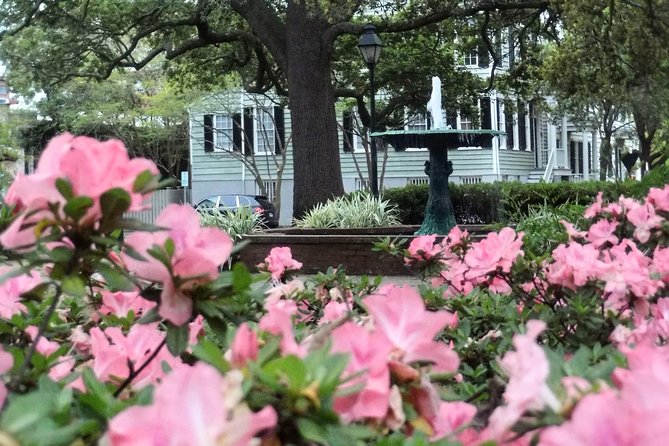
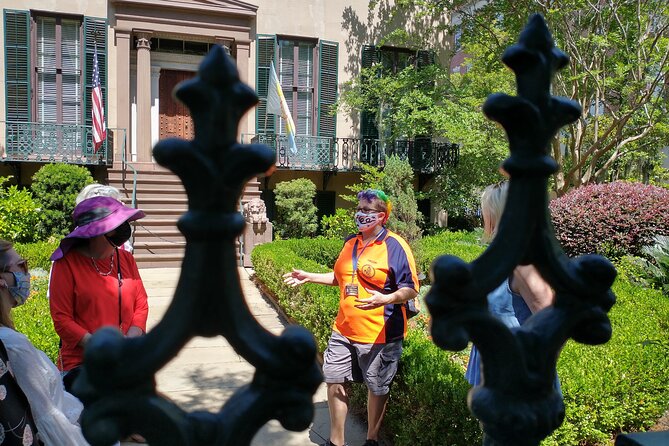
The Andrew Low House is one of the most personal stops on the route. Its garden was lovingly developed by Juliette Gordon Low, founder of the Girl Scouts, and the planting includes several varieties of camellias, crepe myrtles, narcissus, and other flowers.
Camellias receive special attention because they were Juliette Gordon Low’s favorite. That small detail makes the garden feel connected to a person rather than simply labeled as a historic property.
The stop is scheduled for about 10 minutes. One practical warning is important: the garden may be closed depending on the house schedule. You can still see parts of the garden from outside the fence, but the experience may be less complete on a day when access is restricted.
I appreciate that this limitation is clear rather than hidden. You should not book the walk expecting a guaranteed garden entry. Think of the Andrew Low House as a stop with a possible bonus, not the sole reason to reserve the tour.
Madison Square slows the pace with a long plant list
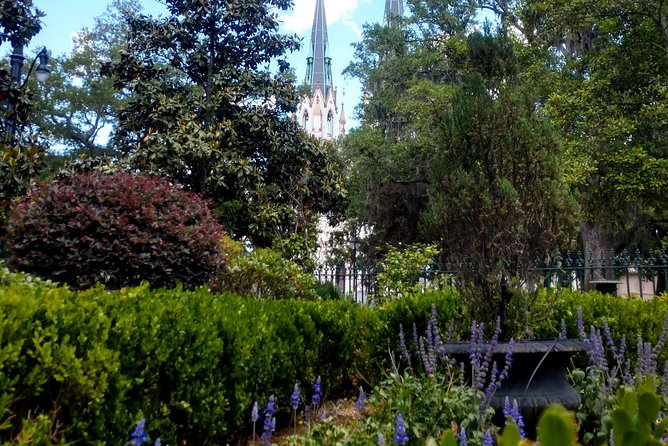
Madison Square adds another set of species and another chance to compare formal public planting with private gardens nearby.
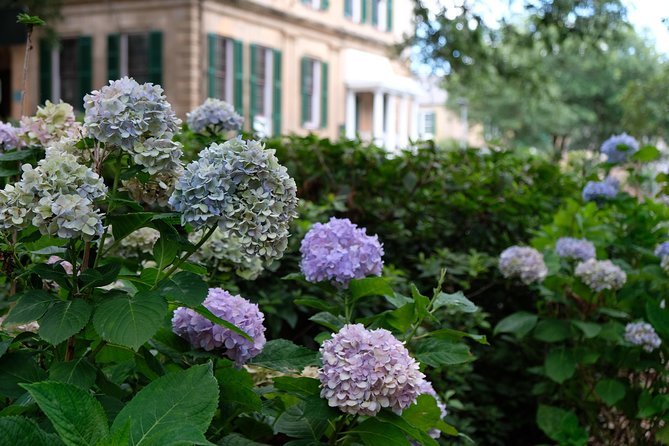
The guide discusses agapanthus, reed canary grass, and big-leaf hydrangeas. You may also see large lacy tree philodendrons, shrimp plants, and a Japanese cherry blossom. The variety is the point. Savannah’s greenery is not just live oaks and Spanish moss, although those are the images most people bring with them.
The stop lasts about 10 minutes. It is a good place to ask how a plant differs from something similar in your home growing zone. One of the most useful guide qualities praised in the feedback is the ability to compare Savannah plants with conditions elsewhere, especially for people who garden at home.
That kind of comparison makes the tour practical. You are not only collecting names. You are learning why a plant thrives here and what might make it difficult to grow somewhere else.
Jones Street shows the city’s private gardens
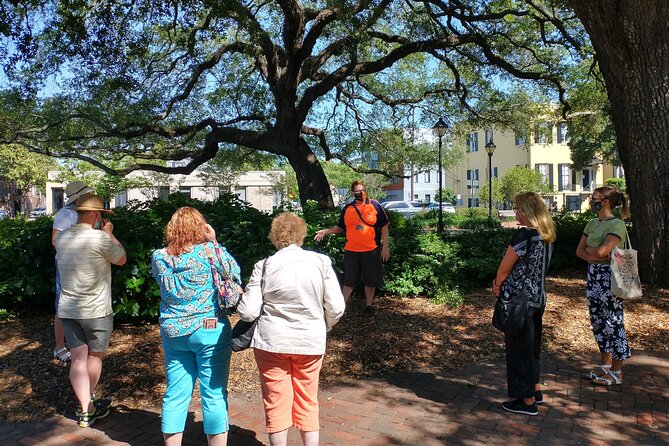
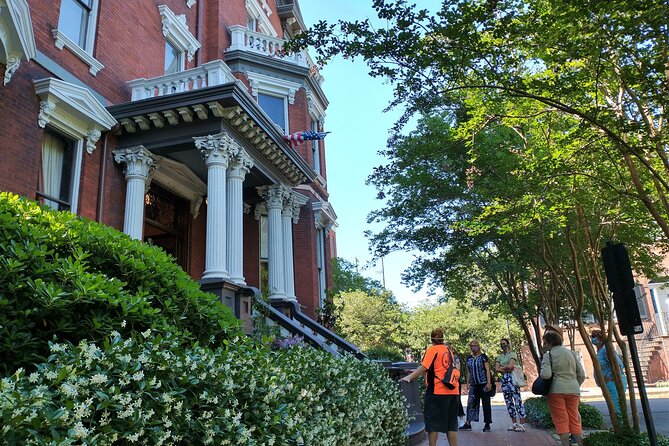
The walk along Jones Street shifts the focus from public squares to residential views. Better Homes and Gardens has called it the prettiest neighborhood to live in in the country, and the route uses the street’s live oak canopy, private gardens, and ironwork as a moving classroom.
Because many gardens are private, you should expect to admire them from the street rather than enter them. That is part of the appeal. The route lets you see how planting, house design, shade, and decorative ironwork work together in a Savannah neighborhood.
This segment also gives the guide room to discuss additional plant life and metalwork without the boundaries of a formal stop. Keep your eyes up and down: branches create the canopy overhead, while fences and garden edges offer smaller details at street level.
Monterey Square adds olives, juniper, and gardenias
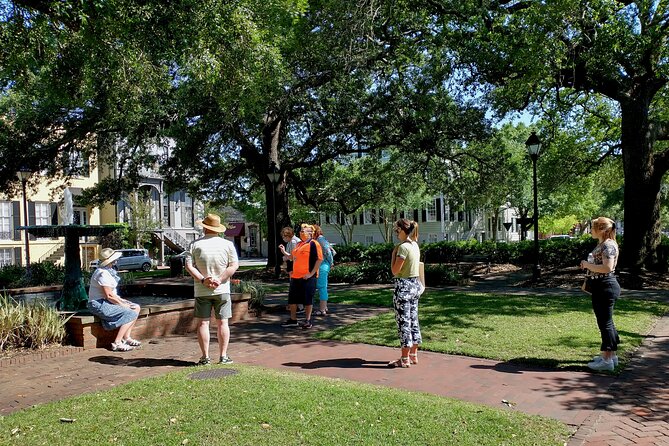
Monterey Square continues the pattern of combining plants with architecture. Here, the guide discusses Georgia’s olives, along with juniper and gardenias. More examples of local ironwork appear around the square.
The subject of Georgia’s olives is particularly useful because it challenges the assumption that Savannah’s planting story is limited to the most obvious Southern species. The walk keeps introducing plants that connect local gardening to wider traditions and uses.
Monterey Square is also a reminder that this is not a garden tour in the narrow sense. You are moving through public urban spaces, looking at the relationship between plants, buildings, fences, fountains, and streets. The experience suits you if you enjoy connections between subjects rather than isolated facts.
Forsyth Park provides a fitting finish
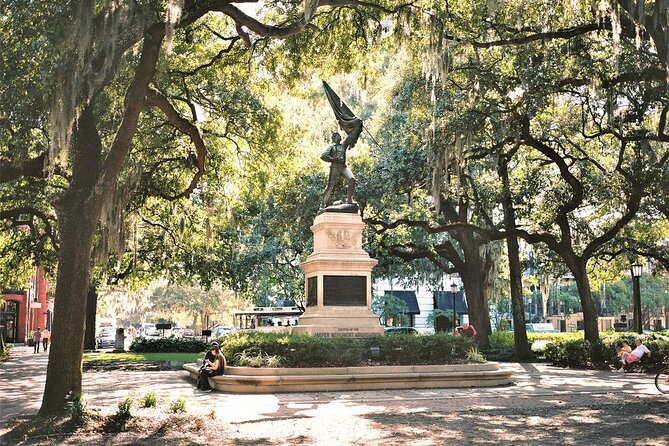
The route ends at Forsyth Park, Savannah’s largest open green space. The closing discussion covers the oldest live oak in downtown Savannah, the Savannah Scent Garden for the Blind, live oaks, and resurrection fern.
The Scent Garden gives the finale a useful sensory and practical angle. It broadens the idea of a botanical garden beyond visual beauty. Resurrection fern, meanwhile, offers a memorable final plant subject because its name alone invites a closer look.
Ending at Forsyth Park is convenient for planning the rest of your day. You are not returned to Columbia Square, so consider that when organizing transportation or meeting companions. The end point is listed at the Marine Corps Memorial at 1 West Gaston Street.
The final stop is scheduled for about five minutes, but it completes the larger theme. You have seen plants in squares, a cemetery, a historic garden, a neighborhood, and the city’s largest park. Savannah’s greenery is not a decoration added to the city. It is one of the city’s main organizing features.
The guide makes the difference
The most consistent praise goes to Sargon. I would place her enthusiasm near the top of the reasons to book. She is described as warm, energetic, easy to talk with, and able to explain complex material in plain language.
The best guides do more than recite names. Sargon is praised for stories about plant uses, folklore, history, and the connection between vegetation and Savannah’s past. She also answers questions and adjusts the material to the group.
That flexibility is important for mixed groups. A serious gardener can ask detailed questions, while someone who cannot identify a shrub can still follow along. The tour has enough range to serve both, provided everyone is comfortable with a conversational pace.
One practical strength is the guide’s attention to heat. A past participant specifically noted that Sargon chose shaded places for stops on a hot day. You should still bring water and wear a hat or visor, but thoughtful shade breaks can make a major difference.
Is $40 a fair price?
At $40 per person, this is not the cheapest way to walk around Savannah, since the squares and parks themselves are free. The value comes from the interpretation.
You are paying for two hours of guided attention across several locations, with plant identification, local history, cemetery context, architectural details, and access to a subject most standard city walks ignore. If you only want to see the main sights quickly, the price may feel less worthwhile. If you want to understand what you are looking at, it is a reasonable fee.
The maximum group size is 20 people. That is large enough for a lively group but small enough that questions should remain practical, especially with a guide who welcomes them. The 98 percent recommendation rate and 4.9 rating from 44 ratings point to a strong record, with the guide’s delivery as the clearest reason.
The experience is commonly reserved about 27 days ahead. That does not guarantee every date will sell out, but it suggests you should reserve early if the botanical walk is important to your schedule.
What to bring and who should book
Plan for a full two hours on foot. Wear comfortable shoes, bring water, and use sun protection. A hat or visor is a sensible addition, especially in warmer weather.
The tour is near public transportation, uses a mobile ticket, and allows service animals and well-behaved pets. Most people can participate, but it is not recommended for anyone who cannot walk or roll one-third of a mile without resting.
I would recommend it most strongly for:
- Gardeners who want plant names, uses, and growing comparisons
- History fans who enjoy smaller details rather than only major landmarks
- Repeat visitors looking for a new way to see familiar squares
- Couples or families who like a slow, question-friendly walk
- People who enjoy architecture and ironwork as much as flowers
I would be more cautious if you dislike stopping often, struggle in heat, or want entry inside every historic property. The Andrew Low House garden may be closed, and much of the experience takes place outdoors.
The tour requires good weather. If poor weather causes cancellation, you are offered another date or a full refund. You can cancel for a full refund up to 24 hours before the start time, but changes or cancellations inside that window are not accepted.
Should you book the Botanical Tour?
Book this walk if you want Savannah to become more than a collection of pretty squares. The route gives you practical plant knowledge, unusual details, cemetery and garden context, and a closer look at ironwork and residential streets.
I would choose it over a standard sightseeing walk if you have already seen the major landmarks or if you prefer learning through small observations. The strongest reason to go is Sargon’s engaging approach, especially if you are unsure whether a plant-focused tour sounds too specialized.
Skip it if you need a short, seated activity or if walking outdoors in warm weather is difficult. For everyone else, $40 buys a thoughtful, highly specific look at the natural side of Savannah, with enough history and architecture to keep non-gardeners interested.
FAQ
How long does the Botanical Tour last?
The tour lasts approximately two hours.
Where does the tour begin?
It begins at Columbia Square in Savannah, Georgia.
Where does the tour end?
It ends at the Marine Corps Memorial at 1 West Gaston Street in Savannah.
What places does the tour visit?
The route includes Columbia Square, Colonial Park Cemetery, Lafayette Square, the Andrew Low House area, Madison Square, Jones Street, Monterey Square, and Forsyth Park.
How much does the tour cost?
The listed price is $40 per person.
How many people can join the tour?
The tour has a maximum group size of 20 people.
Is the Andrew Low House garden always open?
No. The garden may be closed depending on the house schedule, but some of it can still be viewed from outside the fence.
What happens if the tour is canceled because of weather?
You will be offered a different date or a full refund if poor weather causes cancellation.
Just added around the USA
- Woodside: Filoli Historic House and Garden Entry Ticket★ 4.9 · 9 reviews
- Williamsburg: Busch Gardens Ticket & Water Country Option★ 4.2 · 101 reviews
- Miami: Vizcaya Museum & Gardens Ticket with Transport★ 4.6 · 9 reviews
- DC Bus Tour with 10+ Stops & Potomac Cruise, Optional US Capitol★ 5.0 · 2 reviews
- National Mall & Cherry Blossoms with Washington Monument Ticket★ 4.5 · 21 reviews
- Narrated Boat Cruise & DC Bus Tour with 10 Stops, Entry Tickets★ 4.5 · 61 reviews
- Full Day DC: City Bus Tour, Seasonal Boat Cruise, Entry Tickets★ 4.5 · 70 reviews
- DC Kenwood Cherry Blossoms Half-Day Small Group Tour★ 3.5 · 17 reviews
Botanical Gardens, compared.

Blanes: Marimurtra Botanical Garden Entry Ticket
Read our review →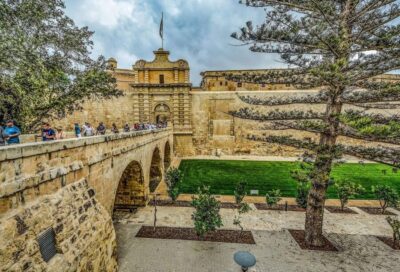
Malta: Mdina, Dingli Cliffs and San Anton Botanical Gardens
Read our review →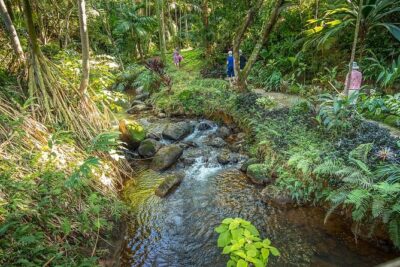
Princeville Botanical Gardens Tour and Chocolate Tasting Ticket
Read our review →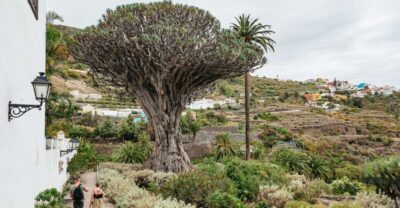
Icod de los Vinos: Dragon Tree & Botanical Garden Ticket
Read our review →
Maleny Botanic Gardens Bird Aviary Experience Ticket
Read our review →
Dubrovnik Countryside and Arboretum ATV Tour with Brunch
Read our review →
Big Island Waterfalls Tour with Swimming and Botanical Garden
Read our review →Browse the lists this tour appears in