
Review · JAPAN
Osaka: teamLab Botanical Garden Entry Ticket
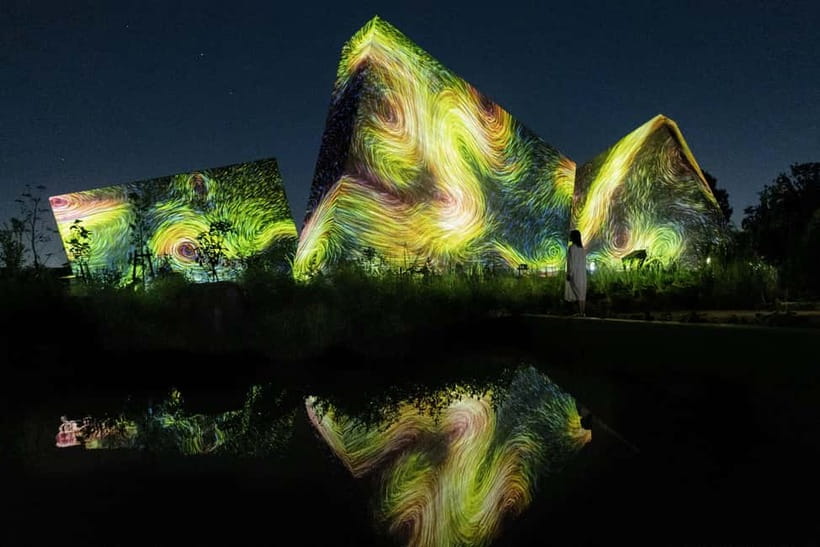
Light changes the garden after dark. Osaka’s teamLab Botanical Garden turns Nagai’s 240,000-square-meter grounds into an outdoor art walk, pairing trees, ponds, flowers, music, and digital light. I like the way the installations use the existing plants instead of putting nature on the sidelines. I also like the freedom to wander at your own pace, with no fixed performance to catch.
The main thing to consider is that this is an outdoor night experience, not a huge indoor teamLab museum. Some installations begin quietly, and the walk can be dark around tree roots and flower beds. Bring sensible shoes, insect repellent, and patience. The reward comes when you slow down and let the garden do some of the work.
Key points to know before you go

- A 240,000-square-meter garden: Nagai Botanical Garden contains about 1,200 plant species, with a central pond and broad paths to explore.
- The artwork comes alive at night: Light, sound, and digital effects react to plants, animals, and people.
- You become part of the display: Some works respond as you approach, move around, or interact with them.
- The price is modest: At about $11 per person, this is one of Osaka’s easier evening activities to fit into a sightseeing budget.
- Plan for an outdoor walk: Long pants, a long-sleeved shirt, comfortable shoes, and insect repellent are useful.
- Arrive before the final entry time: Late arrival means denied entry, and re-entry is not allowed.
What makes this teamLab experience different
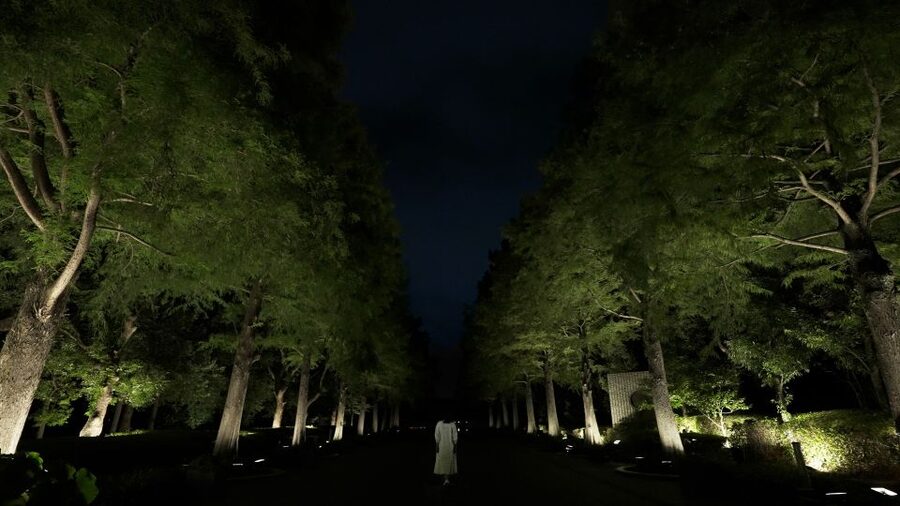
The word teamLab often brings to mind indoor rooms packed with projections and mirrors. This Osaka experience takes another route. Instead of moving through a gallery, you walk through a working botanical garden after sunset.
That difference matters. The trees, pond, shrubs, and open paths are not just decoration. They shape the mood of each installation. A glowing form near water feels different from a light effect among tall plants, and the dark spaces between works give your eyes time to rest.
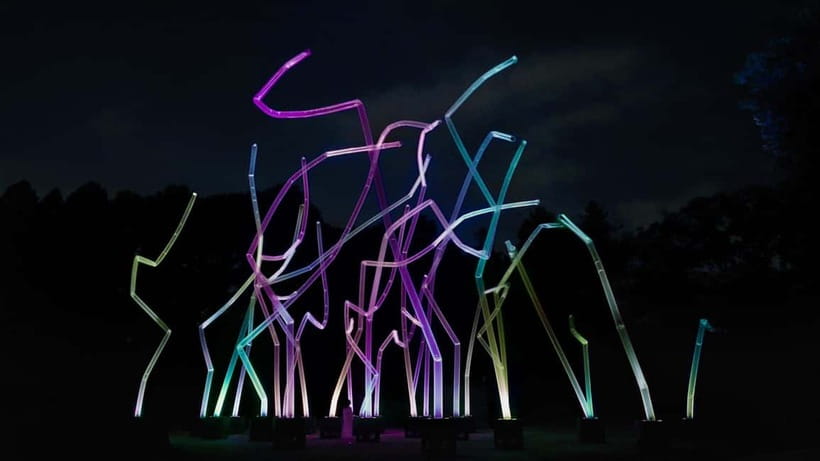
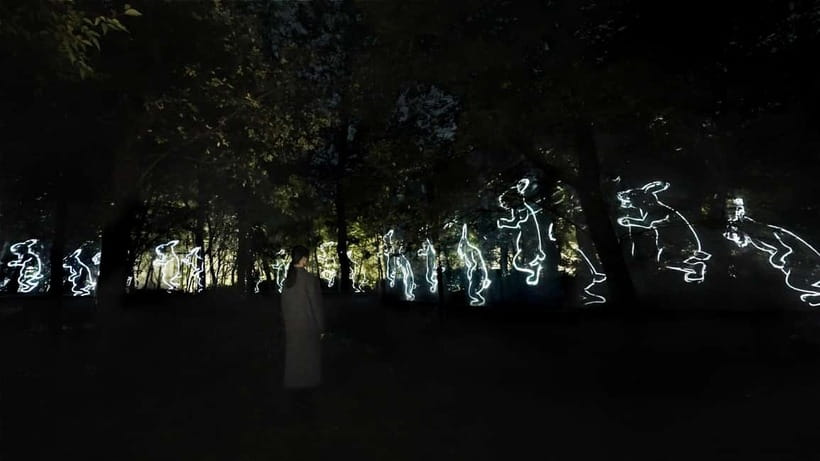
The project’s central idea is simple but thoughtful: digital light can turn nature into art without physically altering or damaging it. The technology is temporary, while the garden remains a living place. That gives the experience a calmer feeling than a typical indoor exhibition.
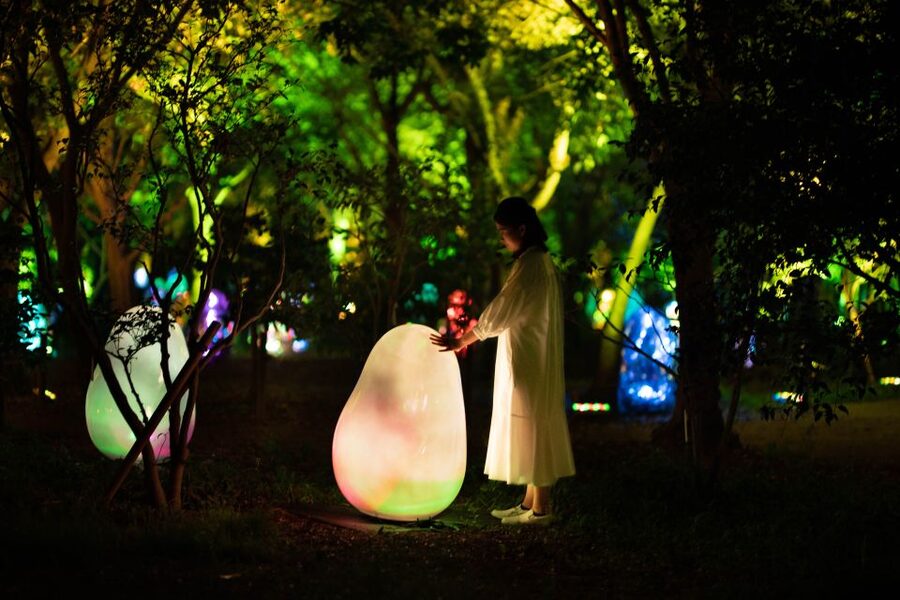
You will see displays that react to the surrounding plants, animals, and people. Your movement can become part of the visual effect. This is not a show where you stand in one place and watch from a distance. You walk through it, sometimes triggering changes simply by being there.
More Botanical Gardens in Japan:
- TeamLab Botanical Garden Osaka Ticket
★ 3.5 · 6 reviews - Calligraphy and Tokyo Great Buddha, Botanical garden, art museum
★ 5.0 · 2 reviews - Walking tour, Tokyo Great Buddha, Botanical Garden, etc.
★ 5.0 · 2 reviews
Start with Nagai’s plants, then wait for darkness
Nagai Botanical Garden is home to roughly 1,200 species of plants. The garden covers a large area, so this is not a quick room-by-room attraction. You will be walking outdoors, often on paths that connect different sections of the grounds.
The central pond is an important stopping point. During the day, it offers a quiet view across the garden. At night, its reflections and surrounding lights give it a different character. Several people particularly enjoy the pond area because it combines open water, music, and changing illumination without feeling rushed.
If you arrive while there is still some daylight, you get two experiences for one admission. First, you can see the garden as a botanical collection and notice its trees and plant beds. Then, as the sky darkens, the same setting changes into an art space.
That transition is one of the best reasons to pay attention to your entry time. A start around 6 p.m. can work well when darkness has arrived, especially in the colder months. Arriving too early may mean waiting for the effects to look their best, while arriving too late risks missing the final entry window.
The garden is especially attractive during seasonal changes. Spring visitors may see cherry blossoms lit at night, while a full moon can add another natural layer to the experience. These details are not guaranteed, but they show why the same installation can feel different at different times of year.
Walking through the installations
The path does not feel like a formal guided tour. You are free to wander, pause, and return your attention to whatever catches your eye. That freedom suits the concept. The art is less about following a plot and more about noticing how light behaves in a living setting.
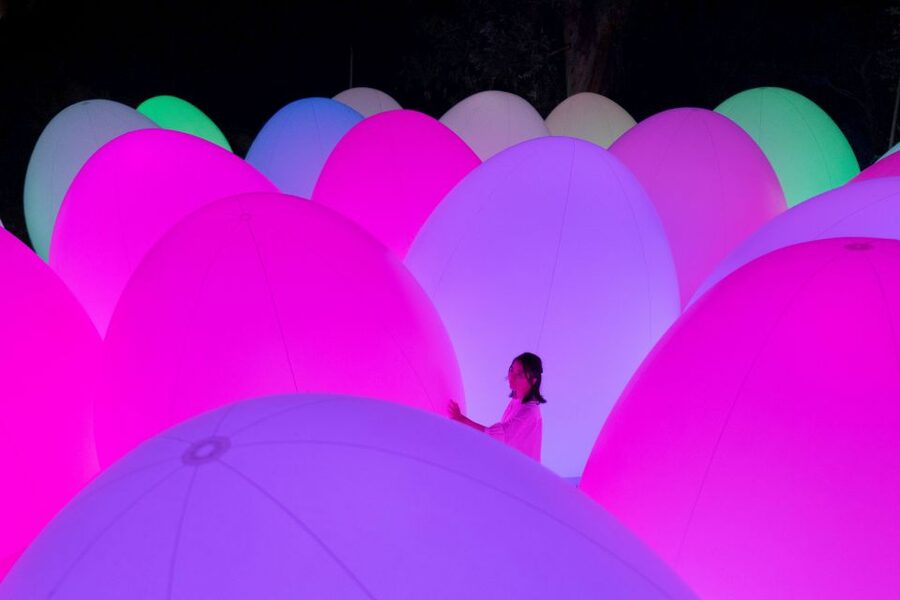
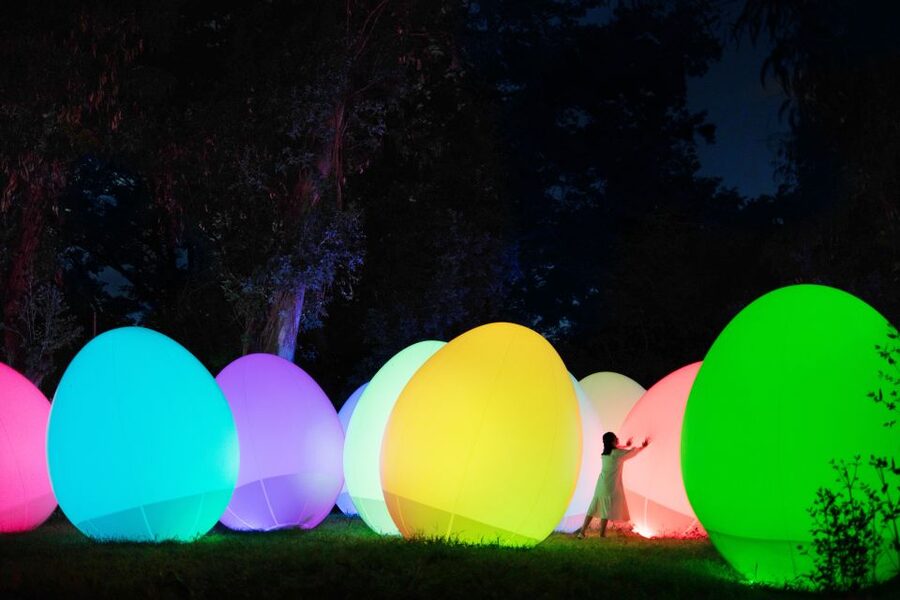
Some works use glowing shapes that appear among the trees or along the paths. Large egg-shaped lights are a favorite, particularly for families with children. They can look playful and inviting, while other works feel quieter, stranger, or more dreamlike.
The first section may seem modest if you expect a constant stream of spectacular effects. Give it time. The experience builds as you move from one work to the next, and the contrast between simple light and more elaborate displays makes the later moments more effective.
Music is a major part of the mood. Classical instruments, Japanese drums, electronic sounds, and natural surroundings can appear together in the wider teamLab program, while the botanical garden’s displays are frequently paired with atmospheric audio. The result can feel peaceful in one area and more energetic in another.
I would not treat this as a photo checklist. You can take pictures, but flash photography is not allowed, and tripods, selfie sticks, drones, and flashlights are prohibited. More importantly, rushing from one installation to the next weakens the experience. Stop, listen, watch the light shift, and let other people enjoy the space too.
The best parts, and the limits
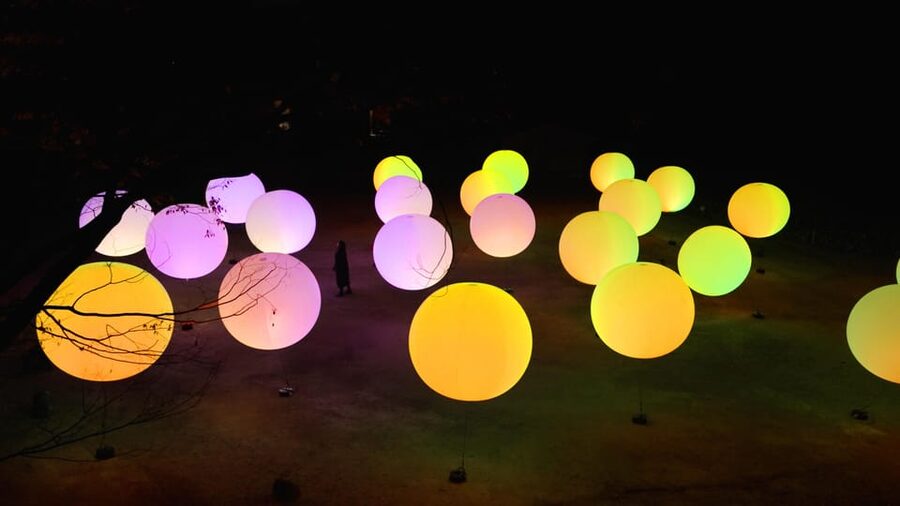
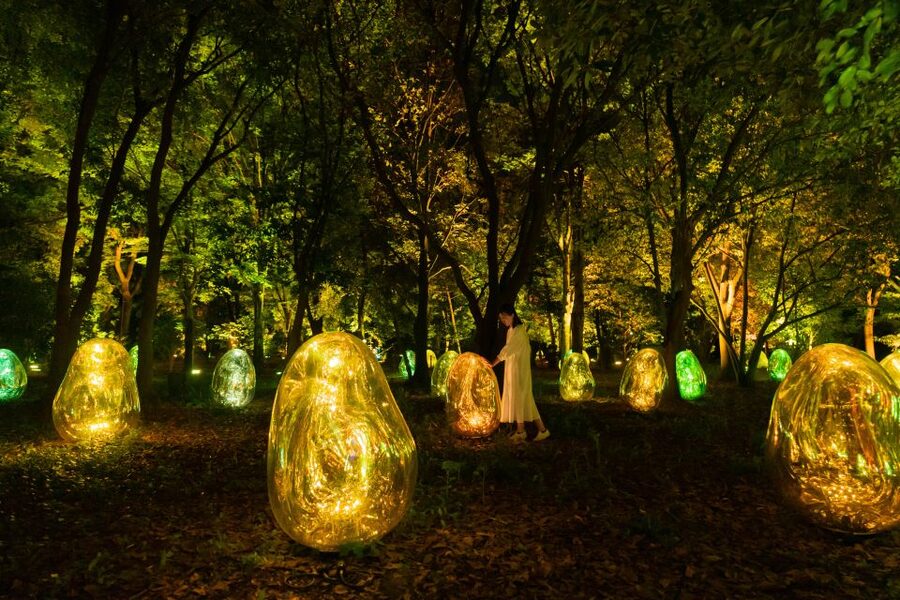
The strongest feature is the relationship between the art and its setting. Light on a blank wall can be impressive, but light passing through branches or reflecting on pond water has a sense of place. The garden gives the digital work texture and depth.
The free-flowing layout is another advantage. You are not locked into a short timed performance. You can spend more time at the pond, linger near the larger glowing forms, or move on when an area feels crowded.
The admission cost also helps. At about $11 per person, the experience offers a full evening activity for less than many major attractions. You are paying for access to both the botanical garden setting and the night exhibition, not for transport, food, or a guided tour. At this price, it offers good value if you enjoy visual art, gardens, photography, or unusual evening walks.
There are limits. This is not directly comparable to the large indoor teamLab attractions in Tokyo. The Osaka version is quieter, more open, and less packed with room-sized digital effects. If you want nonstop spectacle, you may find parts of it restrained.
The ground can also be uneven or hard to see in places. Large roots and unlit edges around flower beds can make walking less easy, especially after dark. Comfortable shoes matter, and you should avoid treating the garden like a polished indoor gallery.
There are no restaurants or cafés on site. Vending machines may be available, but you should not count on a full meal inside the garden. Food and alcohol are not allowed, so eat before entering if you expect to stay for the entire evening.
More Tickets in Japan:
- Kyoto: Kinkaku-ji Temple & Serene Garden Guided Tour with Tickets
★ 5.0 · 9 reviews - Tokyo: Ashikaga Flower Park with Entry Ticket
★ 5.0 · 3 reviews - Tokyo: Hama-rikyu Garden Guided Tour with Entry Ticket
★ 4.6 · 2 reviews - Kyoto: Kinkaku-ji Temple & Serene Garden Tour with Tickets
★ 5.0 · 2 reviews
Getting there and choosing your timing
Nagai Botanical Garden is reached by subway and then a walk. The walk from the station is manageable, but it is not directly beside the entrance. Allow extra time for finding the right route, particularly if you are arriving after dark or navigating Osaka for the first time.
The return journey deserves some thought. After the exhibition ends, taxis may be difficult to find in this part of the city, and the nearest station can be about a 15-minute walk away. I would not leave transport planning until the final light display fades.
The garden is open for a one-day visit based on the time you select. Check the available starting times before booking, and arrive before the final entry time. If you arrive late, you can be refused entry. Re-entry is not allowed, so bring anything you need before passing through the entrance.
The staggered entry approach can help the grounds feel less crowded than a single mass admission. Still, the park can fill quickly. Arriving early in your chosen window gives you more room to enjoy the first sections and reduces the chance of walking into a busy stretch.
What to wear and bring
This is a night walk in a garden, so pack for the setting rather than for a museum.
- Wear comfortable shoes for extended walking.
- Choose long pants and a long-sleeved shirt.
- Bring insect repellent.
- Check the weather before booking because the experience is outdoors.
- Carry only what you need, since luggage and large bags are not allowed.
Pets, drones, tripods, selfie sticks, flashlights, food, alcohol, and drugs are prohibited. Photography is permitted within the stated rules, but flash photography is not. Keep your hands free and your equipment simple.
Children must be accompanied by an adult aged 18 or older. The rule requires one accompanying adult for every three children. Wheelchair users and children in strollers may enter, although some artworks may not be accessible. Contact the venue directly if you need detailed accessibility information.
Who will enjoy it most
I would recommend this for anyone who wants a slower Osaka evening after busy shopping streets and crowded sights. The garden gives you room to walk, and the sound and light create a change of pace without requiring a full-day commitment.
It works particularly well for couples. The pond, trees, music, and gentle lighting create a relaxed setting, and the evening walk can feel romantic without being overly formal.
Families may enjoy the large glowing forms and interactive elements. Children can see their movements affect parts of the display, although adults should supervise closely because the paths may be dark and uneven.
It is also a good choice for people who have already seen teamLab in Tokyo and want a different format. Do not expect a smaller copy of an indoor digital museum. Think of it as a botanical garden that becomes an outdoor art project.
You may want to skip it if rain would ruin your evening, if walking at night is difficult for you, or if you dislike open-air exhibitions. The experience depends on the setting, and the setting depends on the weather and darkness.
Is the $11 admission good value?
Yes, for most people interested in gardens or light art. The admission is low enough that you are not taking a major financial risk, and you can spend a substantial part of the evening walking at your own pace.
The value comes from the combination of setting and atmosphere. You are not simply looking at colored lights. You are seeing them interact with trees, water, plants, sound, and human movement. That connection gives the visit more substance than a standard light show.
The price is less compelling if you are expecting a large, nonstop indoor spectacle. Some areas begin quietly, and the display is spread across a broad garden rather than concentrated in a few dramatic rooms. Go for the outdoor setting and the gradual change in mood, not only for big photo moments.
Should you book teamLab Botanical Garden Osaka?
I would book it if you want a reasonably priced evening walk with art, music, plants, and a little technology. Arrive before full darkness if you want to see the garden change, or choose a time when the night effects are already working at their strongest.
Wear proper shoes, plan the walk back to the station, and avoid scheduling a tight dinner reservation afterward. Take your time at the pond and the larger glowing installations. The more patiently you explore, the more the experience gives back.
I would choose another attraction if you want a major indoor teamLab production or need a fully weatherproof activity. For everyone else, this is a gentle, unusual way to see Osaka after dark, with a strong setting and a fair price.
FAQ
Where is teamLab Botanical Garden Osaka located?
It is located in Nagai Botanical Garden in Osaka, on Honshu, Japan.
How much does admission cost?
The listed price is about $11 per person.
How long is the ticket valid?
The ticket is valid for one day, with starting times available according to the date you select.
Is the experience indoors or outdoors?
It is an outdoor experience in the grounds of Nagai Botanical Garden.
Can I take photographs?
Yes, photography is allowed. Flash photography, drones, tripods, selfie sticks, and flashlights are not allowed.
Can I re-enter after leaving?
No. Re-entry is not allowed.
Are food and drinks available inside?
There are no restaurants or cafés on site. Vending machines may be available, but food and alcohol are not allowed inside.
What should I wear?
Wear comfortable shoes, long pants, and a long-sleeved shirt. Insect repellent is also recommended.
Can children enter?
Yes, but children must be accompanied by an adult aged 18 or older. One adult must accompany every three children.
Is the site accessible for wheelchairs and strollers?
Wheelchair users and children in strollers may enter, but some artworks may not be accessible. Contact the venue for more detailed information.
Just added around Japan
- Private tour – Scenic Fuji Escape: Hakone, Peace Park & More★ 5.0 · 4 reviews
- TOKYO: Tailored Gardens tour with Pro Gardener by E-bike -BASIC★ 5.0 · 2 reviews
- Tsukiji Food Strolling and Hama Rikyu Garden Walking Tour★ 5.0 · 7 reviews
- Tokyo: Serene Sakura & Sake: An Exclusive Brewery Pairing Lunch★ 5.0 · 2 reviews
- Full Guided Mt. Fuji & Shiba-Sakura Festival One Day Pvt.Tour★ 5.0 · 6 reviews
- Tokyo Cherry Blossom Half Day Walking Tour with a Local Guide★ 3.5 · 4 reviews
- Cherry Blossom Highlights, Asakusa, Ueno, Imperial Palace Garden★ 4.5 · 4 reviews
- Licensed Guide Tokyo Meguro Cherry Blossom Walking Tour★ 4.5 · 13 reviews
Botanical Gardens, compared.
Blanes: Marimurtra Botanical Garden Entry Ticket
Read our review →
Malta: Mdina, Dingli Cliffs and San Anton Botanical Gardens
Read our review →
Princeville Botanical Gardens Tour and Chocolate Tasting Ticket
Read our review →
Icod de los Vinos: Dragon Tree & Botanical Garden Ticket
Read our review →
Maleny Botanic Gardens Bird Aviary Experience Ticket
Read our review →
Dubrovnik Countryside and Arboretum ATV Tour with Brunch
Read our review →
Big Island Waterfalls Tour with Swimming and Botanical Garden
Read our review →
Browse the lists this tour appears in