
Review · MALTA
Valletta: Monastery and Secret Garden Entry Ticket
Step inside a place Valletta kept private for centuries. Mysterium Fidei gives you a rare look at St Catherine’s Monastery, where cloistered Augustinian nuns have lived for more than 400 years. I like the quiet central garden and the chance to see the plain rooms, crypt, and working spaces behind the monastery walls. The main drawback is scale: the complex is compact, and the audio guide depends on your phone and app.
I also like the self-paced format. You can listen in eight languages, read the English information boards instead, and linger as long as you wish within the opening hours. Staff at the entrance are helpful, though the app may load slowly or work poorly on some older phones.
For about $12, this is a fair-value stop if you care about ordinary religious life, historic buildings, and peaceful corners of Valletta. It is less satisfying if you want a large museum, a live guided tour, or a busy schedule packed with major sights.
Key points to know before you go
- The monastery reopened after 400 years of privacy: You enter a place that was not designed as a public attraction.
- The cloister garden is the emotional heart: Plants, old vines, and a fountain create a calm break from Valletta’s stone streets.
- The tour takes about 40 minutes: After that, you can continue at your own pace through the cloisters and garden.
- The audio guide uses your own phone: Download the Mysterium Fidei app using the site’s Wi-Fi, then scan QR codes at 15 information points.
- The crypt gives the visit added weight: It serves as the final resting place of the nuns.
- Go earlier for more breathing room: The site is not large, so quiet hours make it easier to pause and listen.
Finding St Catherine’s Monastery in Valletta
Mysterium Fidei is at the entrance on St Christopher Street, at the corner with Strait Street. That puts it in the middle of Valletta, where you can easily combine it with a walk through the city rather than plan a separate outing.
The location is useful because the monastery can feel like a pause button. Outside, Valletta is full of hard limestone, narrow streets, church facades, and steady foot traffic. Inside, the pace changes. You are not entering a grand palace built to impress visitors. You are entering a practical religious home that only recently began receiving the public.
Look for the entrance on the corner, then allow a few minutes for the receptionist to explain the Wi-Fi and app. Several people have found the staff particularly friendly and helpful. One visitor received a glass of water on arrival during a hot summer day, a small courtesy that matters in Malta’s heat.
The building is old and access includes a few low stone steps. If you need help getting in, contact the site ahead of time. This is not presented as a fully modernized attraction, and that is part of its character, but it also means you should not expect smooth museum-style access everywhere.
More Tickets in the world:
- Paris: Versailles Palace and Gardens Full Access Ticket
★ 4.6 · 41,579 reviews - Marrakesh: Majorelle Garden Entry Tickets
★ 4.5 · 9,651 reviews - Florence: Reserved Entry Ticket to the Boboli Gardens
★ 4.4 · 5,275 reviews
What the 40-minute audio tour covers
The audio tour is built around 15 information points placed around the monastery. You scan the QR code at each point and listen from your own phone. The route explains the building, the rooms, the religious community, and the way the nuns organized their lives within the walls.
The audio is available in Maltese, English, French, Italian, German, Spanish, Polish, and Russian. That is a useful choice for international visitors, especially since the subject is more personal and reflective than a standard architectural tour.
The central idea is the life of a closed order. When the nuns joined, they vowed never to leave the monastery. Their world was built around prayer, work, self-sufficiency, and strict separation from life outside. The tour helps you understand how a community could function for generations without its members regularly going into Valletta.
You will hear about the simple way the nuns lived and the tasks that helped sustain the monastery. The building was not merely a place for worship. It was their home, workplace, and complete social world.
That context matters. Without it, you might simply see old rooms and a pleasant garden. With it, the ordinary details become more affecting. A courtyard, a work area, or a narrow passage tells you something about routine, privacy, and devotion.
The audio is not a traditional guide walking beside you. There is no person leading a group from room to room. You manage the sequence yourself, which gives you privacy but also puts more responsibility on you. One person found that the app took a long time to load, and another discovered that an older phone could not run the updated audio properly.
For that reason, I would treat the written boards as an important backup, not an afterthought. They provide an edited version of the story in English. If your phone battery is low, your device is old, or you simply prefer reading, you can still understand the visit.
The cloisters and the secret garden
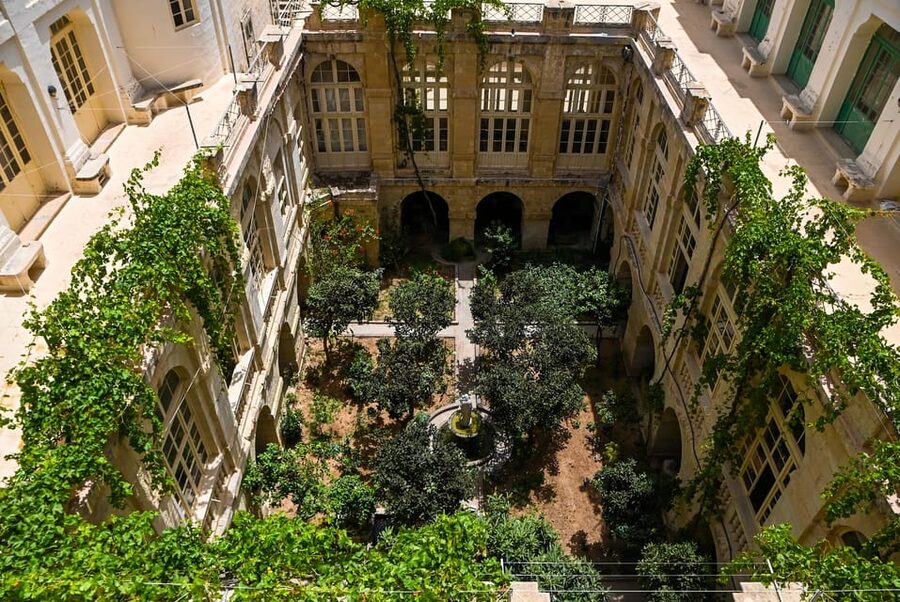
The garden is the strongest part of the experience for many people, and I can see why. Valletta has plenty of stone and very few quiet green spaces, so a planted courtyard inside an old monastery feels precious without needing to be grand.
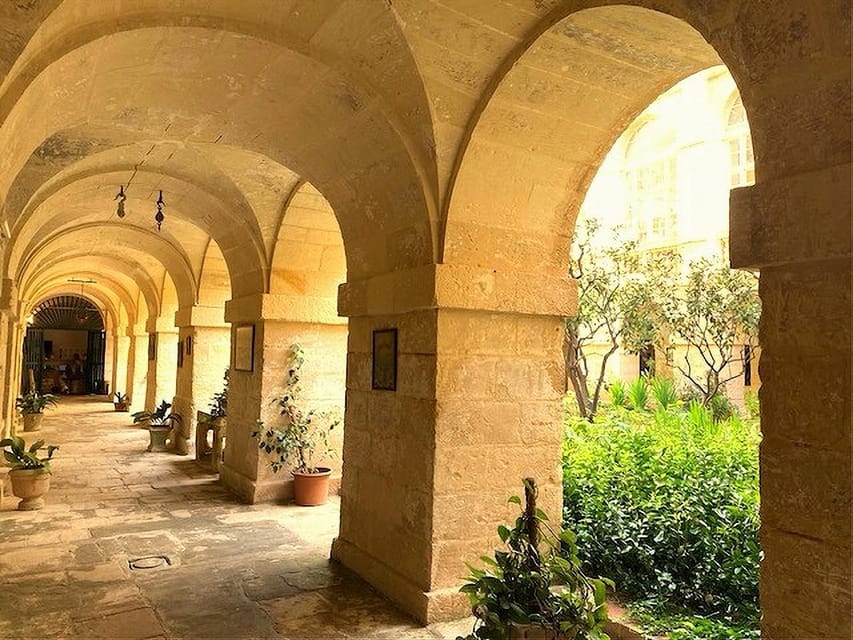
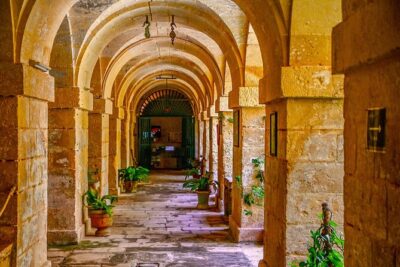
The cloister gives you a sheltered place to sit or stroll. Plants soften the hard architecture, while the fountain supplies a gentle background sound. In summer, the garden can provide welcome shade and a cooler feeling than the streets outside. One visitor described it as a peaceful refuge during the midday heat, and that is a good way to think about it.
Look upward for the old vines growing toward the light at the top of the monastery. They were once harvested to make wine. That detail gives the garden a practical past rather than making it just a decorative courtyard.
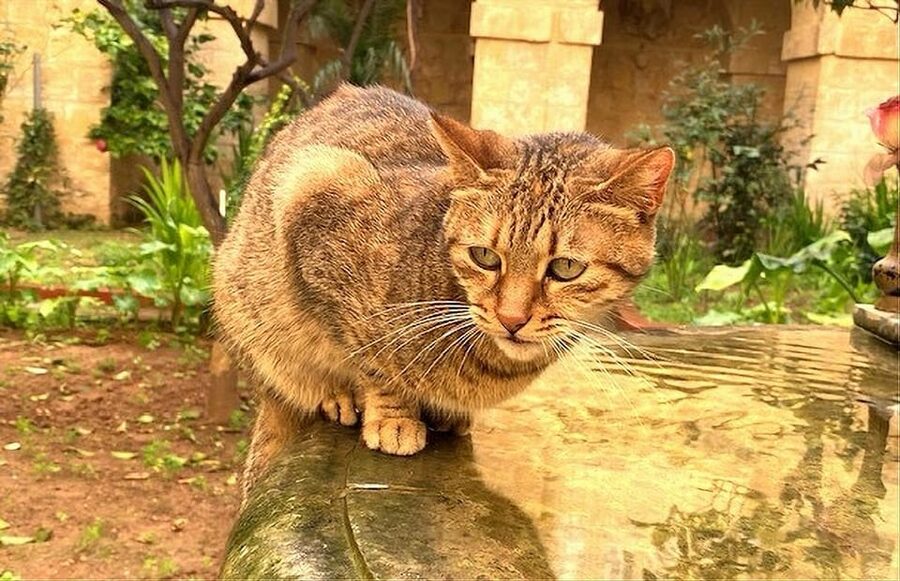
You may also encounter the monastery cat. Mina is mentioned by name, and other visitors have met additional kittens. Turtles are also kept at the site, although they can be harder to spot. These small details add life to a place that might otherwise feel solemn and formal.
The garden is not huge. You will not spend hours wandering through separate courtyards or landscaped grounds. Its appeal is concentration: a small, still space where the fountain, plants, vines, and old walls work together.
Give yourself time after the formal audio ends. The 40-minute estimate covers the main tour, not the amount of time you may want to spend sitting in the cloister. If you rush straight back onto St Christopher Street, you will miss the best part.
Seeing how the nuns lived
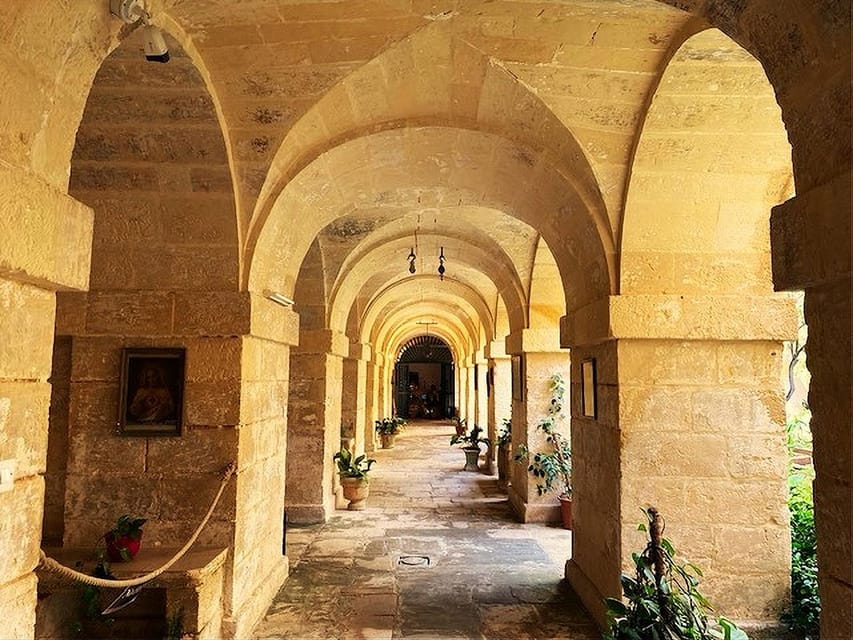
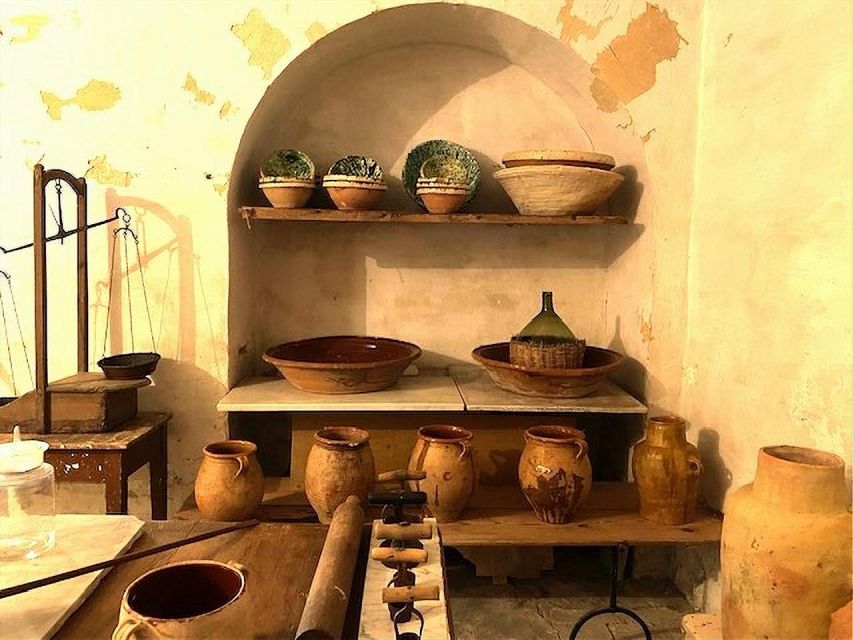
The monastery offers a rare look at domestic religious life rather than only church architecture. You are learning how women lived inside a closed community, how the building supported them, and how faith shaped each part of the day.
The tone is simple and thoughtful. You will not find a large collection of dramatic objects or a grand sequence of rooms. Instead, the value comes from the setting and the explanation of what happened there over the centuries.
Some rooms help you picture the monastery as a self-sustaining home. The nuns did not depend on regular trips into the outside world, so the complex had to support their daily needs. This makes the visit useful for anyone interested in social history, women’s religious communities, and the practical side of faith.
The monastery is still connected to living religious tradition. Current information says the building remains home to a closed order, and a recent account noted that three nuns still live there. That fact changes the mood. You are not looking at a community that exists only in the past. You are visiting a place that remains, at least in part, a home.
You should behave accordingly. Keep your voice low, follow the marked visitor areas, and remember that this is not simply a historic house. The sense of restraint is part of what makes the visit moving.
The stories may also raise difficult questions about separation, choice, and the limits placed on women in earlier societies. One visitor connected the account of the nuns with Ireland’s mother and baby homes. You do not need to share that interpretation to see why the visit can feel more serious than a standard sightseeing stop.
More Garden Tours in the world:
- Versailles: Skip-the-Line Tour of Palace and Gardens Access
★ 4.7 · 10,429 reviews - Vienna: Schönbrunn Palace & Gardens Skip-the-Line Tour
★ 4.7 · 7,739 reviews - Granada: Alhambra & Gardens Tour w/Nasrid Palaces Option
★ 4.2 · 7,022 reviews - From Paris: Versailles Palace & Gardens with Transportation
★ 4.6 · 6,222 reviews
The crypt and the weight of the visit
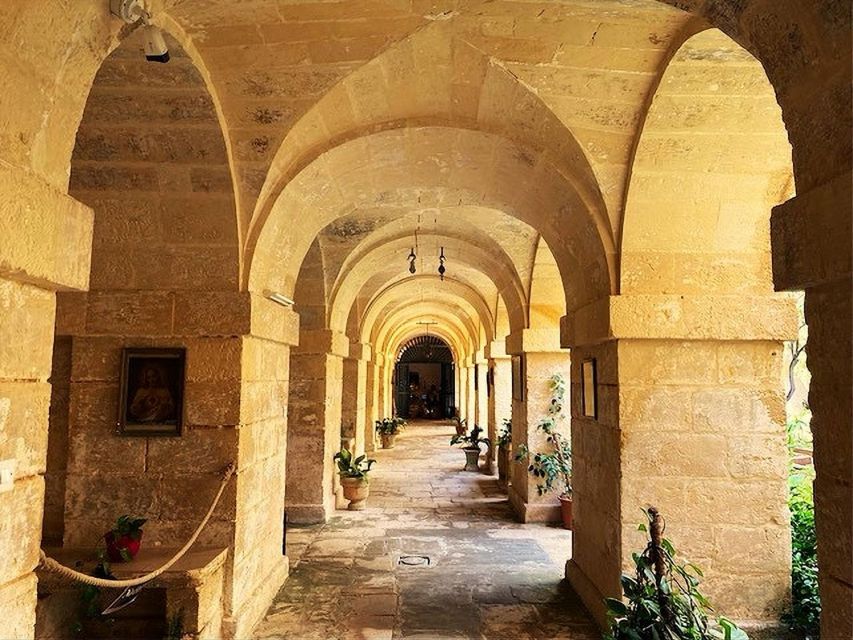
The crypt is the nuns’ final resting place. It is not a long stop, but it adds a quiet gravity to the route.
After hearing about the nuns’ lifelong commitment to the order, seeing the crypt brings the story to its final point. The monastery was not a temporary residence or a stage in a larger career. For many women, it was where they spent their entire adult lives.
I would not describe the crypt as a dramatic attraction. Its value is emotional and historical. If you prefer light sightseeing only, this part may feel somber. If you want to understand the full arc of the community, it is essential.
The building’s age also matters here. You are moving through an authentic old structure with low steps and uneven historic surfaces rather than a newly built visitor center. Take your time, especially if you have mobility concerns.
How the audio app affects the experience
The audio guide is included, but it is not a separate device handed to you at the desk. You connect to the site Wi-Fi, download the Mysterium Fidei app, and scan the QR codes around the complex.
That arrangement keeps the visit independent and makes it easy to stop, replay, or skip information. It also means your experience depends on your phone. Make sure you have enough battery and storage before entering.
The app is described as easy to use once installed, and the receptionist can explain the process. Still, loading time has caused frustration, and some older phones may not support the updated audio. If you are visiting with someone who has a newer phone, it may be sensible to use that device for the audio.
The written boards are a real advantage. They provide enough information to follow the story in English, and some people prefer reading at their own speed. The boards also let you look up from the screen and pay attention to the architecture.
I would scan the QR code at each point, then pause the audio when you want to study a room or garden feature. The site is small enough that the narration can otherwise move faster than your eyes.
Timing, crowds, and how long to allow
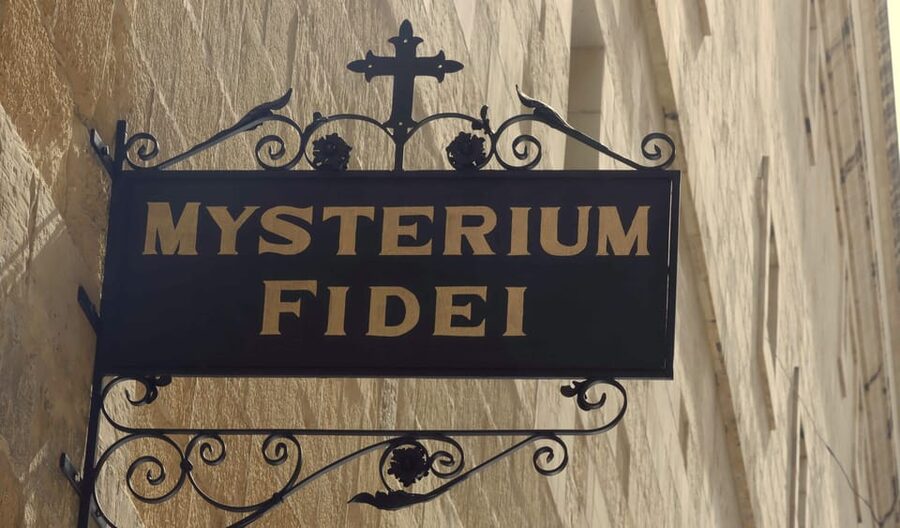
The monastery is open seven days a week. From Monday through Saturday, opening hours are 9:30 a.m. to 4:30 p.m., with last entry at 4 p.m. On Sunday, it closes at 4 p.m., with last entry at 3:30 p.m.
The advertised audio takes about 40 minutes. Add extra time if you want to read every board, sit in the garden, or wait for a quiet moment in the cloister.
Earlier in the day is the safest choice if you want a slower visit. The complex is not large, and a few people using the QR points at once can make the rooms feel crowded. Quiet periods are especially helpful if you plan to listen to the full audio rather than skim the signs.
You do not need to build an entire day around Mysterium Fidei. It works well as a one-hour stop between larger Valletta sights. At the same time, do not schedule it so tightly that you have to leave as soon as the audio finishes.
Is $12 a fair price?

The entry price is about $12 per person. For a 40-minute audio tour in a small complex, that may seem high if you judge only by size.
I think the price is reasonable when you consider what you are supporting. This is an old religious building that remains connected to a living community, and the entrance income helps keep the place operating. You are paying for access to a private space, not simply for another set of museum labels.
The value is strongest for visitors who care about the story of the nuns and want a quiet, self-guided experience. It is weaker for anyone expecting a large collection, elaborate interiors, or a full live tour.
The ticket remains valid for 365 days, which gives you useful flexibility if your plans change or if you want to return. Free cancellation up to 24 hours ahead and a reserve-now, pay-later option also make the booking less risky, though the main reason to visit is the quality of the place itself.
Who will enjoy this most?
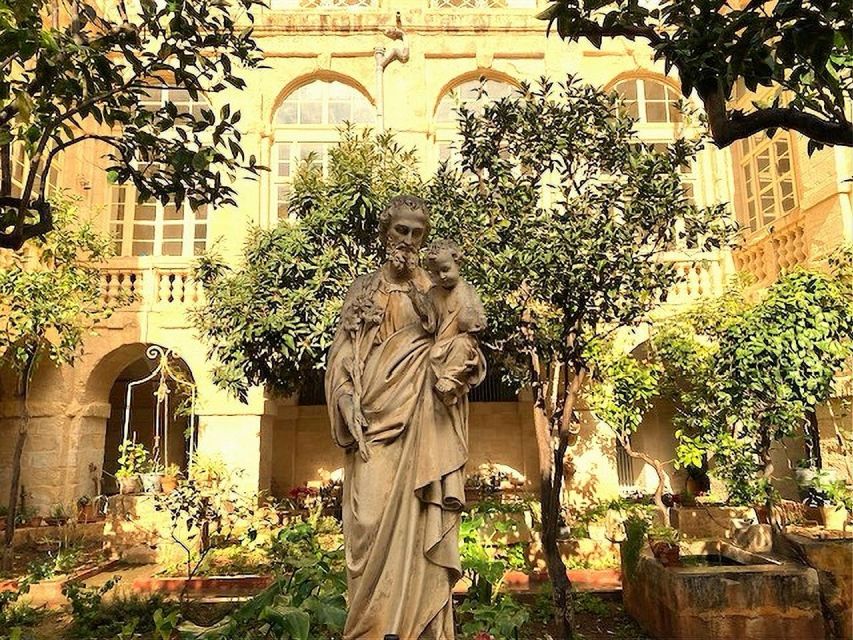
I would recommend Mysterium Fidei to you if you enjoy:
- Religious history and everyday life inside historic communities
- Small museums and preserved buildings
- Quiet gardens in the middle of cities
- Self-guided visits with time to stop and think
- Women’s history and the social role of convents
- Short attractions that fit easily into a Valletta walking day
Families can visit, and children may enjoy the cats, kittens, and turtles, but the subject is reflective rather than highly interactive. The audio may also be less appealing to young children than the garden and animals.
If you need step-free access, contact the monastery before arrival because the entrance includes a few low stone steps. If you dislike using your phone during sightseeing, rely on the English information boards instead.
Should you book Mysterium Fidei?
Book it if you want to see a side of Valletta that is quiet, personal, and still tied to a living religious community. The peaceful garden, old vines, fountain, crypt, and plain domestic spaces give the visit a clear sense of place.
Skip it if you are looking for a large attraction with a live guide, dramatic art, or hours of entertainment. The monastery is compact, and the app can be temperamental on older phones.
For most visitors with an interest in Malta’s religious and social past, I think $12 is fair. Visit earlier in the day, allow an hour, download the app with help from the reception desk, and leave time to sit in the cloister. That is where the experience settles into place.
FAQ
Where is Mysterium Fidei located?
The entrance is on St Christopher Street in Valletta, on the corner with Strait Street.
How long does the audio tour take?
The audio tour takes approximately 40 minutes. You are free to spend additional time in the garden and cloisters afterward.
Which languages are available for the audio guide?
The audio guide is available in Maltese, English, French, Italian, German, Spanish, Polish, and Russian.
Do I need to download an app?
You can use the Mysterium Fidei app by connecting to the site Wi-Fi and scanning QR codes at 15 information points. You can also read the English information boards instead.
What can I see inside the monastery?
You can see the cloisters, secret garden, historic rooms, old vines, fountain, and crypt, which is the final resting place of the nuns.
Is the building accessible for everyone?
The old building is reached by a few low stone steps. Contact the monastery in advance if you need assistance entering.
When is the monastery open?
It is open Monday through Saturday from 9:30 a.m. to 4:30 p.m., with last entry at 4 p.m. On Sunday, it is open from 9:30 a.m. to 4 p.m., with last entry at 3:30 p.m.
Just added around the world
- Royal Horticultural Society: Harlow Carr Garden Ticket★ 4.7 · 14 reviews
- Zanzibar: Jozani Monkeys, Butterfly Garden & Reptile Park★ 5.0 · 2 reviews
- Yu Garden Shanghai Entry Tickets Booking And Trip★ 3.6 · 9 reviews
- York: Castle Howard House and Gardens – Self-Guided★ 4.8 · 120 reviews
- Woodside: Filoli Historic House and Garden Entry Ticket★ 4.9 · 9 reviews
- Xochimilco floating gardens, Coyoacan and UNAM murals★ 4.0 · 6 reviews
- York: Castle Howard Gardens and Grounds Entry Ticket★ 4.5 · 23 reviews
- Woking: Royal Horticultural Society Wisley Garden Ticket★ 4.7 · 24 reviews
Malta Garden Tours, compared.
Malta: Mdina, Dingli Cliffs and San Anton Botanical Gardens
Read our review →
Mdina, Rabat, Dingli cliffs, San Anton gardens, Ta’ Qali & Mosta guided tour
Read our review →
Mysterium Fidei Monastery & Secret Garden in Valletta
Read our review →
Malta: Dingli Cliffs & Buskett Gardens Segway Tour
Read our review →
Scenic Tour by Vintage Bus to Buskett Garden & Dingli Cliffs
Read our review →
The Limestone Heritage Park and Gardens (Entry Ticket)
Read our review →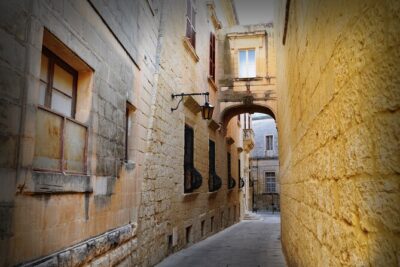
Rabat Mdina and San Anton Gardens Group Tour with St. Paul’s Catacombs
Read our review →Browse the lists this tour appears in