
Review · CHIANG MAI
Morning Cooking Class in Traditional Pavilion with Beautiful Garden – Chiang Mai
Come hungry, leave with new kitchen skills. This four-hour Chiang Mai cooking class combines a local market visit, an organic farm, and a shaded Thai pavilion where you prepare classic dishes at your own station. I like the market-to-table format, and I especially like the chance to harvest mushrooms and collect chicken eggs rather than simply arriving at a cooking school.
The small group limit of eight keeps the class personal, while the garden setting gives the morning a calm change of pace from central Chiang Mai. The main caution is the pickup service: one scheduled transfer failed and left a participant waiting for an hour, although the cooking school arranged and paid for a taxi afterward.
Key points to know before booking
- Market first, farm second: You learn how to identify and select common Thai ingredients before cooking with them.
- Hands-on farm work: The visit can include harvesting mushrooms, collecting chicken eggs, and gathering fresh herbs and vegetables.
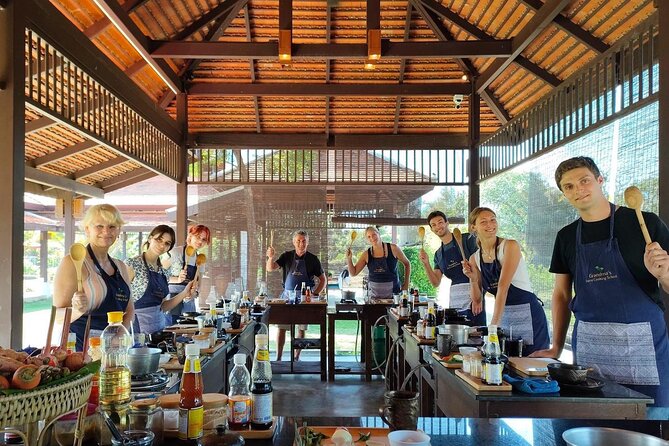
- Three cooking stations: Each participant gets an individual station, with demonstrations before you cook.
- Classic Thai menu: Possible dishes include Tom Yam, Tom Kha, Pad Thai, green curry, red curry, Massaman curry, and mango sticky rice.
- Small morning class: The group is capped at eight people and starts at 9:00 am from Tha Phae Gate.
- Good value with a transport caveat: At $50.50 per person, the price covers a full half-day program, but pickup arrangements deserve extra care.
From Tha Phae Gate to the morning market
The class begins at 9:00 am at Tha Phae Gate, a handy meeting point in central Chiang Mai. Pickup is offered, and the activity finishes back at the meeting point. Since the class includes transport to the farm, confirm the pickup details carefully before the morning begins.
The first stop is a local market. This is more useful than a quick photo stop because the instructor explains the basic ingredients used in Thai cooking and shows you how to select them. You begin to understand the difference between simply following a recipe and knowing what to look for when shopping.
Thai cooking depends heavily on fresh herbs, chilies, aromatics, curry ingredients, vegetables, and coconut-based products. At the market, those ingredients have a real setting and purpose. You can connect the green leaves, roots, and spices with the sauces and soups you will prepare later.
I like this early stop because it gives the class a practical beginning. You are not just handed a premeasured tray of ingredients. You first see how Thai cooks think about freshness and selection, even if the time available at the market is limited.
The market also adds a local touch that a stand-alone cooking studio cannot provide. The tradeoff is that this part is an introduction rather than a full food tour. If you want a long market visit with extensive tasting, this class is not designed for that.
More Cooking Classes in Thailand:
- Chiang Mai: Cooking Class, Market & Thai Herbs Garden Tour
★ 4.9 · 4,824 reviews - We Cook Thai Home Garden Cooking School
★ 4.9 · 378 reviews - Thai Cooking Class with Market & Garden Tour
★ 4.9 · 249 reviews
Farm work among herbs, vegetables, mushrooms, and eggs
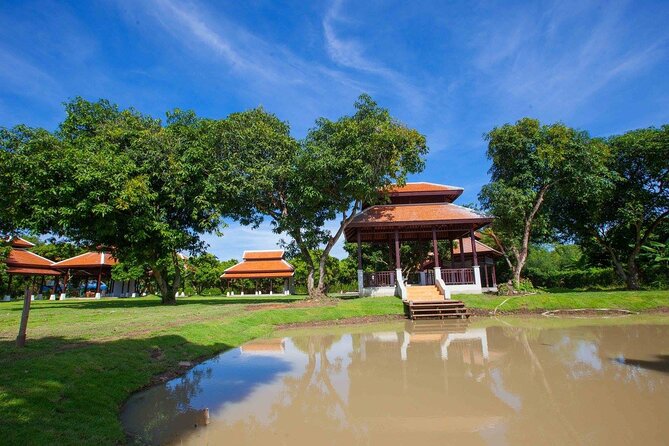
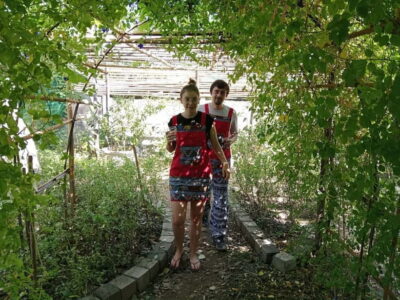
After the market, you travel to an organic farm. The farm is described as clean and carefully arranged, with Thai-style pavilions set among a garden. The setting is a major part of the appeal. Instead of spending the entire morning indoors, you get time outdoors before settling in to cook.
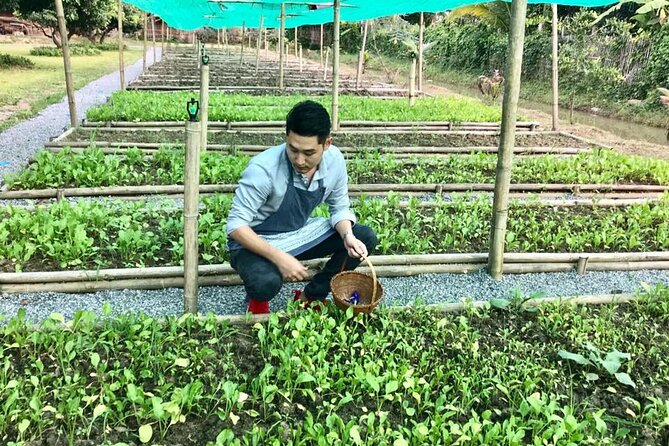
The farm section focuses on Thai herbs and vegetables. You can pick some fresh ingredients yourself, then take part in simple farm activities such as harvesting mushrooms and collecting chicken eggs. These are small tasks, but they help explain where some of the food on your plate begins.
I like the way this connects cooking with growing and gathering. A curry paste or soup ingredient feels less abstract after you have seen it in the garden. The farm visit also gives the morning a slower rhythm, which suits the goal of getting away from city noise.
Do not expect a full farming course. The provided details describe a hands-on introduction, not a long work session or technical lesson in organic agriculture. The charm is in the setting and the small jobs, not in the amount of farm labor.
The farm is also a good reason to wear comfortable clothes and shoes that can handle outdoor paths. That advice follows from the activities themselves, since you may walk around the garden, harvest mushrooms, and collect eggs before cooking.
Cooking in a traditional Thai pavilion
The cooking takes place in traditional Thai-style pavilions. Each participant has an individual cooking station, and the class has a maximum of eight people. That combination matters. You can watch the instructor demonstrate a technique, then repeat it yourself without having to share one crowded work surface.
The instructor demonstrates each dish step by step before you begin. This format works well for cooks with different levels of experience because you can see the order of ingredients and the basic method before handling the pan or pot.
The exact menu can change with the season and ingredient availability. Possible choices include Tom Yam, Tom Kha, Pad Thai, green curry, red curry, and Massaman curry. The class information also describes categories including appetizer, stir-fry, soup, curry, dessert, and a refreshment.
There is some variation in how the menu is described. The clearest practical expectation is that you cook three dishes, with soup, stir-fry, and curry commonly included, while dessert is served. Mango sticky rice is the stated dessert example. Since the menu changes, you should not book expecting one exact combination.
That flexibility is sensible in a Thai kitchen. Seasonal produce affects what is available, and a cooking class is better when the ingredients are fresh. Still, if you have your heart set on green curry or Pad Thai, ask about the menu before booking rather than assuming every listed dish will be offered.
What you may cook during the three-dish class
Tom Yam, the hot and sour soup, is one possible choice. It is a useful class dish because it shows how Thai cooking balances sharp, spicy, salty, and aromatic flavors. Tom Kha offers a different lesson, with a coconut-based soup that gives you a chance to see how richness and acidity work together.
Pad Thai is the familiar stir-fried noodle option. Cooking it yourself can help you understand the timing needed for noodles, sauce, and other ingredients. It is also a sensible pick if you want a dish that is easy to recognize and repeat at home.
The curry choices may include green curry, red curry, or Massaman curry. These give you a chance to work with Thai curry flavors, though the exact preparation will depend on the class menu that day. The wording provided for the course indicates that you select dishes from the available categories rather than automatically cooking every named example.
Dessert is served rather than necessarily prepared as one of your three cooked dishes. Mango sticky rice is the named example. That detail matters if you are booking mainly to learn Thai desserts. You can expect to enjoy dessert, but you should not assume you will make it yourself.
The course also mentions one refreshment. The available information does not specify the exact drink, so I would treat it as a pleasant extra rather than a reason to book.
More Garden Tours in Thailand:
- Pattaya: Nong Nooch Tropical Garden Ticket for Foreigners
★ 4.5 · 417 reviews - Half day Thai cooking Class + Market tour+Garden tour
★ 5.0 · 237 reviews - Krabi: Authentic Thai Cooking Class+Thai Herbs Garden Tour
★ 4.8 · 237 reviews - Cooking Morning Class Chiang Mai Visit Organic Garden and Market
★ 5.0 · 211 reviews
Why the small group and individual stations matter
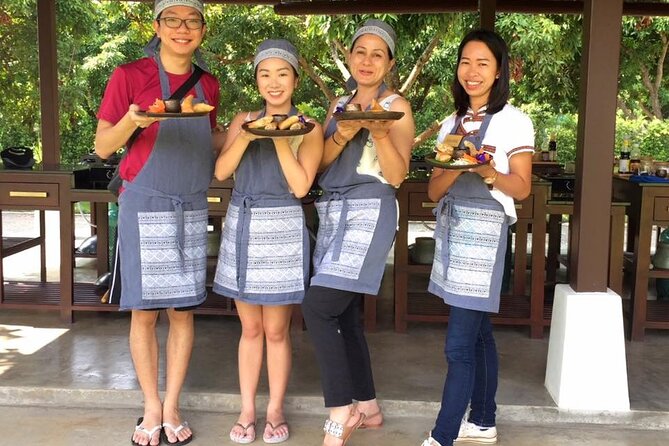
Eight participants is a sensible maximum for a practical cooking class. You get a better chance to hear the instructor, see the demonstration, and receive help than you would in a large workshop.
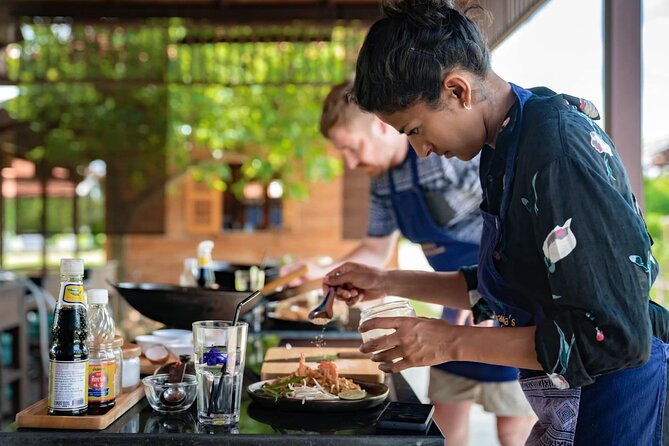
An individual station also changes the feel of the class. You are not merely watching an instructor prepare food while assistants do the real work. You make your own selections and cook the dishes yourself, with guidance available during the process.
The class received strong praise for its friendly and funny guide, along with the clean, attractive farm setting. Those qualities are not minor. A cooking class can become hurried or mechanical if the instructor is hard to follow, while a relaxed teaching style makes it easier to ask questions and enjoy mistakes.
The small group does not guarantee a private lesson. You still share the instructor’s attention with up to seven other participants. For most people, that is a fair balance between personal help and a social morning.
Is $50.50 a fair price?
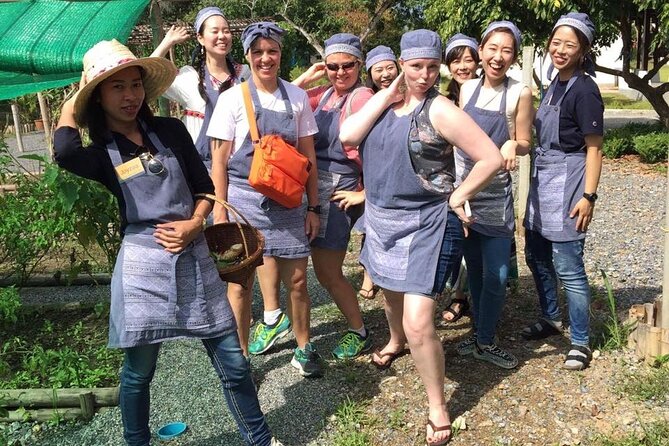
At $50.50 per person, this is not the cheapest cooking lesson in Chiang Mai. The price makes more sense when you count the full program: market orientation, transport to the farm, garden activities, the pavilion class, ingredients, several cooked dishes, dessert, and a refreshment.
I see the value in the range of activities. A basic kitchen class may teach you a few recipes, but this one gives you a look at ingredient shopping and food production first. You also get a pleasant setting and a small group rather than a crowded session.
The price is strongest for anyone who wants a half-day activity with several parts. It is less compelling if your only goal is to learn one specific recipe as cheaply as possible. In that case, a shorter urban class might suit you better, although it would not offer the same farm visit.
The included transport also matters, especially because the farm is separate from the Tha Phae Gate meeting point. Just remember that the pickup system has not been perfect. A missed pickup once resulted in a long wait, though the school arranged and paid for a taxi. Confirm the meeting instructions and keep the cooking school’s contact information available.
Timing, weather, and practical planning
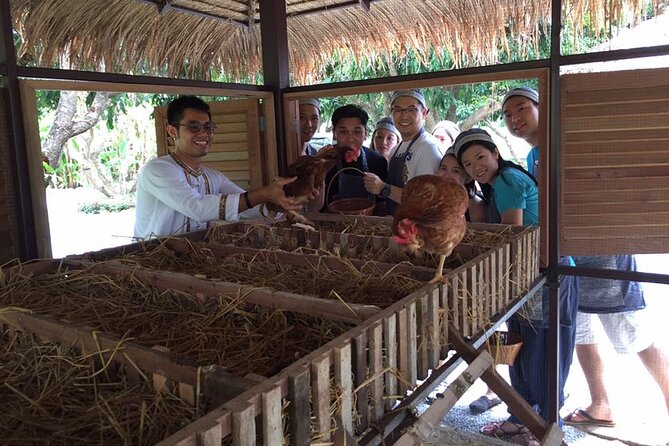
The class starts at 9:00 am and lasts about four hours. That gives you a full morning without taking up the entire day. You return to the meeting point when the activity ends, leaving the afternoon free for Chiang Mai sightseeing.
The itinerary includes time outdoors at the market and farm, followed by cooking in a pavilion. Chiang Mai weather can affect the program, and the activity requires good weather. If poor weather forces cancellation, you are offered another date or a full refund.
The tour also requires a minimum number of participants. If that number is not reached, you are offered another date or activity, or a full refund. Confirmation is provided at booking.
For cancellation, you can receive a full refund if you cancel at least 24 hours before the start time. Changes or cancellations made less than 24 hours before the start are not accepted for a refund. Cutoff times use local Chiang Mai time.
The class is near public transportation, and the listed start and end point is Tha Phae Gate. Pickup is offered, but the supplied details do not explain the exact pickup zone or timing for every hotel. If you use that option, make sure the arrangement is clear before 9:00 am.
Who will enjoy this Chiang Mai cooking class?
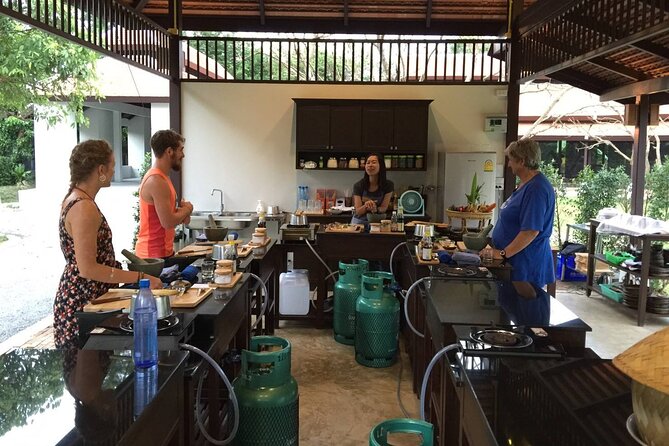
I would recommend this class to anyone who wants more than a recipe demonstration. The market and farm sections give you context, while the individual station lets you take an active role in cooking.
It suits couples, friends, solo participants, and small family groups who enjoy food and light outdoor activity. The eight-person limit should appeal to you if a personal teaching setup matters.
It is also a good choice for first-time Thai cooks. The instructor demonstrates each step, and the menu includes familiar dishes such as Pad Thai and green curry alongside soup and other Thai options.
I would be more cautious if you need guaranteed hotel pickup, want to cook a specific dish, or are mainly interested in dessert preparation. Pickup has had a documented failure, menus can change, and mango sticky rice is served rather than clearly prepared by participants.
Should you book the morning farm cooking class?
You should book it if you want a pleasant, active morning that connects Chiang Mai food with markets, gardens, and hands-on cooking. The strongest features are the small group, individual workstations, friendly instruction, and the chance to harvest ingredients before using them.
The main drawbacks are the uncertain menu and the need to verify pickup details. At $50.50, I consider it fair value for a four-hour program with transport, farm activities, and multiple dishes, but not the best fit for someone seeking the lowest-cost cooking lesson.
My practical advice is simple: confirm the pickup, arrive ready for outdoor activity, and treat the menu as seasonal. If those conditions suit you, this is a well-rounded way to spend a Chiang Mai morning.
FAQ
Where does the cooking class start?
It starts at Tha Phae Gate on Tha Phae Road in Chiang Mai.
What time does the class begin?
The class starts at 9:00 am.
How long does the activity last?
The activity lasts approximately four hours.
Where does the activity finish?
It ends back at the meeting point at Tha Phae Gate.
Is pickup available?
Yes, pickup is offered. Because a pickup problem has occurred, confirm the exact arrangement before the start time.
How many people can join the class?
The maximum group size is eight participants.
Does each participant have a cooking station?
Yes. Each participant receives an individual cooking station.
What dishes can be prepared?
Possible dishes include Tom Yam, Tom Kha, Pad Thai, green curry, red curry, and Massaman curry. The menu may change with the season and ingredient availability.
Is dessert included?
Yes. Dessert is served, with mango sticky rice given as an example. The information does not clearly state that participants prepare the dessert themselves.
Can I cancel for a full refund?
Yes, if you cancel at least 24 hours before the experience start time. Cancellations or changes made less than 24 hours before the start are not refunded.
Just added around Thailand
- Nong Nooch Tropical Garden Tickets in Pattaya★ 4.5 · 6 reviews
- Nong Nooch Tropical Garden Ticket in Pattaya★ 4.0 · 17 reviews
- Koh Samui Footgolf & Botanical Gardens★ 5.0 · 108 reviews
- One Day Tour Doi Suthep Temple, Palad Temple, Orchid Farm, Longneck hill tribe village (Private tour)★ 5.0 · 7 reviews
- Cooking class in organic garden and local market tour ThaiCottage★ 5.0 · 105 reviews
- Doi Suthep Temple, Pha Lat Temple, Sticky Waterfall, Orchid farm★ 5.0 · 31 reviews
- Evening Cooking Class in Traditional Pavilion with Beautiful Garden – Chiang Mai★ 5.0 · 3 reviews
- Morning Buddhist Almsgiving, Grand Palace and Flower Market Tour in Bangkok★ 3.5 · 9 reviews
Cooking Classes, compared.
Cooking Class, Market & Thai Herbs Garden Tour
Read our review →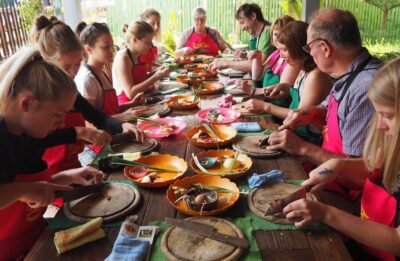

Ella : Cooking class with amazing Spice Garden Tour
Read our review →
Krabi: Authentic Thai Cooking Class+Thai Herbs Garden Tour
Read our review →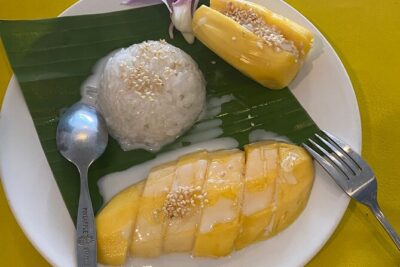
Half day Thai cooking Class + Market tour+Garden tour
Read our review →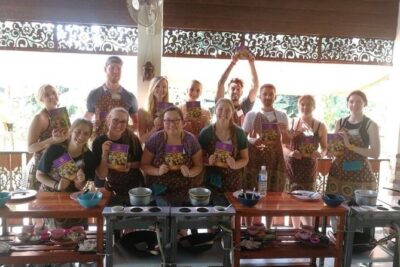
Cooking Morning Class Chiang Mai Visit Organic Garden and Market
Read our review →Browse the lists this tour appears in