
Review · SPAIN
Private VIP visit El Escorial Palace, Monastery and Gardens
History gets wonderfully oversized here. This private visit to San Lorenzo de El Escorial brings together a Renaissance monastery, royal burial chambers, a basilica, gardens, palace rooms, and Philip II’s famous library in one carefully guided outing. I especially like the private format, which lets your guide adjust the pace and explain the site at your level. I also like that the admission ticket and official guide are included, so you can focus on the place rather than sorting out the details. The main consideration is mobility: this is not suitable for people with mobility impairments.
The experience costs $129 per person and lasts three hours. That is a serious price for a half-day visit, but it covers entry, a government-approved local guide, and a private group. The strongest part of the experience is the guide service. Ana received repeated praise for her personal approach and command of both English and Spanish, while Pablo was also singled out for making the visit enjoyable and easy to follow.
Key points to know before booking
- The Royal Crypts are part of the visit: You enter the burial place of Spain’s kings and queens, an unusually powerful stop within the complex.
- Philip II’s library is a major highlight: The Laurentian Library reflects the king’s interest in humanist learning and Renaissance thought.
- You see far more than a monastery: The route includes the basilica, Habsburg palace, monastery, gardens, crypts, library, and the surrounding village.
- This is a private three-hour experience: Your guide can adapt explanations to your background instead of giving a one-size-fits-all speech.
- The guide quality is a real strength: Ana was praised for her warmth, preparation, and ability to tailor the tour in English or Spanish.
- Getting there is manageable from Madrid: El Escorial is about 40 minutes from Madrid city center, with public transportation available throughout the day.
Why El Escorial deserves a place in your Madrid plans

Madrid has grand palaces and famous art museums, but El Escorial gives you a different view of Spain. This enormous complex brings religion, monarchy, military memory, architecture, scholarship, and royal burial customs into one place.
King Philip II ordered the monastery complex in the 16th century. Its design reflects the ambitions of the Spanish Golden Age, when Spain held major power in Europe and its monarch wanted a building that could serve several purposes at once. El Escorial became a monastery, royal residence, basilica, school, library, and burial site.
That mixture makes the visit rewarding. You are not simply admiring stonework. You are seeing how Philip II linked religious duty with royal authority and learning. The famous grill-shaped plan refers to Saint Lawrence, the monastery’s patron saint. That shape is one of the details your guide can help you notice, since the sheer size of the complex can otherwise make the visit feel like a parade of grand rooms.
I would set aside three hours because the site rewards slow looking. The main guided visit is described as taking about two hours, followed by time connected with the gardens and village. The exact flow can depend on the day and the guide, but you should expect a substantial indoor visit rather than a quick photo stop.
More Garden Tours in Spain:
- Granada: Alhambra & Gardens Tour w/Nasrid Palaces Option
★ 4.2 · 7,022 reviews - Granada: Alhambra Gardens and Generalife Ticket
★ 4.4 · 2,195 reviews - Granada: Alhambra Guided Tour with Nasrid Palaces & Gardens
★ 4.7 · 2,190 reviews
Entering the monastery and Philip II’s world
The monastery is the natural starting point. Its scale can be a little intimidating at first, and that is where a private guide earns the fee. Instead of walking through a succession of rooms without context, you can ask why the building was created and how its different sections worked together.
The guide places El Escorial within the reign of Philip II and the Spanish Golden Age. That context matters because the building is not merely a Renaissance decoration project. It reflects a monarch who wanted a religious center, a royal home, and a place of study tied closely to his rule.
The monastery’s sober character may surprise you if you expect a palace full of glitter. The appeal is its combination of strict religious purpose and royal ambition. I would pay attention to the way the complex balances monumental architecture with spaces meant for prayer, study, and administration.
A private group is useful here. If you already know something about Spanish history, you can ask for more detail about the Habsburgs or Philip II. If this period is new to you, the guide can keep the explanation clear and chronological. John’s experience with Ana is especially encouraging on this point: she adjusted the visit to the group’s prior knowledge and did not rush them.
Saint Lawrence Basilica and the power of ceremony
The basilica is one of the central sights. It gives you a strong sense of how religious ceremony shaped the complex. The architecture is grand, formal, and designed to make the visitor feel the weight of the institution.
Your guide can explain how the basilica fits into the wider plan rather than treating it as an isolated church visit. That connection is important. The monastery, palace, library, and crypts all support the same message: Spain’s monarchy presented itself as powerful, devout, and intellectually serious.
I would expect the basilica to be one of the more visually impressive stops, but it is also a place where a guide’s timing matters. You may want a moment to take in the interior before moving on. Since this is a private tour, you have a better chance of asking questions or pausing briefly than you would with a large scheduled group.
The experience includes headsets if required. That can help inside large rooms or when other groups are nearby, though a private tour already offers a more direct connection with the guide.
The Royal Crypts and Spain’s royal family
The Royal Crypts provide the most personal stop on the route. This is where Spain’s kings and queens are buried, making the long story of dynasties and royal power suddenly concrete.
The crypts are not simply an extra room added to a palace tour. They help explain why El Escorial mattered so much to the Habsburg monarchy. A royal residence can display wealth, but a royal burial place connects the building to generations of rulers and the continuity of the crown.
I would listen closely here, since the names and family links can become confusing. Philip II’s era sits within a larger succession of Spanish monarchs, and the crypts give your guide a natural place to explain that sequence.
This part may not suit every visitor. The atmosphere is formal and solemn, and anyone looking only for bright interiors or outdoor views may find it less engaging. For anyone interested in monarchy, Spanish history, or the human side of royal institutions, it is one of the most worthwhile sections.
Same place, a different sort of green day out:
- Alhambra &Charles Palace Guided Tour with Optional Nasrid Palaces
★ 4.5 · 2,149 reviews - Granada: Alhambra and Generalife Garden Ticket & Guided Tour
★ 4.0 · 1,862 reviews - Granada: 3-Hour Alhambra and Generalife Gardens Guided Tour
★ 4.7 · 1,304 reviews - Blanes: Marimurtra Botanical Garden Entry Ticket
★ 4.7 · 998 reviews
The Habsburg palace inside the complex
The Habsburg palace adds a domestic and political layer to the visit. Here you can consider how the royal family used El Escorial not only as a religious foundation but also as a place connected to court life.
The palace rooms help balance the more institutional sections of the complex. After the basilica and crypts, you get a better sense of the people behind the titles. The palace also reinforces the building’s unusual character: this is a monastery that functions at the same time as a royal residence.
The supplied information does not promise access to every room or describe a fixed sequence, so I would avoid expecting a full palace tour in the style of Madrid’s Royal Palace. Instead, think of this as one part of a broader visit to the monastery complex.
That broader approach is a strength. El Escorial makes more sense when you see its religious, royal, and scholarly roles together. A guide can connect those parts as you move through the site.
Philip II’s Laurentian Library
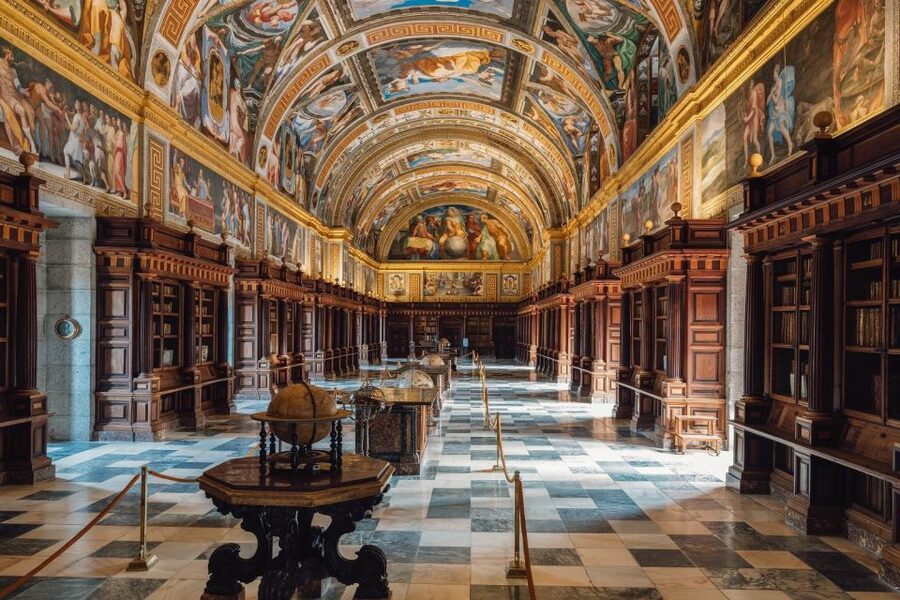
For many visitors, the Renaissance library is the standout. Known as the Laurentian Library, it reflects Philip II’s interest in humanist learning and the wider intellectual culture of the Renaissance.
The library gives the tour a welcome change of mood. You move from royal ceremony and religious authority into a room centered on books, study, and the spread of ideas. The collection was assembled around Philip II’s desire for broad humanistic knowledge, so this is not just an attractive room with old volumes.
Look up as well as around you. The library is described as a golden Renaissance space, and its decoration supports the idea that learning held a high place within the royal project. Your guide can help you see how the room’s design and contents fit the ambitions of the period.
I would not rush this section. The library may be physically smaller than the vast complex suggests, but it carries a large idea: power in 16th-century Spain was expressed not only through armies and churches, but also through books, scholarship, and control of knowledge.
This is another place where a private guide adds real value. Without background, you may simply see shelves and decoration. With clear explanation, you understand why the library mattered to Philip II and why it remains one of El Escorial’s most memorable spaces.
Gardens and the village of San Lorenzo
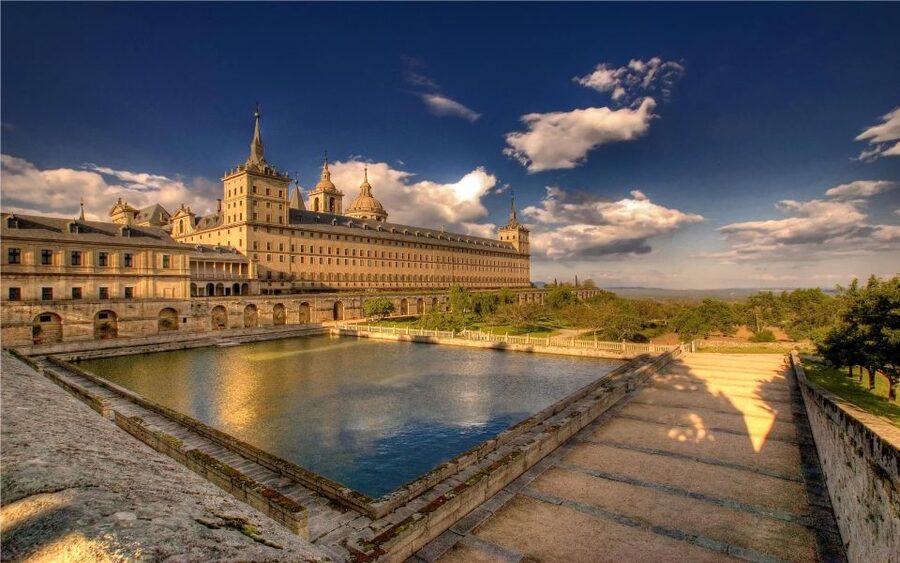
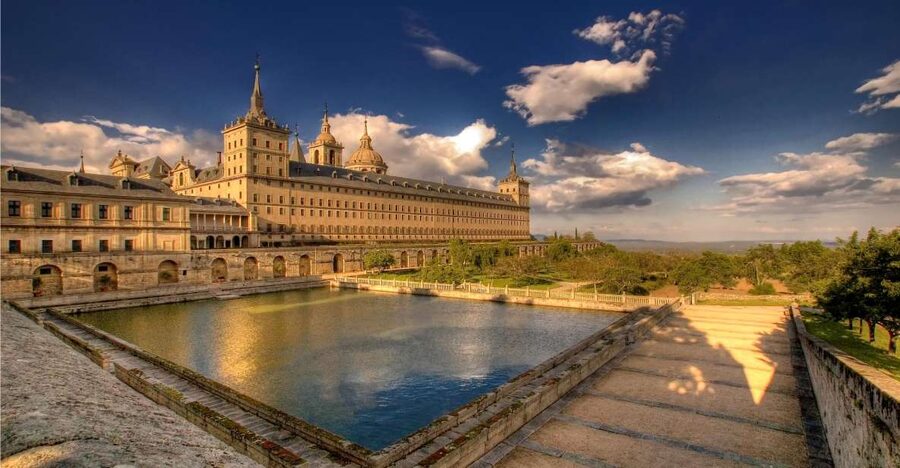
The gardens offer a pause after the formal interiors. They give you room to see the monastery from a different angle and appreciate the Renaissance planning around the main building.
Do not treat the gardens as filler. After the basilica, palace, crypts, and library, the outdoor setting helps you understand the scale of the complex. It also provides a calmer change of pace during a three-hour visit.
The tour also includes a walk through the village of San Lorenzo de El Escorial. This is useful because it connects the monumental site with the town that grew around it. You get a little local atmosphere rather than leaving with the impression that El Escorial is only a sealed historical monument.
The village portion is not described as a long food, shopping, or restaurant tour, so keep your expectations modest. It is best viewed as a short extension that helps you connect the monastery with its present-day setting.
Is $129 per person good value?
At $129 per person, this is not the cheapest way to see El Escorial. You are paying a premium for privacy, an official guide, entry tickets, and a three-hour visit rather than simply arriving and walking through on your own.
I think the price makes the most sense for couples, families, or small groups who care about interpretation. El Escorial contains enough history and architectural detail to justify help, especially if you want to understand Philip II’s goals rather than merely photograph the building.
The value is also tied to group size. Since this is a private group, you are not sharing the guide’s attention with a large crowd. That makes it easier to ask about the Habsburgs, the library, the royal crypts, or the building’s unusual plan.
If you are highly independent and mainly want to see the basilica and gardens, the price may feel steep. If you want the most complete version of the visit, the package is easier to justify because it covers the complex’s main themes in one appointment.
The near-perfect 4.9 rating from 23 bookings supports the idea that guide quality is the main reason people find value here. Ana received especially warm praise for her command of the material, personal attention, and ability to work in both English and Spanish. Pablo also received strong approval. One Spanish-speaking group praised Ana’s contact before the appointment as well as her performance during the visit.
Timing, transport, and practical limits
El Escorial is about 40 minutes from Madrid city center, and public transportation is available throughout the day. You should still allow extra time around the stated journey, since your total outing includes getting to San Lorenzo, meeting the guide, and returning to Madrid.
The meeting point is Av. de Juan de Borbón y Battenberg, 6, 28200 San Lorenzo de El Escorial. Check the starting time when booking because the activity offers different possible start times depending on availability.
The tour is offered in English and Spanish. If your group has mixed language needs, confirm the language arrangement in advance so the visit feels comfortable for everyone.
The site is not suitable for people with mobility impairments. That is the clearest practical limitation provided for this experience, and you should take it seriously before booking. The complex is large, and the visit includes several distinct areas, so a demanding amount of walking is likely even though the listing does not give a step count or detailed accessibility plan.
Cancellation is flexible up to 24 hours before the visit for a full refund, and you can reserve now while paying later. Those terms are useful if your Madrid schedule is still shifting, but they should not replace checking the final meeting time and transport plan.
Who will enjoy this private El Escorial visit?
I would recommend it most strongly to:
- First-time visitors who want a clear introduction to Philip II and the Spanish Golden Age
- Families or couples who prefer a private guide to a large group
- People interested in royal burial customs and Habsburg history
- Architecture lovers drawn to Renaissance planning and religious buildings
- Readers, students, and history fans who want time in the Laurentian Library
- Visitors who want to connect a major monument with its surrounding town
I would be more cautious if you dislike indoor historical sites, have mobility limitations, or only want a quick look at the exterior. The three-hour format is designed for a full cultural visit, not a short stop between Madrid attractions.
Should you book this El Escorial tour?
Book it if you want the fullest guided introduction to El Escorial and value personal attention. The private format, included entry, official guide, royal crypts, basilica, palace, gardens, village, and Laurentian Library give you a well-rounded visit rather than a narrow look at one section.
The guide is the deciding factor. Ana’s ability to tailor the experience and explain the site in English or Spanish received particularly strong praise, and Pablo also made a good impression. If you can request or confirm your preferred language and guide availability, do so.
Skip it if $129 per person feels too high for a historic monument or if you want to explore independently. For everyone else, especially those who want the meaning behind the rooms, this is a strong use of half a day outside Madrid.
FAQ
How long does the private El Escorial visit last?
The experience lasts three hours. The main guided visit through the monastery is described as taking about two hours, with the wider experience also including gardens and a walk through the village.
How much does the tour cost?
The stated price is $129 per person.
What is included in the price?
Entry tickets, an official government-approved guide, and headsets if required are included.
Is the tour private?
Yes. The experience is offered for a private group.
What languages are available?
The live guide is available in English and Spanish.
What parts of El Escorial are included?
The visit includes the monastery, Saint Lawrence Basilica, Royal Crypts, Habsburg palace, Renaissance Laurentian Library, gardens, and a walk through the village.
Where does the tour meet?
The meeting point is Av. de Juan de Borbón y Battenberg, 6, 28200 San Lorenzo de El Escorial, Madrid, Spain.
How far is El Escorial from Madrid?
The site is about 40 minutes from Madrid city center, and public transportation is available throughout the day.
Can I cancel for a full refund?
Yes. You can cancel up to 24 hours in advance for a full refund.
Just added around Spain
- Valencia, Botanical Garden, Guided Tour★ 5.0 · 3 reviews
- Complet Segway Tour Medieval + Gardens★ 5.0 · 25 reviews
- Private E-Bike City Tour of Valencia’s History, Gardens★ 5.0 · 3 reviews
- Valencia Segway Tour Through Gardens & Nature★ 5.0 · 19 reviews
- Exclusive Alcazar with breakfast or afternoon coffee in gardens★ 5.0 · 3 reviews
- Granada Full Day Tour From Malaga★ 3.5 · 95 reviews
- Private VIP visit El Escorial Palace, Monastery, Villa & Garden★ 5.0 · 25 reviews
- Granada Full Day Tour From Malaga★ 4.0 · 40 reviews
Spain Garden Tours, compared.
Alhambra & Gardens Tour w/Nasrid Palaces Option
Read our review →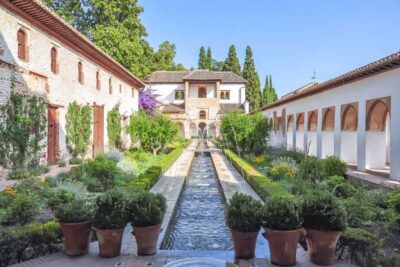
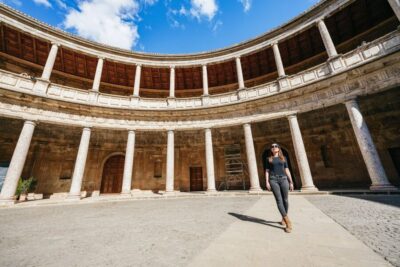
Alhambra Guided Tour with Nasrid Palaces & Gardens
Read our review →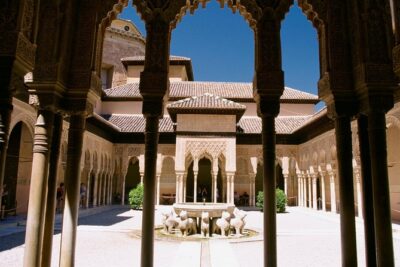
Alhambra &Charles Palace Guided Tour with Optional Nasrid Palaces
Read our review →
Alhambra and Generalife Garden Ticket & Guided Tour
Read our review →
3-Hour Alhambra and Generalife Gardens Guided Tour
Read our review →Blanes: Marimurtra Botanical Garden Entry Ticket
Read our review →
Córdoba: Viana Palace Gardens and Patios Entry Ticket
Read our review →Browse the lists this tour appears in