
Review · VIETNAM
Viet Garden Cooking Class (Countryside and Market tour)
Come hungry, leave with new kitchen skills. The Viet Garden Cooking Class gives you more than a standard cooking lesson: you spend the morning visiting small local businesses, shopping for ingredients at a market, and learning how food fits into daily life in central Vietnam. I especially like the stop at the noodle factory and the relaxed meal at Chef Dat’s family home.
I also like the personal feel of the day. You travel with an English-speaking guide, meet people connected to mat weaving, baking, coffee, and farming, then prepare three Vietnamese dishes with ingredients you helped choose. The main consideration is the six-hour schedule. This is a full morning and afternoon outing, not a quick class squeezed between beach time and sightseeing.
Key points to know before booking
- The day begins at 9 AM with hotel pickup from central Nha Trang hotels and returns at about 3 PM.
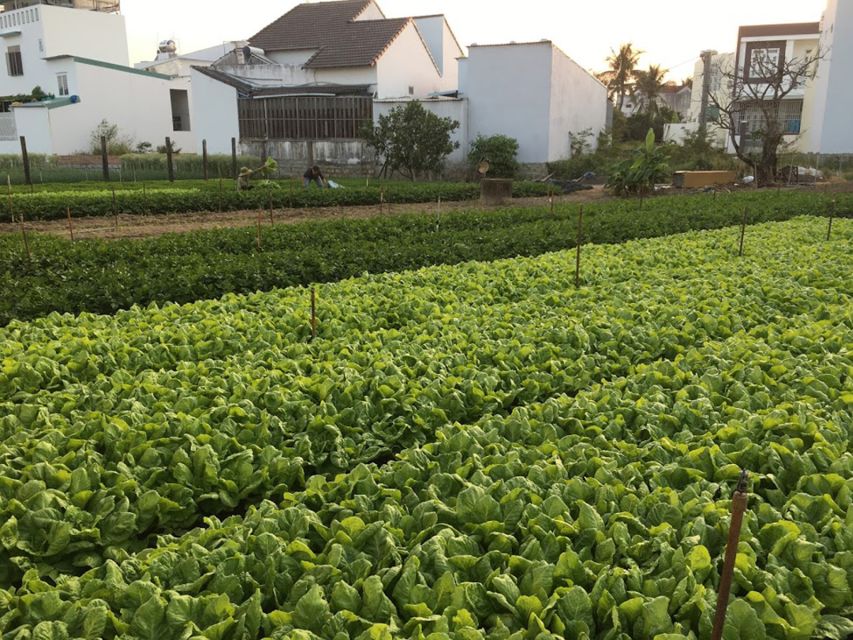
- You visit several working local businesses, including a bakery, noodle factory, mat-weaving family business, and vegetable and herb garden.
- Chef Dat adapts the menu to the dishes you want to learn, or suggests recipes with ingredients that may be easier to find at home.
- The market visit is part of the lesson, not just a sightseeing stop. You help select the food used later in class.
- Coffee has its own story here, including local growing methods, weasel coffee, and the Vietnamese habit of adding condensed milk.
- The $75 price covers transport, guide service, and cooking-class food, making it most useful for people who want a full cultural day rather than only lunch.
From Nha Trang to Vietnam’s farming heartland
The tour starts with pickup at your hotel at 9 AM. From central Nha Trang, you head away from the resort center and into the provincial area, where farming and small family businesses shape the day.
I like this change of setting. Nha Trang is known for its coast, hotels, and seafood, but this experience shows you another side of the region. You get a look at ordinary work, food production, and household life instead of spending six hours inside a restaurant or formal cooking school.
The pace is built around short visits rather than one long ride. That matters because the day has several distinct parts: local stops in the morning, shopping at the market, cooking in the afternoon, then lunch and a return to your hotel. You should still expect a busy schedule, so comfortable clothing and shoes make sense.
The tour is listed as wheelchair accessible, which is useful to know when planning. Since the experience includes several local businesses and a market, you may want to confirm any specific mobility needs when booking.
More Cooking Classes in Vietnam:
- Home Cooking Class: Market, Garden and cooking 4 dishes
★ 5.0 · 61 reviews - Cooking Class Hoi An – Organic Garden – Farming Tour-Handicrafts
★ 5.0 · 56 reviews - Hue’s Vegetarian Cooking Class in Ancient Garden
★ 5.0 · 47 reviews
Mat weaving, baking, and the work behind everyday food
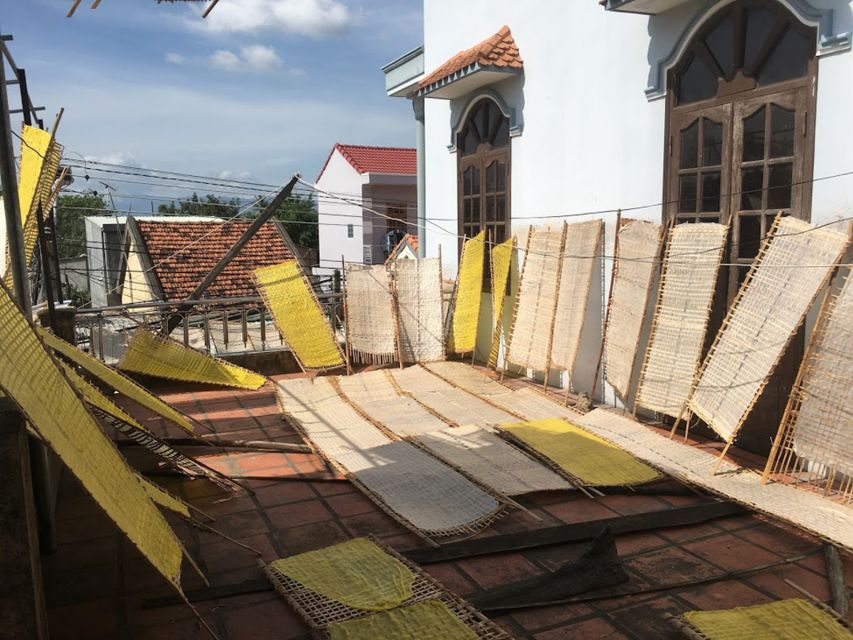
One of the first parts of the outing introduces you to a family business that makes rush mats. You see how the mats are woven and learn about a practical craft that belongs to daily household life.
This is the kind of stop I value because it shows work in progress. You are not only looking at finished souvenirs. You are seeing how a useful object is made and how a family business fits into the local economy.
The bakery offers another small window into the region. You learn how locals make French baguettes, a reminder of the long French influence on Vietnamese food. The result is now thoroughly part of local eating habits, especially in the form of baguette sandwiches and simple bakery fare.
The stop is not described as a long baking lesson, so keep your expectations sensible. You are learning about the process rather than making a loaf from start to finish. Still, it adds welcome context before you begin cooking Vietnamese dishes later in the day.
Coffee, coconut juice, and a slower country road
Along the route, you stop for local coffee and coconut juice. This is a simple break, but it helps the day feel less like a checklist of attractions.
The coffee discussion covers how coffee is grown in Vietnam and explains why locals often drink it with condensed milk. You also hear about weasel coffee, a subject that tends to attract curiosity from visitors who have seen it on menus but know little about it.
I like that the coffee stop connects a familiar drink with local production and habits. Vietnamese coffee can be strong and sweet, and the condensed milk is not just a decorative add-on. It is a central part of the taste many people associate with the drink.
The coconut juice gives you a different flavor and a refreshing pause. Because the exact refreshment arrangements are not described in detail, think of this as a local tasting stop rather than a full café visit. The value is in the setting and the conversation, not in a long coffee break.
Inside a noodle factory making pho noodles
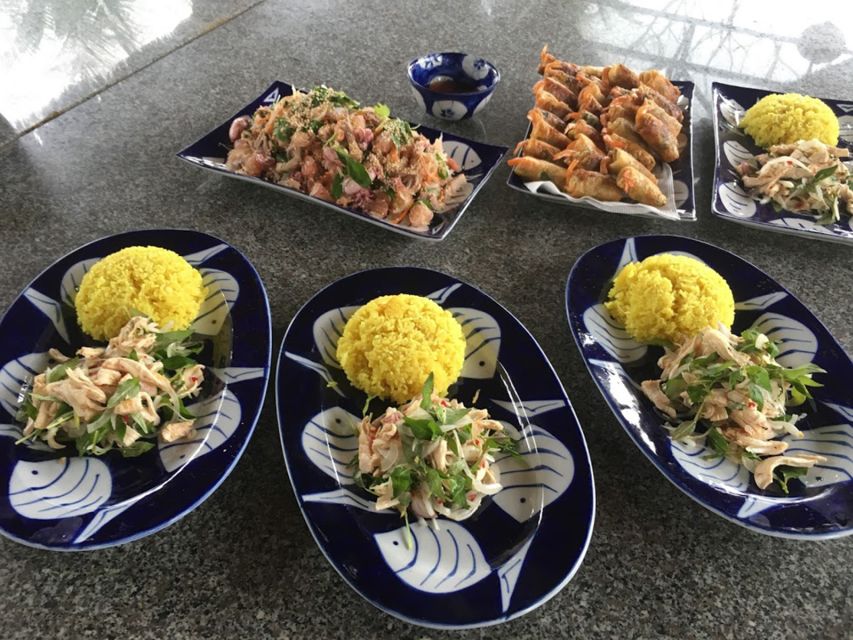
The noodle factory is one of the most useful stops for anyone who enjoys pho. You learn about the local process used to make noodles for the famous soup.
This gives you a better sense of how much preparation sits behind a bowl of pho. At a restaurant, noodles arrive ready to use. Here, you get to see the production side and connect the finished dish with the people and businesses that supply it.
The visit also fits the cooking theme well. You are not simply looking at random village industries. The bakery, coffee, market, garden, and noodle factory all lead back to food and the way it reaches the table.
Do not expect to operate a noodle line or take part in a long factory workshop unless your guide specifically offers it. The stated purpose is to learn the local process. That is still worthwhile, especially if pho is one of the reasons you want to explore Vietnamese cuisine.
More Garden Tours in Vietnam:
- Mekong Delta Homestay 2-Day at Family Tiny Garden – Small Group
★ 5.0 · 410 reviews - Botanic Garden – Paradise Cave – Zipline – Mudbath at Dark Cave
★ 5.0 · 79 reviews - Can Tho Floating Market and Fruit Garden Tour
★ 5.0 · 40 reviews - Can Tho: Cycling in Village-Fruit Garden-Experience Local Ferry
★ 5.0 · 24 reviews
Shopping for ingredients at a local market
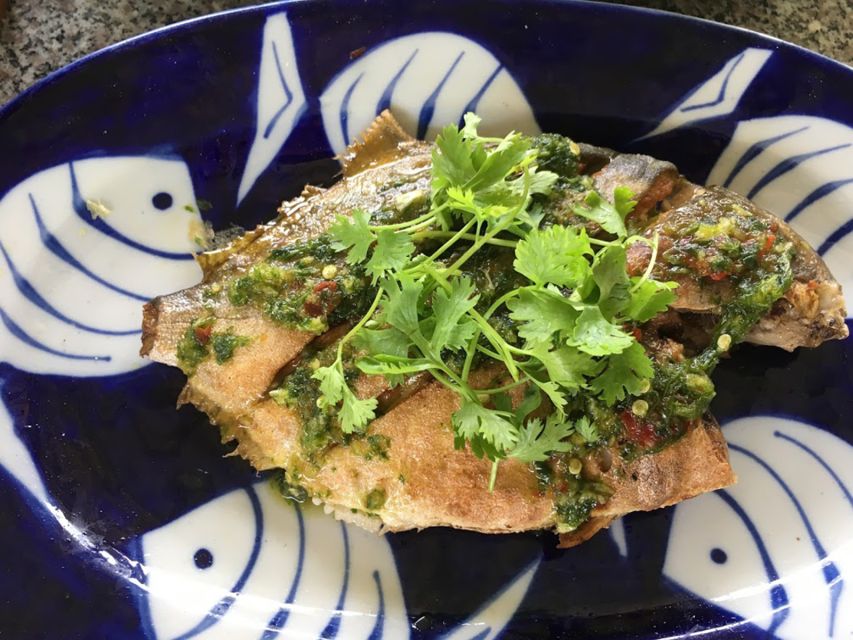
The market visit marks the shift from sightseeing to cooking. You help choose the ingredients for the class, with Chef Dat guiding the selection.
This is a strong part of the tour because shopping teaches you things a recipe card cannot. You see the raw materials before they are washed, chopped, seasoned, and plated. You also get a better idea of what local cooks consider fresh and useful.
The exact market and menu can change, so you should not expect a fixed shopping list. That flexibility is one of the advantages of the class. You can express interest in particular dishes, or let Chef Dat suggest options.
The market may feel more active and less polished than a food hall aimed at tourists. That is part of its value, but it also means you should be ready for a practical visit rather than a carefully staged food show. The goal is to buy what you will cook, not to spend a long time browsing every stall.
Cooking three Vietnamese dishes with Chef Dat
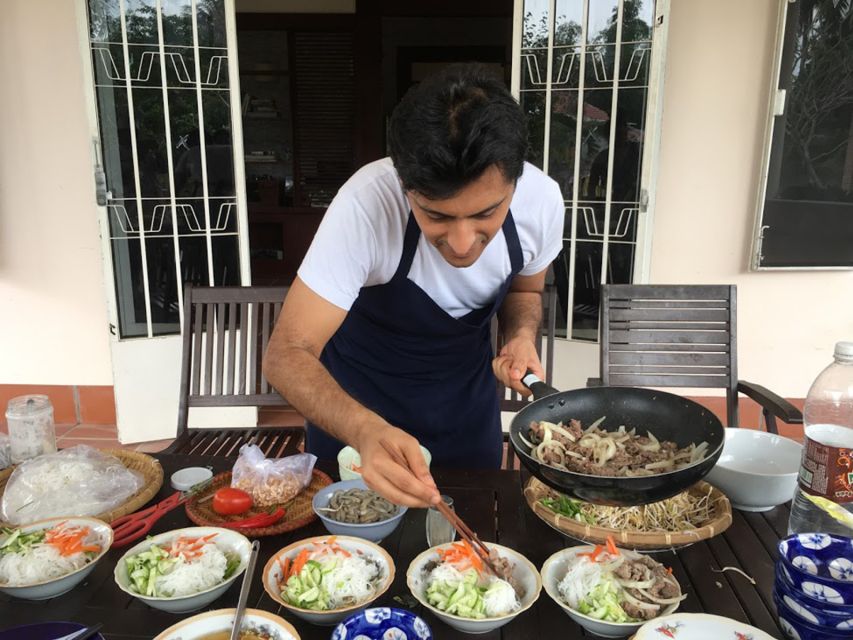
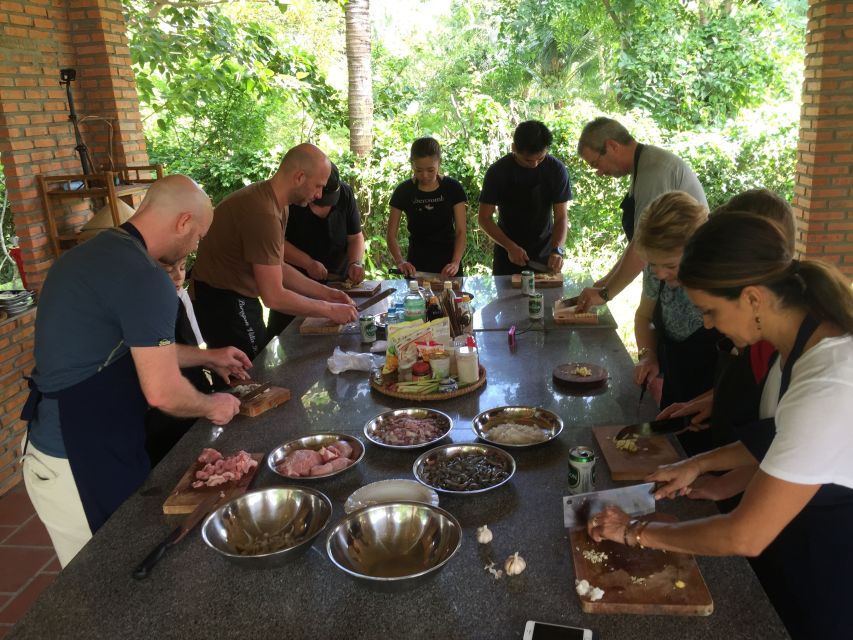
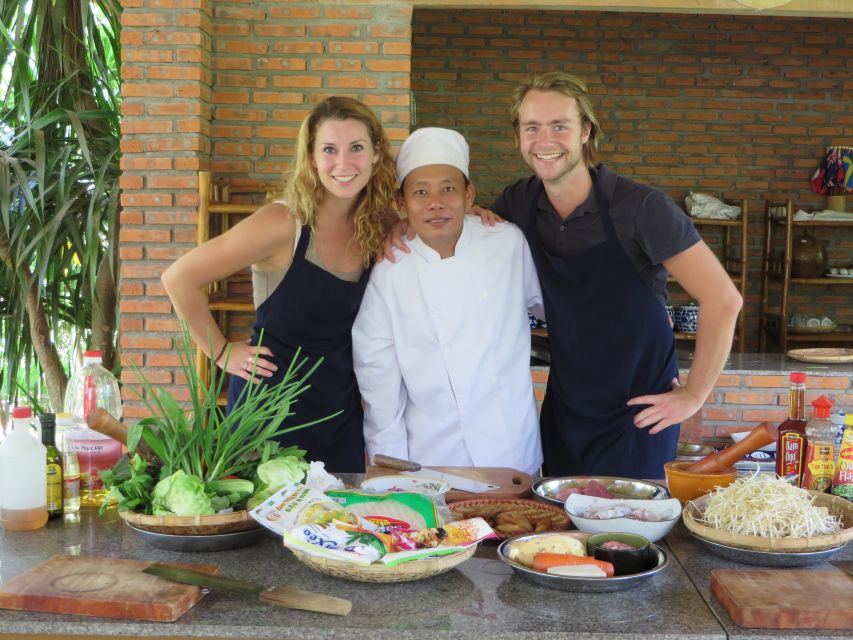
The second half of the day takes place at Chef Dat’s family house in the countryside. The property includes an organic garden and bonsai trees, giving the cooking session a home-based setting instead of a commercial classroom.
You prepare three Vietnamese dishes from start to finish. The menu depends on your interests, and Chef Dat can offer suggestions if you are not sure what to choose.
That flexibility makes the class useful for different types of cooks. If you already have a favorite Vietnamese dish in mind, you can ask about it. If you want practical recipes for your own kitchen, Chef Dat can help select dishes using ingredients you may be able to find in your hometown.
This is an important point to clarify before booking: the supplied information does not name a standard menu. You should ask what dishes are available if a specific recipe is essential to you.
The cooking is hands-on, with guidance throughout the process. You are not simply watching a chef prepare lunch while you take notes. You take part in making the food, then sit down to eat what you have prepared.
I particularly like the link between the garden and the meal. The organic garden gives context to the herbs and vegetables used in Vietnamese cooking. You also have time to relax among the bonsai trees, which helps balance the practical work in the kitchen.
Lunch, conversation, and the personal side of the tour
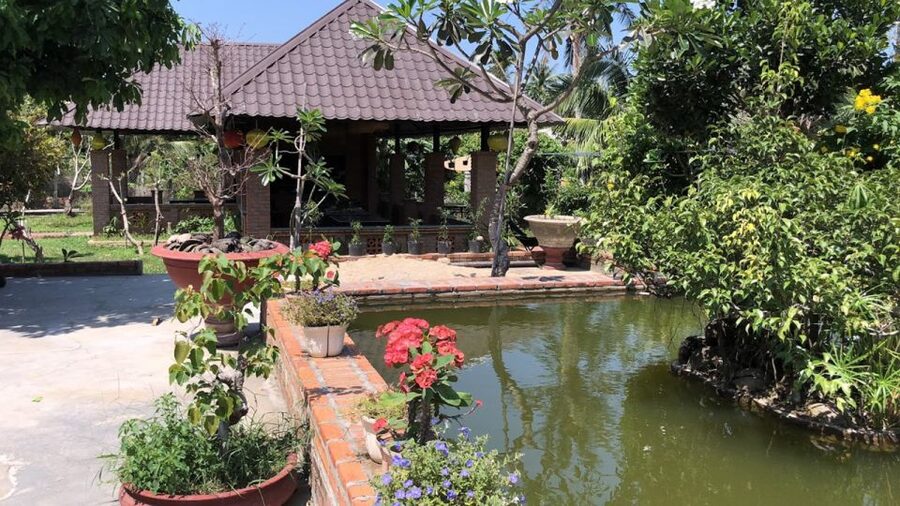
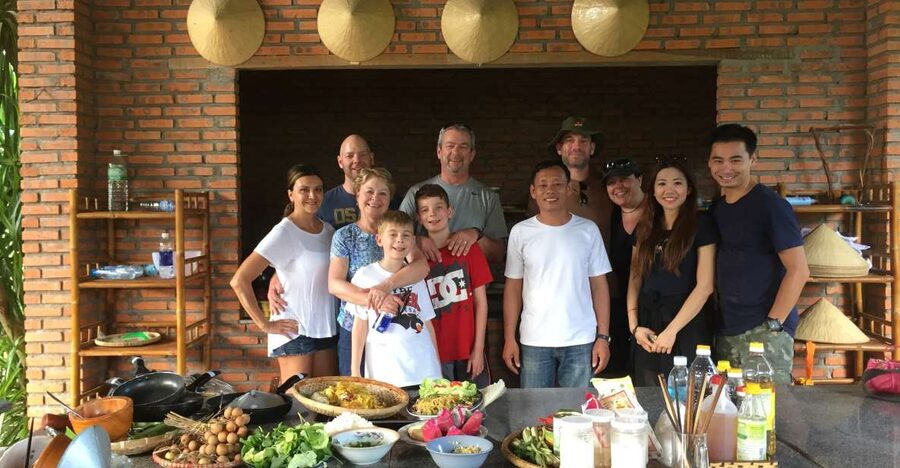
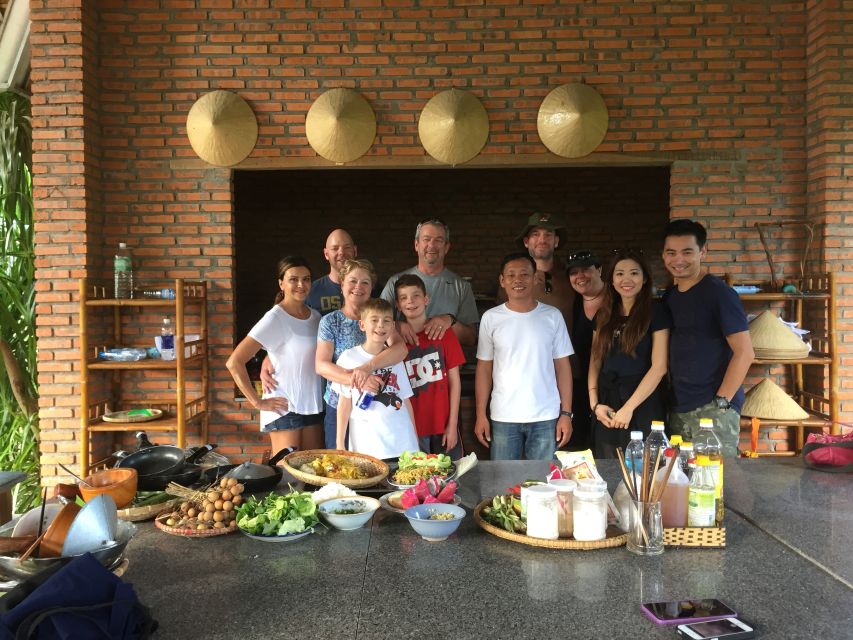
After cooking, you enjoy the meal at Chef Dat’s family home. This is more than a final tasting. It is the point where the market visit, garden, cooking lesson, and morning stops come together.
Several strong points in the feedback focus on Chef Dat’s personal guidance and his willingness to talk about local life. One description calls the day personal and praises his help with different dishes. Another highlights the chance to learn how Vietnamese people live, not just how to cook.
That distinction matters. A cooking class can teach you knife work and sauces, then send you home. This one aims to put the recipes inside a wider picture of farming, family businesses, food production, and daily habits.
You also have time to chat about local lifestyle while eating. If you enjoy asking questions and learning through conversation, this part may be one of the best reasons to choose the experience.
The tone may depend on the group and guide on your date. The available feedback gives Chef Dat especially strong praise for his passion and hospitality, but no tour can guarantee that every group will have the same rhythm. If you prefer a quiet, tightly timed class with little conversation, this may feel more social than expected.
What the $75 price includes
The price is $75 per person. It includes transportation, an English-speaking guide, and the food for your cooking class.
For a six-hour outing, that is a reasonable price if you want several stops plus a full cooking meal. You are paying for more than ingredients. The cost also covers the vehicle, guiding, local introductions, market shopping, and access to a family setting outside the city.
The value is strongest for people who would otherwise need to arrange several separate activities. A market visit, rural excursion, food-production tour, and cooking class could take considerable planning on your own. Here, they are tied together around one theme.
The price may feel high if you only want to learn one simple dish. It may also be less appealing if you have limited time in Nha Trang and prefer to focus on the beach or city sights. The tour makes sense when you want a full day with food, local work, and conversation.
Personal expenses and travel insurance are not included. The food used for class is included, but the supplied details do not specify extra drinks or purchases at the market, so bring some money if you want to buy personal items.
Who will enjoy this countryside cooking day?
I would recommend this tour to you if you like food with a story. The best fit is someone who wants to see how ingredients are produced, shop for a meal, cook with guidance, and talk about local life.
It also suits couples, families, and small groups who enjoy doing an activity together. The three-dish format gives everyone something practical to work on, while the market and village stops add variety.
It can work well for first-time visitors to Vietnam because the day introduces several familiar subjects at once: coffee, baguettes, pho noodles, herbs, vegetables, markets, and home cooking.
You may want to skip it if your priority is a short class in central Nha Trang, a fixed menu, or a highly polished culinary studio. You should also think twice if a six-hour schedule feels too long or if your holiday plans leave no room for a full-day outing.
The tour is wheelchair accessible, but because local markets and family businesses can have different layouts, ask for practical details about your needs before you go.
Booking advice and final verdict
The experience offers free cancellation up to 24 hours before departure, and you can reserve now and pay later. Those terms help if your Nha Trang plans are still changing.
The strongest reason to book is the combination of personal cooking instruction and ordinary local life. You see the work behind food, choose ingredients at a market, cook three dishes, and eat at a family home. That is a fuller experience than a class held only inside a city restaurant.
The strongest reason to hesitate is the lack of a fixed menu in the available details. If you need to learn one particular dish, ask ahead. Otherwise, Chef Dat’s suggestions may be the better choice, especially if you want recipes that can surprise your family and friends back home.
Should you book the Viet Garden Cooking Class?
Book it if you want a food-focused day that reaches beyond Nha Trang’s tourist center. The noodle factory, bakery, mat weavers, coffee stop, market, garden, and family lunch give the tour a useful sense of place.
Skip it if you want a short, highly structured lesson with a guaranteed menu. For most visitors who enjoy cooking, conversation, and a look at rural life, the $75 cost is justified by the variety and the personal care associated with Chef Dat’s guidance.
The rating of 4.8 from 12 reviews supports the main impression: the cooking itself is only part of the appeal. The real value lies in seeing where the ingredients come from and meeting the person who helps turn them into lunch.
FAQ
Where does the Viet Garden Cooking Class take place?
The tour begins with pickup from central Nha Trang hotels and travels into the countryside around central Vietnam. The cooking session takes place at Chef Dat’s family house.
How long does the tour last?
The experience lasts six hours. Pickup begins at 9 AM, and hotel drop-off is expected at about 3 PM.
What is the price?
The price is $75 per person.
What is included in the price?
Transportation, an English-speaking guide, and food for the cooking class are included.
Is hotel pickup provided?
Yes. Pickup is included from central Nha Trang hotels.
How many dishes will I cook?
You will prepare three Vietnamese dishes.
Is the menu fixed?
No fixed menu is provided. The dishes depend on your interests, and Chef Dat can suggest options.
Will I visit a local market?
Yes. You visit a local market and help select ingredients for the cooking class.
What other places will I visit?
The tour includes visits to mat weavers, a noodle factory, a bakery, and a vegetable and herb garden. You also stop for local coffee and coconut juice.
Is the tour wheelchair accessible?
Yes, the activity is listed as wheelchair accessible.
Just added around Vietnam
- Orchid Cruise Top Notch Cruise into Halong and Lan Ha Bay 2D1N★ 4.5 · 5 reviews
- Hue’s Vegetarian Cooking Class in Ancient Garden★ 5.0 · 47 reviews
- Cooking Class Hoi An – Organic Garden – Farming Tour-Handicrafts★ 5.0 · 56 reviews
- Vietnam Flavour: Market-to-Table & The Art of Egg Coffee★ 5.0 · 53 reviews
- Orchid Cruise Halong Bay 2Days 1Night on 5 Star Cruise★ 4.5 · 10 reviews
- Orchid Cruises Halong Bay 3 Day/2Night on 5 Star★ 5.0 · 2 reviews
- Orchid Cruise Halong Bay 3Days 2Night on 5 Star Cruise★ 4.5 · 57 reviews
- Orchid Premium Cruises Halong Bay 2Days/1Night With 5 Star★ 5.0 · 31 reviews
Cooking Classes, compared.
Cooking Class, Market & Thai Herbs Garden Tour
Read our review →
Ella : Cooking class with amazing Spice Garden Tour
Read our review →
Krabi: Authentic Thai Cooking Class+Thai Herbs Garden Tour
Read our review →
Half day Thai cooking Class + Market tour+Garden tour
Read our review →
Cooking Morning Class Chiang Mai Visit Organic Garden and Market
Read our review →Browse the lists this tour appears in