
Review · TOKYO
Tokyo: Imperial Palace East Gardens and Tokyo Station Tour
Tokyo’s past is hiding in plain sight. This 150-minute walk links the quiet Imperial Palace East Gardens with the polished streets of Marunouchi and the grand red-brick face of Tokyo Station. I like the clear connection between Edo Castle and present-day Tokyo, and I like that guide Yuki explains the past with humor and vivid detail. The main drawback is simple: you will spend most of the tour on foot, often outdoors, so shoes and weather matter.
The $38 price is fair for a guided look at one of central Tokyo’s most important areas. You get access to the East Gardens without an admission fee, several historic stops, and a guide who can turn walls, gates, and garden paths into a readable story. Just remember that backpacks are not allowed, and the tour may feel brisk if you prefer to linger at every photo stop.
Key points to know before you book
- Yuki’s storytelling is a major strength: Her explanations of Edo Castle and the shogunate are described as easy to follow, humorous, and vivid.
- The route joins two very different Tokyos: You move from moats, guardhouses, and garden design to Marunouchi offices, public art, and Tokyo Station.
- The East Gardens carry the historical weight: Ote-mon Gate, Hyakunin Bansho, Ninomaru Garden, the Honmaru area, and Fujimi-yagura help explain the former castle grounds.
- Tokyo Station is the satisfying finish: The restored red-brick exterior gives the walk a clear ending and a strong contrast with the palace grounds.
- Plan for outdoor walking: Bring water, sunscreen, a hat, and comfortable shoes. Smoking and flash photography are not allowed.
- The tour is accessible and multilingual: Live guiding is offered in English, Japanese, Spanish, Chinese, and French, and the experience is wheelchair accessible.
From a fountain park to the palace grounds
The meeting point is the Starbucks Coffee Imperial Palace Outer Garden Wada Kuray Fountain Park store. That location puts you near Kokyo Gaien National Garden and the open spaces around the palace, rather than dropping you into a busy commercial street with no sense of place.
I like this start because it gives you a calm entry into the subject. You are not beginning with a lecture in a crowded room. You begin beside water, trees, and the formal grounds surrounding Japan’s imperial residence. From there, the walk turns toward the East Gardens and the remains of Edo Castle.
The palace area works best when you understand that today’s quiet paths once served a far more defensive purpose. Moats, stone walls, gates, and watchtowers were part of a carefully controlled castle complex. Your guide helps connect those physical remains to the Tokugawa shogunate, the military government that ruled Japan for centuries.
More Garden Tours in Tokyo:
- Imperial Palace East Garden and Edo Castle Walking Tour in Tokyo
★ 5.0 · 510 reviews - Tokyo: Imperial Palace East Gardens Walking Tour
★ 4.8 · 353 reviews - Tokyo: Edo Castle & East Garden of the Imperial Palace Tour
★ 4.7 · 112 reviews
Ote-mon Gate and the old castle defenses
Ote-mon Gate is one of the first important historic stops. It gives you a useful lesson in how access to Edo Castle was controlled. Rather than treating the gate as a quick photo background, the tour uses it to explain the way castle entrances, walls, and guards worked together.
The route also includes the Hyakunin Bansho Guardhouse. The name and site help bring the human side of the castle into view. You are not only looking at stones and greenery. You are considering the officials and guards who watched movement in and out of the compound.
This is where a guide adds real value. Without context, a large gate can look like another old structure in a city full of temples and shrines. With a clear explanation, you begin to read the layout. The castle was built for authority and protection, not just beauty.
The tour also points out the Edo Castle ruins and the Fujimi-yagura watchtower. The tower is especially useful for imagining the lost castle complex. You will not see the entire former keep as it once existed, but the remaining structures and scale model help fill in the gaps.
Ninomaru Garden and the art of controlled beauty
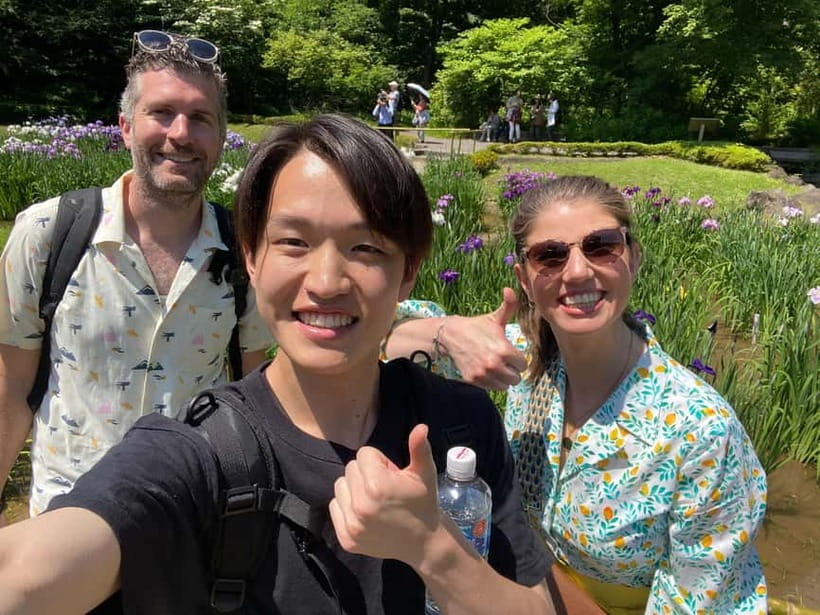
Ninomaru Garden offers a change of pace. After gates and defensive walls, you move through a garden designed around balance, water, plants, and carefully framed views. This is not simply a green break in the walking route. It shows another side of power in old Japan, where garden design expressed order, taste, and status.
I like this part because it keeps the tour from becoming a string of military facts. The garden gives you time to look closely at the relationship between built structures and nature. Its quiet mood also helps you understand why the East Gardens feel so different from the streets only a short distance away.
The garden section lasts within the roughly 30-minute guided visit to the Imperial Palace East Gardens, though the full experience continues beyond it. You should expect an explanatory walk rather than a long period for independent wandering. If you want to photograph every pond, tree, and garden detail, you may wish you had more free time.
That tradeoff is common on a short city tour. You cover more ground and gain a connected story, but you give up some freedom to pause. For a first visit to the palace grounds, I think the structure is useful. For a dedicated garden photographer, it may feel less relaxed.
Honmaru, the keep model, and the Tokugawa story
The Honmaru area adds another layer to the visit. This was the central part of Edo Castle, and the tour uses the site to explain the castle’s scale and importance. The Edo Castle main keep scale model is especially helpful because so much of the original structure no longer survives above ground.
A model can sound modest, but it solves a real problem. Standing among ruins, you can see a wall or foundation and still struggle to picture the complete castle. The scale model gives your eye a reference point. Suddenly, the broad grounds and remaining defenses make more sense.
This is also the point where the tour’s historical focus becomes clearest. You learn about the Edo period, the shogunate, samurai-era architecture, and the political system that shaped Japan before the modern era. The subject can become dense, but the guide’s role is to keep it tied to the places under your feet.
The strongest feedback about Yuki centers on this quality. Her explanations are described as easy to understand, well organized, and sometimes funny. One especially useful feature is her ability to make the castle feel present through description, helping you picture what the area may have looked like around 400 years ago.
That does not mean the tour turns into a theatrical performance. It remains a walking history lesson, with real sites doing much of the work. But a guide who can explain the background without burying you in names and dates makes a noticeable difference.
Same place, a different sort of green day out:
- Mt. Fuji Day Trip from Tokyo with English Speaking Driver Guide
★ 5.0 · 443 reviews - Mt. Fuji, Cherry Blossom & Shiba Sakura Pvt. Day Tour
★ 5.0 · 326 reviews - Tokyo Private Tour! Edo Castle & Imperial Palace East Gardens
★ 5.0 · 105 reviews - Mount Fuji & Lake Kawaguchiko Private Tour: Beyond the Ordinary
★ 5.0 · 78 reviews
Crossing from the palace to Marunouchi
The walk from the East Gardens toward Marunouchi takes about 10 minutes. This short connection is more than a transfer between stops. It lets you watch Tokyo change in front of you.
The palace grounds are defined by open space, old stonework, garden paths, and controlled views. Marunouchi brings tall office buildings, wide streets, modern design, and public art. The contrast is one of the tour’s best ideas. You do not study old Tokyo in isolation. You see how it sits beside the financial and business center of present-day Japan.
Marunouchi is a good section for anyone interested in city design. Your guide discusses modern architecture and art while keeping the palace in the background. The result is not a simple old-versus-new comparison. The two parts of the city exist side by side, and the route lets you see that relationship at walking speed.
You may find this section less emotionally powerful than the castle grounds. It is a working district, and the appeal comes from its architecture, scale, and connection to Tokyo’s growth. If your main interest is Japanese gardens or samurai history, this portion may feel like a pause. If you want to understand how Tokyo combines old institutions with modern business, it earns its place.
Nijubashi views and Kokyo Gaien
The route includes scenic views of Nijubashi and a walk through Kokyo Gaien National Garden. These open areas offer some of the most recognizable palace scenery on the experience.
Nijubashi is a useful visual stop because it gives you a formal view connected with the Imperial Palace. The open setting also creates a welcome change after the tighter paths and stone features of the East Gardens. Have your camera ready, but remember that flash photography is not allowed.
Kokyo Gaien helps connect the palace grounds with the wider city. You can take in the broad public spaces and see why this central area feels unusually open for Tokyo. The tour is not only about entering historic sites. It also shows how the palace area functions as a major public setting in the middle of the capital.
The light and weather will shape this portion more than any indoor tour. On a sunny day, a hat, sunscreen, and water will make the walk much easier. In poor weather, bring suitable clothing and expect little relief from the elements.
Marunouchi architecture before the final station stop
Once you are in Marunouchi, the tour shifts its attention to modern architecture and art. This is a chance to slow down and look up. The district’s buildings are part of the story, even if they do not carry the age of the palace walls.
I appreciate the route’s sense of progression here. You begin with the authority of the shogunate, move through the imperial setting, then arrive in a district shaped by modern commerce and design. The walk shows Tokyo as a city built in layers, rather than as a collection of separate attractions.
The guide’s commentary matters because the architecture can otherwise become a passing view between historical stops. You learn why the district belongs in a tour that began with Edo Castle. The point is not only that Tokyo has old and new buildings. The point is that the city’s modern center grew around, and alongside, older symbols of national power.
The tour does not provide a long museum visit or an interior architecture program. Most of the experience takes place outdoors, with the guide interpreting what you see from the street. That keeps the pace efficient, but it also means you should book this for context and orientation rather than detailed architectural study.
Tokyo Station, the red-brick finale
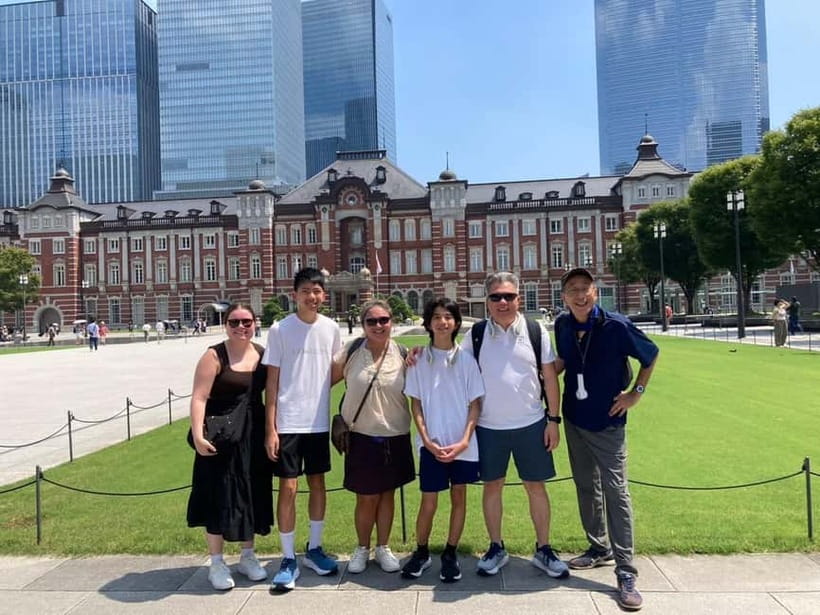
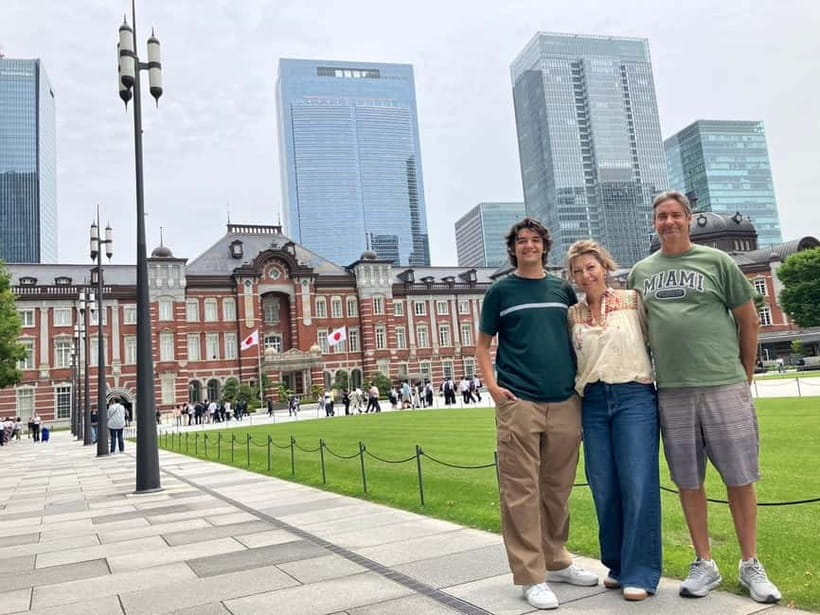
The walk ends at Tokyo Station. Its beautifully restored red-brick exterior gives the tour a strong final image and a practical endpoint in central Tokyo.
After the palace gardens and Marunouchi towers, the station ties the story together. It represents movement, modern infrastructure, and the city’s transformation into a major national center. The building is also visually distinct, so the finish does not feel like an ordinary corner where the guide simply says goodbye.
The station is visited from the outside as part of the guided experience. If you want to continue exploring the station afterward, you can make your own plans, but the tour itself focuses on the exterior and surrounding district.
For me, this is a smart ending. The route does not finish back where it began. Instead, it carries you forward through several periods of Tokyo’s development and leaves you at one of the city’s best-known landmarks. That makes the walk feel like a story with a destination, not just a loop through a park.
Is $38 a good value for 150 minutes?
At $38 per person, the value depends on how much context you want. The East Gardens do not require an admission fee, so you are paying mainly for the guide, the route, and the connections between the sites.
I think the price is reasonable for three reasons. First, the experience covers several major areas in one walk: the East Gardens, historic Edo Castle remains, Kokyo Gaien, Marunouchi, and Tokyo Station. Second, the guide explains details that are easy to miss on your own. Third, the route links old and modern Tokyo instead of treating them as unrelated sightseeing stops.
The value is weaker if you already know the palace grounds well, dislike guided pacing, or want to spend most of your time taking photos. You may prefer to visit the East Gardens independently and set your own schedule. But for a first visit, the $38 fee can save you from walking past important features without knowing why they matter.
The activity also allows cancellation up to 24 hours before the start for a full refund, and you can reserve now and pay later. Those terms help if your Tokyo schedule is still shifting. Live guides are listed for English, Japanese, Spanish, Chinese, and French, so check the language option you need when choosing a time.
Practical advice for a comfortable walk
Wear shoes you can use for a moderate amount of walking. The route includes gardens, historic grounds, public outdoor spaces, and city streets, so comfort matters more than fashion.
Bring water, sunscreen, a hat, a camera, and clothing suited to the weather. You can take photos, but flash photography is prohibited. Smoking is also not allowed.
The backpack rule deserves special attention. Backpacks are not allowed, so do not arrive with a large day bag and assume you can carry it throughout the tour. Pack lightly and confirm the current arrangements before setting out.
The experience is wheelchair accessible. Since the route covers several outdoor areas, anyone who needs specific assistance should still check the arrangements before booking, but accessibility is included among the stated features.
The tour is suitable for history fans, first-time visitors to the palace grounds, and anyone who wants a clear introduction to Tokyo’s transition from shogunate capital to modern city. It may be less suitable for people seeking a quiet, unstructured garden visit or a long indoor stop.
My verdict: book it for the connections
I would book this tour if I wanted a readable introduction to central Tokyo’s past and present in one outing. The East Gardens supply the old castle setting, Ninomaru provides garden calm, Marunouchi supplies modern contrast, and Tokyo Station gives the walk a memorable finish.
The most praised quality is the guiding, especially Yuki’s friendly and vivid explanations. Her humor and clear storytelling appear to make complex subjects easier to picture, which is exactly what you need among castle ruins and altered city streets.
Skip it if you want to wander alone, carry a backpack, or spend a full afternoon at each stop. Choose it if you value a well-connected route, a guide who can explain what you are seeing, and a practical way to place Tokyo’s imperial, samurai, and modern identities on the same map.
FAQ
How long does the tour last?
The tour lasts 150 minutes, or two and a half hours.
Where does the tour begin?
It begins at Starbucks Coffee Imperial Palace Outer Garden Wada Kuray Fountain Park store.
Where does the tour finish?
It finishes at Tokyo Station, written as 東京駅 in the meeting information.
Is admission to the Imperial Palace East Gardens included?
Yes. Entry to the Imperial Palace East Gardens is included, and no admission fee is required.
Which historic sites are included?
The route includes Ote-mon Gate, the Hyakunin Bansho Guardhouse, Ninomaru Garden, Edo Castle ruins, the Fujimi-yagura watchtower, the Honmaru area, and the Edo Castle main keep scale model.
What languages are available?
Live guiding is offered in English, Japanese, Spanish, Chinese, and French.
Is the tour wheelchair accessible?
Yes, the activity is listed as wheelchair accessible.
What should I bring?
Bring comfortable shoes, a hat, a camera, sunscreen, water, and clothing suitable for the weather.
Can I bring a backpack or use flash photography?
No. Backpacks and flash photography are not allowed. Smoking is also prohibited.
Just added around Tokyo
- Private tour – Scenic Fuji Escape: Hakone, Peace Park & More★ 5.0 · 4 reviews
- TOKYO: Tailored Gardens tour with Pro Gardener by E-bike -BASIC★ 5.0 · 2 reviews
- Tsukiji Food Strolling and Hama Rikyu Garden Walking Tour★ 5.0 · 7 reviews
- Tokyo: Serene Sakura & Sake: An Exclusive Brewery Pairing Lunch★ 5.0 · 2 reviews
- Tokyo Cherry Blossom Half Day Walking Tour with a Local Guide★ 3.5 · 4 reviews
- Cherry Blossom Highlights, Asakusa, Ueno, Imperial Palace Garden★ 4.5 · 4 reviews
- Full Guided Mt. Fuji & Shiba-Sakura Festival One Day Pvt.Tour★ 5.0 · 6 reviews
- Licensed Guide Tokyo Meguro Cherry Blossom Walking Tour★ 4.5 · 13 reviews
Tokyo Garden Tours, compared.
Imperial Palace East Garden and Edo Castle Walking Tour in Tokyo
Read our review →
Mt. Fuji Day Trip from Tokyo with English Speaking Driver Guide
Read our review →
Edo Castle & East Garden of the Imperial Palace Tour
Read our review →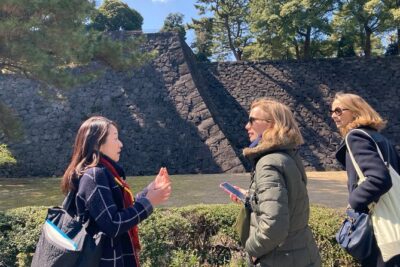
Tokyo Private Tour! Edo Castle & Imperial Palace East Gardens
Read our review →
Mount Fuji & Lake Kawaguchiko Private Tour: Beyond the Ordinary
Read our review →
Rainbow Bridge Day Cruise Show and Only Soft Drinks
Read our review →Browse the lists this tour appears in