
Review · JAPAN
Guided Half-day Tour(AM) to Noritake Garden & Toyota Commemorative Museum
Nagoya’s factories tell a surprisingly human story. This four-hour tour links Noritake Garden with the Toyota Commemorative Museum of Industry and Technology, showing how craftsmanship grew into modern manufacturing. I like the smart pairing of porcelain and automobiles, and I like that a guide handles the museum details while you focus on what you are seeing. The possible drawback is simple: you will do a fair amount of walking, and the schedule may feel tight for anyone who wants to examine every display.
The tour costs $110.76 per person, with admission to the Toyota museum and transportation between the attractions included. A maximum of eight people keeps the group small, though the experience may not feel fully private if the group fills. English-speaking guides such as Aki and Hiro have been praised for making good use of limited museum time.
Key points at a glance
- Two very different sides of Japanese manufacturing: Noritake introduces fine pottery and design, while Toyota explains the move from textile machinery to cars.
- Noritake Garden offers an urban pause: The former headquarters grounds provide about an hour in the birthplace of modern Noritake pottery.
- Toyota’s museum uses live demonstrations: You see industrial processes in action rather than only reading labels.
- Aki and Hiro received especially strong praise: Both guides were noted for clear English and for pointing out the important parts of each museum.
- The tour starts and ends at Nagoya Station: Meet at the Nagoya Station Tourist Information Center at 9:30 am and return there after the visit.
- The small group has a practical advantage: With no more than eight people, it should be easier to ask questions and keep the morning moving.
Why these two companies explain Nagoya
Nagoya is one of Japan’s major manufacturing centers, and this tour gives you a compact way to understand why. You are not simply visiting a car museum followed by a garden. You are tracing a change in Japanese industry, from careful handwork and pottery production to machines, textiles, engineering, and automobiles.
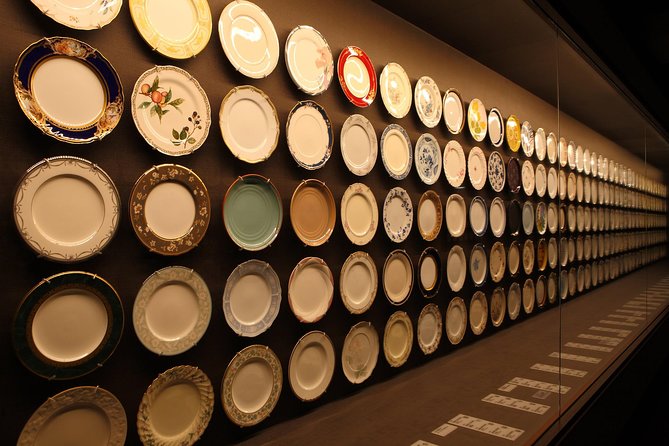
Noritake and Toyota also make a useful comparison. Noritake began with tableware and developed a reputation for design and manufacturing skill. Toyota began with textile machinery before becoming one of the world’s best-known car companies. Seeing both in one morning helps you connect small-scale craftsmanship with large-scale industry.
I find this approach more useful than visiting a single corporate museum in isolation. The story has a clear arc, but the two stops still feel different. One offers greenery and a former industrial site. The other is more focused on machinery, factory methods, and Toyota’s development.
The tour is especially appealing if you want something beyond Nagoya’s usual central sights. It gives you local industry, company history, architecture, and Japanese craftsmanship without requiring a full day away from the city.
More Museum Visits in Japan:
- Calligraphy and Tokyo Great Buddha, Botanical garden, art museum
★ 5.0 · 2 reviews - Vienna: Skip-the-Line Sisi Museum, Hofburg and Gardens Tour
★ 4.8 · 5,918 reviews - Marrakech: Majorelle Garden, YSL, and Berber Museum Entry
★ 4.6 · 5,168 reviews
Starting at Nagoya Station at 9:30 am
Your meeting point is the Nagoya Station Tourist Information Center at 1-chōme-1-4 Meieki, in Nakamura Ward. A 9:30 am start leaves enough of the day afterward for lunch, shopping, or another Nagoya attraction.
Starting at the station is practical. Nagoya Station is a major transport hub, and the tour also returns there, so you are not left figuring out a new drop-off point. The experience includes transportation to and from the attractions, but the exact transport method is not specified, so you should not assume a particular train, bus, or vehicle.
The maximum group size is eight people. That is a useful middle ground. You get more guidance than on a large bus excursion, but the group may still include other participants. The use of a professional guide matters here because both museums contain more information than you can absorb in a short visit.
Bring comfortable shoes. The tour notes a fair amount of walking, and you will be moving through museum areas and the Noritake grounds within a four-hour schedule. Most people can participate, and the attractions are near public transportation, but this is not a sit-down sightseeing tour.
Noritake Garden: one hour among pottery and greenery
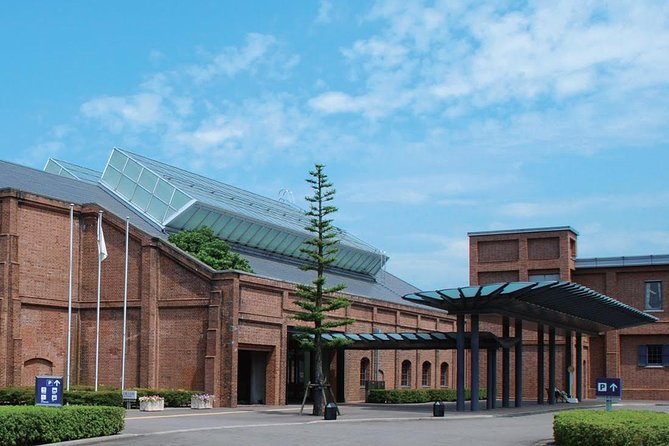
The first stop is Noritake no Mori, also called Noritake Garden. The garden opened on October 5, 2001, to mark Noritake’s 100th anniversary. It occupies the grounds of Noritake’s headquarters, at the company’s birthplace and the origin point of modern Noritake pottery.
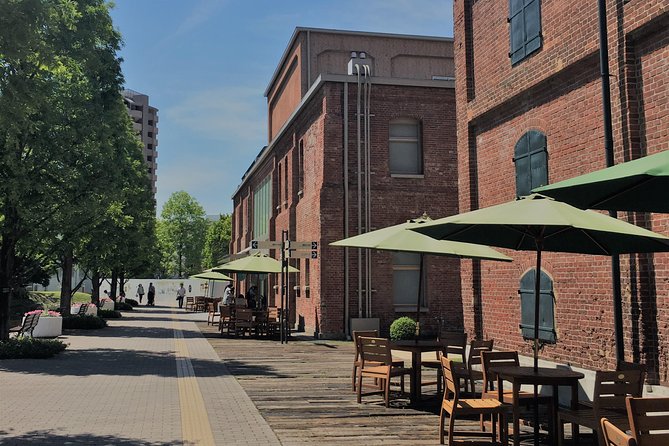
The setting gives this visit its character. Instead of entering a modern showroom detached from the company’s past, you are visiting a former industrial site that has been arranged as an urban oasis. The green space provides a welcome change after city streets and gives the tour a slower opening.
Admission to Noritake Garden is free. That helps the overall value, since your tour price is not being used to cover a large entrance fee at this stop. The value here comes from the setting, the company story, and the guide’s explanation.
You should think of this as an introduction rather than a full-day Noritake study. The scheduled time is about one hour, so your guide will likely focus on the key sites and the main story of Noritake’s development. If you have a personal connection to the brand, the stop may carry extra weight. One participant had bought Noritake china on a first trip to Japan in 1967 and found the visit particularly meaningful.
That detail points to one strength of the stop: Noritake is not only about factory production. Its tableware has been part of many households and travel memories. If you know the brand from china, giftware, or design, the garden may feel more personal than a standard company museum.
The tradeoff is time. An hour is enough to appreciate the garden and receive an overview, but it is not enough for a leisurely look at every feature. If you prefer to move slowly, take photographs, or read every display, you may want to return independently.
Toyota Commemorative Museum: machinery with a clear story
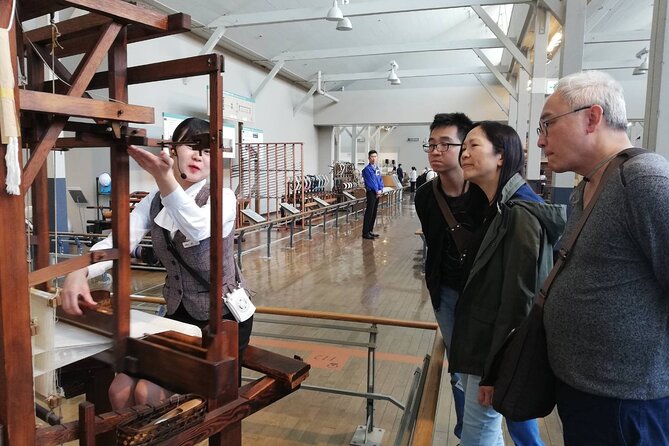
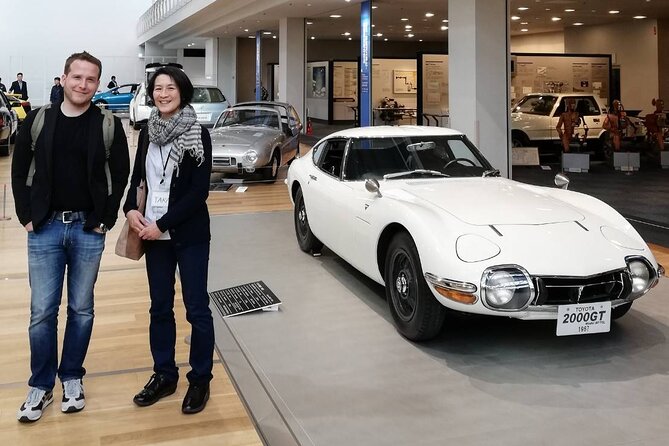
The Toyota Commemorative Museum of Industry and Technology receives about an hour and a half, making it the main stop of the morning. The museum was established by the Toyota group in a factory building from the Taisho era, which ran from 1912 to 1926. The building remains in the birthplace of the Toyota group and is preserved as industrial heritage.
That location gives the museum more substance than a collection of cars in a polished exhibition hall. You are seeing Toyota’s development in a former factory setting, with the building itself connected to the company’s early years. The museum’s purpose is not only to display finished products. It preserves the machinery and methods that shaped the company.
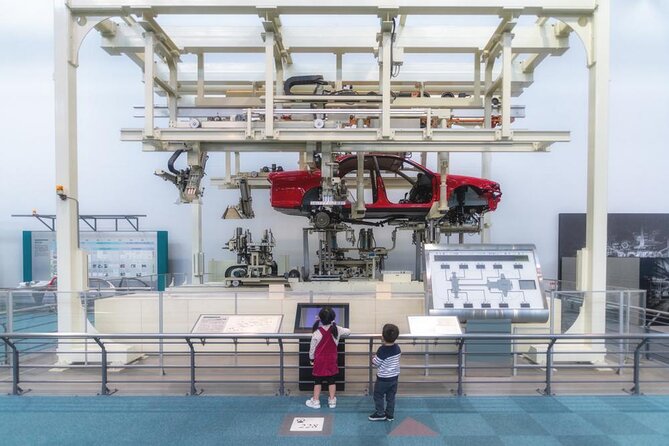
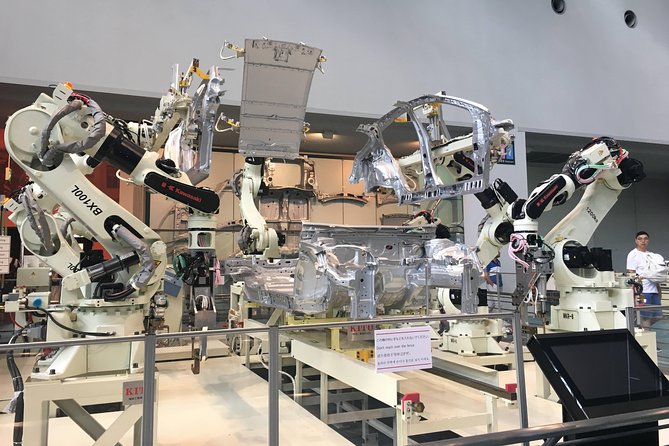
The main story is Toyota’s change from textile production to automobile manufacturing. This is one of the most valuable parts of the visit. If you arrive thinking only about cars, you may be surprised by how important the textile machinery chapter is. The company’s early identity was tied to industrial equipment, and the museum shows how that foundation led toward automobiles.
The tour includes admission, so you do not need to arrange a separate museum ticket. The museum also features live demonstrations. That matters because industrial technology can become dry when it is reduced to panels and dates. Seeing machines operate gives you a better sense of speed, precision, repetition, and human skill.
Your guide can help you use the 90 minutes well. Aki was praised for making the most of limited museum time, while Hiro was noted for showing the important sites in both museums. Those details are useful when choosing this experience: the guide is not merely leading you to the entrance. Good time management is central to the value of a short museum tour.
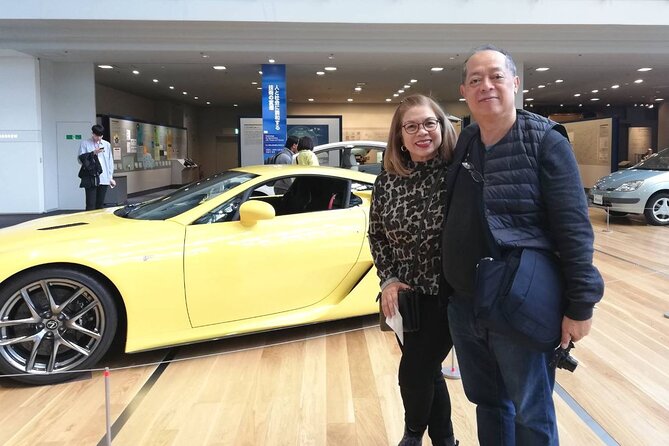
The Toyota stop will appeal strongly to car owners and engineering enthusiasts. One participant who had owned Lexus vehicles for more than 20 years found the museum especially meaningful. You do not need to be a Toyota owner, though. The textile-to-automobile story gives the museum wider interest, particularly if you want to understand Japan’s manufacturing culture.
Still, the museum may be less appealing if you have no interest in industry, machinery, cars, or company development. The live demonstrations help, but this is not designed as a general sightseeing attraction. I would choose it because you want context, not because you expect a collection of glamorous automobiles alone.
More Half-Day Outings in Japan:
- Kyoto Arashiyama Bamboo forest & Garden Half-Day Walking Tour
★ 5.0 · 413 reviews - Kanazawa: Half-Day Private Tour – Garden, Castle, Geisha
★ 5.0 · 10 reviews - From Paris: Giverny, Monet’s Home & Gardens Half-Day Trip
★ 4.5 · 2,887 reviews - From Avignon: Half-Day Lavender Tour of Luberon
★ 4.8 · 232 reviews
What craftsmanship means on this morning
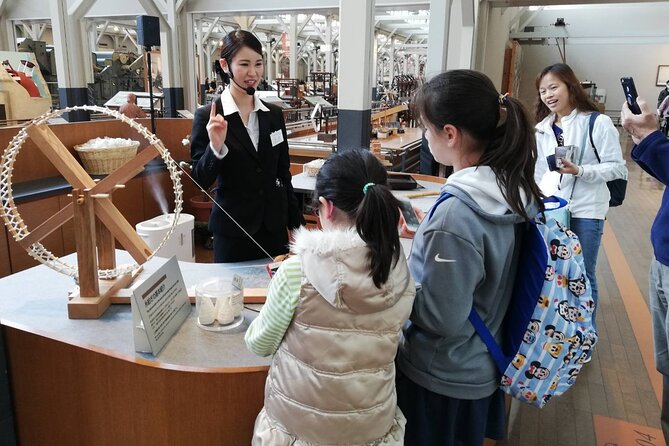
The Japanese idea of monozukuri, or craftsmanship, is the thread connecting both stops. Here, the word is not just a slogan. You see it in two forms: the care involved in making tableware and the systems required to produce advanced machinery and cars.
Noritake gives you the design and pottery side of the story. Toyota gives you the industrial side. The contrast makes the concept easier to understand. Craftsmanship can mean careful finishing by hand, but it can also mean refining a production method until it becomes accurate, reliable, and repeatable.
This is why the tour works better as a pair than as two unrelated visits. You can compare the scale of each company while keeping an eye on the same basic questions: How are things made? How does a company preserve its origins? How does it change without losing its identity?
The guide’s commentary is important because the museums may present many details quickly. An English-speaking guide such as Aki or Hiro can point out the parts that matter most and explain how the two companies fit into Central Japan’s rise as a manufacturing center.
Is $110.76 good value?
At $110.76 per person, this is not a budget morning outing. The price makes more sense when you count what is included: a professional guide, transportation to and from the attractions, admission to the Toyota museum, and a small group capped at eight people.
Noritake Garden itself has free admission, so the tour price is not mainly paying for entry tickets. You are paying for structure and interpretation. The guide gets you to two related sites, explains the company histories, manages the four-hour schedule, and returns you to the original meeting point.
I think the value is strongest for first-time visitors to Nagoya who want an organized introduction to local industry. It is also useful if you have limited time and would otherwise struggle to connect the two locations. The guide’s ability to prioritize displays can save you from wandering through a large museum without knowing what deserves attention.
The value is weaker for independent visitors who are comfortable arranging transport and reading museum information on their own. Noritake Garden is free, and the Toyota museum can be visited separately, so a self-guided plan may cost less. You should choose this tour for the guide and convenience, not simply for museum admission.
Group discounts are available, which may improve the price for larger bookings. Since the tour is usually booked about 48 days ahead, planning early is sensible if the morning schedule matters to you.
Who should book this half-day tour?
I would recommend this experience to:
- Anyone curious about Japanese manufacturing and company origins
- Toyota or Lexus owners who want context behind the brand
- People interested in Noritake tableware, pottery, and design
- Visitors with only one morning available in Nagoya
- Families or small groups that prefer a guide to large museums
- Anyone who wants an urban garden stop alongside industrial exhibits
I would be more cautious if you dislike walking, need a slow pace, or want a tour centered on historic temples, food, or traditional neighborhoods. The focus here is modern industry and craftsmanship. The garden adds a pleasant outdoor element, but it is not a long nature visit.
National holidays also require some flexibility. Attractions may close on certain holidays, and substitute stops may be used. Check the arrangements close to your travel date if seeing both named attractions is essential.
Cancellation terms are worth noting before you pay. You can receive a full refund if you cancel at least six full days before the start time. Cancellation two to six full days ahead allows a 50 percent refund, while cancellation less than two full days before the tour receives no refund.
Should you book it?
Book this tour if you want a compact, guided explanation of why Nagoya became a manufacturing center. The pairing of Noritake Garden and the Toyota museum is thoughtful, the small group is practical, and the guides can help you get more from a short museum visit.
The best reason to book is not the free garden admission or the Toyota ticket. It is the chance to connect two companies and two kinds of making in one organized morning. If you are happy to move at a steady pace and have at least some interest in pottery, cars, machines, or Japanese industry, $110.76 can be fair value.
Skip it if you prefer complete independence or want to linger at one museum for half a day. For everyone else, this is a focused and useful way to see a side of Nagoya that many visitors miss.
FAQ
Where does the tour begin?
It begins at the Nagoya Station Tourist Information Center, located at 1-chōme-1-4 Meieki, Nakamura Ward, Nagoya, Aichi 450-0002, Japan.
What time does the tour start?
The start time is 9:30 am.
How long does the experience last?
The tour lasts approximately four hours and ends back at the meeting point.
What attractions are included?
The tour visits Noritake no Mori, also called Noritake Garden, and the Toyota Commemorative Museum of Industry and Technology.
Are entrance fees included?
Admission to the Toyota Commemorative Museum is included. Noritake Garden has free admission.
How many people can join the tour?
The tour has a maximum of eight participants.
What happens if I need to cancel?
You can receive a full refund by canceling at least six full days before the start time. Cancellation two to six full days ahead receives a 50 percent refund, and cancellation less than two full days before the start time is nonrefundable.
Just added around Japan
- Private tour – Scenic Fuji Escape: Hakone, Peace Park & More★ 5.0 · 4 reviews
- TOKYO: Tailored Gardens tour with Pro Gardener by E-bike -BASIC★ 5.0 · 2 reviews
- Tsukiji Food Strolling and Hama Rikyu Garden Walking Tour★ 5.0 · 7 reviews
- Tokyo: Serene Sakura & Sake: An Exclusive Brewery Pairing Lunch★ 5.0 · 2 reviews
- Full Guided Mt. Fuji & Shiba-Sakura Festival One Day Pvt.Tour★ 5.0 · 6 reviews
- Tokyo Cherry Blossom Half Day Walking Tour with a Local Guide★ 3.5 · 4 reviews
- Cherry Blossom Highlights, Asakusa, Ueno, Imperial Palace Garden★ 4.5 · 4 reviews
- Licensed Guide Tokyo Meguro Cherry Blossom Walking Tour★ 4.5 · 13 reviews
Museums, compared.

Skip-the-Line Sisi Museum, Hofburg and Gardens Tour
Read our review →
Majorelle Garden, YSL, and Berber Museum Entry
Read our review →
Borghese Gallery and Gardens Guided Small-Group Tour
Read our review →
Borghese Gallery & Gardens Small Group Guided Tour
Read our review →
Pitti Palace, Boboli Garden, Palatine Gallery Tour
Read our review →
Tremezzina: Villa Carlotta Museum and Garden Entry Ticket
Read our review →
Tulip Experience Ticket with Tulip Garden and Museum
Read our review →
Skip-the-Line Sisi Museum, Hofburg and Gardens Tour Vienna
Read our review →Browse the lists this tour appears in