
Review · TOKYO
Tokyo Cherry Blossoms blooming spots E-bike Tour, 3hrs
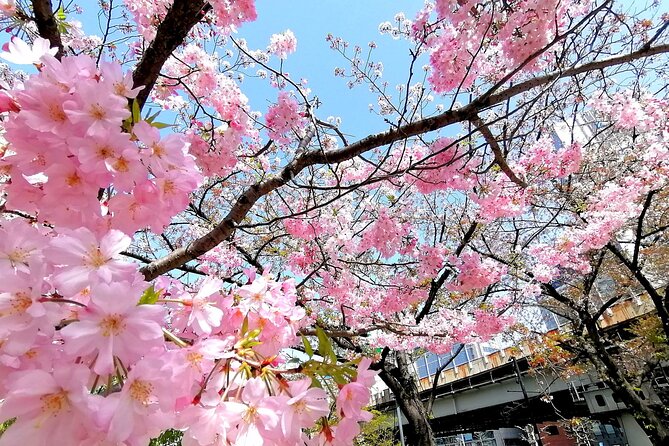
Cherry blossoms reward the right route. This three-hour Tokyo e-bike tour links several famous viewing areas around the Imperial Palace, giving you more variety than a single park visit. I like the electric assistance, which makes the 15-kilometer route manageable, and the small groups of no more than six, which keep city cycling easier. The main catch is timing: blooms can be late, brief, or uneven across Tokyo.
You meet near Kanda Station and return to the same base after visiting Chidorigafuchi, Yasukuni Shrine, Sotobori Park, Hibiya Park, and Kensei Kinenkan. Guides such as Yoshihisa, Jenny, Take, Kenta, Kay, and Takako have been praised for clear explanations and warm service. Still, this is a bicycle tour first, so you need to ride confidently and meet the 147-centimeter minimum height.
Key points at a glance
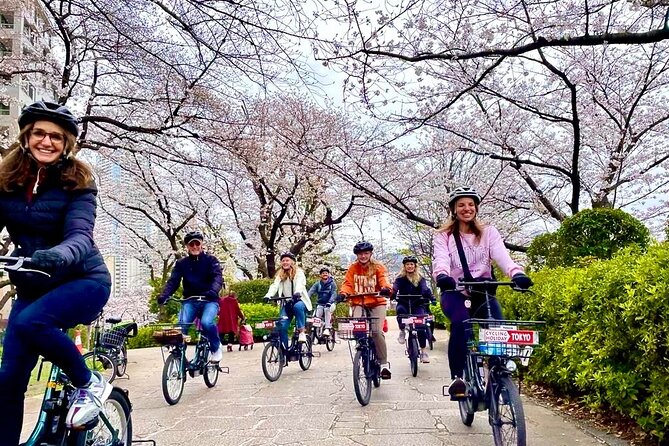
- Five cherry blossom areas in three hours: You see palace-moat paths, shrine grounds, city parks, and quieter local corners instead of settling for one famous viewpoint.
- Electric bikes reduce the strain: The motor assist helps you cover ground without making every incline or long street feel like exercise.
- Small groups matter in Tokyo: With a maximum of six people, the guide can keep the group together more easily and answer questions along the way.
- Bloom timing is never guaranteed: The tour can be adjusted into a regular Tokyo cycling route if the sakura are late, though that may disappoint if blossoms are your main reason for booking.
- Practical equipment is included: Your fee covers the e-bike, helmet, guide, insurance, and storage for luggage other than valuables.
- The route has cultural context: Guides explain Tokyo, Japanese culture, local history, and the meaning of the spring season rather than simply pointing at trees.
Why an e-bike works well for Tokyo’s cherry blossom season
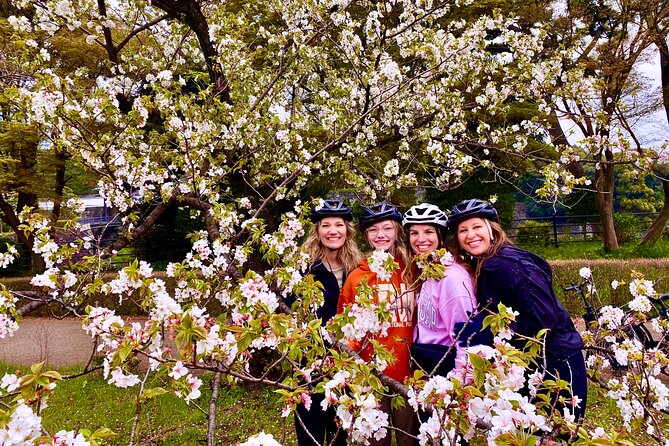
Tokyo is enormous, and its best spring views are spread across separate parks, waterways, shrine grounds, and streets. A walking tour can show you one or two areas before your feet begin to complain. Public transport can move you quickly between districts, but it often leaves you with a walk at each end and little sense of how the areas connect.
This route uses the middle ground. You pedal through central Tokyo, take paths and streets that cars cannot use, and stop often enough for photographs and short visits. The electric motor does not remove the need to pedal, but it makes the ride friendlier for mixed fitness levels. One parent described taking the tour with a 13-year-old daughter, while another participant said the bikes made getting around easy regardless of fitness.
The pace is active but not extreme. The listed stops include roughly 50 minutes of scheduled viewing time, with the remaining time used for cycling, introductions, explanations, and transitions. A past outing covered about 15 kilometers, so you should expect a real city ride rather than a short spin around one park.
The small group size is a real advantage. Tokyo streets can feel complicated when six bicycles move together, but a maximum of six is far easier to manage than a large sightseeing convoy. It also gives you a better chance to ask about a shrine, a bridge, a tree variety, or something you notice along the way.
More Cherry Blossom Tours in Japan
- Mt. Fuji, Cherry Blossom & Shiba Sakura Pvt. Day Tour
★ 5.0 · 326 reviews - Mt. Fuji & Hakone Cherry Blossom private One Day Tour
★ 4.5 · 35 reviews - Cherry Blossom Private Tour
★ 4.5 · 18 reviews
Starting near Kanda Station
The meeting point is Cycling Holiday Tokyo at 3-chome-8-6 Uchikanda, Chiyoda City. It is near Kanda Station, served by the JR Yamanote Line and Tokyo Metro, and the base offers free Wi-Fi.
That central location is useful if you are staying in eastern or central Tokyo. You do not need to travel out to a distant suburb before the ride begins. The activity ends back at the same meeting point, which makes it easier to plan lunch, an afternoon museum, or an evening reservation afterward.
Arrive ready to cycle. The operator provides the bike and helmet, but food, drinks, and rain gear are not included. Bring water, especially if the day is warm, and consider sunscreen and a small towel in summer. In colder months, warm clothing and gloves matter because the wind feels sharper on a moving bicycle.
You may leave luggage at the base, except valuables. That is handy if you are between hotel check-out and a later train, but keep passports, cameras, cash, and electronics with you.
Chidorigafuchi: the first major blossom stop
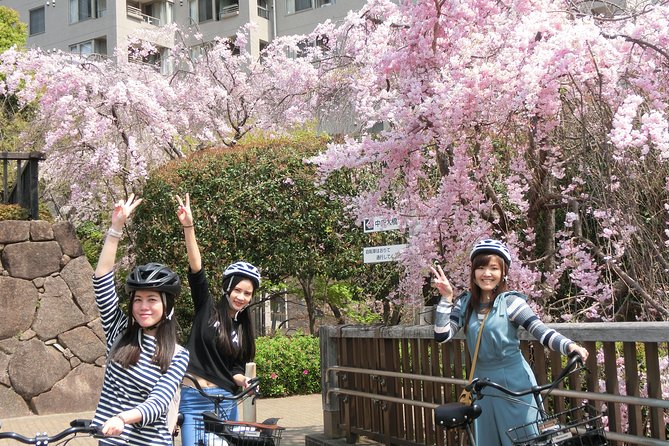
Chidorigafuchi is one of Tokyo’s best-known cherry blossom areas, located beside the Imperial Palace grounds. The route allows about 10 minutes to enjoy the trees while passing by e-bike.
This is a scenic opening because the blossoms are tied to the palace moat and broad central Tokyo views. You get a sense of why the area becomes so popular in spring. The bike lets you keep moving along the route rather than stopping at a single crowded footpath.
The short scheduled time also tells you how this tour works. You will not spend an hour at every location. Instead, you get a taste of each area, take photographs, hear the guide’s comments, and continue. If your dream is to sit under one tree for a long picnic, this tour may feel too mobile. If you want several viewpoints in one morning or afternoon, the format makes good sense.
Ask your guide about the palace area and the trees as you ride. Guides have been praised for explaining Tokyo’s past and Japanese culture in ways that add meaning to the scenery.
Yasukuni Shrine: blossoms with a cultural setting
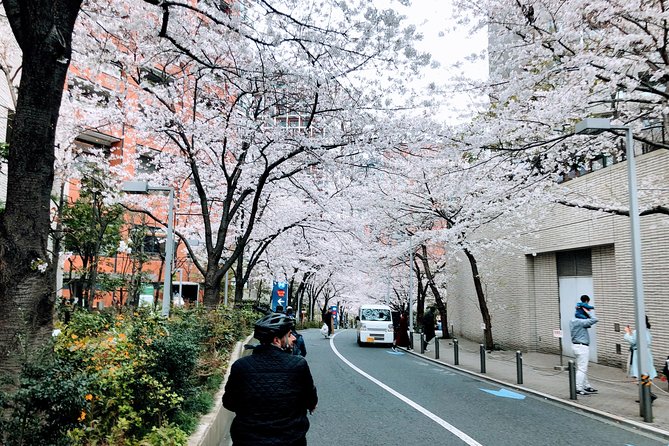
At Yasukuni Shrine, you get off the bike for about 15 minutes and walk through the park to see the cherry blossoms. This is one of the more substantial stops, and it gives you time to look around rather than view the trees only from the saddle.
The shrine is also a place where context matters. Its history is sensitive and tied to Japan’s modern past, so a good guide can help you understand what you are seeing without reducing the stop to a quick photograph. The available information does not promise a formal shrine tour, but the guides are noted for historical explanations and cultural background.
This stop also gives your legs a break. Cycling, especially in a city, involves concentration as well as pedaling. Getting off the bike lets you reset before the next section.
More Cherry Blossom Tours in Tokyo
- Licensed Guide Tokyo Meguro Cherry Blossom Walking Tour
★ 4.5 · 13 reviews - Evening Hanami (Cherry Blossom) Experience with a Local
★ 3.5 · 10 reviews - Tokyo: Mt. Fuji & Hakone Cherry Blossoms Private Day Tour
★ 3.5 · 9 reviews - Tokyo Cherry Blossom Express Tour with Boat Ride
★ 4.3 · 7 reviews
Sotobori Park: riding beside the outer moat
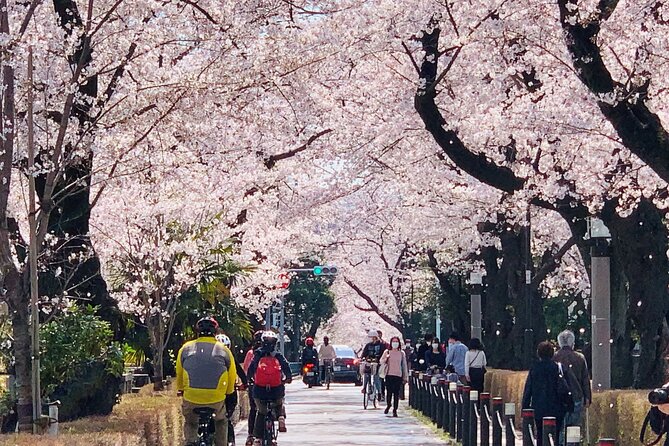
Sotobori Park offers one of the most distinctive parts of the route. You ride beside the outer moat, with cherry trees lining the waterway for about 10 minutes.
This section shows the value of using a bicycle. You can follow the long line of blossoms and see how the moat shapes the city, rather than arriving at one entrance by train and turning around. The water, trees, paths, and surrounding buildings create a different view from Chidorigafuchi, even though both areas relate to the Imperial Palace district.
The route may use paths where cars cannot go, but you still need to pay attention to other cyclists and pedestrians. Tokyo’s spring parks can be busy, and a bicycle tour requires patience. Stay close to the guide, follow instructions, and allow faster groups or walkers room to pass.
Hibiya Park: a brief city pause
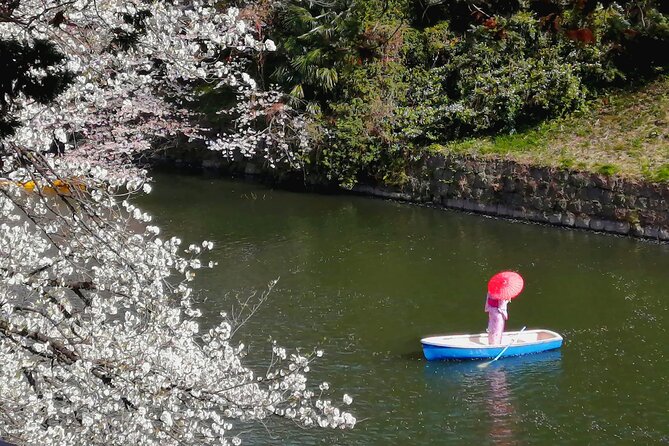
Hibiya Park is a short five-minute pass-by stop. You look at the blossoms while riding through the park rather than making a long visit.
That brevity may be a drawback if Hibiya Park is high on your personal list. It is also part of the tour’s strength: you keep moving through central Tokyo and see how formal green spaces fit among major city streets. The stop adds another setting without using up the time needed for longer visits elsewhere.
Use this section for quick photographs if the group pauses safely. Your guide may also point out details you would miss while navigating alone, but the schedule does not allow an extended wander through the park.
Kensei Kinenkan: a quieter final stop
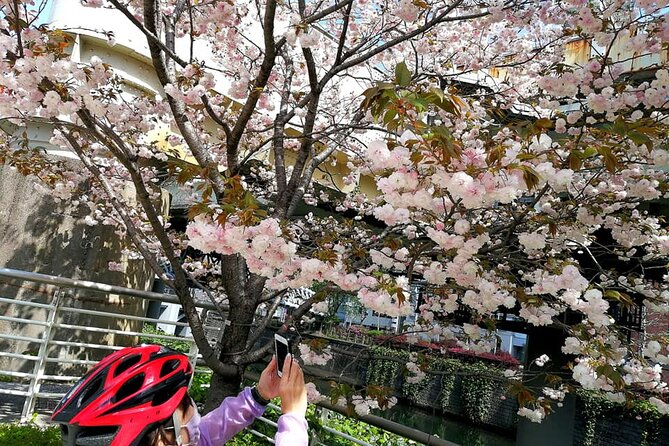
At Kensei Kinenkan, you leave the bikes and spend about 10 minutes viewing the blossoms in the park. Like Yasukuni Shrine, this stop gives you a chance to stand still and take photographs after several riding sections.
The combination of riding stops and walking stops keeps the afternoon from becoming repetitive. You see trees beside moats, within shrine grounds, along park paths, and near urban landmarks. That variety is more useful than visiting five locations that all look alike.
Because Kensei Kinenkan comes near the end, it also gives you a final chance to ask questions. If you want help identifying the route on a map or advice about another Tokyo area to visit, this is a good time to speak with the guide before returning to Kanda.
What the guides add to the ride
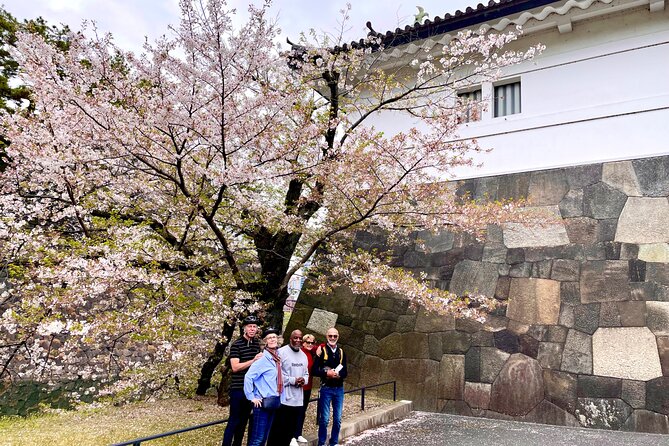
The human side of this experience receives nearly as much praise as the bikes. Yoshihisa, also called Yoppi, is described as polite and informative, while Jenny has been praised for being fun, well informed, and good at finding special places. Take provided extensive background for a parent and teenage daughter, and Kenta was singled out for making three hours pass quickly.
Yoshiko, Kay, Takako, and San are also named in positive comments. The common thread is not a scripted lecture. It is the chance to ask questions while moving through real neighborhoods and parks.
That matters in Tokyo because the visual details can be easy to miss. A guide can explain why a particular park matters, connect a shrine to the surrounding district, or suggest a local shop. One adjusted tour included a small mochi shop that the participant felt would have been difficult to find alone. That kind of local detour is not listed as a guaranteed part of this cherry blossom route, but it shows the value of having a guide who knows the area.
Guides may also take group photographs. Most people appreciate having a shared record of the outing, but one participant found the repeated group photos intrusive and wanted more control over private pictures. If you prefer not to be photographed, say so clearly at the start. Good communication can prevent a small issue from affecting the ride.
The big question: will the cherry blossoms be in bloom?
Sakura timing is the tour’s greatest uncertainty. Tokyo’s flowering period changes from year to year, and even a short difference in weather can separate bare branches from full bloom.
Several outings had to adapt because the blossoms arrived late. In those cases, the operator offered a regular Tokyo e-bike route or adjusted the ride to find trees that were already flowering. Some participants still had a fine day, with guides making the most of scattered blossoms and other sights. Others understandably felt disappointed because the flowers were the main purpose of booking.
If you have flexible dates, schedule the tour during the published peak forecast rather than assuming a calendar date will guarantee flowers. Even then, no operator can promise exact conditions. The strongest reason to book this tour is that the route can still provide a worthwhile Tokyo cycling experience if the sakura are early or late.
If the flowers are non-negotiable, check the forecast close to your date and confirm what happens if the bloom is poor. The experience requires good weather, and a cancellation caused by rain or failure to reach the minimum number of participants results in a choice of another date, another experience, or a full refund.
Price, group size, and practical value
At $64.57 per person, this is a fair price for a three-hour guided ride if you want several cherry blossom areas in one outing. The price includes the e-bike, helmet, guide, and insurance. You are paying not only for equipment, but also for route planning, navigation, safety support, and local explanations.
The value is strongest for first-time visitors who want an overview of central Tokyo. A bicycle connects the stops in a way that public transport cannot, and the motor assist makes the distance less intimidating. Families with children aged 12 or older may also find it useful, provided everyone meets the 147-centimeter minimum height and can ride a bicycle confidently.
The value is weaker if you already know Tokyo’s central parks well or want a slow, unstructured blossom picnic. The itinerary moves on after short stops, and food and drinks are not included. You may also share the ride with other participants, although the group limit is six people.
The experience has a 4.9 rating from 27 ratings and a 93 percent recommendation rate. Those figures suggest strong satisfaction, especially with the guides and the easy cycling format, while the blossom timing issue remains the main variable.
Who should book this Tokyo e-bike tour?
I would choose this tour if you want to cover ground, prefer outdoor sightseeing, and like learning as you move. It suits couples, families with older children, and first-time Tokyo visitors who want a clear introduction to the Imperial Palace area and nearby parks.
You should be comfortable riding in an urban setting. The operator states that anyone unable to ride a bicycle cannot join, and the minimum height is 147 centimeters. The e-bike helps with effort, but it does not replace balance, awareness, or the need to follow the guide.
Bring sun protection in summer and warm layers in winter. Wear clothing that lets you pedal comfortably, and remember that rain gear is not included. Sunday and public holiday departures are available, which may help if your schedule is tight.
Should you book it?
Book this tour if you want a friendly, active way to see several cherry blossom areas in one morning or afternoon. The small group, electric bikes, central meeting point, and strong guide feedback make it a practical choice, especially for visitors who do not want to plan a complicated route themselves.
Skip it if you cannot ride, dislike fixed schedules, or need a guaranteed full-bloom experience. For everyone else, the best approach is to treat the blossoms as the goal but not the only payoff. If the flowers are perfect, you get a memorable ride through springtime Tokyo. If they are late, you still have a well-supported way to see central neighborhoods, parks, landmarks, and local details by bicycle.
FAQ
Where does the Tokyo cherry blossom e-bike tour start?
It starts at Cycling Holiday Tokyo, 3-chome-8-6 Uchikanda, Chiyoda City, Tokyo 101-0047, near Kanda Station. Kanda is served by the JR Yamanote Line and Tokyo Metro.
Where does the tour end?
The tour ends back at the same meeting point near Kanda.
How long is the e-bike tour?
The tour lasts approximately three hours.
What is included in the price?
The price includes an e-bike rental, helmet rental, guide, insurance, and luggage storage for items other than valuables.
What should I bring?
Food, drinks, and rain gear are not included. Towels and sunscreen are recommended in summer, while warm clothing and gloves are recommended in winter.
Is there a minimum age or height?
The minimum age is 12 years, and the minimum height is 147 centimeters. You must also be able to ride a bicycle.
What happens if the weather is poor or the blossoms are late?
The activity requires good weather. If it is canceled because of poor weather or because the minimum number of participants is not reached, you can choose another date or experience, or receive a full refund. Late blossoms may lead to an adjusted or regular Tokyo cycling route.
More E-Bikes in Tokyo
- Porto Riverbank Tour on an e-bike: Atlantic Coast, Gardens
★ 4.7 · 11 reviews - Porto Riverbank E-Bike Tour – Atlantic Coast, Gardens
★ 5.0 · 6 reviews - Picnic next to Lavender fields by e-bike
★ 3.4 · 4 reviews - 3.25-Hour Wilmington Airlie Gardens E-Bike Self-Guided Tour
★ 4.5 · 4 reviews
More Bike Rides in Tokyo
- TOKYO: Tailored Gardens tour with Pro Gardener by E-bike -BASIC
★ 5.0 · 2 reviews - Versailles Full Day Bike Tour with Palace, Gardens, & Picnic
★ 5.0 · 2,217 reviews - From Paris: Versailles Bike Tour w/ Palace, Gardens, & Picnic
★ 5.0 · 2,150 reviews - Versailles Bike Tour with Market, Gardens & Guided Palace Tour
★ 5.0 · 1,121 reviews
Just added around Tokyo
- Private tour – Scenic Fuji Escape: Hakone, Peace Park & More★ 5.0 · 4 reviews
- TOKYO: Tailored Gardens tour with Pro Gardener by E-bike -BASIC★ 5.0 · 2 reviews
- Tsukiji Food Strolling and Hama Rikyu Garden Walking Tour★ 5.0 · 7 reviews
- Tokyo: Serene Sakura & Sake: An Exclusive Brewery Pairing Lunch★ 5.0 · 2 reviews
- Full Guided Mt. Fuji & Shiba-Sakura Festival One Day Pvt.Tour★ 5.0 · 6 reviews
- Tokyo Cherry Blossom Half Day Walking Tour with a Local Guide★ 3.5 · 4 reviews
- Cherry Blossom Highlights, Asakusa, Ueno, Imperial Palace Garden★ 4.5 · 4 reviews
- Licensed Guide Tokyo Meguro Cherry Blossom Walking Tour★ 4.5 · 13 reviews
Cherry Blossom Tours, compared.

The DC Cherry Blossom Bus Tour with Tidal Basin Guided Walk
Read our review →
National Mall & Cherry Blossoms Tour with Optional Museum Tickets
Read our review →


Nagano: 1-Day Snow Monkey & Cherry Blossom Tour in Spring
Read our review →
Nagano Spring: 1-Day Cherry Blossoms & Snow Monkeys Guided Tour
Read our review →Browse the lists this tour appears in