
Review · TOKYO
Licensed Guide Tokyo Meguro Cherry Blossom Walking Tour
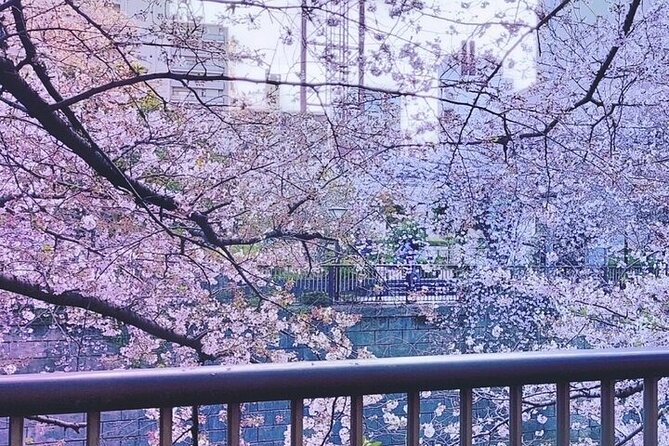
Cherry blossoms are only part of the story. This 90-minute walk links the famous Meguro River with Daienji temple and Hotel Gajoen Tokyo, giving you a compact look at flowers, fire history, religion, and old Tokyo dining culture. I like the low $22 price and the private English-speaking guide. I also like that the route ends near JR Meguro Station, rather than leaving you to find your way back. The main concern is meeting-point reliability, especially during peak blossom season.
The timing matters. Cherry blossoms usually appear from late March to early April, but the season can shift, and one March tour took place in rain before the flowers had opened. You should also note that some promotional highlights mention a Shinjuku bus tour and a samurai, ghost, and taiko show, but the detailed route provided here is a walking tour around Nakameguro and Meguro. Confirm what you are booking before paying.
Five things to know before you book
- The route begins at a precise Starbucks: Meet at Starbucks Coffee, Naka-Meguro Tsutaya Books, opposite Nakameguro Station on the Hibiya Line.
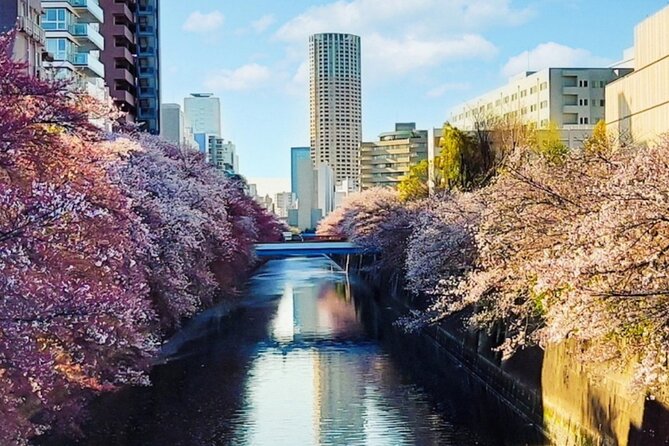
- The river walk takes about 45 minutes: This is the main event during cherry blossom season, with scenic views along the Meguro River.
- Daienji adds real historical depth: The temple is tied to a devastating Edo-period fire and later became a memorial site.
- Gajoen is more than a photo stop: Its decorated halls and role as Japan’s first general wedding hall make it a useful window into modern Japanese social history.
- The guide service has some risk: A past participant could not locate the guide and received no refund, so arrive early and keep the guide contact details handy.
Why the $22 price can work
At $22 per person, this is priced as a short, focused introduction rather than a full-day Tokyo tour. You are paying for a licensed English-speaking guide, a 90-minute route, and the convenience of connecting three nearby sights without having to research the history yourself.
I think the value is strongest if you are already staying in Tokyo and want a gentle half-day activity during blossom season. The route does not require a train between stops, and it finishes at Meguro Station. That makes it easy to continue elsewhere afterward.
The value is less clear if you expect a large number of attractions or a long cultural program. The walk includes the river, Daienji, and Gajoen, but the temple and wedding hall receive limited time. You should see this as a guided introduction, not a complete tour of Meguro.
The private-group format could make the price attractive for a small party. You are not joining a large crowd, and the guide can presumably keep the pace suited to the group. Still, the available information does not state the maximum group size, so I would not assume this means an entirely private, one-family experience unless your booking confirms it.
Free cancellation up to 24 hours before the start and the reserve-now, pay-later option reduce some financial risk. They do not remove the need to check the meeting instructions carefully. One person arrived on time but could not identify the guide and was unable to take the tour, then was refused a refund. That is the sharpest warning attached to this experience.
More Cherry Blossom Tours in Japan
- Mt. Fuji, Cherry Blossom & Shiba Sakura Pvt. Day Tour
★ 5.0 · 326 reviews - Mt. Fuji & Hakone Cherry Blossom private One Day Tour
★ 4.5 · 35 reviews - Tokyo Cherry Blossoms blooming spots E-bike Tour, 3hrs
★ 5.0 · 27 reviews
Finding the guide at Nakameguro
The starting point is Starbucks Coffee, Naka-Meguro Tsutaya Books, opposite Nakameguro Station on the Metro Hibiya Line. The supplied coordinates are 35.644621, 139.6993005.
This is specific, but Tokyo station areas can still feel confusing, particularly when you are looking for one branch of a familiar chain. I would arrive at least 15 minutes early, check the station exit, and compare the storefront with the map before the meeting time. Do not rely on simply asking for a Starbucks, since there may be more than one nearby.
The guide is supposed to carry a company-logo brochure and a national government-licensed guide certificate. Those are useful identifying details. Look for both rather than waiting for a large tour flag, since the information does not promise one.
The poor meeting experience described by Javed from Kuwait is important. He arrived on time but could not find anyone matching the expected meeting arrangement. The operator offered a place on the following day, but that did not help because he was leaving Japan that night. If your Tokyo schedule is tight, this kind of problem can spoil the whole plan.
I would save the coordinates, the meeting-point name, and the provider name, STIJ, before leaving your hotel. If the booking gives you a phone number or message function, keep it ready. Those are sensible precautions for any appointment in a busy station district.
Walking the Meguro River for 45 minutes
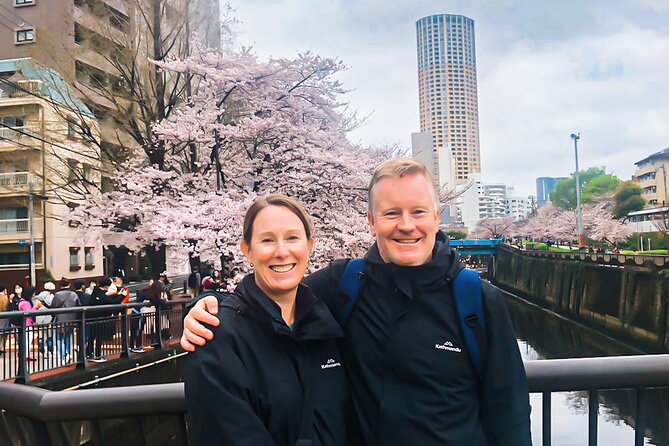
The first major section follows the Meguro River for about 45 minutes. During the usual blossom period, from late March through early April, this is the part most people will anticipate.
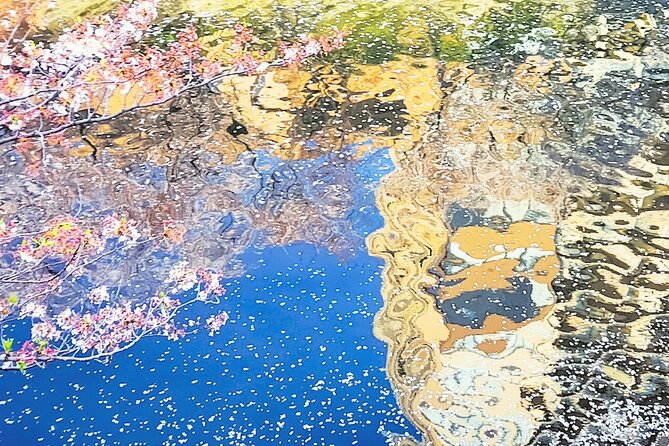
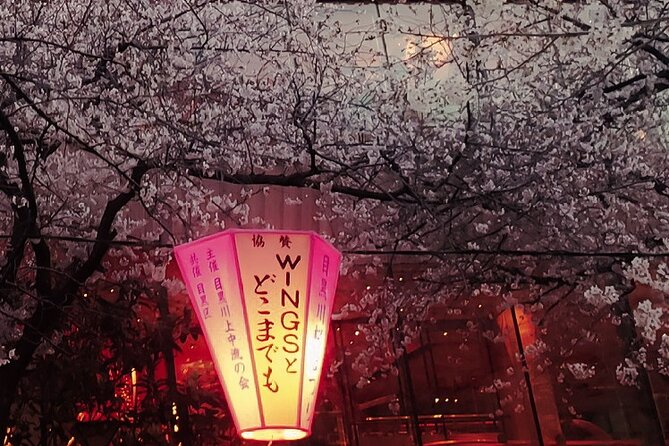
The river is one of Japan’s well-known cherry blossom settings. The appeal comes from the combination of water, urban streets, and trees lining the route. You are not being taken to a remote garden. Instead, you get a distinctly Tokyo scene, where seasonal beauty appears within an ordinary city neighborhood.
The timing is the great uncertainty. Cherry blossom forecasts are useful, but they cannot guarantee the exact day of full bloom. One tour on March 30 took place in driving rain, and the blossoms had not opened. The group was taken to a traditional house instead. That shows the guide may adjust the plan, but it also shows that a date near the expected season is not the same as a flower-filled walk.
If blossoms are your main reason for booking, check the forecast shortly before your visit and keep your expectations flexible. A rainy day can also make the river path less comfortable, so bring weather protection and wear shoes with good grip. Comfortable shoes are specifically recommended, and that advice applies even on dry days because you will be walking continuously for much of the experience.
The river section is also the least predictable part of the tour in terms of crowd conditions and visual payoff. The provided information promises scenic views, not a reserved viewing area or a quiet photo session. You may find the route especially attractive in bloom, while a cloudy day before flowering will feel more like a neighborhood walk with historical commentary.
Daienji and the memory of Edo’s fire
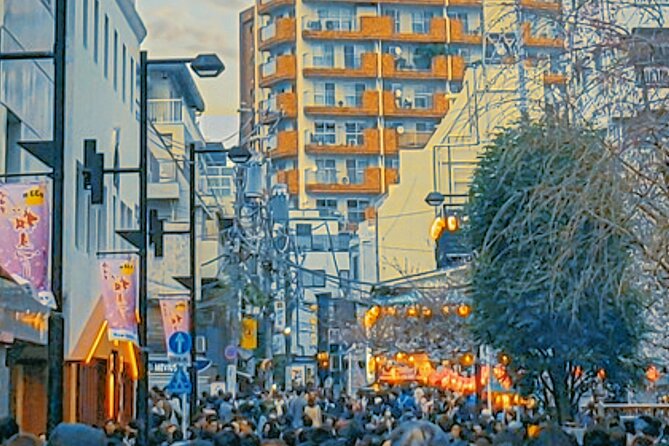
Daienji is the historical stop that gives the walk more weight than a simple blossom outing. It is described as one of the seven luckiest temples during the Edo era, but its past also includes a terrible disaster.
In the middle of the 18th century, a fire began at the temple and spread through Edo. The city became a sea of fire. Afterward, Daienji was not allowed to be rebuilt until the end of the Edo period. It was eventually rebuilt as a tribute to those who died in the fire.
That story changes how you look at a small temple visit. You are not just stopping at a religious building for a quick photograph. You are hearing how fire shaped an older Japanese capital, how authorities responded to disaster, and how a site can carry both blame and remembrance.
The schedule allows about 15 minutes within the wider 30-minute Gajoen and scenic section, although the exact time at Daienji is not separately stated. You should expect an introduction rather than a long temple study. If you want time for extensive personal exploration, ask the guide how long the group will remain.
I like this stop because it breaks up the floral scenery with a difficult piece of urban history. It also gives the guide a chance to explain Edo in human terms, not only through famous castles and rulers. The temple’s connection with luck adds another layer, but the fire and memorial story is the part I would listen for most closely.
More Cherry Blossom Tours in Tokyo
- Cherry Blossom Private Tour
★ 4.5 · 18 reviews - Licensed Guide Tokyo Meguro Cherry Blossom Walking Tour
★ 4.5 · 13 reviews - Evening Hanami (Cherry Blossom) Experience with a Local
★ 3.5 · 10 reviews - Tokyo: Mt. Fuji & Hakone Cherry Blossoms Private Day Tour
★ 3.5 · 9 reviews
Gajoen, Tokyo’s first general wedding hall
The final major sight is Hotel Gajoen Tokyo, known historically as Meguro Gajoen. The route allows about 30 minutes for a guided visit, photo stop, and views along the way.
Gajoen opened in 1931 as a restaurant named after Meguro. It became the first general wedding hall in Japan. That fact matters because the venue was not only for wealthy society. It served authentic Beijing cuisine and Japanese cuisine, placed prices on its menu, and welcomed ordinary people alongside politicians and high-ranking customers.
This is a useful piece of social history. Dining out and formal celebrations were not kept entirely behind private doors. Gajoen helped make an elaborate public setting available to a wider range of people, at least compared with the exclusive establishments of its era.
The interior decoration is described as dignified and grand, with a nickname comparing it to a Ryukyu castle in the Showa period. Four of its seven banquet halls were designated tangible cultural properties by the Tokyo Metropolitan Government in 2009. Those details explain why the site deserves more than a passing glance.
At the same time, the route calls this a photo stop and guided visit, so do not expect access to every room or a full architectural tour. The information does not guarantee that all decorated halls will be open. You might see only selected spaces or public areas, depending on the day.
Gajoen gives the tour a strong finish because it moves the subject from old temple history to 20th-century urban life. The river shows seasonal Tokyo. Daienji recalls Edo disaster. Gajoen explains food, weddings, design, and social change. That is a smart sequence for a short route.
What the guide adds

The tour is conducted in English by a national government-licensed guide. That credential matters most at Daienji and Gajoen, where a quick explanation can turn an attractive building into a meaningful stop.
The strongest direct praise available for the guide comes from Jan of the United Kingdom, who found the guide nice and well informed. That is encouraging, particularly for a tour built around history rather than only photographs. Jan also described the outing as good even though the weather was poor and the blossoms had not opened.
You should keep the praise in proportion. There are only six ratings overall, producing a 3.6 score, and the experience has a serious meeting-point complaint. A license does not guarantee a perfect tour, and the guide’s performance cannot compensate if you cannot locate the guide.
The private-group setup should help with questions and pace, but the supplied details do not name the guide or state the group limit. If a personal guide is important to you, ask for the guide’s name and contact method after booking. No guide name is provided here.
The confusing Shinjuku and show references
Some highlights connected with this experience mention a bus tour around Shinjuku and a stage show featuring cartwheeling samurai, breakdancing ghosts, and taiko drums. Those items do not fit the detailed route, which begins at Nakameguro, follows the Meguro River, visits Daienji and Gajoen, and ends at Meguro Station.
I would not assume the Shinjuku bus ride or the theatrical show is included in this 90-minute walk. The included services are a walking tour and licensed guide. Treat the extra references as a possible description mix-up and confirm the exact activity before booking.
This matters because a visitor expecting a dramatic evening performance could be disappointed by a quiet historical walk. The Meguro route has its own appeal, but it is a very different experience from a bus tour and a stage production.
Who should book this walk?
I would choose it for a first visit to Tokyo when you want a short orientation to one neighborhood. It suits you especially well if you like seasonal scenery but also want temples, local history, and architecture in the same outing.
It is a good fit for couples and small private groups who prefer an easy pace and an English explanation. The $22 cost is modest enough to make sense as a targeted add-on to a wider Tokyo itinerary.
I would be more cautious if you have only one day in Tokyo and need famous landmarks such as Asakusa, Shibuya, or the Imperial Palace. This tour stays in the Meguro area and does not cover those sights.
I would also hesitate if the blossoms are your only goal. The flowering window is short, weather can interfere, and one late-March outing found the trees still bare. Book it for the neighborhood and its history, with cherry blossoms as a welcome bonus rather than a guarantee.
Finally, do not book without preparing for the meeting point. Arrive early, use the exact Starbucks name and coordinates, and identify the guide by the company brochure and license certificate. That small effort addresses the biggest practical weakness attached to this experience.
My booking advice
Book this tour if you want a compact, affordable walk with three distinct subjects: river scenery, an Edo-era temple story, and a grand Showa-period venue. The route is short, the ending at Meguro Station is convenient, and the guide may add useful context that you would miss on your own.
Skip it if you expect a Shinjuku bus ride or a theatrical samurai and ghost show, or if you cannot tolerate any uncertainty about blossom timing. I would also avoid it on a tight departure day unless the meeting instructions and guide contact details are fully clear.
At $22, the potential value is good. Just book for the broader Meguro experience, not for a guaranteed peak-bloom photograph.
FAQ
Where does the tour begin?
It begins at Starbucks Coffee, Naka-Meguro Tsutaya Books, opposite Nakameguro Station on the Metro Hibiya Line. The listed coordinates are 35.644621, 139.6993005.
Where does the tour finish?
The tour ends at JR Meguro Station.
How long does the tour last?
The walking tour lasts 90 minutes. The Meguro River section takes about 45 minutes, while the Gajoen portion includes about 30 minutes for a photo stop, guided visit, and scenic views.
Is the tour conducted in English?
Yes. It includes a live English-speaking guide who holds a national government guide license.
When can I see the cherry blossoms?
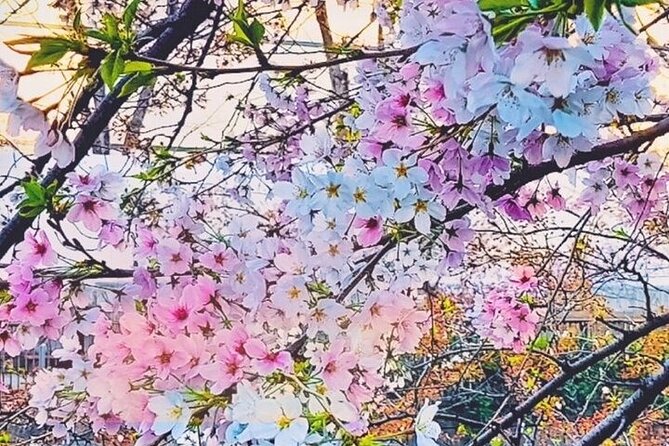
The usual season is between late March and early April. The exact timing can change, and the flowers may not be open on your tour date.
What should I bring?
Bring comfortable shoes. You may also want to prepare for rain, since one recorded outing took place in driving rain, although rain protection is not listed as an official requirement.
Can I cancel for a full refund?
Yes, cancellation is free up to 24 hours in advance. You can also reserve now and pay later, according to the provided booking terms.
Just added around Tokyo
- Private tour – Scenic Fuji Escape: Hakone, Peace Park & More★ 5.0 · 4 reviews
- Tokyo: Serene Sakura & Sake: An Exclusive Brewery Pairing Lunch★ 5.0 · 2 reviews
- TOKYO: Tailored Gardens tour with Pro Gardener by E-bike -BASIC★ 5.0 · 2 reviews
- Tsukiji Food Strolling and Hama Rikyu Garden Walking Tour★ 5.0 · 7 reviews
- Full Guided Mt. Fuji & Shiba-Sakura Festival One Day Pvt.Tour★ 5.0 · 6 reviews
- Tokyo Cherry Blossom Half Day Walking Tour with a Local Guide★ 3.5 · 4 reviews
- Cherry Blossom Highlights, Asakusa, Ueno, Imperial Palace Garden★ 4.5 · 4 reviews
- Licensed Guide Tokyo Meguro Cherry Blossom Walking Tour★ 4.5 · 13 reviews
Cherry Blossom Tours, compared.

The DC Cherry Blossom Bus Tour with Tidal Basin Guided Walk
Read our review →
National Mall & Cherry Blossoms Tour with Optional Museum Tickets
Read our review →


Nagano: 1-Day Snow Monkey & Cherry Blossom Tour in Spring
Read our review →
Nagano Spring: 1-Day Cherry Blossoms & Snow Monkeys Guided Tour
Read our review →Browse the lists this tour appears in