
Review · GERMANY
Sanssouci Park: A Self-Guide Audio Tour of the Garden’s Landmarks
Royal gardens tell their best stories outdoors. This affordable Sanssouci Park audio walk takes you past fountains, palaces, statues, churches, and royal oddities while explaining why Frederick the Great prized this corner of Potsdam so highly. I especially like the freedom to begin and end when you choose, plus the route’s memorable details, from potatoes on a king’s grave to fake ruins and statues that do not look quite as Chinese as expected. The main trade-off is that the tour only guides you around the park. Palace interiors, museums, and other attractions require separate admission.
I also like that the tour uses automatic GPS playback, so you can listen without constantly checking a map. Producer Jo Eckardt, founder of A Friend in Berlin, gives the walk a personal connection to the city. At about $9.99 per person, it is a good buy if you want historical context without paying for a private guide, though the price does not include transportation, headphones, or entry to any attraction.
Key Points to Know Before You Go

- Start at the Obelisk: The walk begins near the Great Fountain at Obeliskportal on the park’s Hauptallee.
- Follow a 60 to 90 minute route: You can complete it quickly or pause at the gardens, monuments, and viewpoints.
- Hear unusual royal stories: Expect potatoes on Frederick the Great’s grave, fake ruins, undecipherable hieroglyphics, and statues around the Chinese House.
- Use it offline: The VoiceMap app stores the audio, map, and route data, so you do not need a live internet connection during the walk.
- Finish at the Church of Peace: The route ends just outside Friedenskirche, giving the walk a clear endpoint.
- Plan extra time for interiors: The audio tour does not guide you inside palaces, museums, or other attractions along the way.
Why Sanssouci Park Works So Well as a Walking Tour
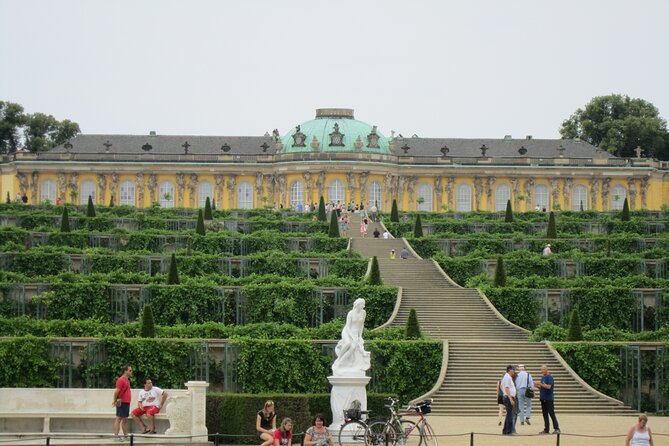
Sanssouci Park is a large royal garden filled with more than a single headline palace. Its appeal comes from the way fountains, terraces, statues, churches, working buildings, and ornamental gardens fit into one long royal setting. You are not simply walking from point A to point B. You are watching Frederick the Great’s taste unfold across the grounds.
The audio route gives you a way to make sense of that variety. Without background, the park can feel like a beautiful succession of fountains and buildings. With the narration, the details begin to connect. You learn why Frederick built the intimate Sanssouci Palace, why he spent so much time there, and how later members of the Hohenzollern family added their own buildings and interests.
I like this format for Potsdam because it leaves room for your own pace. You can stop to take photographs, sit near the Great Fountain, or linger around the palace grounds without holding up a group. If you are in a hurry, the main walk takes about an hour. If you pause often, allow closer to an hour and a half.
That flexibility is the heart of the experience. You are not tied to a departure time or a live guide’s schedule. You can also use the tour more than once, including before the booking date, after it, or at home through the virtual tour option.
A few more gardens around Germany worth a look
- Berlin: Charlottenburg Palace & Gardens Ticket & Audio Tour
★ 4.2 · 9 reviews - E-ticket to Berlin Botanical Garden with Audio Tour
★ 5.0 · 2 reviews - From Paris: Versailles Palace Self Guided & Gardens tickets
★ 4.4 · 1,100 reviews
Starting at the Obelisk and Great Fountain
The walk begins at the Obeliskportal on Hauptallee, near the Great Fountain. This is a useful starting point because the fountain gives you an immediate visual anchor, and the surrounding park makes the royal scale clear from the first few minutes.
The Great Fountain is one of the route’s best early stops. You will have several chances to photograph it while learning about its purpose and place within the park. The audio does more than identify the fountain. It helps you read the arrangement of monuments and gardens around it.
This is also where the GPS feature matters. After installing the VoiceMap app and entering the unique code supplied with your booking, the app guides you to the starting point. Once you are in position, you put on your headphones and tap Start. The narration plays automatically as you move.
You should still keep an eye on your surroundings. GPS audio is convenient, but you are walking through a public park with monuments, paths, and other people. The app provides turn-by-turn directions, yet a quick look at the map before beginning is sensible.
The Church of Peace and the Hohenzollern Connection
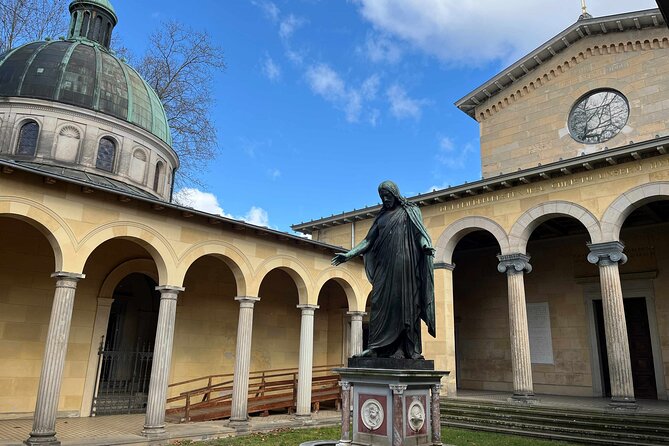
The route leads past several monuments toward the Church of Peace. This church is important not only for its architecture but also because many Hohenzollern kings are buried there. The stop gives the walk a strong connection to the royal family that shaped Potsdam.
You will hear stories about the former kings and the role the church played within the park. It is a fitting early reminder that Sanssouci was not merely a private garden for one ruler. It became part of a wider royal setting, shaped by generations.
The tour also ends outside the Church of Peace, so this building gives the walk a clear frame. You begin among the formal gardens near the Obelisk and finish at a place tied closely to the people who used and developed the park.
Keep in mind that the audio does not guide you through the church interior. If you choose to enter any attraction along the route, you pay separately and explore it outside the audio experience.
Neptune Grotto and the Park’s Decorative Oddities

Neptune Grotto adds a more playful note to the route. The monument is filled with thousands of crystals and shells, giving it a very different feel from the grand palace buildings and formal fountains.
This stop is useful because it shows how the park mixes serious royal symbolism with decorative fantasy. You are not looking only at practical garden design. The rulers who shaped Sanssouci also wanted surprise, ornament, and theatrical touches.
The route continues with stories about unusual objects and decorative choices. These details are the reason I would choose an audio walk over a bare map. A map can show you where Neptune Grotto is. It cannot explain why a monument covered in crystals and shells belongs in a Prussian royal garden.
Same place, a different sort of green day out:
- Munich: Old Town Walking Tour
★ 4.7 · 589 reviews - Munich Old Town Walking Tour
★ 4.5 · 152 reviews - Stuttgart: Wilhelma Zoological-Botanical Garden Ticket
★ 4.7 · 121 reviews - Munich: Old Town and English Garden Rickshaw Tour
★ 4.9 · 112 reviews
Sanssouci Palace and Frederick the Great’s Private World
Sanssouci Palace is the emotional center of the walk. The audio explains why Frederick II, known as Frederick the Great, loved the park so much that he built this intimate palace and spent much of his time there.
The word intimate matters. Sanssouci was not presented as a massive public statement in the same way as some grand European palaces. Its place within the gardens helped create a more personal retreat for the king. The route uses the palace to explain his connection to the park, rather than treating it as just another photogenic building.
You will also see the Grave of Frederick the Great. One of the most memorable details is the explanation of why potatoes appear on his grave. It is a small detail, but it gives the royal story a human and slightly comic turn.
The grave is a good example of what this tour does best. It links a physical object to a story you are likely to remember later. If you are touring with children, this detail may hold their attention better than a long account of dynasties and dates.
The palace itself may require separate admission if you want to go inside. The audio tour does not include museum or palace entry, so budget extra if interiors are part of your plan.
Fake Ruins, Hieroglyphics, and the Courtyard Castle
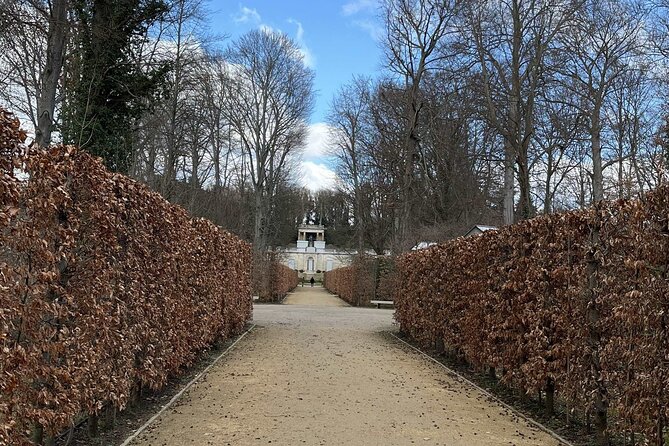
Sanssouci’s Courtyard Castle brings another unusual element into view. Here you will see fake ruins and hieroglyphics that are difficult to decipher.
The point is not simply to admire the objects. The narration helps you understand that royal gardens often included staged fragments, invented antiquities, and decorative puzzles. These features could suggest age, mystery, or distant cultures without being genuine ancient remains.
This is one of the route’s more entertaining sections. The park is not a perfect display of sober historical accuracy. Some parts were designed to create a mood. Once you know that, you can look at the ruins and symbols with a sharper eye.
I would pay attention here if you enjoy architecture, garden design, or the strange ways rulers used decoration to shape an image of themselves. The information also helps prevent a common mistake: assuming every old-looking object in a royal garden is an authentic archaeological piece.
The Historic Mill and a Working Viewpoint

The Historic Mill of Sanssouci provides a change of pace. Rather than being only a decorative monument, it is a working mill with a beautiful view.
Its presence adds a practical side to the royal setting. Sanssouci was not made only of grand fountains and carefully arranged flowers. A mill belongs to the working life of the estate, and it helps broaden your picture of how the park functioned.
The view is part of the appeal. After formal gardens and palace details, the mill gives you another way to see the grounds. You may want to pause here rather than treating it as a quick audio stop.
Entry is not included in the walking tour. The route takes you by the site and explains it, while any interior visit would be your own decision and expense.
Orangery Palace and the Garden’s Later Royal Chapter
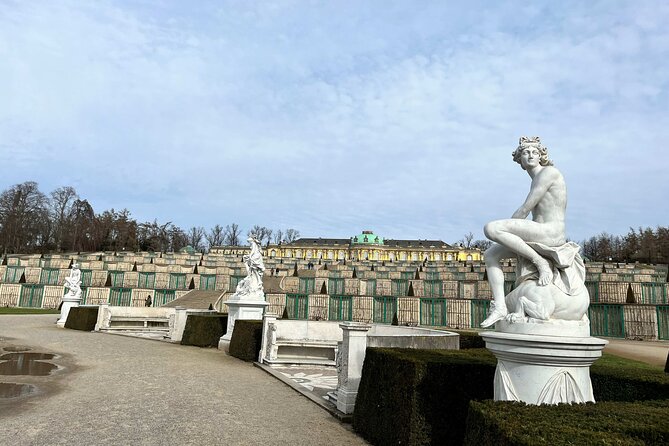
Orangery Palace introduces Frederick William IV, who loved Sanssouci Park almost as much as his grand-uncle Frederick the Great. This part of the route shows that the park did not stop evolving after Frederick’s reign.
The palace has a different connection to the royal family, and the audio places it within the broader story of Potsdam’s rulers. You get a sense of how later generations kept using the park while adding their own preferences and projects.
This is valuable context. Without it, you might treat Sanssouci as one ruler’s finished creation. The route makes clear that the gardens and buildings reflect more than one period and more than one royal personality.
Again, the audio tour takes you to the building but does not provide an indoor visit. If you want to tour Orangery Palace, check its separate admission arrangements before setting out.
More Than 130,000 Plants and Flowers
The gardens themselves deserve close attention. The route covers more than 130,000 plants and flowers, including fig trees, a vineyard, and the last tree from the Royal Nursery.
Those details make the park feel like a living collection rather than a decorative backdrop. A vineyard and fig trees also point to the practical and experimental side of royal gardening. You can look beyond the palace facades and notice what was grown, arranged, and preserved.
The mention of the Royal Nursery’s last tree gives the garden a sense of continuity and loss. It is a small botanical detail, but it can change how you look at the plantings around you. You are seeing not only color and shape but also traces of earlier gardening work.
The large number of plants means you should not rush every garden section. The tour can be finished in an hour, but anyone who enjoys flowers and formal planting will benefit from allowing the full 90 minutes, with extra time if you want photographs.
The Chinese House and Statues That Miss the Mark
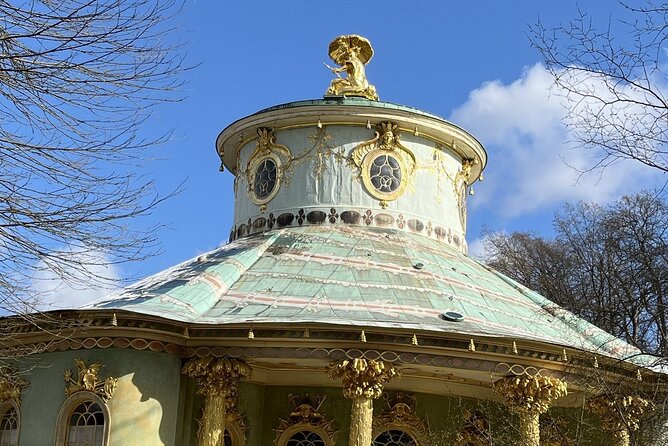
The Chinese House is one of the park’s most distinctive buildings. The audio explains why the statues around the teahouse do not look Chinese, which makes this stop more revealing than a simple photo break.
The building reflects a European fascination with Asian styles, filtered through royal taste and imagination. The surrounding statues are part of that story. Their appearance invites questions about how eighteenth-century European designers pictured faraway cultures.
This is a useful place to listen carefully rather than relying on the building’s name. You may find the contrast between the intended style and the actual figures more interesting once you know the background.
The Chinese House also adds visual variety late in the route. After churches, fountains, ruins, and palaces, it reminds you that Sanssouci’s design language changes repeatedly as you walk.
Flora and the Final Walk to Friedenskirche
The route passes the statue Die Statue der Flora, giving you another chance to see how sculpture is used to connect the gardens with classical themes. The audio explains the statue while you continue walking, so you do not need to stop for every point unless you want a closer look.
This moving format works well in a park. You receive a story, view the object, and continue at your own speed. If something catches your attention, you can pause the audio and return to it later.
The final stretch brings you back to the Church of Peace, where the tour ends just outside. By this point, the route has built a picture of why Frederick loved Sanssouci and why later rulers continued to care about it.
An endpoint outside the church is practical if you plan to continue sightseeing in Potsdam. You can also stop there and use the church as your next destination, though any interior visit is separate from the audio route.
Price, App Features, and Practical Value
At $9.99 per person, this is inexpensive for a private experience. Your group alone uses the route, but there is no live guide. The value comes from the amount of context packed into a self-guided walk and the freedom to use it without a fixed start time.
The VoiceMap app is available for Android and iOS. Your booking confirmation includes instructions and a unique code under Before You Go. You need your own smartphone and headphones, since neither is included.
Offline access is a real advantage. The audio, maps, and geodata can be used without an internet connection, which makes the walk less dependent on mobile service. Download and set up the tour before arriving so you are not troubleshooting at the Obelisk.
The tour includes lifetime access in English. That makes the price better if you expect to return to Potsdam, want to replay a section, or prefer to preview the route at home through the virtual option.
The weak point is the strict booking policy. The experience is non-refundable and cannot be changed for any reason, so choose your date carefully before paying.
Who Should Choose This Sanssouci Walk?
I would recommend it most strongly if you like history in small, memorable pieces. The potatoes on Frederick’s grave, the crystals and shells in Neptune Grotto, the fake ruins, and the Chinese House statues give the walk more personality than a simple list of palace names.
It also suits independent visitors who dislike large groups or fixed schedules. You can pause the narration, take photographs, linger by the Great Fountain, or finish in about an hour if your day is packed.
Families may appreciate the unusual stories, especially the grave potatoes and fake hieroglyphics. People who want detailed interior tours should treat this as an outdoor introduction, not a complete palace visit.
You should also be comfortable walking through a large park while using a phone and headphones. The app gives directions, but you remain responsible for following the route and deciding which attractions to enter.
Should You Book It?
Book this tour if you want a low-cost, flexible way to understand Sanssouci Park while seeing its major garden landmarks. The strongest features are the automatic GPS narration, offline access, lifetime use, and the route’s memorable royal stories.
Skip it if you want a live guide, guided palace interiors, or a tour focused mainly on architecture inside the buildings. For most independent visitors, though, $9.99 is a fair price for a well-planned outdoor introduction to one of Potsdam’s essential sights. Bring charged headphones, allow up to 90 minutes, and leave extra time if you plan to enter any palace, church, museum, or mill.
FAQ
Where does the Sanssouci Park audio tour begin?
It begins at the Obeliskportal on Hauptallee, 14469 Potsdam, near the Great Fountain.
Where does the tour end?
The tour ends just outside the Church of Peace, Friedenskirche, at Am Grünen Gitter 3, 14469 Potsdam.
How long does the audio tour take?
The expected duration is about one hour to one hour and 30 minutes.
What app do I need?
You need the VoiceMap app for Android or iOS. After booking, enter the unique code provided with your confirmation.
Does the tour work without internet access?
Yes. The audio, maps, and geodata are available offline.
Are palace and museum admissions included?
No. The tour does not guide you through museums or other attractions along the route. Any admission fees are paid separately.
Do I need to bring headphones?
Yes. A smartphone and headphones are not included, so you need to bring your own.
Is transportation included?
No. Transportation to and from Sanssouci Park is not included.
Can I use the tour more than once?
Yes. The experience includes lifetime access in English, and you can use it before or after the booking date as well as through the virtual tour option.
Just added around Germany
- Private Tour of Nymphenburg Palace and Gardens★ 5.0 · 26 reviews
- Private and full rickshaw tour in the English Garden★ 4.5 · 10 reviews
- Munich Private City Bike Tour and English Garden★ 4.5 · 2 reviews
- City Bike and English Garden Tour★ 4.0 · 14 reviews
- Amazing Schwetzingen Garden Tour★ 4.5 · 4 reviews
- E-ticket to Berlin Botanical Garden with Audio Tour★ 5.0 · 2 reviews
- Berlin: Potsdam & Sanssouci Gardens Private Tour With Jacob★ 4.8 · 8 reviews
- Cologne-Nippes: Summer wine party in the frenchstyle garden★ 4.7 · 3 reviews
Self-Guided Tours, compared.

Versailles Palace Self Guided & Gardens tickets
Read our review →
Avery Island Experience- Tabasco & Jungle Gardens Self-guided tour
Read our review →
Self-Guided Bike Tour of Killarney National Park, Muckross Gardens & Waterfall
Read our review →
Tulip Fields near Keukenhof – Self-Drive Audio Tour for 2 People
Read our review →
York: Castle Howard House and Gardens – Self-Guided
Read our review →

Papal Palace and Secret Garden Ticket and Audio Guide
Read our review →
Browse the lists this tour appears in