
Review · TOKYO
Tokyo: Edo Castle Ruins & Imperial Palace East Garden Tour
Tokyo’s imperial past hides in plain sight. This two-hour walking tour links the Wadakura Fountain, Edo Castle ruins, samurai guardhouses, and the peaceful Imperial Palace East Gardens for a useful introduction to the shoguns and emperors. I especially like the route’s historic variety and the chance to see the old castle through its gates, moats, stone walls, and garden remains. I also like that admission and a live English guide are included in the $37 price. The main drawback is simple: the guide makes or breaks the experience, and one quiet guide can leave you feeling that you paid for a walk you could have done alone.
The tour begins at the indoor Wadakura Free Rest Area, where your guide waits outside with a yellow sign. Guides Mari and Isao have earned praise for being warm, patient, and willing to answer questions, while another experience was described as little more than a park walk. Bring comfortable shoes and water, and remember that you will not enter the palace buildings or the inner grounds where the Imperial Family lives.
Key points at a glance
- Royal wedding connection: The Wadakura Fountain was built to commemorate a royal wedding, giving the meeting point an unexpected modern link to Japan’s imperial family.
- Samurai security in stone and wood: Otemon Gate, Ote San-no-mon Gate Ruins, Doshin Bansho, and Hyakunin Bansho show how carefully Edo Castle was guarded.
- A castle that is no longer there: The Honmaru site and Tenshu-dai reveal the scale of the former main compound without a rebuilt palace dominating the view.
- A useful castle model: The Edo Castle keep restoration model helps you picture the massive structure that once occupied the site.
- A calm finish: Ninomaru Garden and its koi pond provide a quiet change of pace after the gates and ruins.
- Best for history-minded walkers: The tour suits adults and older children who want context, not a palace interior visit.
Why this compact Tokyo tour is worth considering
Edo Castle was the seat of the Tokugawa shoguns, and the site later became part of the Imperial Palace grounds. That gives this walk two layers of Japanese history. You are not simply looking at a garden. You are following the old approach to a fortified seat of power and then seeing how the imperial grounds use the same setting today.
I like the tour because it gives each surviving feature a job in the story. The gates explain control and security. The guardhouses hint at the people who watched visitors. The broad stone foundations show the lost scale of the castle. The gardens offer a quieter view of the same property.
At $37 per person, the value rests mainly on the guide. Admission to Edo Castle and the East Gardens is included, and the route covers more ground than a quick independent stroll. A good guide can explain why each gate mattered, connect the shoguns with the emperors, and answer your questions. A weak guide may leave you looking at attractive ruins without much context.
The rating of 4.4 from 13 submitted scores suggests a generally positive experience, but the spread matters. Several people praised guides for their patience, kindness, and historical explanations. One person felt the tour could easily be done alone. I would book it if you want a clear introduction to the site and prefer asking questions as you walk. If you already know Edo-period history, the fee may feel less necessary.
More Garden Tours in Tokyo:
- Imperial Palace East Garden and Edo Castle Walking Tour in Tokyo
★ 5.0 · 510 reviews - Tokyo: Imperial Palace East Gardens Walking Tour
★ 4.8 · 353 reviews - Tokyo: Edo Castle & East Garden of the Imperial Palace Tour
★ 4.7 · 112 reviews
Meeting at Wadakura Fountain and moat
Meet outside the Wadakura Free Rest Area, in front of the entrance. The guide carries a yellow sign, which should make the meeting point easy to spot. The indoor rest area is a practical place to begin, especially if you need a brief pause before walking.
The first guided stop is Wadakura Fountain National Park. The fountain was created to commemorate a royal wedding, and that detail gives the opening some personal and ceremonial meaning. Instead of starting with a dry list of dates, you begin with a visible reminder of Japan’s modern royal family.
The route then reaches the Wadakura Moat. This short stop helps you read the site as a defended castle rather than just a pleasant urban garden. Water, walls, gates, and controlled routes all worked together to protect the castle compound.
These opening stops are brief, so you should not expect a long lecture at either one. Their purpose is to set the scene before the route reaches the main gates.
Otemon Gate and the first line of defense
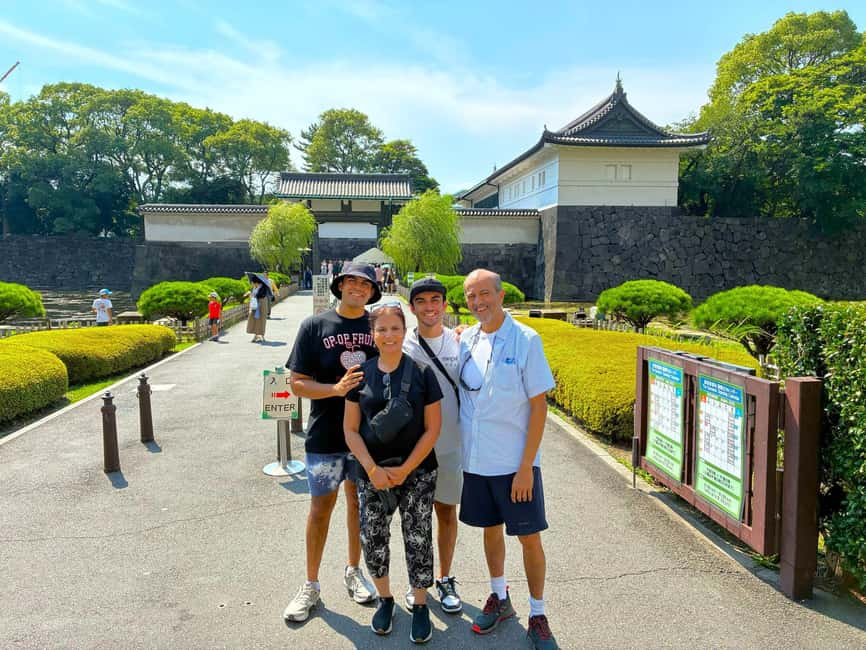
Otemon Gate is one of the most important sights on the walk. It was the main entrance to Edo Castle, and its scale helps explain the power of the shogunate. The gate was not merely decorative. It controlled access and created a formal approach to the castle.
Your guide also points out the Ote San-no-mon Gate Ruins. Here, the interest lies in what has disappeared as much as what remains. Ruins can be frustrating if you want a complete building, but they are valuable when someone explains how the entrance sequence once worked.
Next come Doshin Bansho and Hyakunin Bansho. These guardhouses bring the castle’s security system down to a human level. Rather than imagining only giant walls and grand lords, you can picture guards checking people and protecting the route into the compound.
Hyakunin Bansho, whose name refers to a hundred guards, is especially useful for understanding the scale of the operation. The stop connects samurai heritage with everyday duty. Guards stood watch, controlled movement, and helped maintain the shogun’s authority.
I would listen closely here and ask questions. The surviving structures are not huge, so the explanation does much of the work. This is also where a strong guide can turn a short stop into one of the most memorable parts of the tour.
Edo Castle ruins and the lost Honmaru palace
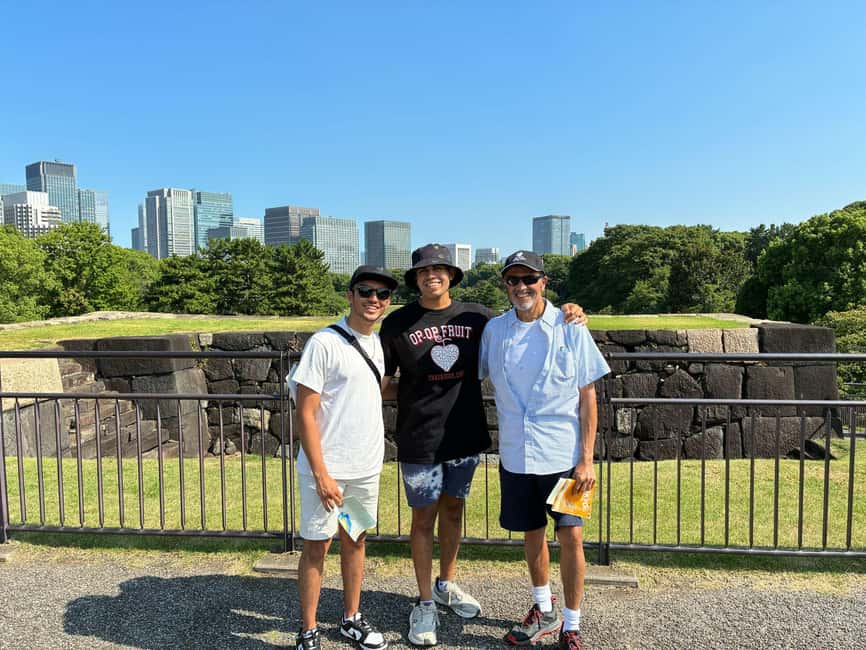
The route moves into the Edo Castle ruins, then to the site of Edo Castle Honmaru, the main hall area. Honmaru was the central compound, so this is one of the key places for understanding the former castle’s layout and importance.
Do not expect a complete palace interior. The buildings are not presented as a fully restored castle, and the Imperial Palace’s palace buildings are not open to the public. Instead, you read the site through foundations, open space, walls, and the guide’s account of what once occupied the grounds.
That may sound modest, but it is the honest strength of this part of Tokyo. The old castle is present through traces. You need to use your imagination, and the guide helps supply the missing pieces.
The Edo Castle keep restoration model is particularly helpful. It gives you a visual sense of the keep that once towered above the compound. The model is more useful than trying to picture the entire structure from scattered stones alone.
You then reach the Tenshu-dai, the base associated with the castle keep. From here, you get panoramic views of the surrounding area. The view is not the same as standing inside a surviving tower, but the raised position helps you understand why this location mattered.
I like this stop because it avoids pretending that the castle survives intact. You see the remains, then use the model and the view to reconstruct the site in your mind. That is a more rewarding approach than a modern replica with every detail already supplied.
Same place, a different sort of green day out:
- Mt. Fuji Day Trip from Tokyo with English Speaking Driver Guide
★ 5.0 · 443 reviews - Mt. Fuji, Cherry Blossom & Shiba Sakura Pvt. Day Tour
★ 5.0 · 326 reviews - Tokyo Private Tour! Edo Castle & Imperial Palace East Gardens
★ 5.0 · 105 reviews - Mount Fuji & Lake Kawaguchiko Private Tour: Beyond the Ordinary
★ 5.0 · 78 reviews
Trees, tea, and the East Gardens
The itinerary includes a stop connected with the prefectural tree, followed by Suwa no Chaya, a traditional tea house. These are gentler parts of the route, and they add variety after the castle defenses and ruins.
The prefectural tree stop gives you a chance to notice the planting and civic symbolism within the grounds. It is a small detail, but small details often keep a large historic site from becoming a blur of walls and dates.
Suwa no Chaya adds a traditional architectural note. It is not a palace tour, and you should not expect a tea ceremony. Its value is visual and atmospheric, offering a calmer pause before the main garden section.
The East Gardens are the broad setting for the latter part of the walk. You can enjoy the grounds without entering the palace buildings or the inner palace area. Since the Imperial Family still resides there, the tour stays in the public garden areas and focuses on the former castle remains.
That limit is important to understand before booking. If your main goal is to see rooms used by the Imperial Family, this is not the right activity. If you want accessible public grounds connected with both imperial and shogunal history, the East Gardens make good sense.
Ninomaru Garden and the koi pond
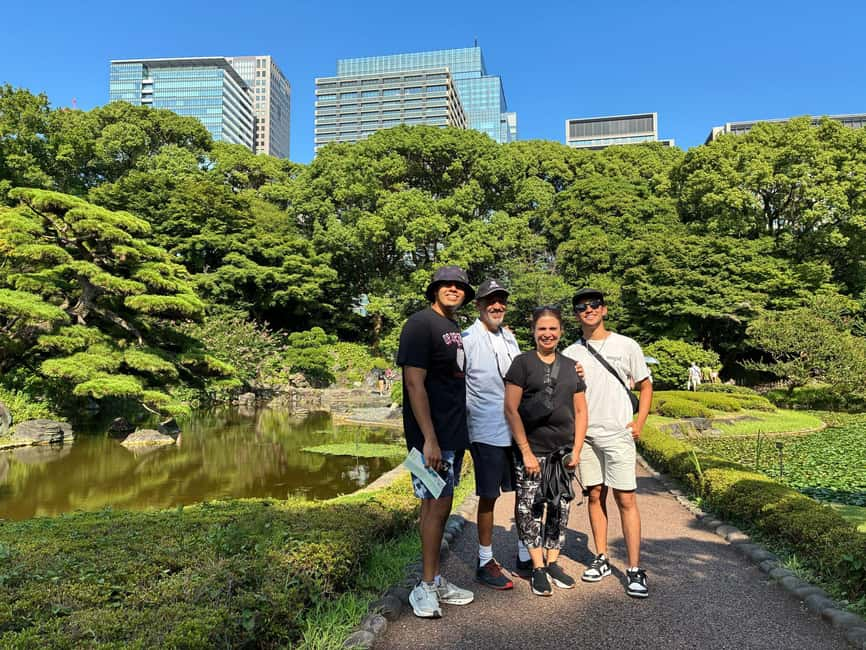
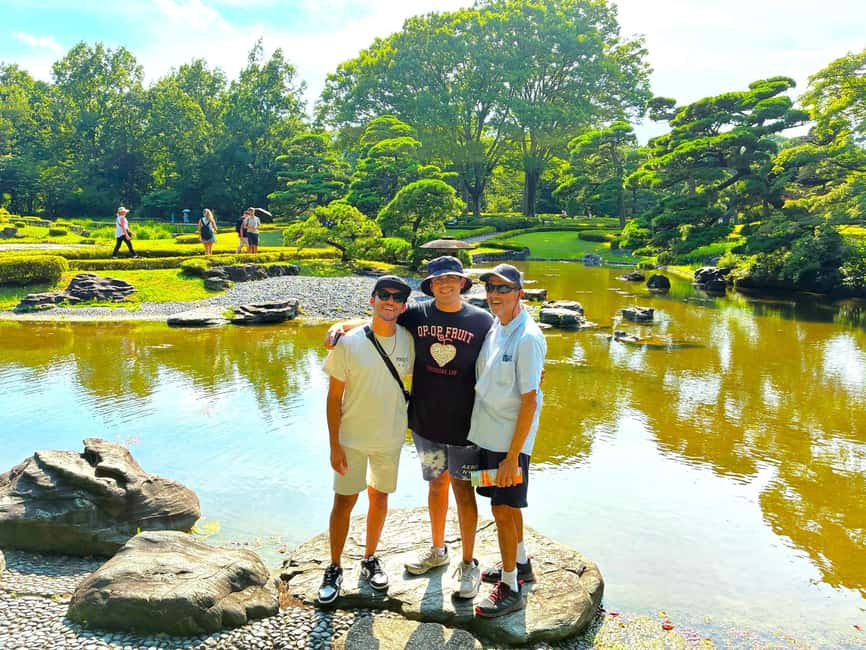
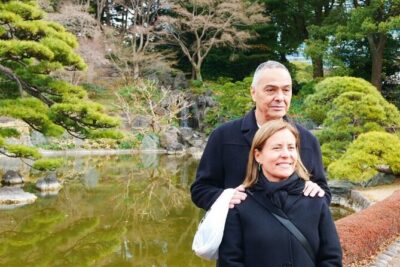
Ninomaru Garden is a welcome change of mood. After gates, guardhouses, and the broad Honmaru site, the garden offers a slower finish with planted areas, paths, and a pond where you can see koi fish.
The garden is not just a decorative ending. It shows another side of the castle grounds, where carefully planned gardens provided beauty and a place for rest. The contrast helps you understand that Edo Castle was both a fortress and a seat of political life.
The guide spends about 15 minutes here, which is enough to appreciate the setting without turning the visit into a long garden study. You can ask final questions, take photos, and enjoy the pond before returning to the Wadakura Free Rest Area.
Flash photography is not allowed. Bring a camera, but use it without flash and keep your attention on the guide when explanations are underway.
What the guide adds, and where the tour can fall short
The strongest part of this experience is the human explanation. A guide can connect the shoguns, samurai guards, castle defenses, emperors, and present-day imperial grounds in a way that a signboard cannot. The most positive comments praise guides such as Mari and Isao for being friendly, patient, and willing to answer questions.
One guide was praised for taking extra time to explain the palace and Japan’s history with enthusiasm. Another was described as smiling, kind, and responsive to questions. That is exactly what you want here because many of the most important sights are ruins rather than complete buildings.
But you should also know the risk. One person found the walk uninteresting and felt the guide said very little. Another felt the route could be completed independently. Those comments point to a real issue, not a minor complaint: the site itself is free of the theatrical drama found at a preserved European castle, so the guide must provide the story.
If your guide is quiet, ask direct questions. Ask how the gates controlled access, what the Honmaru area contained, and how the Edo Castle site relates to the Imperial Palace today. A private or small-group option may give you more room to do this, though group format availability can vary.
Timing, walking, and practical comfort
The advertised duration is two hours, and the route returns to the Wadakura Free Rest Area. The schedule includes many short guided stops, from roughly five to 15 minutes. That means the pace is purposeful. You are covering a series of connected sights rather than lingering at one location for a long time.
Wear comfortable shoes. The tour is not suitable for wheelchair users or people with mobility impairments, and children under six are not accepted. The supplied guidance does not describe the exact walking distance, so you should be prepared for a sustained outdoor walk with repeated stops.
Bring water and a camera. Food and drinks are not included, and there is no hotel pickup or drop-off. You arrange your own way to the meeting point and meet the guide there.
The activity is offered in English, with private or small-group formats available. You can cancel up to 24 hours ahead for a full refund, and the reserve-now, pay-later option may help if your Tokyo schedule is still changing.
Who should book the Edo Castle walk
I would recommend this tour to a first-time Tokyo visitor who wants historical context without committing to a full-day museum visit. It also suits anyone curious about the shoguns, castle defense, and the connection between Edo Castle and the Imperial Palace.
You will get the most from it if you enjoy asking questions. The ruins are meaningful, but they do not explain themselves. A guide who shares facts clearly can make the Otemon Gate, guardhouses, Honmaru site, and Tenshu-dai feel connected rather than scattered.
I would be more cautious if you want to enter palace buildings, see private imperial rooms, or tour a fully restored castle interior. None of that is part of this experience. I would also think twice if you already know the site well and prefer to set your own pace.
Should you book it?
Book it if $37 feels reasonable for an English explanation of one of Tokyo’s most important historic sites. The route covers the key public parts of the former Edo Castle, includes admission, adds the Ninomaru Garden and koi pond, and finishes with broad views from the Tenshu-dai.
The guide is the deciding factor. If you value history and conversation, request a private or small-group format when available and come ready with questions. If you only want to stroll through the East Gardens, you may prefer to explore independently and save the fee.
FAQ
Where does the tour meet?
Meet outside the Wadakura Free Rest Area, in front of the entrance. The guide will be holding a yellow sign.
How long does the tour last?
The tour lasts two hours and returns to the Wadakura Free Rest Area.
What language is the tour offered in?
The live guided tour is offered in English.
Is admission included?
Yes. Admission to Edo Castle and the Imperial Palace East Gardens is included.
Can I enter the Imperial Palace buildings?
No. The palace buildings are not open to the public, and the tour does not enter the inner grounds of the Imperial Palace.
What parts of Edo Castle will I see?
The route includes Otemon Gate, the Ote San-no-mon Gate Ruins, Doshin Bansho, Hyakunin Bansho, the Edo Castle ruins, the Honmaru site, the keep restoration model, and the Tenshu-dai.
Will the tour visit Ninomaru Garden?
Yes. The tour includes the Imperial Palace East Gardens and Ninomaru Garden, where you can see koi fish in the pond.
Is the tour suitable for wheelchair users?
No. The activity is not suitable for wheelchair users or people with mobility impairments.
Are young children allowed?
Children under six years old are not accepted on the tour.
What should I bring?
Bring comfortable shoes, water, and a camera. Flash photography and smoking are not allowed.
Just added around Tokyo
- Private tour – Scenic Fuji Escape: Hakone, Peace Park & More★ 5.0 · 4 reviews
- Tokyo: Serene Sakura & Sake: An Exclusive Brewery Pairing Lunch★ 5.0 · 2 reviews
- TOKYO: Tailored Gardens tour with Pro Gardener by E-bike -BASIC★ 5.0 · 2 reviews
- Tsukiji Food Strolling and Hama Rikyu Garden Walking Tour★ 5.0 · 7 reviews
- Full Guided Mt. Fuji & Shiba-Sakura Festival One Day Pvt.Tour★ 5.0 · 6 reviews
- Tokyo Cherry Blossom Half Day Walking Tour with a Local Guide★ 3.5 · 4 reviews
- Cherry Blossom Highlights, Asakusa, Ueno, Imperial Palace Garden★ 4.5 · 4 reviews
- Licensed Guide Tokyo Meguro Cherry Blossom Walking Tour★ 4.5 · 13 reviews
Tokyo Garden Tours, compared.
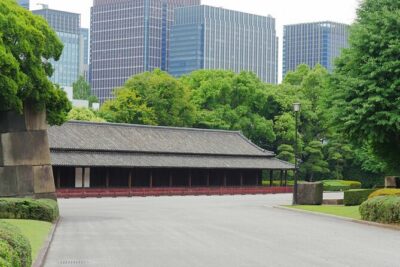
Imperial Palace East Garden and Edo Castle Walking Tour in Tokyo
Read our review →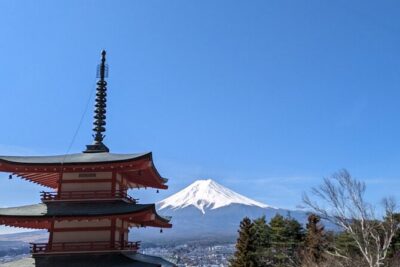
Mt. Fuji Day Trip from Tokyo with English Speaking Driver Guide
Read our review →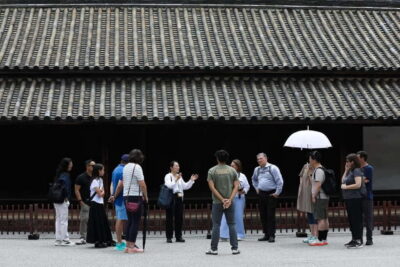
Edo Castle & East Garden of the Imperial Palace Tour
Read our review →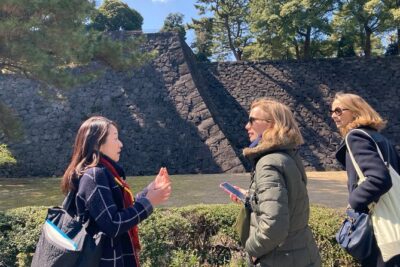
Tokyo Private Tour! Edo Castle & Imperial Palace East Gardens
Read our review →
Mount Fuji & Lake Kawaguchiko Private Tour: Beyond the Ordinary
Read our review →
Rainbow Bridge Day Cruise Show and Only Soft Drinks
Read our review →Browse the lists this tour appears in