
Review · TOKYO
Tokyo: Pvt. Tour – Edo Castle & Imperial Palace East Gardens
Ancient walls meet modern Tokyo here. This private two-hour walk brings Edo Castle’s stonework, moats, and Ninomaru Garden into focus, while English-speaking guides add the stories you would likely miss alone. I especially like the calm setting and the freedom to set a comfortable pace with your own group. The main limitation is clear: you do not enter the Imperial Palace itself, and seasonal flowers may not be at their best on your date.
The $63 price is fair if you want context rather than a quick garden stroll. Guides such as Yoshi, Yuji, Naoko, Masahito, and Hiroshito have been praised for clear English, thoughtful pacing, and practical help beyond the tour. Allow extra time for the entry inspection, and do not arrive carrying a knife or another item that could be treated as a weapon.
Key points to know before you book
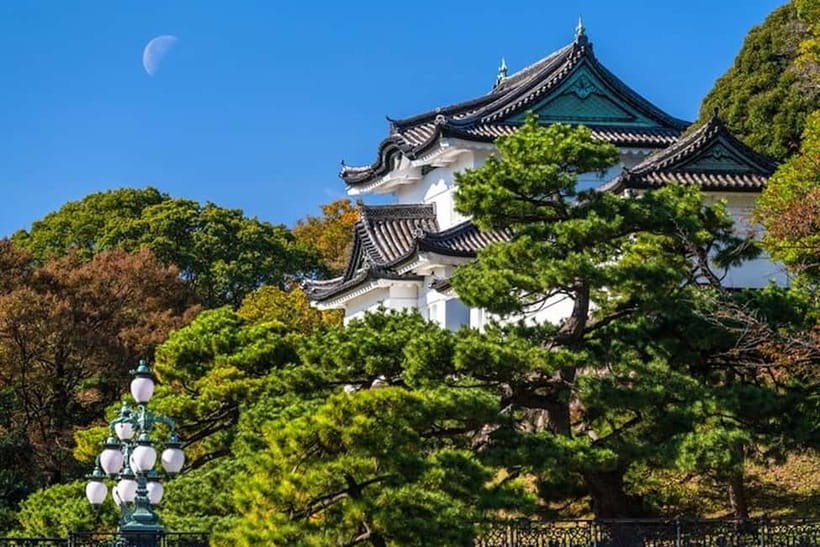
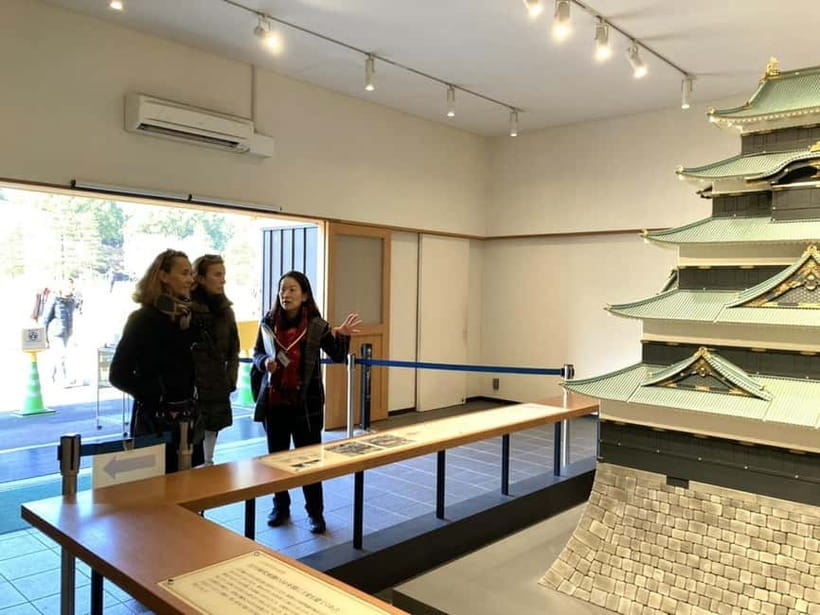
- Edo Castle survives in stone, not as a complete palace: Moats, walls, gates, and the massive former keep site show the scale of the shogun’s stronghold.
- The Ninomaru Garden changes with the calendar: Cherry blossoms, irises, and autumn leaves offer different rewards, but no season guarantees a full floral display.
- Your guide can shape the visit: This is a private group, so guides can adjust the pace, answer questions, and explain details that are easy to overlook.
- The meeting point is central and simple: Meet by Starbucks in Wadakura Fountain Park, about three minutes from Otemachi Station’s D2 exit or ten minutes from Tokyo Station’s Marunouchi central exit.
- Security affects your arrival: Expect a baggage inspection before entering the palace grounds.
- The tour focuses on the East Gardens: It does not include the Inner Palace or the rooms where the Emperor resides.
Why this short Tokyo tour works
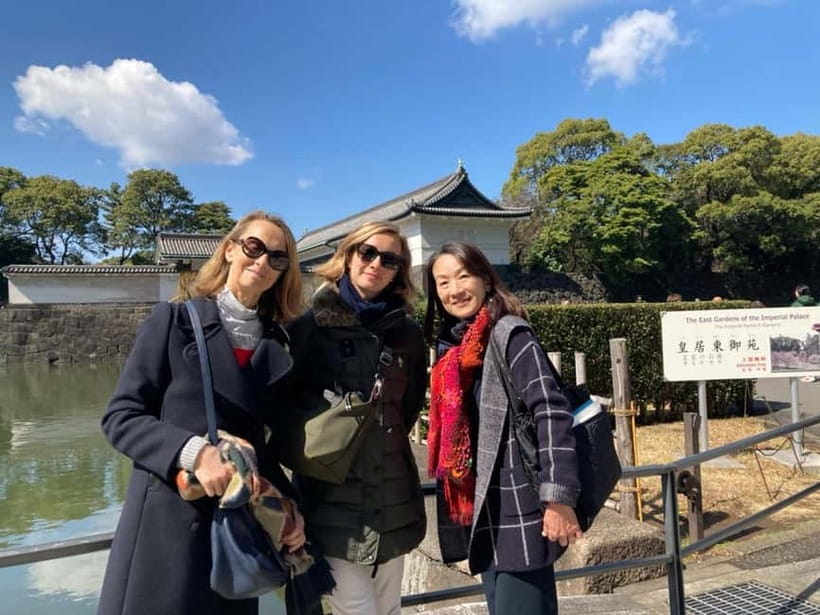
Tokyo can make its past hard to see. Trains, towers, shops, and crowds fill your view, while the city’s feudal foundations sit behind walls and gates. This tour gives you two hours to slow down and read the site properly.
The setting is the former grounds of Edo Castle, the center of political power during Japan’s shogun-led era. You walk through a place connected to military rule, court life, garden design, and the later Imperial era, but you do so in a public garden rather than a museum. That makes the experience pleasant as well as instructive.
I like the private format here. You are not trying to keep up with a large crowd, and the guide can respond to your interests. A family can ask for a gentler pace. A history-minded couple can pause over the castle remains. The reviews repeatedly praise guides for being friendly, organized, flexible, and easy to understand in English.
Two hours is also a useful length. You get a proper introduction without giving up half a day of sightseeing. Still, this is a walking tour through outdoor grounds. You should be ready for paths, open areas, and a visit shaped by the weather and season.
More Garden Tours in Tokyo:
- Imperial Palace East Garden and Edo Castle Walking Tour in Tokyo
★ 5.0 · 510 reviews - Tokyo: Imperial Palace East Gardens Walking Tour
★ 4.8 · 353 reviews - Tokyo: Edo Castle & East Garden of the Imperial Palace Tour
★ 4.7 · 112 reviews
Meeting at Wadakura Fountain Park
The tour begins at Wadakura Fountain Park, in front of Starbucks. Look for the guide holding a sign marked gotcha. This detail matters in central Tokyo, where several large buildings and station exits can make a simple meeting point feel less simple than expected.
From Otemachi Station, use exit D2 and expect about a three-minute walk. From Tokyo Station’s Marunouchi central exit, the walk takes about ten minutes. I would arrive early enough to find the park without rushing, especially if you are unfamiliar with Tokyo’s underground passages.
The starting area offers a useful contrast. You begin among modern offices and transport links, then move toward the old castle grounds. That shift helps explain one of the tour’s pleasures: Edo Castle is not isolated from Tokyo. It is part of the city’s daily life, surrounded by major streets and office towers.
Bring only what you need. Everyone entering the Imperial Palace grounds is subject to a baggage inspection. If you have bought Japanese knives or another object that could be used as a weapon in Tsukiji, Asakusa, or elsewhere, leave it in a coin locker before meeting the guide.
The Main Gate and the first layer of history
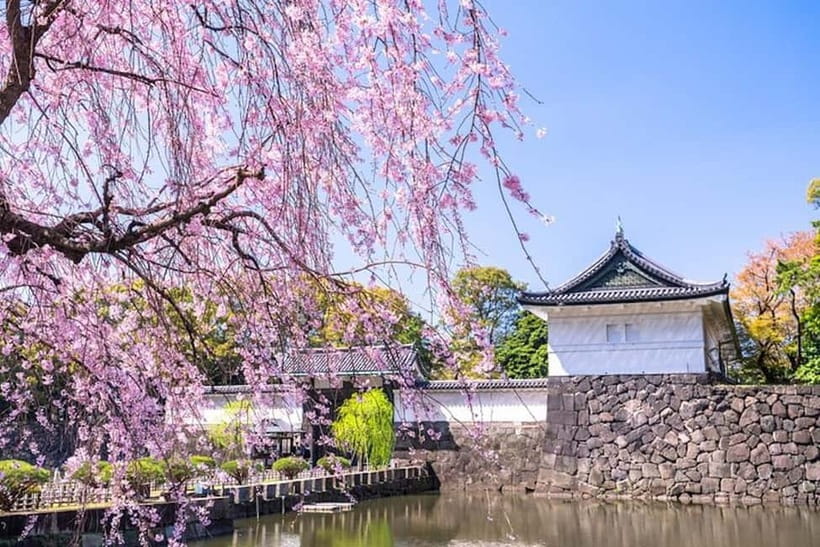
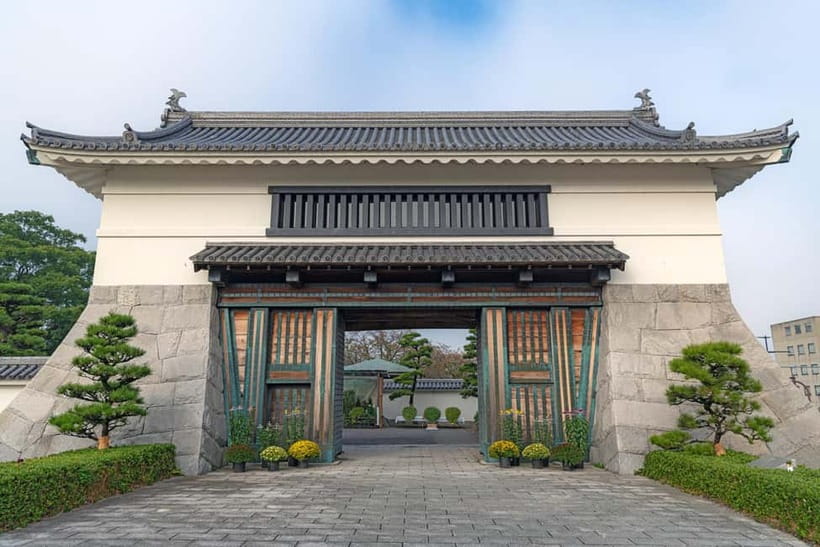
The historic Main Gate introduces the site with a mix of old and new. You see a traditional guardhouse alongside modern security procedures, a small but telling reminder that this is both a historic place and a working Imperial property.
A guide can add meaning to details that otherwise seem decorative. The gate is not simply a photogenic entrance. It marks controlled access to one of Japan’s most important seats of power, and its guardhouse helps you picture how movement into the castle was managed.
This opening section is also a good test of the tour’s pace. The guides praised in the feedback, including Mari, Yuji, and Maru, were described as punctual, clear, and attentive to the needs of the group. Those qualities matter here because the visit works best when you can stop for an explanation instead of hurrying from one sight to the next.
Do not expect a grand palace interior after passing through the entrance. The tour remains outdoors, and the emphasis is on grounds, ruins, gardens, and stories connected with the site.
Edo Castle ruins and the scale of shogun power
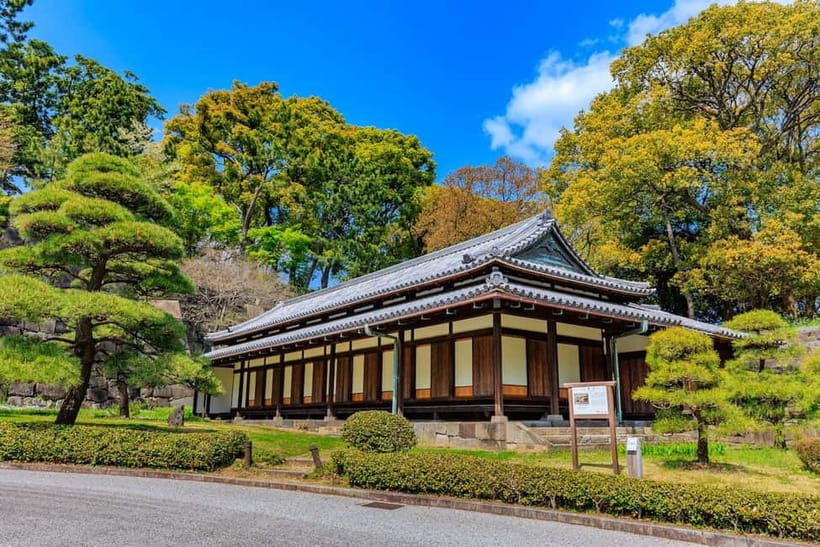
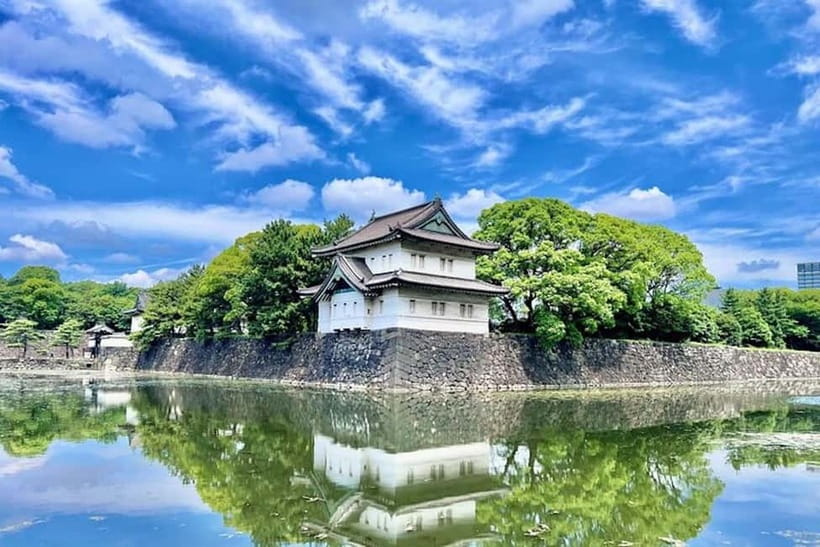
The castle remains are the strongest historical part of the walk. Ancient stone walls, moats, and the site of a massive keep reveal how large and defended Edo Castle once was. You will not see a complete castle building, so your guide’s explanation is especially important.
Stonework can seem abstract without a sense of scale. Here, the walls and moats help you picture a fortified political center rather than a pretty park. The castle was tied to the shogun, the military ruler whose government directed Japan during the Edo period. Walking these grounds gives that political story a physical setting.
This is where a private guide earns the $63 price most clearly. Alone, you can admire the stones and take photographs, but you may not understand what has survived, what has disappeared, or why the layout mattered. A good guide turns scattered remains into a readable site.
The feedback gives useful examples. Masahito was praised for explaining the gardens and castle history while matching the group’s pace. When he did not immediately know an answer, he contacted another guide to check it. That kind of honesty is more useful than a guide pretending to know every detail.
You should also keep expectations realistic. The ruins do not recreate the castle as it looked during the shogun’s rule. If you want intact interiors, this is not that kind of visit. If you enjoy reading history from walls, gates, and open ground, it is a satisfying stop.
Same place, a different sort of green day out:
- Mt. Fuji Day Trip from Tokyo with English Speaking Driver Guide
★ 5.0 · 443 reviews - Mt. Fuji, Cherry Blossom & Shiba Sakura Pvt. Day Tour
★ 5.0 · 326 reviews - Tokyo Private Tour! Edo Castle & Imperial Palace East Gardens
★ 5.0 · 105 reviews - Mount Fuji & Lake Kawaguchiko Private Tour: Beyond the Ordinary
★ 5.0 · 78 reviews
Ninomaru Garden and the changing seasons
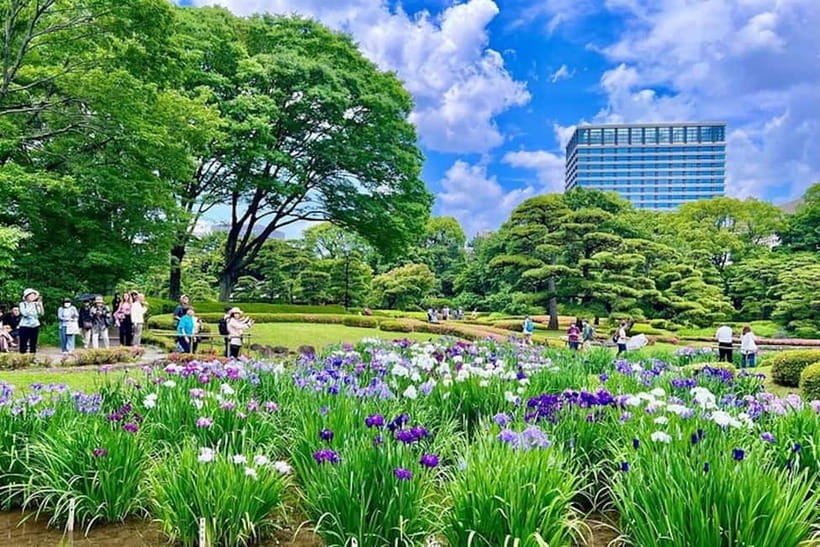
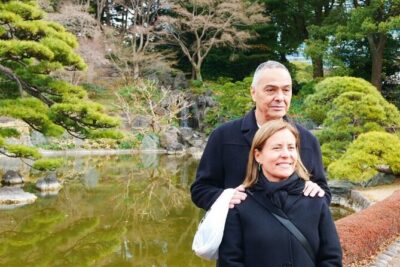
The Ninomaru Garden shifts the mood from military strength to careful design. It is a traditional Japanese garden with seasonal flowers and planted areas, including cherry blossoms in spring, irises in summer, and autumn leaves later in the year.
The garden is more than a pause between castle ruins. Its ordered paths, water, plants, and quiet spaces show another side of Japanese culture. The same site that once represented power and defense also contains a setting built for beauty, reflection, and controlled movement.
Season matters. An April visit may offer some blossoms but not a full display. One April guest found that the flowers and cherry blossoms had not really appeared yet, which was disappointing despite an excellent guide. That is a useful warning: do not book this tour solely for peak blossoms unless your dates already line up with the season.
The garden can still be worthwhile outside the headline viewing periods. Spring is associated with cherry blossoms, summer with irises, and autumn with colored leaves, but the exact appearance will vary. The garden itself, along with the guide’s explanation of its design and plants, remains the main attraction.
Naoko was praised for discussing the buildings, former inhabitants, garden features, and a hybrid type of koi. That kind of detail gives the garden more depth than a quick walk with a camera. You can also ask questions about what you are seeing instead of guessing at the meaning of every pond, plant, or structure.
What the guide adds to the experience
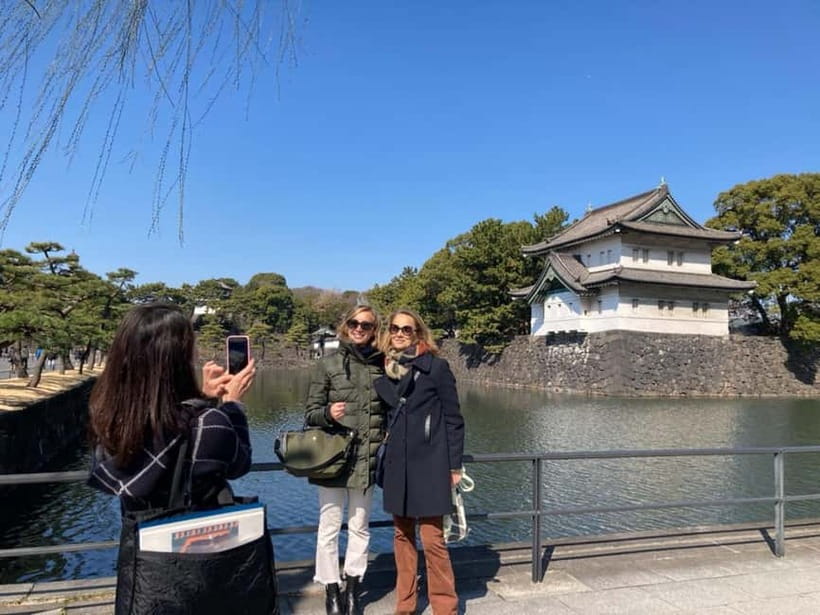
This tour depends heavily on the person leading it. The grounds are pleasant on their own, but the history becomes much easier to follow with a guide who can connect the castle, the garden, the Imperial setting, and modern Tokyo.
English ability is an important part of the value. Yoshi was praised for strong English and interesting explanations of the palace buildings and garden. Yuji was repeatedly described as welcoming, attentive, and able to walk at a comfortable pace for a family. Ishida was also praised for clear English and a good grasp of the Edo period.
The strongest pattern is not a single guide’s personality. It is the combination of information and flexibility. Several guides were described as friendly, well organized, and willing to adjust the visit. One guide even helped with directions for the train station afterward and walked part of the way toward the next destination.
That extra assistance is useful on a first Tokyo visit, though you should treat it as a pleasant possibility rather than a promised part of the tour. The official inclusions are the guide and the walking tour of the East Gardens.
Because the group is private, you can ask more questions than you usually can in a large tour. You can also say when you need a slower pace or a short pause. The tour is not designed as a rigid march through numbered stops.
What is not included
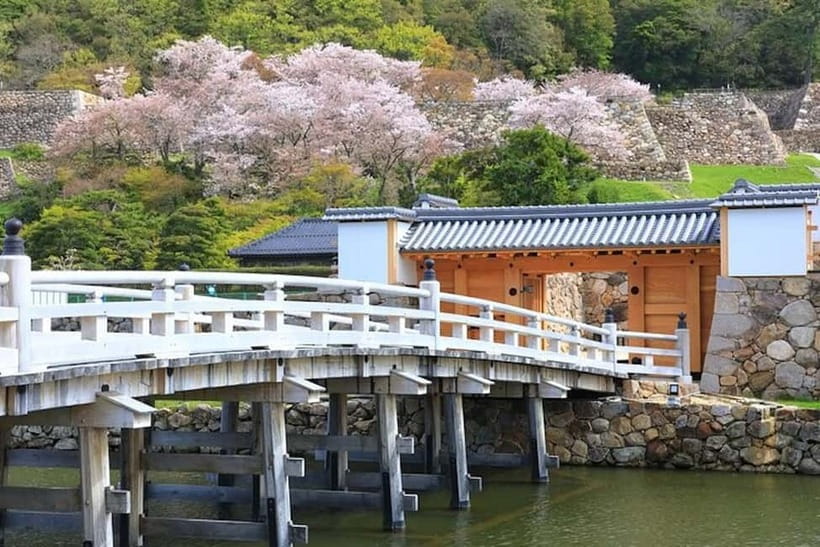
The most important boundary is the Inner Palace. You cannot enter the part of the Imperial Palace where the Emperor resides, and the tour does not include palace rooms or an indoor palace visit.
That limitation should not surprise you, but it should shape your decision. The experience is about the East Gardens and the former Edo Castle grounds. If your main goal is to see Imperial interiors, this tour will not meet it.
The gardens also are not a substitute for a full Edo Castle reconstruction. You see remains, walls, moats, and historical markers rather than a complete feudal castle. That can feel understated if you expect a dramatic building at the center of the visit.
In exchange, you get an outdoor look at a major historic site without committing to a longer excursion. The tour pairs well with a day focused on central Tokyo because it is close to Otemachi and Tokyo Station.
Is $63 a fair price?
At $63 per person, the price is reasonable for a private two-hour experience if you value explanation and a flexible pace. The entrance setting is easy to reach, and the tour concentrates on one important area rather than spending time moving between distant sights.
The value is weaker if you are happy to walk through the East Gardens on your own and read signs. You can still enjoy the paths, stonework, and seasonal plants without paying for a guide. The fee makes more sense for first-time visitors, families, and anyone who wants the Edo period explained in plain English.
It also makes sense for people who want a calm, focused activity between Tokyo’s faster attractions. You are paying less for access to a rare view than for the person who helps you understand what is already there.
Free cancellation up to 24 hours before the start and the option to reserve now and pay later make the booking less rigid. Check the available start times for your date, since the activity lasts two hours.
Who should book this private walk?
I would recommend it to you if you:
- Want an introduction to Edo-period history without spending a full day in a museum
- Prefer a private group to a crowded public tour
- Appreciate having questions answered in English
- Are visiting Tokyo with family and want a manageable two-hour activity
- Enjoy gardens, old stonework, and historical settings
- Want help understanding a site that might otherwise feel like a pleasant but confusing park
I would be more cautious if you expect to enter the Imperial Palace, see intact palace rooms, or find a complete Edo Castle. You should also think twice about booking purely for cherry blossoms or autumn color, since seasonal timing can disappoint.
Should you book the Edo Castle and East Gardens tour?
Yes, if you want the East Gardens to make sense rather than simply look attractive. The combination of castle ruins, moats, the Main Gate, Ninomaru Garden, and a private English-speaking guide gives you a useful two-hour introduction to Japan’s political past.
The best reason to book is the guide. The strong feedback about Yoshi, Yuji, Naoko, Masahito, Mari, Hiroshito, and others points to a consistently friendly and well-organized experience. Just remember the limits: it is outdoors, the palace interior is off-limits, the flowers depend on the season, and baggage checks are part of arrival.
If those conditions suit your plans, $63 buys a focused walk with real context, not just a garden visit.
FAQ
Where does the tour meet?
Meet in front of Starbucks at Wadakura Fountain Park. Look for a guide carrying a sign that says gotcha.
How far is the meeting point from Otemachi Station?
The meeting point is about a three-minute walk from Tokyo Metro Otemachi Station exit D2.
How far is the meeting point from Tokyo Station?
It is about a ten-minute walk from Tokyo Station’s Marunouchi central exit.
How long does the tour last?
The guided walking tour lasts two hours.
Is the tour private?
Yes. It is offered for a private group, rather than as a shared public group.
What language does the guide speak?
The live tour guide speaks English.
Can I enter the Imperial Palace on this tour?
No. The tour does not enter the Inner Palace or the area where the Emperor resides. It visits the East Gardens and the former Edo Castle grounds.
Will my bags be inspected?
Yes. Visitors are subject to a baggage inspection when entering the Imperial Palace grounds.
Can I bring a Japanese knife purchased earlier in the day?
You should not bring it to the meeting or into the palace grounds. Leave Japanese knives or other objects that could be used as weapons in a coin locker or similar storage before the tour.
Just added around Tokyo
- Private tour – Scenic Fuji Escape: Hakone, Peace Park & More★ 5.0 · 4 reviews
- Tsukiji Food Strolling and Hama Rikyu Garden Walking Tour★ 5.0 · 7 reviews
- Tokyo: Serene Sakura & Sake: An Exclusive Brewery Pairing Lunch★ 5.0 · 2 reviews
- TOKYO: Tailored Gardens tour with Pro Gardener by E-bike -BASIC★ 5.0 · 2 reviews
- Full Guided Mt. Fuji & Shiba-Sakura Festival One Day Pvt.Tour★ 5.0 · 6 reviews
- Tokyo Cherry Blossom Half Day Walking Tour with a Local Guide★ 3.5 · 4 reviews
- Cherry Blossom Highlights, Asakusa, Ueno, Imperial Palace Garden★ 4.5 · 4 reviews
- Licensed Guide Tokyo Meguro Cherry Blossom Walking Tour★ 4.5 · 13 reviews
Tokyo Garden Tours, compared.
Imperial Palace East Garden and Edo Castle Walking Tour in Tokyo
Read our review →
Mt. Fuji Day Trip from Tokyo with English Speaking Driver Guide
Read our review →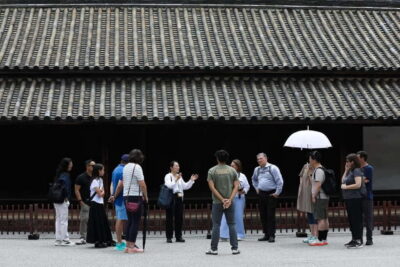
Edo Castle & East Garden of the Imperial Palace Tour
Read our review →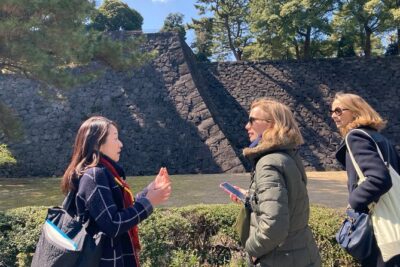
Tokyo Private Tour! Edo Castle & Imperial Palace East Gardens
Read our review →
Mount Fuji & Lake Kawaguchiko Private Tour: Beyond the Ordinary
Read our review →
Rainbow Bridge Day Cruise Show and Only Soft Drinks
Read our review →Browse the lists this tour appears in