
Review · KYOTO
Kyoto: Kinkaku-ji Temple & Serene Garden Guided Tour with Tickets
Kyoto’s famous gold is only half the story. I like this tour for its small group of no more than seven and its unusual access at Ninna-ji, where a monk leads a chanting session and answers questions. I also like the clear contrast between Kinkaku-ji’s showy samurai past and Ninna-ji’s quiet imperial and Buddhist traditions.
The main consideration is timing. Three hours gives you a useful introduction, but not a leisurely study of every corner. Ninna-ji’s schedule can also change because of temple needs, so the special access is valuable but not guaranteed in exactly the same form every time.
Key points to know before booking
- See two UNESCO World Heritage temples in about three hours, with very different moods and stories.
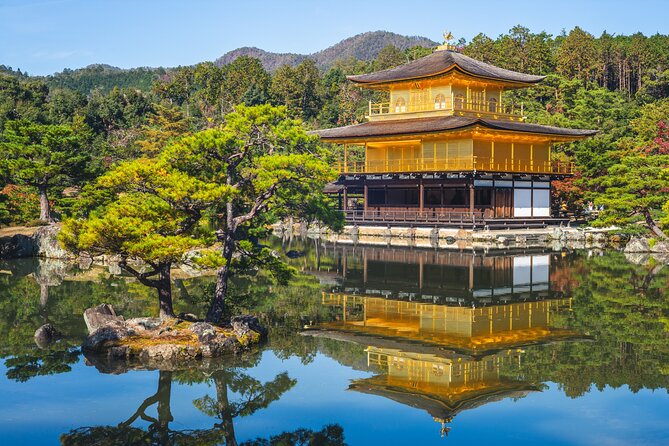
- Admire Kinkaku-ji’s gold-leaf pavilion and garden, including the pond, gates, waterfall, teahouse, and Fudo Hall.
- Enter a normally restricted hall at Ninna-ji, where a monk leads chanting and takes questions.
- Handle a rotating sutra shelf, a ritual object connected with Buddhist practice.
- Travel in a group capped at seven, a useful size for questions and close guiding.
- Finish at Ninna-ji, rather than returning to the original meeting point, so plan the rest of your day from there.
Why this Kyoto pairing works so well
Kinkaku-ji and Ninna-ji sit in the same broad western Kyoto sightseeing area, but they tell very different stories. Kinkaku-ji presents power, wealth, and visual drama. Ninna-ji feels more reflective, with imperial connections, Buddhist ritual, gardens, and quieter spaces.
That contrast gives the tour a clear purpose. You are not simply checking two temples off a list. You are comparing how religion and political power shaped Kyoto in different periods.
The experience lasts about three hours. The listed price is $48.86 per person, with entrance tickets included. For me, that is a reasonable price if you want context, help with the transition between temples, and access to the monk-led session. It is less compelling if you prefer to move quickly and read signs on your own.
The group limit matters. With seven people or fewer, you have a better chance of hearing explanations clearly and asking about details that catch your eye. It also suits a temple visit, where the best moments can be quiet and easily missed in a large crowd.
Your meeting point is Yamazaki-an25, at 25 Kinugasa Babachō in Kyoto’s Kita Ward. The tour ends at Ninna-ji Temple, at 33 Omuroōuchi in Ukyo Ward. That one-way finish is practical if you plan to continue around western Kyoto, but it means you should not expect to be returned to the starting point.
More Tickets in Kyoto:
- Kyoto: Kinkaku-ji Temple & Serene Garden Tour with Tickets
★ 5.0 · 2 reviews - Paris: Versailles Palace and Gardens Full Access Ticket
★ 4.6 · 41,579 reviews - Marrakesh: Majorelle Garden Entry Tickets
★ 4.5 · 9,651 reviews
Kinkaku-ji: gold, water, and a shogun’s retirement villa
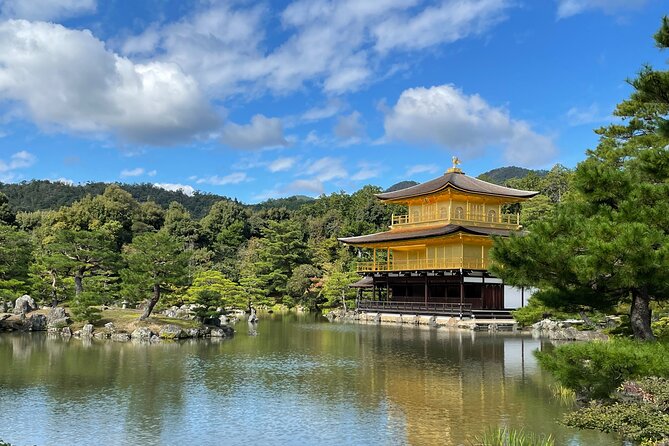
The first hour belongs to Kinkaku-ji, better known as the Golden Pavilion. The building began as a retirement villa for Shogun Ashikaga Yoshimitsu and later became a Zen Buddhist temple.
That origin explains much of its character. This was not designed as a plain religious retreat. It was a statement of status, taste, and political influence. The upper floors are covered in gold leaf, and the pavilion reflects in the pond below, creating the image most associated with Kyoto.
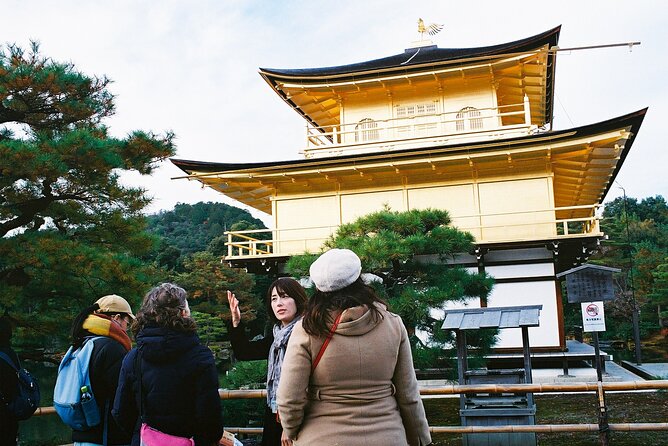
Your guide can help you look past the obvious shine. Without context, it is easy to take a few photographs, admire the color, and move on. The tour gives meaning to the building’s design and explains how a former residence became a temple.
The garden is a major part of the visit. You will see Shariden, the pavilion’s reliquary hall, along with Karamon Gate, Rikushu-no-taki waterfall, Anmintaku Pond, Hakujanotsuka, Yukatei Teahouse, and Fudo Hall.
Each stop helps shift your attention away from the single gold building. The water, rocks, gates, and small religious structures frame the pavilion and create a carefully arranged setting. The pond reflection is the visual prize, but the surrounding route gives you more to notice than one famous façade.
The garden also introduces an important Japanese design idea: a view can be shaped by what is placed around it. The pavilion does not need to fill the entire scene. The water and trees provide space, while smaller features direct your eye back toward the main building.
Allow yourself time for photographs, but listen before you rush toward the best angle. A guide such as Eri, Eriko, or Ellie can add the stories and details that make the place more than a picture stop. These guides have been praised for clear English, warmth, preparation, and an easy manner, all useful qualities in a busy temple setting.
There is one practical limitation here. Kinkaku-ji is visually powerful but not a place where you wander freely through every interior room. Much of the appeal comes from the outside view, the garden route, and the explanation around them. If you need extensive indoor access, the second temple offers more unusual opportunities.
Ninna-ji: a calmer temple with imperial connections
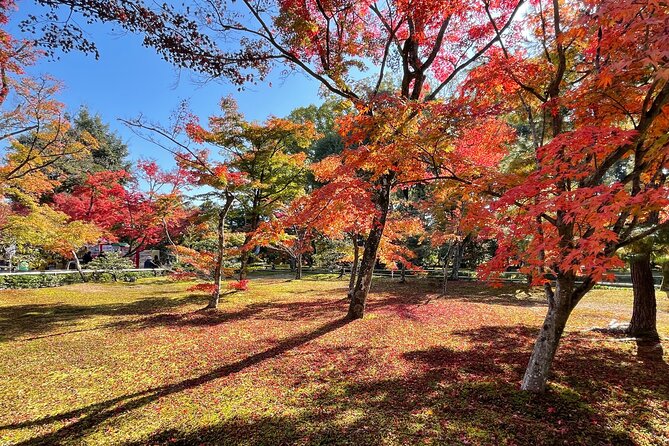
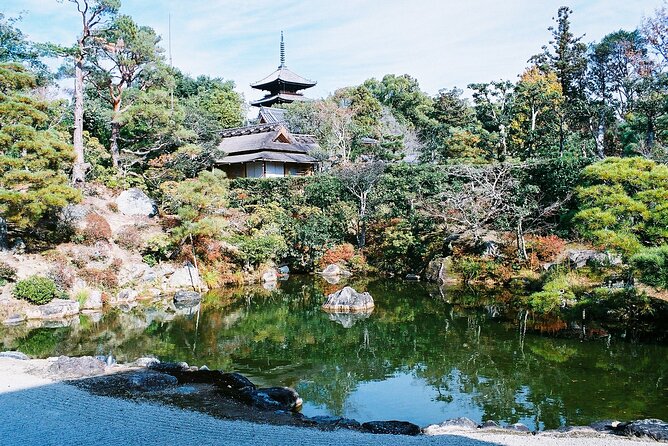
The tour then continues to Ninna-ji, founded in 888 by Emperor Uda. It is the head temple of the Omuro school of Shingon Buddhism and is known for its five-story pagoda, gardens, and Omuro cherry trees.
Ninna-ji changes the pace. Kinkaku-ji is polished and immediately dramatic. Ninna-ji gives you more room to think about ritual, imperial heritage, and the daily life of a Buddhist institution.
The temple’s age is important, but the experience is not only about dates. Ninna-ji shows how Buddhist practice has continued through centuries of political and cultural change. The guide can connect the buildings and customs to the wider role of temples in Japanese society.
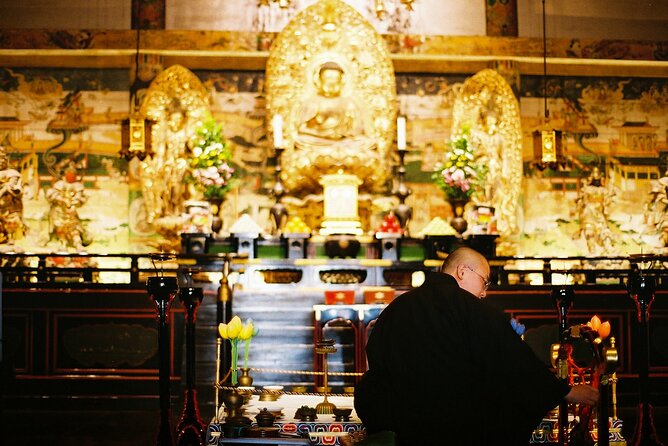
The most unusual part is the chance to enter the Main Hall, a space not always open to the public. Inside, a monk leads a sacred chanting session. You then have an opportunity to ask questions and hear about Buddhist spiritual traditions directly.
This is the feature that changes the tour from ordinary sightseeing into something more personal. A monk speaking about practice, ritual, or belief can give you a more direct sense of Buddhism than a display label or guidebook paragraph.
You should approach this part with respect. It is not a theatrical performance designed for photographs. The value comes from listening quietly, noticing the atmosphere, and asking thoughtful questions when invited.
The itinerary may change because of the temple’s circumstances. That matters here more than at Kinkaku-ji. Religious spaces sometimes need to close, adjust schedules, or limit access, so you should treat the Main Hall session as a special possibility rather than an absolute guarantee.
The rotating sutra shelf and the value of guided access
At Ninna-ji, you also visit the Sutra Hall and see the rotating sutra shelf. You may be able to interact with it, a small physical action connected with a larger Buddhist ritual meaning.
This is a good example of why a guide helps. A rotating shelf can look like an unusual piece of temple furniture if you do not know its purpose. With an explanation, it becomes part of the temple’s religious world and gives you a more active way to connect with the site.
The tour also includes a photo opportunity with the monk before moving to the elegant Imperial Residence. That moment may appeal to you if you value a personal memory of the visit, but it should not overshadow the religious setting. The conversation and chanting are the important parts.
The Imperial Residence provides a graceful ending. After the gold and crowds at Kinkaku-ji, the quieter imperial spaces at Ninna-ji help bring the tour back to architecture, gardens, and refined court culture.
More Garden Tours in Kyoto:
- Kyoto Zen Meditation & Garden Tour at a Zen Temple with Lunch
★ 5.0 · 441 reviews - Kyoto Arashiyama Bamboo forest & Garden Half-Day Walking Tour
★ 5.0 · 413 reviews - Kyoto Kiyomizu Tea Ceremony with Scenic Garden Views
★ 5.0 · 101 reviews - Kyoto: Private Tea Ceremony with a Garden View
★ 4.9 · 61 reviews
What the guide adds to the experience
The guide is central to the tour’s value. Kinkaku-ji is easy to recognize, but recognition is not the same as understanding. A strong guide explains why the pavilion was built, how Yoshimitsu’s role shaped it, and why the garden is arranged as it is.
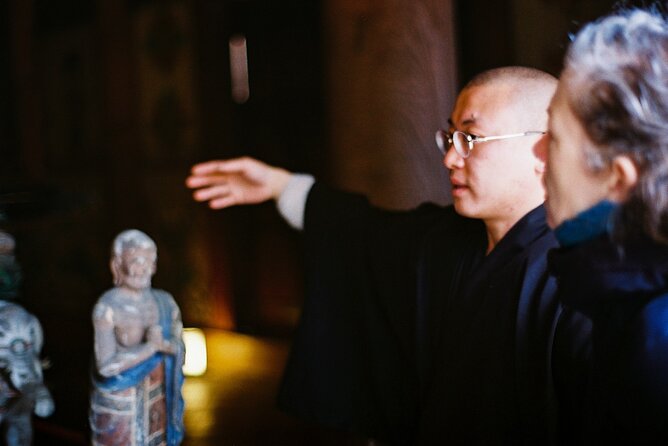
At Ninna-ji, guiding becomes even more useful. You need help understanding the difference between a temple building, a ritual hall, an imperial space, and a Buddhist object. You also benefit from someone who can prepare you for the monk session and explain what you have seen afterward.
Several guides associated with the experience include Ellie, Eri, and Eriko. Their strengths are described as friendly conversation, strong English, enthusiasm, and detailed explanations. That combination is valuable because the tour covers serious religious and historical material in a short period.
I would book this rather than a large bus-style excursion if you want to ask questions. The maximum of seven creates a more personal setting, and the subject matter rewards conversation.
Still, guide quality can vary from person to person. The experience depends partly on who leads your group and how the temple schedule unfolds. The available feedback is very positive, but no guided tour can promise identical pacing or access every day.
Timing, transport, and practical planning
The advertised duration is about three hours. One hour is allocated to Kinkaku-ji and one hour and 45 minutes to Ninna-ji, leaving a small amount of time for the transition and any schedule adjustments.
That split makes sense. Kinkaku-ji offers a focused garden route, while Ninna-ji contains more layers of religious and imperial material. You will want enough time there for the Main Hall, monk interaction, Sutra Hall, and Imperial Residence.
The transfer between temples is handled by taxi with the guide according to the experience details shared by participants. That is helpful because Ninna-ji can be inconvenient to reach from Kinkaku-ji compared with simply walking around the first temple area. Confirm the exact transport arrangements when booking, since the listed details do not spell out whether taxi costs are part of the $48.86 price.
Because the tour ends at Ninna-ji, you can continue from there to other western Kyoto sights, but you will need your own onward plan. The meeting point and ending point are different, so check the addresses before setting out.
The tour is near public transportation, and most people can participate. No special fitness requirement is given, but temple visits generally involve walking through outdoor grounds and moving between buildings. Wear comfortable shoes and be ready for changing surfaces.
You receive confirmation when booking, and the ticket is mobile. Free cancellation is available up to 24 hours before the start time. If you cancel or request changes inside that window, you should not expect a refund or a revised booking.
Who will get the most from this tour?
I think this experience suits you best if you want Kyoto explained rather than simply photographed. It is especially good for first-time visitors who want two major temples placed in historical and religious context.
It also fits travelers with limited time. In three hours, you see the Golden Pavilion, an important imperial temple, a garden, a Buddhist ritual space, a monk-led session, and the Imperial Residence.
Families with older children may appreciate the variety. The gold pavilion gives the tour an immediate visual hook, while the monk, rotating sutra shelf, and stories give young people something active to notice. Very young children may find the quiet religious portions harder to follow.
You should also consider it if you have already seen Kinkaku-ji independently but felt you missed the meaning behind it. The guide’s explanations and the Ninna-ji access add something that a quick solo visit may not provide.
I would be more cautious if you want a slow photography morning. The schedule is fixed, the tour covers two sites, and the Main Hall program may change. You will see a lot, but you will not have unlimited time at each viewpoint.
Is the $48.86 price fair?
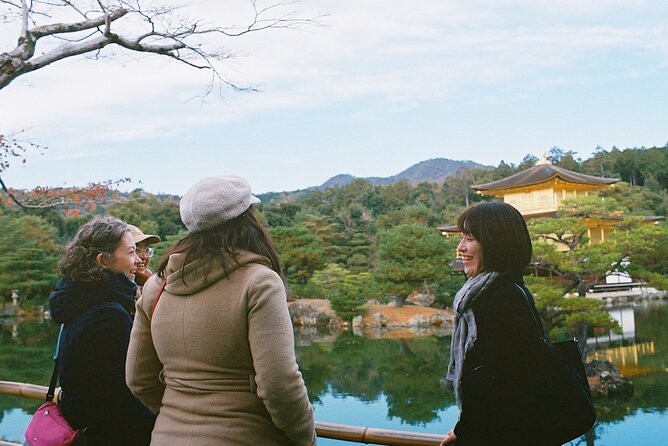
The cost is fair when you place value on three things: two admission tickets, a small group, and guided access at Ninna-ji. The monk session and question period are the strongest reasons to pay more than a simple temple entrance fee.
The price is less attractive if your main goal is only to see the Golden Pavilion. Kinkaku-ji is straightforward to visit on its own, and the building’s famous appearance is easy to appreciate without a guide.
For me, the second temple makes the difference. Ninna-ji is where the tour earns its price, especially if the Main Hall and monk-led session operate as planned. The experience takes you beyond the standard photograph and gives you direct contact with religious practice.
Should you book it?
Book this tour if you want a compact, well-explained look at two very different Kyoto temples, especially if a small group and monk interaction appeal to you. The best reasons are the contrast between Kinkaku-ji and Ninna-ji, the thoughtful guiding, and the possibility of entering a hall that is not normally open to everyone.
Skip it if you want complete freedom, long photography stops, or a guaranteed schedule inside Ninna-ji. For most visitors seeking cultural context in a short window, though, the $48.86 cost is sensible. Plan around the one-way finish, allow for walking, and treat the Ninna-ji access as a privilege rather than a promise.
FAQ
How long does the tour last?
The tour lasts approximately three hours. About one hour is allocated to Kinkaku-ji and one hour and 45 minutes to Ninna-ji.
What temples are included?
The tour visits Kinkaku-ji, also called the Golden Pavilion, and Ninna-ji Temple. Both are UNESCO World Heritage sites.
Are entrance tickets included?
Yes. Admission tickets for Kinkaku-ji and Ninna-ji are included.
What happens at Ninna-ji?
The experience may include entry to the Main Hall, a chanting session led by a monk, a question-and-answer session, a visit to the Sutra Hall, interaction with a rotating sutra shelf, a photo with the monk, and a visit to the Imperial Residence.
Is the Main Hall visit guaranteed?
The details of the Ninna-ji itinerary may change because of the temple’s circumstances. You should treat the Main Hall visit and related activities as subject to change.
How large is the group?
The tour has a maximum of seven participants.
Where does the tour start and finish?
The tour starts at Yamazaki-an25, 25 Kinugasa Babachō, Kita Ward, Kyoto. It ends at Ninna-ji Temple, 33 Omuroōuchi, Ukyo Ward, Kyoto.
Just added around Kyoto
- Stunning Private Tea Ceremony: Camellia Garden Teahouse★ 5.0 · 28 reviews
- Kyoto-Nara Adventures Private Tour With Hotel Pick Up★ 4.0 · 5 reviews
- Kyoto Hidden Treasures: Special Temple & Garden Access Tour★ 4.5 · 25 reviews
- Kyoto Japanese Garden Lover’s Private Tour with Government-Licensed Guide★ 4.5 · 10 reviews
- Guided Kyoto City Cherry Blossom One Day Private Tour★ 5.0 · 16 reviews
- Kyoto ITALIAN GUIDE Golden Pagoda Bamboo Forest Dry Garden★ 4.0 · 2 reviews
- The Art of Mindful Living: Tea Ceremony in Kyoto★ 5.0 · 16 reviews
- Bamboo Grove Temple and Garden Views Tour★ 5.0 · 41 reviews
Kyoto Garden Tours, compared.
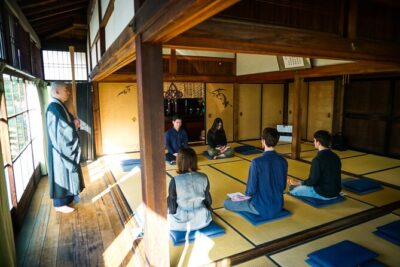
Kyoto Zen Meditation & Garden Tour at a Zen Temple with Lunch
Read our review →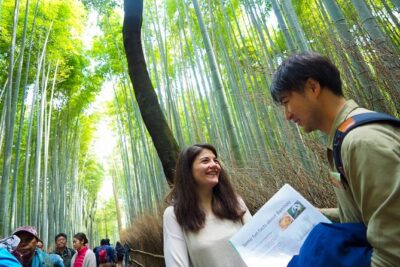
Kyoto Arashiyama Bamboo forest & Garden Half-Day Walking Tour
Read our review →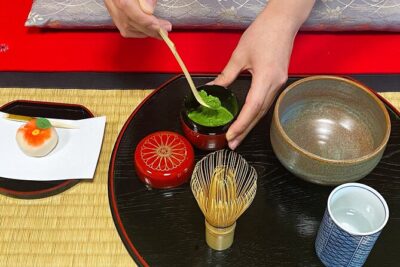
Kyoto Kiyomizu Tea Ceremony with Scenic Garden Views
Read our review →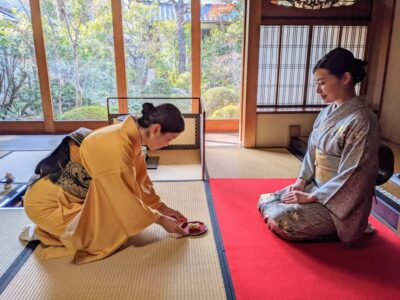
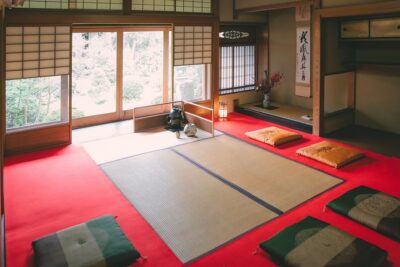
Stunning Private Tea Ceremony: Camellia Garden Teahouse
Read our review →
Kyoto Hidden Treasures: Special Temple & Garden Access Tour
Read our review →
Browse the lists this tour appears in