
Review · KYOTO
Kyoto ITALIAN GUIDE Golden Pagoda Bamboo Forest Dry Garden
Kyoto’s postcard sights come with a practical catch. This half-day outing links Kinkakuji Temple, Arashiyama’s famous bamboo forest, and the old Togetsukyo Bridge by train, bus, and foot, giving you three very different views of Kyoto in about four and a half hours. A local guide from Kyoto adds context about the imperial family, aristocrats, samurai, writers, and the quieter rural edge of the old capital.
I like the efficient route and the chance to reach several major sights without working out Kyoto’s transport system alone. I also like the small-group limit of 15 people, which should make it easier to ask questions about Japanese culture and daily life. The main drawback is crowding, especially at Kinkakuji and the bamboo forest, where the calm setting can be overwhelmed by large numbers of visitors.
Key points at a glance
- Three famous sights in one morning: Visit Kinkakuji, the Bamboo Forest Street, and Togetsukyo Bridge during a 4-hour-30-minute outing.
- Transport is part of the tour: The route uses trains, buses, and walking, so you get a practical introduction to moving around Kyoto.
- Kinkakuji admission is included: You do not pay a separate entrance fee for the Golden Pagoda stop.
- The group is capped at 15: This is more manageable than a large coach excursion, though the public sites themselves can still be packed.
- The tour begins and ends at Kyoto Station: The meeting time is 8:30 a.m., with the activity returning to the original meeting point.
- Crowds shape the experience: The sights are beautiful and important, but neither Kinkakuji nor the bamboo grove promises solitude.
What this Kyoto morning actually covers
This is not a single-site temple visit. It is a compact northwestern Kyoto route that joins historic buildings, wooded paths, a bridge, and public transportation. You move through places linked to imperial life, aristocratic retreats, samurai culture, and literary Kyoto.
The tour takes about four and a half hours, while the three main stops account for roughly three and a half hours of scheduled sightseeing. The remaining time is useful for transfers between Kyoto Station, Kinkakuji, and Arashiyama. That matters because these sights are spread across the city, not arranged in one walkable cluster.
I see the format as a good first look at Kyoto’s northwest side. You will not have unlimited time at any stop, but you will get a broad sample of the city’s most recognizable sights. The guide’s role is important here. Instead of simply pointing toward a golden building or a bamboo path, the guide can explain how these places connect with the old capital and answer questions about Japanese history, culture, and modern life.
The meeting point is Kyoto Station, at Higashishiokoji Kamadonocho in Shimogyo Ward. The start time is 8:30 a.m., and the tour returns to the same meeting point. That makes the outing fairly easy to fit into a Kyoto itinerary, especially if you want an organized morning before spending the afternoon elsewhere.
More Garden Tours in Kyoto:
- Kyoto Zen Meditation & Garden Tour at a Zen Temple with Lunch
★ 5.0 · 441 reviews - Kyoto Arashiyama Bamboo forest & Garden Half-Day Walking Tour
★ 5.0 · 413 reviews - Kyoto Kiyomizu Tea Ceremony with Scenic Garden Views
★ 5.0 · 101 reviews
Kinkakuji’s Golden Pagoda, beautiful and complicated
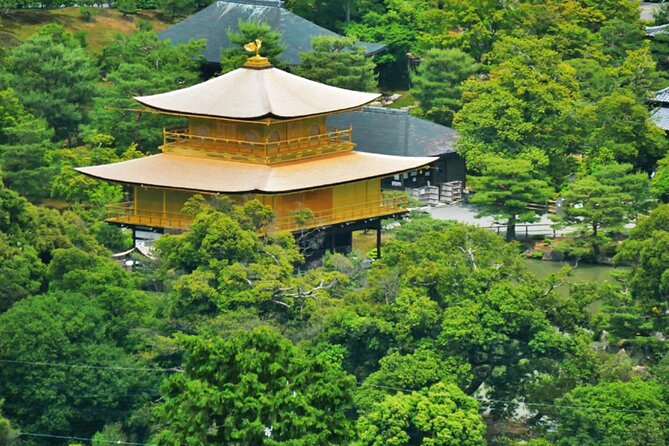
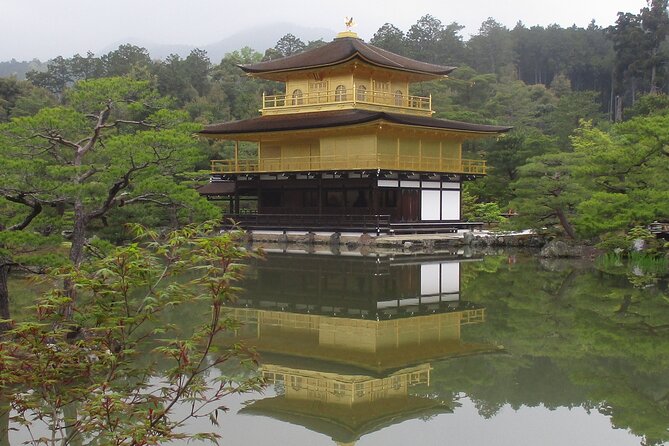
The first major stop is Kinkakuji Temple, also known as the Golden Pagoda. You have about 1 hour and 30 minutes here, and admission is included in the price.
Kinkakuji began as the private villa of shogun Yoshimitsu Ashikaga in the 14th century. Its setting reflects the taste of the ruling elite of the period: a carefully arranged retreat where architecture and nature work together. The gold-covered pavilion catches the eye immediately, but the surrounding grounds are part of the appeal. The visit is designed around viewing the pavilion within its garden setting rather than entering it as an ordinary building.
There is an important piece of context behind the polished appearance. The original pavilion burned in 1955, and the building you see today is a reconstruction. That does not make the visit meaningless, but it does change how I would frame it. You are looking at a modern rebuilding of a famous historic design, not an untouched medieval structure.
The bright gold can also feel at odds with the quiet restraint many people associate with Zen Buddhism. I would not dismiss the place for that reason. Instead, I would treat the contrast as part of the story. Kinkakuji reflects the wealth and power of a shogun’s villa as much as it reflects religious ideals.
You have a generous amount of time here compared with the other stops, but the grounds can be extremely crowded. The main viewpoint may fill quickly, and the steady flow of people can make the setting feel less peaceful than its design suggests. If you are hoping for a silent temple garden, keep your expectations modest.
Still, Kinkakuji earns its place on a first Kyoto visit. The building is visually striking, the setting is carefully preserved, and a guide can give you the political and cultural background that a quick photograph cannot. I especially value the included admission because it keeps the morning simple, with no separate ticket purchase at the entrance.
Arashiyama Bamboo Forest, famous for a reason
The second stop is Bamboo Forest Street in Arashiyama, with about one hour to explore. Entry is free.
This is the bamboo grove seen in countless photographs and films. Tall bamboo rises on both sides of the path, creating a narrow corridor that feels very different from the open grounds at Kinkakuji. The scale of the stalks and the enclosed path are what make this place memorable.
The fame is also the problem. The grove is one of Japan’s best-known sightseeing locations, so you should not expect a private walk through the trees. People arrive for the same photographs, and the path can feel busy. If your ideal bamboo experience involves total quiet, this stop may disappoint.
I would still keep it on the route because it offers a strong change of mood. Kinkakuji gives you formal architecture and a temple garden. The bamboo path gives you height, shade, and a more rustic setting associated with the outskirts of the old capital. The guide can help place the grove within the wider character of Arashiyama, rather than treating it as a quick photo backdrop.
The one-hour allowance is sensible for a short introduction. It gives you time to walk through the main area without letting this single sight take over the entire morning. If you want a slower exploration of Arashiyama, additional independent time would be useful, but that is not part of this experience.
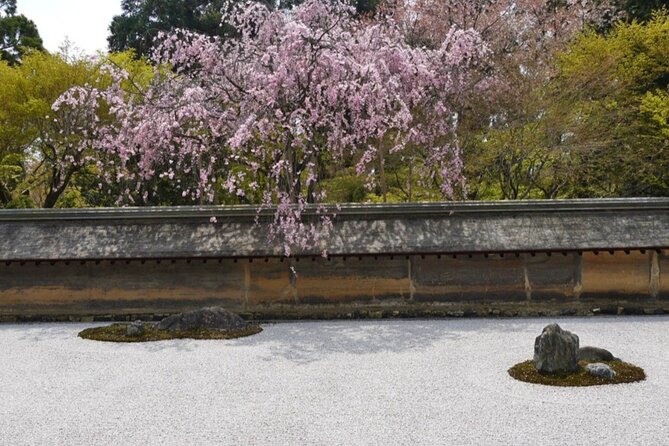
The tour title refers to a dry garden, but the supplied schedule does not identify a separate dry garden stop. I would book this experience for Kinkakuji, the bamboo forest, and Togetsukyo Bridge, not on the assumption that a particular dry garden receives its own visit.
Togetsukyo Bridge and the preserved edge of Kyoto
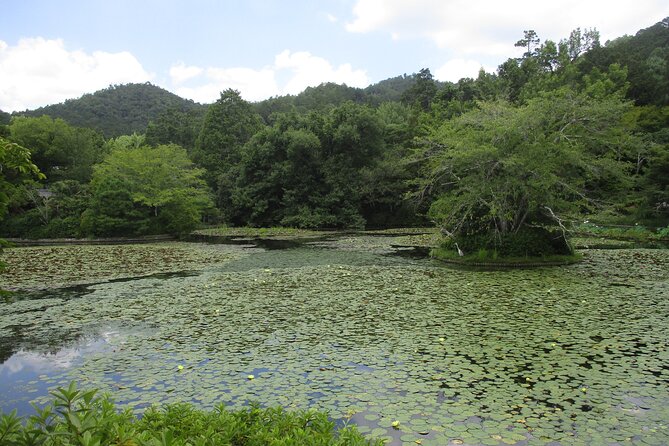
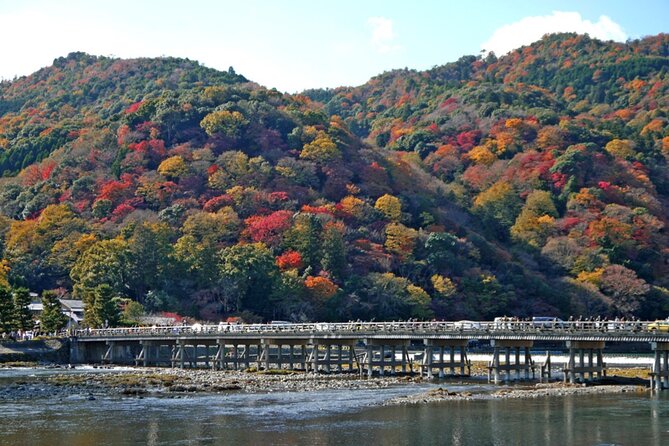
The final listed stop is Togetsukyo Bridge, where you have about one hour. The bridge has existed since the ninth century and provides a different view of Arashiyama from the bamboo grove.
Togetsukyo is associated with the preserved historical environment of this former suburb of Kyoto. Here, the focus is less on one famous building and more on the setting around the bridge. You can look across the surrounding area and understand why aristocrats, writers, and members of the imperial household valued this part of Kyoto as a place of retreat.
I like this stop because it slows the pace. After the visual concentration of Kinkakuji and the narrow bamboo path, the bridge opens things up. It gives the guide a natural place to discuss the old capital’s outer districts, seasonal scenery, and the way the area served as a retreat from court life.
The bridge itself is not a museum with a long indoor visit. Your enjoyment depends on the weather, the view, and your interest in the setting. The one-hour stop should be enough for a walk and photographs, but you will not receive an exhaustive exploration of every nearby lane or temple.
If your interests run toward old Kyoto rather than checklist sightseeing, this is likely the most satisfying part of the route. The bridge helps connect the famous attractions with the larger story of Arashiyama as a historical suburb and leisure area.
Same place, a different sort of green day out:
- Kyoto: Private Tea Ceremony with a Garden View
★ 4.9 · 61 reviews - Bamboo Grove Temple and Garden Views Tour
★ 5.0 · 41 reviews - Stunning Private Tea Ceremony: Camellia Garden Teahouse
★ 5.0 · 28 reviews - Kyoto Hidden Treasures: Special Temple & Garden Access Tour
★ 4.5 · 25 reviews
Why the train, bus, and walking format matters
Kyoto’s famous sights are not all next door to one another. This outing uses public transportation and walking to connect them, which makes the tour more useful than a simple transfer between attractions.
You should expect a moderate level of physical activity. The experience includes walking at the sights, moving through transport connections, and spending time on foot around the bridge and bamboo forest. No special athletic ability is indicated, but anyone who finds extended walking difficult should think carefully before booking.
The transport format also gives the morning a more local rhythm than a private vehicle route. You are not sealed inside a coach for the entire experience. Instead, you see how the city’s main sights connect by public transit. That can be especially helpful if this is your first time in Kyoto and you want to understand the geography before exploring independently.
The trade-off is less control over the schedule. Public transport and crowded attractions can make the timing feel less flexible than a private car tour. The provider allows flexible itineraries and times on request as far as possible, but that is not a guarantee. I would treat the published 8:30 a.m. departure as the dependable plan.
Group size, guide support, and the feel of the morning
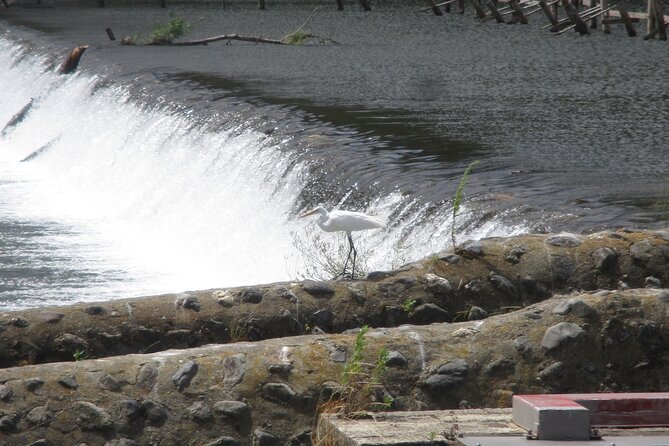
The maximum group size is 15 people. That is small enough to keep the guide within speaking distance and large enough to create a social group without the scale of a full bus tour.
The guide is described as a native Kyoto guide who explains local history, culture, and daily life. That local focus is one of the experience’s strongest features. The sights are famous, but the useful questions are often more specific: Why did aristocrats choose this area? How did samurai power shape the city? How have these places changed in modern Japan?
Assistance is available during the tour, and the guide can answer questions throughout the route. I would make use of that. Kinkakuji and the bamboo forest are easy to photograph without help, but context is what turns a quick sightseeing circuit into a better introduction to Kyoto.
The tour is offered by AgenziaItaliana, and the experience is described as an Italian-guided tour. The supplied information does not provide the guide’s personal name, so you should not expect a named guide to be guaranteed in advance.
Is $113.85 a fair price?
At $113.85 per person, this is not the cheapest way to see these places. The value depends on how much you want help with transport and interpretation.
The price includes a four-and-a-half-hour guided route, Kinkakuji admission, public transportation connections, and assistance during the outing. It also gives you a structured morning that covers three high-demand sights without requiring you to plan the order yourself. For a first visit, that convenience can justify the cost.
The value is weaker if you are comfortable using Kyoto’s trains and buses and prefer to spend unlimited time at one site. You could visit the bamboo forest and Togetsukyo Bridge independently, and the public nature of the sights means the tour does not remove crowds.
I would view the fee as payment for orientation, cultural explanation, and time management, not for exclusive access. The group limit helps, but there is no private entry or crowd-free version of Kinkakuji included.
Who should book this experience?
I would recommend this outing to a first-time Kyoto visitor who wants a guided overview of the northwest side of the city. It suits you especially well if you want historical context, prefer not to plan several public transport connections, and have moderate walking fitness.
It also works for anyone with only one free morning who wants to see three major sights in a single organized outing. The small group and local guide are useful if you enjoy asking questions rather than simply following a route.
I would hesitate if your main goal is solitude. Kinkakuji and the bamboo grove are both heavily visited, and the bridge area may also feel active. I would also choose another format if you want a slow photographic walk, a private vehicle, or extended time in one garden.
Free cancellation is available when you cancel at least 24 hours before the start time. Changes made less than 24 hours before departure are not accepted, and late cancellations are not refunded. The activity also requires a minimum number of participants, with a different date, another experience, or a full refund offered if that minimum is not reached.
Should you book the Golden Pagoda and Bamboo Forest tour?
Book it if you want a well-organized first look at northwest Kyoto, with a local guide, included Kinkakuji admission, and transport handled as part of the morning. The combination of the Golden Pagoda, bamboo forest, and Togetsukyo Bridge gives you a useful range of Kyoto experiences in one outing.
Skip it if you already know Kyoto’s transport system, dislike busy attractions, or want long, quiet visits. The sights are worthwhile, but the tour cannot change their popularity. For most first-time visitors, the practical route and cultural explanation make the $113.85 price reasonable, provided you see it as an introduction rather than a peaceful retreat.
FAQ
Where does the tour begin?
The tour begins at Kyoto Station, at Higashishiokoji Kamadonocho in Shimogyo Ward, Kyoto.
What time does the tour start?
The scheduled start time is 8:30 a.m.
Where does the tour end?
The activity ends back at the original meeting point at Kyoto Station.
How long does the tour last?
The tour lasts approximately 4 hours and 30 minutes.
Is admission to Kinkakuji included?
Yes. Admission to Kinkakuji Temple is included in the tour price.
How many people can join the tour?
The activity has a maximum group size of 15 people.
Can I cancel for a full refund?
Yes, if you cancel at least 24 hours before the experience start time. Cancellations made less than 24 hours before the start time are not refunded.
Just added around Kyoto
- Stunning Private Tea Ceremony: Camellia Garden Teahouse★ 5.0 · 28 reviews
- Kyoto-Nara Adventures Private Tour With Hotel Pick Up★ 4.0 · 5 reviews
- Kyoto Hidden Treasures: Special Temple & Garden Access Tour★ 4.5 · 25 reviews
- Kyoto Japanese Garden Lover’s Private Tour with Government-Licensed Guide★ 4.5 · 10 reviews
- Guided Kyoto City Cherry Blossom One Day Private Tour★ 5.0 · 16 reviews
- Kyoto: Kinkaku-ji Temple & Serene Garden Guided Tour with Tickets★ 5.0 · 9 reviews
- The Art of Mindful Living: Tea Ceremony in Kyoto★ 5.0 · 16 reviews
- Bamboo Grove Temple and Garden Views Tour★ 5.0 · 41 reviews
Kyoto Garden Tours, compared.
Kyoto Zen Meditation & Garden Tour at a Zen Temple with Lunch
Read our review →
Kyoto Arashiyama Bamboo forest & Garden Half-Day Walking Tour
Read our review →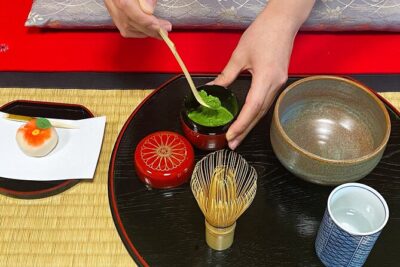
Kyoto Kiyomizu Tea Ceremony with Scenic Garden Views
Read our review →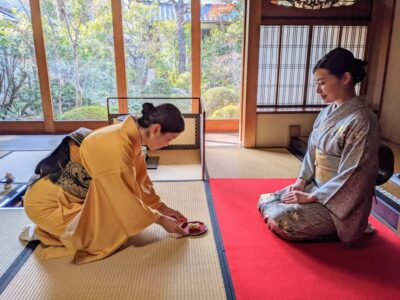
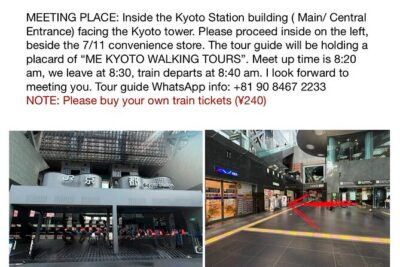
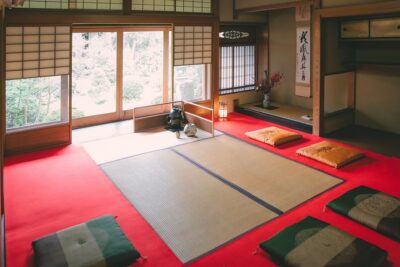
Stunning Private Tea Ceremony: Camellia Garden Teahouse
Read our review →
Kyoto Hidden Treasures: Special Temple & Garden Access Tour
Read our review →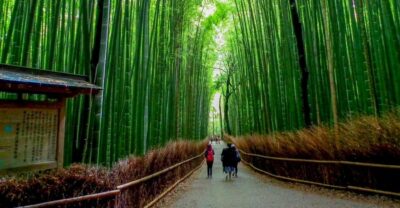
Browse the lists this tour appears in