
Review · KYOTO
Kyoto Kiyomizu Tea Ceremony with Scenic Garden Views
Quiet Kyoto begins with a whisk. This 45-minute tea ceremony pairs a traditional matcha lesson with wide views over a carefully tended Japanese garden. I especially like the peaceful setting and the chance to watch a tea master prepare the drink from start to finish, rather than simply ordering matcha at a café. The main consideration is time: at $50.87 per person, some people may find the session brief for a formal ceremony and garden visit.
I also like the small-group format, capped at 12 people, and the practical structure: one cup is prepared for you, then you learn to make another yourself. You receive two cups of matcha, wagashi sweets, and a photo, but not a kimono rental or video recording. Wear socks, since sitting and handling the tea bowl are part of the experience.
What makes this Kyoto tea ceremony special
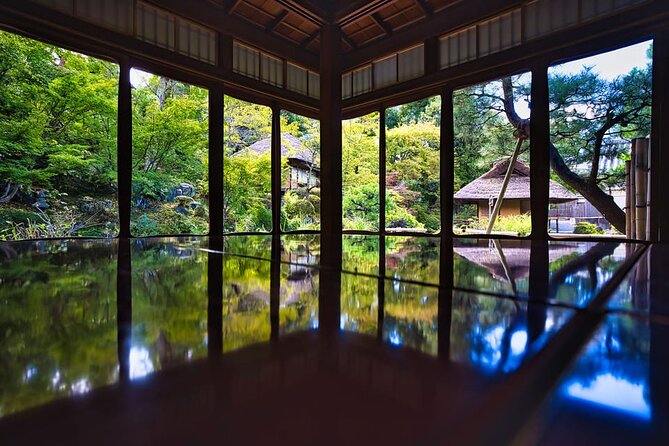
- Large garden views from the tea room: The ceremony takes place in a traditional setting with broad windows looking onto a Japanese garden.
- Two cups with different roles: The first is prepared by the tea master, while the second gives you a chance to practice making matcha.
- Small group, maximum 12 people: The modest size leaves room for questions and keeps the session personal.
- A calm break near Kiyomizu: The tea room offers a quiet pause from sightseeing around Kyoto’s popular Higashiyama district.
- English support: An assistant explains the ceremony, its customs, and its background in English.
- Simple inclusions: The $50.87 price includes two matcha servings, traditional wagashi, and a photo.
Arriving at Sakaguchian near Kiyomizu
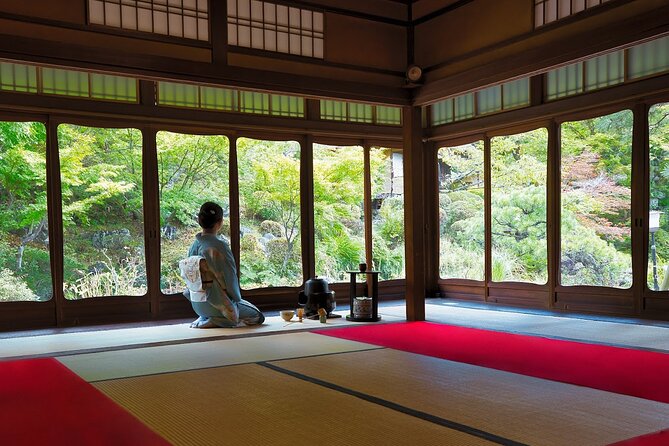
Your meeting point is Tea Ceremony Sakaguchian, written in Japanese as 茶道体験 阪口庵, at 3-chōme-334 Kiyomizu in Kyoto’s Higashiyama Ward. The activity begins and ends at this same location, so you do not need to arrange a separate return transfer.
The location matters. Kiyomizu is one of the best areas in Kyoto for traditional streets, temples, wooden buildings, and old-style shops. You can fit this ceremony into a sightseeing day in the district, though you should allow enough time to find the tea house and arrive without rushing. The experience itself is quiet and measured, so arriving flustered from a last-minute dash would work against the mood.
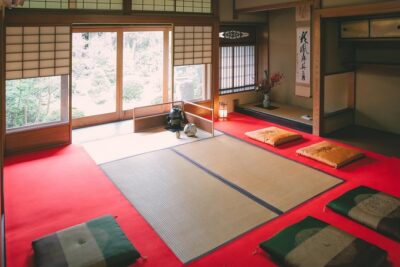
The setting is one of the strongest reasons to book. The room has large windows or broad openings with views across the garden, giving you something to look at while the ceremony unfolds. The garden is not simply a backdrop for a photograph. Its changing seasonal appearance helps explain the Japanese preference for noticing small details, from changing light to flowers and leaves.
More Garden Tours in Kyoto:
- Kyoto Zen Meditation & Garden Tour at a Zen Temple with Lunch
★ 5.0 · 441 reviews - Kyoto Arashiyama Bamboo forest & Garden Half-Day Walking Tour
★ 5.0 · 413 reviews - Kyoto: Private Tea Ceremony with a Garden View
★ 4.9 · 61 reviews
The first cup, prepared by the tea master
The session begins in the tea room, where the host introduces the ceremony and gives you context for what you are about to see. English explanations cover the history, customs, and meaning behind the actions, so you are not left trying to guess why each utensil is handled in a particular way.
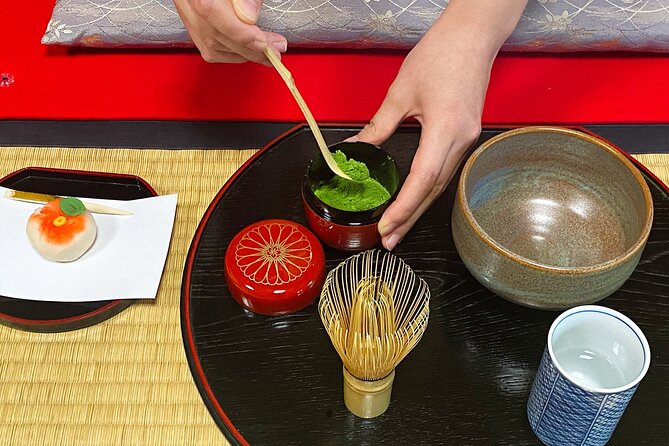
The tea master then performs the ceremony with deliberate movements. You see the utensils purified, the bowl handled with care, and the matcha whisked into a fine foam. None of this is hurried. The slow rhythm is part of the point, and it gives you time to notice the order of the actions.
Your first serving is prepared for you. This lets you concentrate on the ceremony itself rather than worrying about technique. The matcha is paired with a traditional wagashi sweet, which balances the tea’s sharp, grassy flavor with a delicate sweetness.
If you are used to tea bags, milk, or sugar, matcha can be a surprise. It has a fuller taste and a different texture, especially when whisked into a frothy drink. The sweet is not an afterthought. It helps prepare your palate for the tea and adds a small seasonal touch to the ritual.
Learning to whisk your own matcha
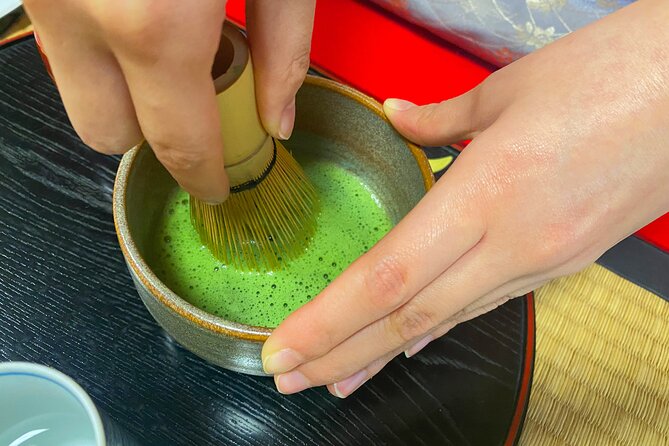
After watching the tea master, you get a more hands-on turn. The second cup gives you a chance to learn how to prepare matcha yourself, including the basic handling of the bowl and whisk.
This is where the activity becomes more than a demonstration. You can see how much control is required to make a smooth, frothy cup. The lesson is introductory rather than a full professional tea-school course, but it gives you a better sense of the work behind the graceful movements.
The host and tea master make room for questions. The English-speaking assistant is especially useful here, explaining details that could otherwise be lost in translation. You can ask about the ceremony, the utensils, the tea, and the symbolism connected with the room and garden.
The practical lesson also helps you enjoy matcha later in your trip. After trying it here, you will have a better idea of how the drink should look and taste, and why preparation matters. You do not just consume the tea. You understand the steps that shape it.
Why the garden view changes the experience
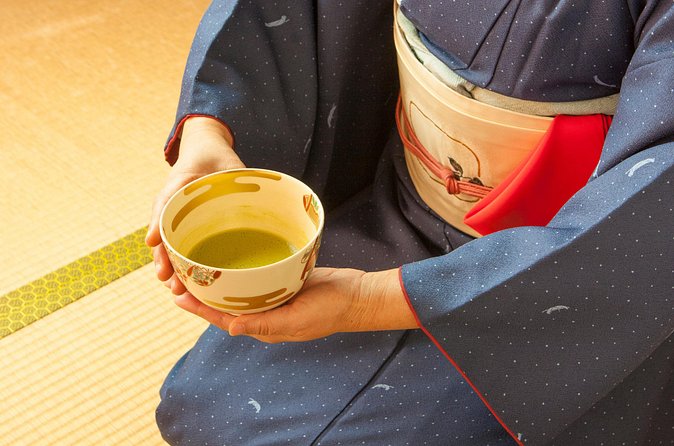
Kyoto has plenty of places where you can buy matcha, but a restaurant or sweets shop cannot offer the same sense of occasion. Here, the garden and the ceremony work together.
The room gives you a framed view of traditional Japanese design. The garden’s careful arrangement reinforces the ceremony’s focus on harmony, respect, purity, and calm. Those ideas are not delivered as an abstract lecture. You see them in the room, the utensils, the host’s movements, and the pauses between each step.
The view also keeps the experience from feeling too formal. You have something peaceful to watch while the tea is prepared, and the garden gives the short session a sense of place. Several people described the setting as a highlight, and I can see why. A tea ceremony in a plain indoor room would still teach you something, but this setting gives the lesson much more atmosphere.
The experience works particularly well in the middle of a busy Kyoto day. You might spend the morning walking through temples and crowded streets, then use this session to slow down. It is a good reset before continuing around Kiyomizu.
Same place, a different sort of green day out:
- Bamboo Grove Temple and Garden Views Tour
★ 5.0 · 41 reviews - Stunning Private Tea Ceremony: Camellia Garden Teahouse
★ 5.0 · 28 reviews - Kyoto Hidden Treasures: Special Temple & Garden Access Tour
★ 4.5 · 25 reviews - Kyoto: Japanese Gardens Private Customizable Tour
★ 4.1 · 18 reviews
Small-group attention and English explanations
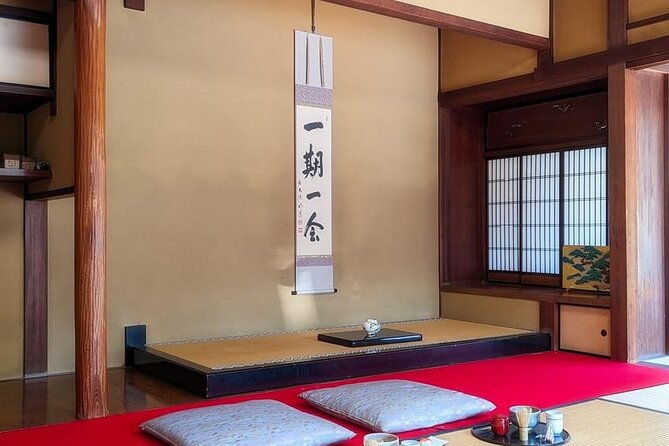
The maximum group size is 12. That is not a private lesson, but it is small enough to avoid the packed, assembly-line feeling found at some cultural attractions.
A small group also makes questions easier. The English-speaking assistant explains the process and answers questions about the culture around tea ceremonies. The tea master’s movements remain the focus, while the assistant helps you understand what you are seeing.
The tone is warm and respectful. Several descriptions of the experience praise the hosts for being kind, polite, and willing to explain. That matters in a ceremony where visitors may worry about making a mistake. You are learning a formal tradition, but you are not expected to arrive already knowing the rules.
The tea master’s precision is another strong point. Each movement is measured, from purifying the utensils to whisking the tea. You get a close look at how much discipline sits behind an action that can appear simple from a distance.
How long is enough for this format?
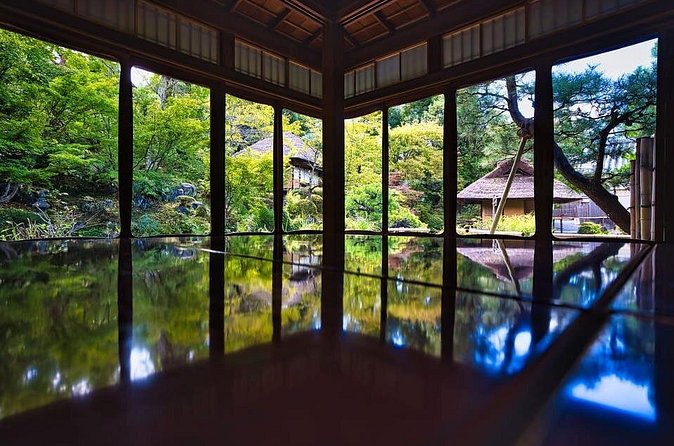
The stated duration is approximately 45 minutes. Some descriptions place the experience closer to an hour, so you should think of it as a short session rather than a long cultural workshop.
That length is useful if your Kyoto schedule is full. You can add the ceremony to a day around Kiyomizu without sacrificing several hours. It also suits families and first-time visitors who want an introduction without committing to a more formal study of tea.
The trade-off is depth. You will learn the main sequence, taste two cups, prepare matcha, and hear cultural background, but you will only scratch the surface of the tea tradition. If you want extended instruction, a longer private lesson, or detailed training in every utensil and rule, this may feel too brief.
For most people, the short format is probably the right introduction. You see the formal movements, take part yourself, and leave with a clear sense of what makes the ceremony special. Just keep your expectations realistic.
Is $50.87 a fair price?
At $50.87 per person, this is not the cheapest way to drink matcha in Kyoto. You are paying for more than the beverage, though. The price covers the setting, the tea master’s demonstration, English interpretation, a hands-on second cup, wagashi, and a photo.
The garden view is a major part of the value. So is the small group. If the session were simply a cup of tea and a short explanation, I would find the price harder to justify. Here, you receive a structured cultural experience in a traditional tea room, with two opportunities to taste matcha.
Still, one person found the activity a little expensive for its short length. That is a fair criticism. The value depends on what you want. If you are mainly looking for a cheap refreshment, choose a café. If you want a compact introduction to tea ceremony with an attractive setting, the price is easier to defend.
I would consider it good value for someone who cares about atmosphere, instruction, and cultural context. I would be less enthusiastic for someone who dislikes organized activities or wants a long, highly detailed lesson.
Sitting, clothing, and practical comfort
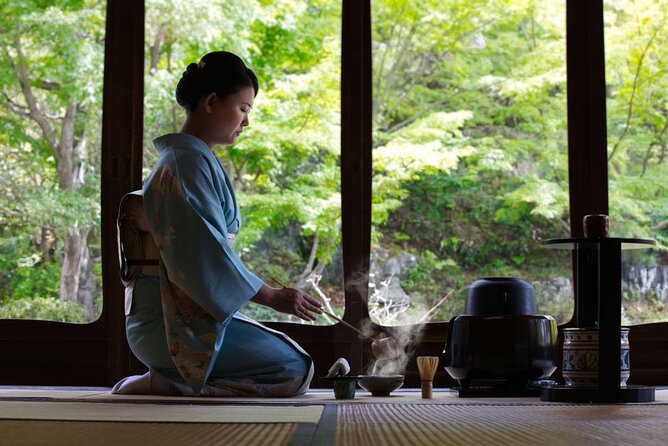
The information specifically says the activity is not recommended for people with foot or knee problems. You should take that seriously, since a traditional tea room may require sitting in a position that is uncomfortable for some people.
Wear socks. One person specifically offered this tip, and it is a sensible choice for a tea-room experience. Comfortable, modest clothing is also the practical way to approach the session, though kimono rental is not included.
The room has air conditioning, which is useful during Kyoto’s hot summer months. The garden remains part of the experience without requiring you to stand outdoors for the full session.
A photo is included, giving you a small record of the occasion. Video recording is not included, so you should not plan on filming the entire ceremony. The ritual is best enjoyed by watching closely rather than trying to document every movement.
Who will enjoy this most?
I would recommend the experience to you if you want a calm cultural activity that fits neatly into a sightseeing day. It is especially suitable if you are curious about Japanese customs but do not want a long lecture or a full-day class.
It also works well for couples, families, and small groups. The format gives everyone a chance to watch, taste, and try making matcha. Children may enjoy the whisking and sweets, though anyone with mobility concerns should think carefully about the seating.
You will get the most from it if you like quiet, precise activities. This is not a loud show or a fast-moving attraction. It asks you to slow down and pay attention to small actions.
You may want to skip it if you are only interested in drinking matcha, if sitting on the floor is difficult, or if $50.87 feels high for an experience under an hour. You should also avoid squeezing it between two tightly timed reservations, since the ceremony’s calm pace is part of its appeal.
Booking, weather, and cancellation details
Confirmation is provided when you book, and the activity accepts mobile tickets. Free cancellation is available up to 24 hours before the start time for a full refund. Changes or cancellations made less than 24 hours before the start time are not accepted for a refund.
The experience depends on good weather. If poor weather causes the activity to be canceled, you are offered another date or a full refund. Since the garden views are central to the appeal, that weather policy makes practical sense.
Should you book the Kiyomizu tea ceremony?
Book it if you want a gentle introduction to matcha and Japanese tea culture, especially with a garden view and English support. The first cup lets you watch the tea master’s careful work, while the second gives you a chance to try the process yourself. That balance makes the activity feel personal rather than purely performative.
The strongest reasons to go are the beautiful room, the calm garden, the kind hosts, and the chance to ask questions in a small group. The main weakness is the short duration compared with the price. For a deep study of tea ceremony, you will need something longer.
For a first visit to Kyoto, though, this is a sensible choice. Wear socks, leave room in your schedule, and treat the session as a peaceful cultural pause rather than a simple tea tasting.
FAQ
How long does the Kyoto tea ceremony last?
The listed duration is approximately 45 minutes. Some descriptions of the session refer to about an hour, so allow a little flexibility around the stated time.
What is included in the price?
The experience includes two cups of matcha, traditional wagashi sweets, and a photo. Kimono rental and video recording are not included.
Where does the activity start and end?
It starts at Tea Ceremony Sakaguchian, located at 3-chōme-334 Kiyomizu, Higashiyama Ward, Kyoto, 605-0043, Japan. The activity ends back at the same meeting point.
How many people can join the session?
The activity has a maximum group size of 12 people.
Is the tea ceremony suitable for people with foot or knee problems?
The experience is not recommended for people with foot or knee problems. Wearing socks is also advised for the tea-room setting.
Can I cancel for a full refund?
Yes. You can cancel at least 24 hours before the experience start time for a full refund. Cancellations or changes made less than 24 hours before the start time are not accepted for a refund.
Just added around Kyoto
- Stunning Private Tea Ceremony: Camellia Garden Teahouse★ 5.0 · 28 reviews
- Kyoto-Nara Adventures Private Tour With Hotel Pick Up★ 4.0 · 5 reviews
- Kyoto Hidden Treasures: Special Temple & Garden Access Tour★ 4.5 · 25 reviews
- Kyoto Japanese Garden Lover’s Private Tour with Government-Licensed Guide★ 4.5 · 10 reviews
- Guided Kyoto City Cherry Blossom One Day Private Tour★ 5.0 · 16 reviews
- The Art of Mindful Living: Tea Ceremony in Kyoto★ 5.0 · 16 reviews
- Kyoto: Kinkaku-ji Temple & Serene Garden Guided Tour with Tickets★ 5.0 · 9 reviews
- Kyoto ITALIAN GUIDE Golden Pagoda Bamboo Forest Dry Garden★ 4.0 · 2 reviews
Kyoto Garden Tours, compared.
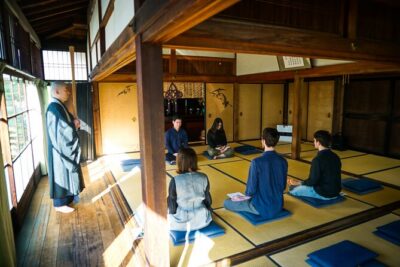
Kyoto Zen Meditation & Garden Tour at a Zen Temple with Lunch
Read our review →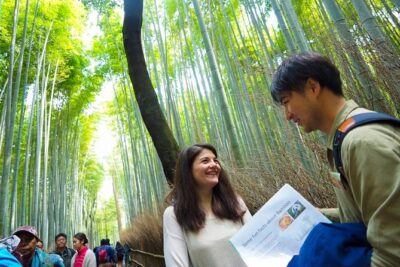
Kyoto Arashiyama Bamboo forest & Garden Half-Day Walking Tour
Read our review →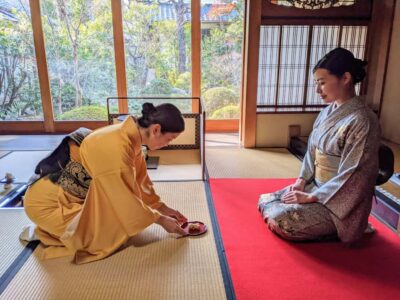
Stunning Private Tea Ceremony: Camellia Garden Teahouse
Read our review →
Kyoto Hidden Treasures: Special Temple & Garden Access Tour
Read our review →

The Art of Mindful Living: Tea Ceremony in Kyoto
Read our review →Browse the lists this tour appears in