
Review · SPAIN
Rural Life Experience: Mojo Workshop and botanical Walk
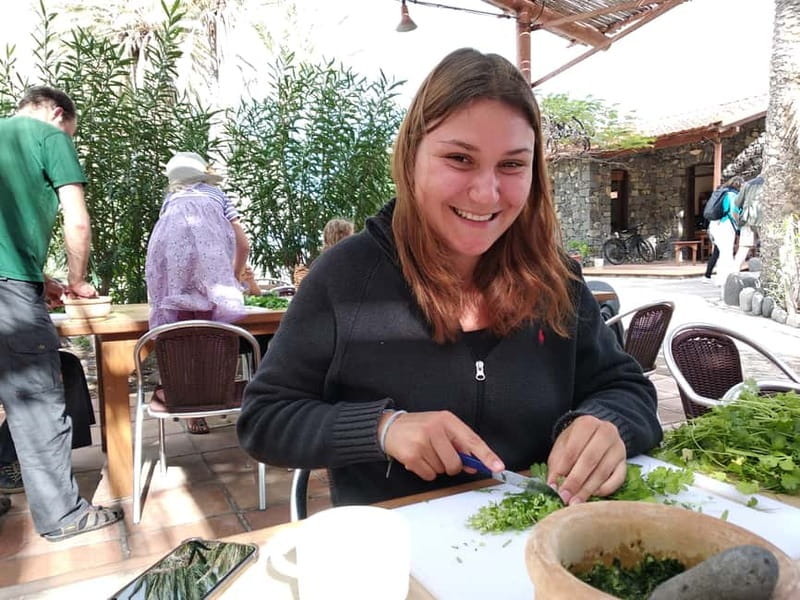
Mojo tastes better with a story. This three-and-a-half-hour outing pairs a botanical walk through La Laja with hands-on cooking, so you learn about local plants and agriculture before turning freshly gathered ingredients into traditional mojo sauce. I like the tiny group size, limited to four people, and the chance to ask Zdenka, a gardener and botanist, plenty of questions. I also like that the workshop uses a mortar and stone rather than turning the sauce into a quick kitchen demonstration.
The main consideration is the walk itself. Parts can be hot, and the experience is not suitable for people with a low level of fitness or a fear of heights. You also need to make your own way to La Laja, since transport is not included.
Key points at a glance
- Only four people per group: This gives you time for personal questions and a quieter look at village life.
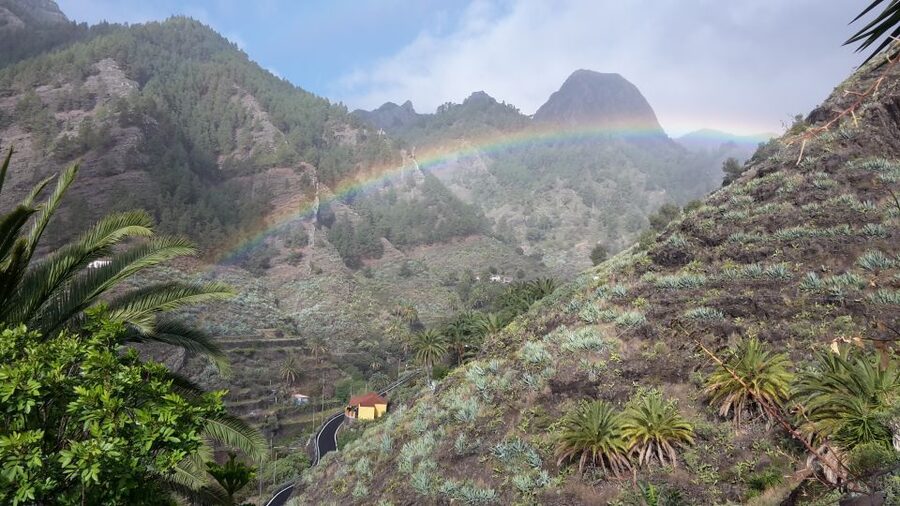
- A real La Gomera setting: The walk begins in the small mountain village of La Laja and heads into its agricultural valley.
- Botany with a local guide: Zdenka connects plants, farming, climate, history, and everyday island life.
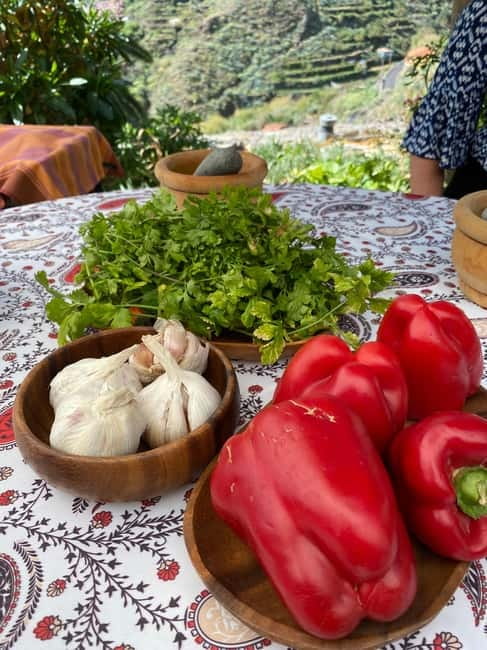
- Mojo made by hand: You harvest ingredients and use a mortar and stone to prepare the sauce in the traditional way.
- More than one taste: Mojo is served with local potatoes or bread, and you can sample different versions.
- Plan for sun and uneven walking: Bring a hat, drinks, and sunscreen, and be ready for heat.
Why this La Gomera experience feels different
Many food activities begin at a table. This one begins with the ground beneath your feet. Before you taste mojo, you see the setting that gives the sauce its character: a small mountain village, garden plots, local plants, and the green valley of La Laja.
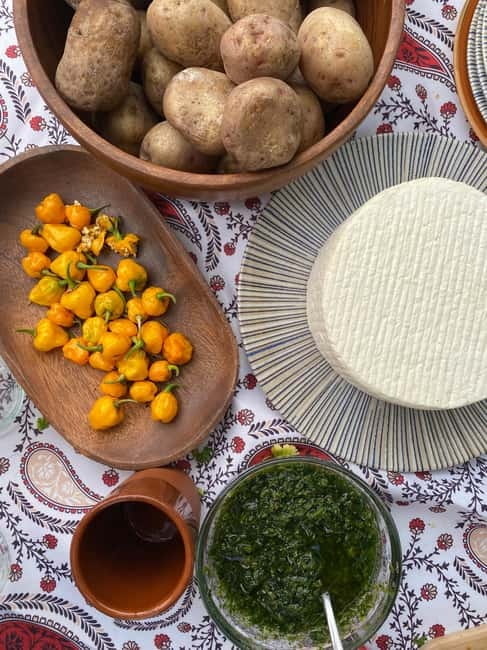
That order matters. You are not simply shown a finished dish and handed a recipe. You first see coriander and Canary chilies in their growing environment, then learn how these ingredients fit into local cooking. By the time you reach the mortar, the sauce has a clear connection to the place.
I also like the scale of the experience. Four participants is a useful limit, not just a marketing line. With a group this small, you can ask about a plant, stop for an explanation, or follow up on something that interests you without competing with a crowd. Zdenka can give the activity a personal feel, and the available languages, German, Czech, English, and Spanish, make it accessible to a wide mix of visitors.
The tone is rural and personal rather than polished for mass tourism. You visit a working village and agricultural area, not a staged version of island life. That means the experience may feel less predictable than a standard cooking class, but that is also the appeal.
More Botanical Gardens in Spain
- Blanes: Marimurtra Botanical Garden Entry Ticket
★ 4.7 · 998 reviews - Icod de los Vinos: Dragon Tree & Botanical Garden Ticket
★ 4.5 · 761 reviews - Las Palmas, Botanical Gardens and Bandama Volcano Tour
★ 4.1 · 113 reviews
Meeting Zdenka in central La Laja
The meeting point is easy to define: the central bus stop in La Laja, next to the Centro Social and Plaza de La Laja. The activity ends at the same place, which keeps the day straightforward once you arrive.
You need to arrange your own transport to the village. This is the biggest practical point to settle before booking. The price of $74 per person covers the guided walk, plant and agriculture explanations, the mojo workshop, and tasting, but not the journey to La Laja.
If you are using the bus, check your connection carefully and allow enough time to reach the central meeting point. The instructions say you can call the guide if you have trouble finding the location. That is useful in a small village, where a named plaza and social center may be more helpful than a full street address.
The return to the same meeting point also gives you a clear finish. You are not left at a different part of the valley trying to work out your next move.
Walking through the plants and farms of La Laja
The walk takes you from the center of La Laja into the valley, where you look at local plants and traditional agriculture. The exact route can vary with conditions, but the purpose is clear: you see how nature and farming meet in this part of La Gomera.
Zdenka brings several subjects together during the walk. Her background as a botanist and gardener lets her explain the plants themselves, while her local perspective adds information about climate, village life, and the island’s past. One of the strongest features of this outing is that these subjects are not treated as separate facts. A plant can lead to a conversation about weather, cultivation, food, or daily life.
You may also hear personal details about life on La Gomera. That kind of information can make the village easier to understand than a list of dates or formal monuments. The activity is especially worthwhile if you like knowing how people use a place, not just how it looks from a viewpoint.
The valley is described as green, but do not assume this means a cool or effortless stroll. The information warns that walking can be hot. Bring your own drinks, wear sunscreen, and use a sun hat. Comfortable footwear is sensible, although the supplied details do not specify a required shoe type.
There is also a height concern. The activity is not suitable for people afraid of heights, so you should take that warning seriously. The route is in a mountain village, and the walk may include exposed or elevated sections. Exact terrain details are not provided, so ask before booking if height is a major concern for you.
From the garden to the mojo ingredients
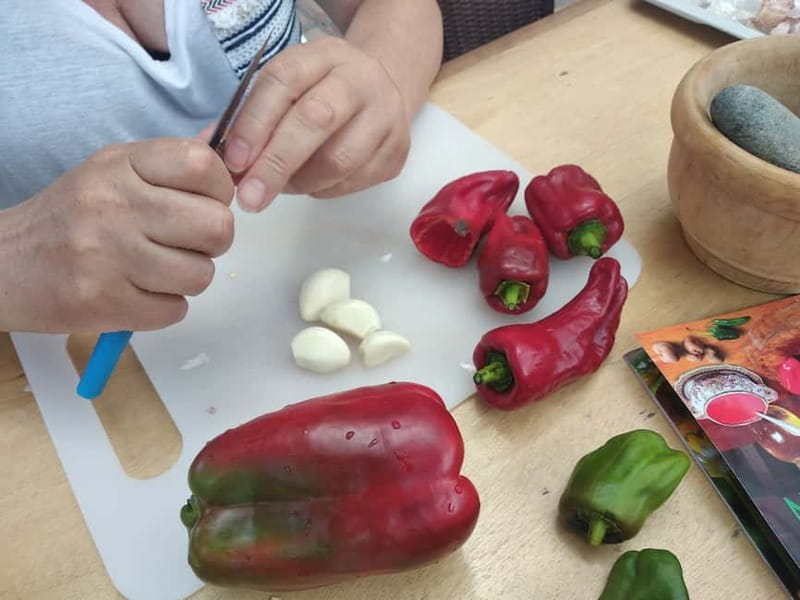
After the walk, you have the chance to go into the fields and learn how to plant coriander or Canary chilies. You can also harvest ingredients for the sauce.
This is a small step, but it gives the cooking section more meaning. You are not simply placing pre-measured ingredients into a bowl. You see where some of them grow and take part in the process before grinding them together.
The gardening element also suits people who want more than a tasting. You learn through touch and action, which is useful if you are curious about home cooking or traditional food production. It is not presented as a formal farming course, and the available information does not promise a long lesson in cultivation. Think of it as a practical link between the valley walk and the kitchen work.
The activity is strongest here for anyone who enjoys local food with a clear sense of place. If you only want to eat mojo, this may feel like extra time before the tasting. If you want to understand why the dish belongs to the Canary Islands, the sequence works well.
Same place, a different sort of green day out:
- Granada: Alhambra & Gardens Tour w/Nasrid Palaces Option
★ 4.2 · 7,022 reviews - Granada: Alhambra Gardens and Generalife Ticket
★ 4.4 · 2,195 reviews - Granada: Alhambra Guided Tour with Nasrid Palaces & Gardens
★ 4.7 · 2,190 reviews - Alhambra &Charles Palace Guided Tour with Optional Nasrid Palaces
★ 4.5 · 2,149 reviews
Making mojo with a mortar and stone
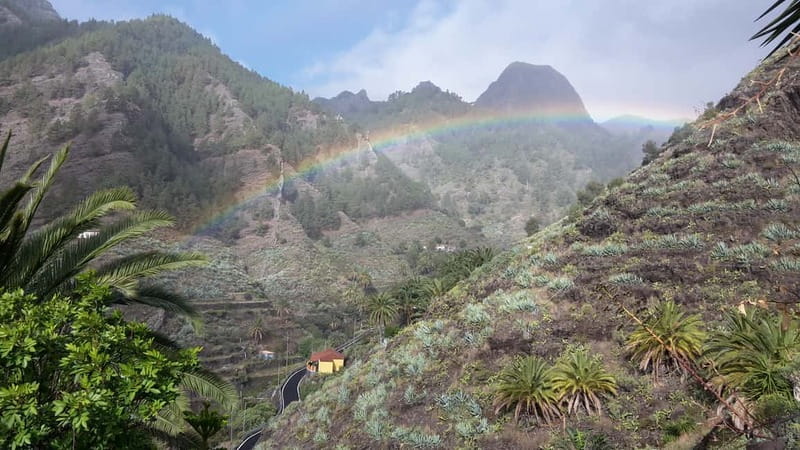
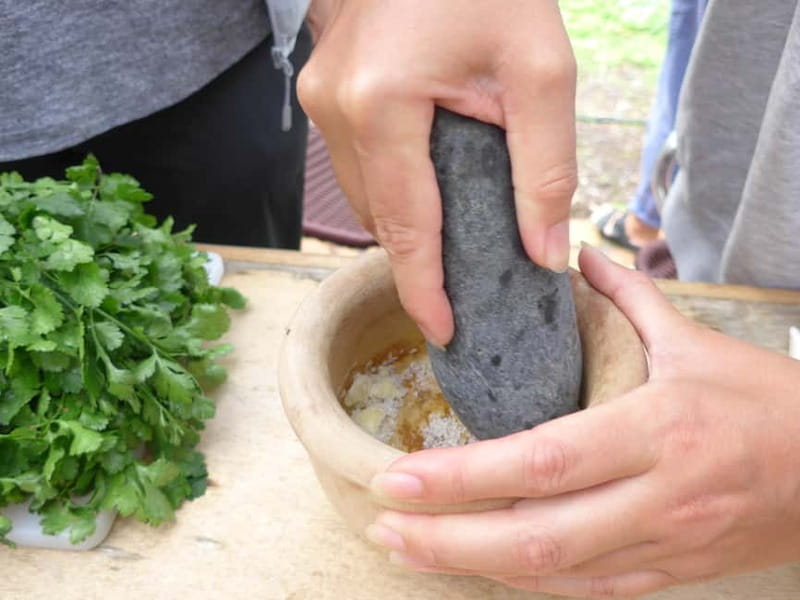
The central activity is the mojo workshop. You learn to prepare the sauce in the traditional way, using a mortar and a stone.
That method is slower than using a blender, but the slower pace is the point. You get a direct feel for the ingredients as they are crushed and combined. It also turns the cooking into a shared activity rather than a demonstration you watch from the side.
The workshop is described as hands-on, and you take part in making the sauce. The exact ingredients and recipe quantities are not specified, so do not expect a printed formula with precise measurements unless the guide provides one during the activity. What you can count on is learning the traditional process and working with ingredients connected to the local fields.
Mojo is a key part of Canary Islands food culture, and making it by hand helps you understand why the sauce is more than a condiment on the plate. It becomes a simple example of how local produce, tools, and habit combine in everyday cooking.
The mortar work may require some effort, especially if you have limited strength or mobility in your hands. The activity information does not list a specific accessibility arrangement, so contact the provider if that is important for you.
Tasting different mojo with potatoes or bread
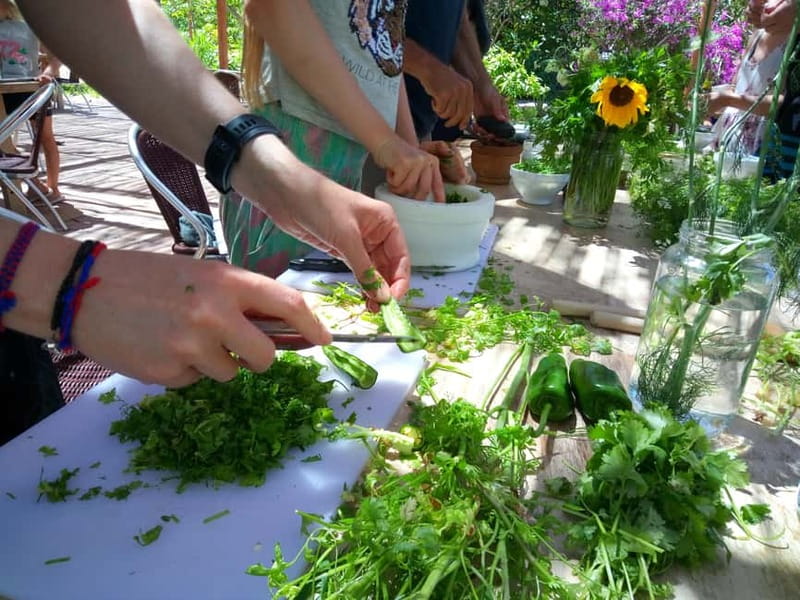
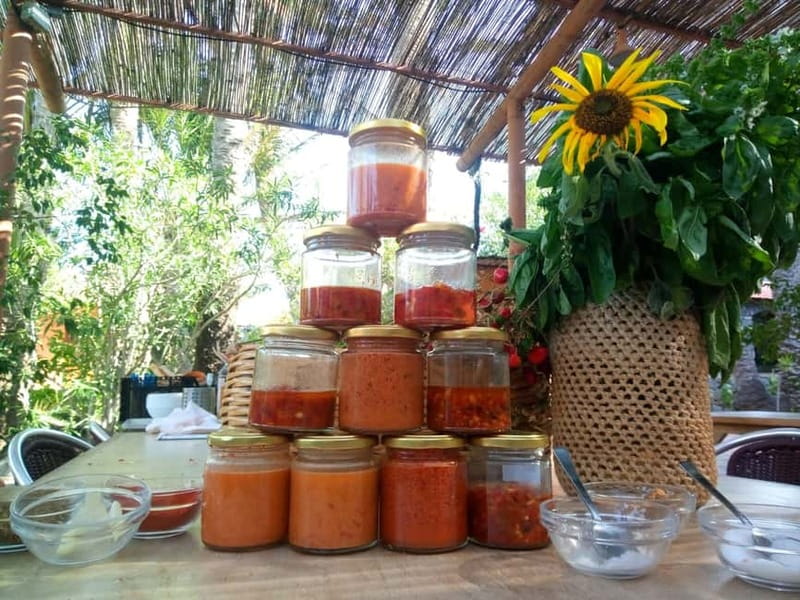
Once the sauce is ready, you can taste it with local potatoes or bread. You also have the chance to try other mojos, giving you a basis for comparison.
This tasting is one of the most useful parts of the workshop. Instead of hearing that mojo can vary, you can taste the difference directly. The sauce may become easier to appreciate when you compare versions side by side with a plain accompaniment.
The food element is modest rather than a full meal. Potatoes or bread are included for tasting, but the activity does not promise lunch or a larger spread. If you are hungry, plan around that. A three-and-a-half-hour morning or afternoon can be a long stretch without a proper meal, depending on the starting time.
I like that the tasting follows the walk and preparation. You have context, participation, and then food. It gives the experience a natural rhythm and prevents the workshop from feeling like a quick sauce sample added to a sightseeing trip.
What the $74 price gives you
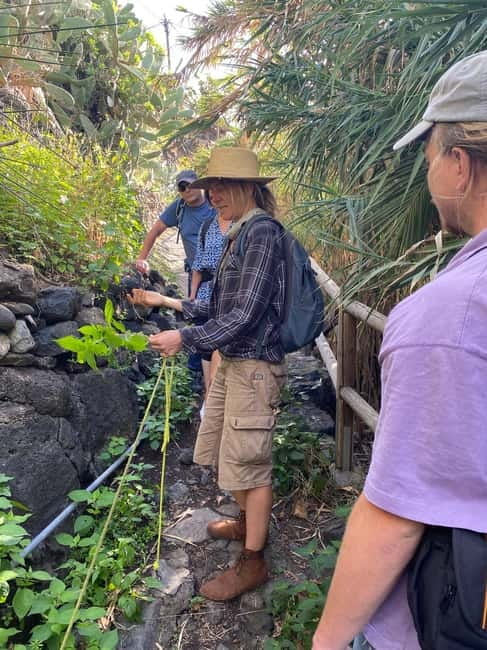
At $74 per person, this is not the cheapest way to spend a few hours in La Gomera. The value depends on how much you want from the experience.
You are paying for a private-feeling small group, a guided walk, botanical and agricultural explanations, a practical cooking session, and a tasting. With only four participants, the price also buys access to the guide’s time. That matters here because the questions and conversation are a large part of the experience.
The price is easier to justify if you value local contact and hands-on learning. You are not paying only for a view or a plate of food. You are paying for a connected visit to the valley, the fields, and the cooking tradition.
The calculation is less favorable if you are mainly seeking a substantial meal, a long hike, or included transportation. None of those are promised. You must also cover your own route to La Laja, which adds time and possibly transport cost.
Still, the combination is unusual. A botanical walk alone might leave you wanting a stronger local connection. A cooking class alone might tell you little about where the ingredients come from. Here, the two parts support each other.
Who will enjoy the walk and workshop most
I would recommend this experience to people who enjoy small-scale activities and direct contact with local life. It suits you especially well if you like plants, gardening, regional food, village settings, and conversations with a guide who can answer questions in depth.
It is also a good choice for couples, friends, or solo visitors who prefer a calm activity over a large group excursion. A four-person limit makes it easier to speak up and follow your own interests.
Families may need to judge the walking and heat for themselves. The supplied information does not give a minimum age or child policy, so you should ask the provider before booking for children. Anyone with low fitness should also take the warning seriously.
This is not the best pick if you want a gentle, fully accessible stroll, a bus tour, or an organized transfer. It is also a poor match if you are uncomfortable on mountain routes or dislike practical cooking tasks.
Timing, clothing, and useful preparation
The activity lasts three and a half hours, but starting times depend on availability. Check the schedule before building the rest of your day around it.
Bring a sun hat, drinks, and sunscreen. Those are not optional extras in a hot rural setting. Wear clothing that allows you to walk and work in a garden, and choose shoes you can use comfortably on the route.
You should also arrive ready to participate. The experience includes planting, harvesting, and crushing ingredients, so it is more rewarding when you join in rather than treat it as a passive talk.
The available languages are German, Czech, English, and Spanish. If you need another language, this activity may not be suitable. If you are unsure about the route, meeting point, heat, or height exposure, contact Zdenka before booking.
Free cancellation is available up to 24 hours before the activity for a full refund. You can also reserve and pay later, which helps if your island plans are still changing.
Should you book this La Gomera experience?
Book it if you want to connect a local food with the plants, farms, and people behind it. The strongest reasons are the four-person group, Zdenka’s mix of botanical and gardening knowledge, the personal feel of the walk, and the chance to make mojo with a mortar and stone.
Skip it if you need transport included, have low fitness, dislike heat, or feel uneasy around heights. Also remember that the tasting is not advertised as a full meal.
For the right visitor, $74 is a fair price for a focused half-day in La Laja. You leave with more than a taste of mojo. You get a clearer sense of how a small village, its gardens, and its food traditions fit together.
FAQ
Where does the activity begin?
It begins at the central bus stop in La Laja, next to the Centro Social and Plaza de La Laja.
Where does the activity finish?
The activity ends back at the same meeting point in central La Laja.
How long does the experience last?
The experience lasts three and a half hours. Starting times depend on availability.
Is transport to La Laja included?
No. You must arrange your own transport to the meeting point.
What is included in the price?
The price includes a guided walk through traditional agriculture in La Laja, explanations from a botanist and gardener, the traditional mojo workshop, and mojo tasting.
Which languages are available?
The instructor can provide the experience in German, Czech, English, or Spanish.
Can I cancel for a full refund?
Yes. You can cancel up to 24 hours in advance for a full refund.
Just added around Spain
- Private VIP visit El Escorial Palace, Monastery and Gardens★ 4.9 · 23 reviews
- Valencia, Botanical Garden, Guided Tour★ 5.0 · 3 reviews
- Complet Segway Tour Medieval + Gardens★ 5.0 · 25 reviews
- Private E-Bike City Tour of Valencia’s History, Gardens★ 5.0 · 3 reviews
- Valencia Segway Tour Through Gardens & Nature★ 5.0 · 19 reviews
- Exclusive Alcazar with breakfast or afternoon coffee in gardens★ 5.0 · 3 reviews
- Granada Full Day Tour From Malaga★ 3.5 · 95 reviews
- Private VIP visit El Escorial Palace, Monastery, Villa & Garden★ 5.0 · 25 reviews
Botanical Gardens, compared.

Blanes: Marimurtra Botanical Garden Entry Ticket
Read our review →
Malta: Mdina, Dingli Cliffs and San Anton Botanical Gardens
Read our review →
Princeville Botanical Gardens Tour and Chocolate Tasting Ticket
Read our review →
Icod de los Vinos: Dragon Tree & Botanical Garden Ticket
Read our review →
Maleny Botanic Gardens Bird Aviary Experience Ticket
Read our review →
Dubrovnik Countryside and Arboretum ATV Tour with Brunch
Read our review →
Big Island Waterfalls Tour with Swimming and Botanical Garden
Read our review →Browse the lists this tour appears in