
Review · OSAKA
Osaka: Daytime Hanami (Cherry Blossom) and Food Tour
Cherry season rewards slow wandering. This three-hour tour pairs Karahori’s old wooden streets with seasonal food, local drinks, and a quieter place to enjoy the blossoms. I like the small-group limit of 10 and the chance to see a less polished, more lived-in side of Osaka.
I also like the food focus, which goes beyond one restaurant meal and includes several stops, street snacks, tea, sake, or beer. The main catch is timing: cherry blossoms are weather-dependent, so you may not get the full pink display even during the advertised season.
Key details at a glance
- Karahori setting: Walk through one of old Osaka’s most atmospheric neighborhoods, with traditional wooden homes, small shops, shrines, and narrow backstreets.
- Seasonal eating: Sample snacks from cherry-blossom-season stalls along with dishes served at several food stops.
- A quieter hanami stop: Finish at a secluded spot where shrines and cherry trees provide time to sit, snack, and enjoy the season.
- English-speaking guide: The tour is led in English, with guides such as Miki and Sanae praised for their friendly, flexible style.
- Small group format: A maximum of 10 people makes conversation and food ordering easier than on a large bus tour.
- Simple logistics: Meet outside Masumuraningyoten Sueyoshibashiten at Matsuyamachi Station, and return to the same place after three hours.
Walking old Osaka around Karahori
Karahori gives this tour its character. Instead of starting with Osaka’s giant signs and packed shopping streets, you begin near Matsuyamachi Station and enter a neighborhood of narrow lanes, old wooden houses, artisan shops, and small local businesses.
That change of pace matters. You get a look at Osaka that is less about famous attractions and more about how an older neighborhood still functions. The streets can feel maze-like, so having a guide helps you notice the details and avoid spending the whole walk wondering which turn leads back to the station.
The district is also a sensible place for a food walk. Small shops and local businesses provide natural stopping points, and the guide can explain what you are eating rather than leaving you to guess at every unfamiliar snack. I would expect the route to feel more like a neighborhood stroll with food along the way than a formal sightseeing circuit.
The tradeoff is that this is a walking tour through older streets. The route is not suitable for wheelchair users, and comfortable shoes are important. If you dislike uneven or confined walking routes, this may not be the right Osaka activity for you.
More Cherry Blossom Tours in Japan
- Mt. Fuji, Cherry Blossom & Shiba Sakura Pvt. Day Tour
★ 5.0 · 326 reviews - Nagano: 1-Day Snow Monkey & Cherry Blossom Tour in Spring
★ 4.8 · 51 reviews - Mt. Fuji & Hakone Cherry Blossom private One Day Tour
★ 4.5 · 35 reviews
Seasonal stalls, local drinks, and several food stops
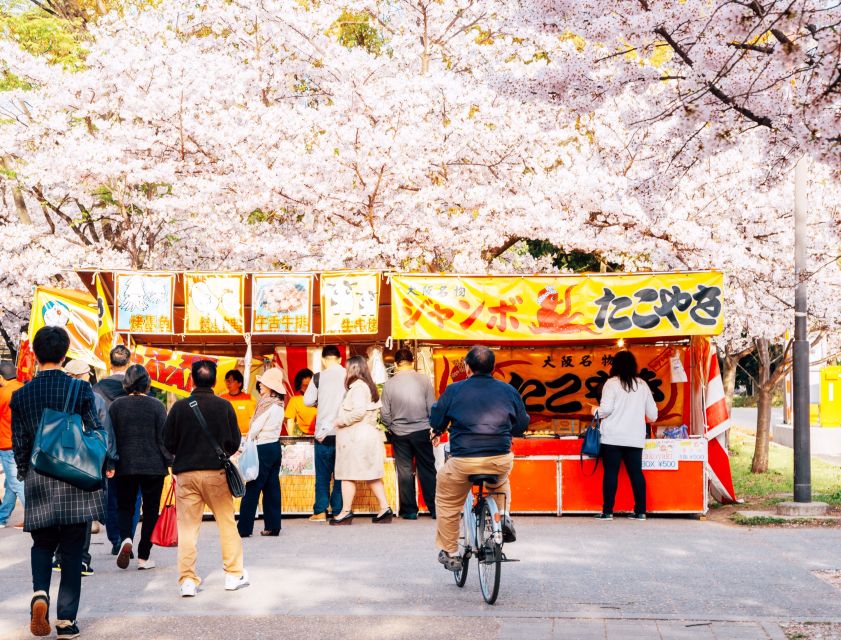
Food is not a minor extra here. The tour includes local snacks from seasonal street stalls, a variety of dishes at multiple stops, and one included drink. Depending on what is available, that drink may be tea, sake, beer, or another beverage.
That variety gives the tour better value than a single tasting plate. You can sample several kinds of Osaka food and see how the neighborhood eats during sakura season. The cherry-blossom theme also gives the food stops a clear focus, with seasonal specialties inspired by the flowers and the arrival of spring.
The exact dishes are not fixed in the information provided, so I would not book this expecting a guaranteed menu. Seasonal supply, shop hours, and the guide’s route can affect what you receive. That uncertainty is part of the charm of a food walk, but it also means you should tell the guide about food preferences or concerns at the start.
Additional food and drinks are not included. You can buy more at your own expense, which is useful if one stop leaves you wanting another drink or if a particular snack catches your eye. Bring some budget beyond the $161 tour price if you like to graze.
The included beverage is especially welcome on a three-hour walk. A cup of tea can slow the pace, while sake or beer gives the stop a more social feel. If you do not drink alcohol, the inclusion of tea or another nonalcoholic option keeps the experience accessible in that respect.
A traditional meal and a memorable tea ceremony
One especially well-regarded version of the route included a meal at a traditional bar or restaurant. That meal was praised as a highlight, and a tea ceremony also made a strong impression.
These moments add depth to the tour. You are not only picking up snacks from a stall and moving on. You may also sit down for a more settled meal and see how Japanese hospitality shapes the pace of eating and drinking.
The tea ceremony is valuable because it gives the tour a cultural pause. It is a chance to pay attention to preparation, presentation, and quiet hospitality rather than treating food as fuel between sightseeing stops. The details of the ceremony are not guaranteed in the published schedule, so consider it a possible highlight rather than a fixed promise.
A meal at a traditional restaurant can also be more comfortable than eating everything while standing outdoors. At the same time, the tour’s menu and seating arrangements can vary, so I would ask the guide early if you have allergies, dietary restrictions, or strong dislikes.
Shops, seaweed, and the people behind the food
The route can include small businesses that preserve older local traditions. One stop highlighted a seaweed shop, giving the guide a chance to explain an ingredient that plays a major role in Japanese cooking but often gets little attention from first-time visitors.
That kind of stop is exactly why a local guide adds value. You can learn how an everyday product fits into meals, shopping, and neighborhood life. It also gives you a better chance to buy something useful for later in your trip, though purchases are not included in the tour price.
The guide’s role is not limited to pointing out blossoms. Miki was praised for sharing local food secrets and for directing the group to places used by residents. Sanae was remembered for her English, warmth, and thoughtful companionship, along with the meal, tea ceremony, seaweed shop, and final sakura stop.
Those comments point to a useful strength: the experience depends heavily on the guide. A good guide can adjust the route, explain unfamiliar food, and keep the mood pleasant when the weather turns poor. A less engaging guide would make the same streets and snacks feel much less special, but the available rating of 4.7 from seven reviews is encouraging.
Same place, a different sort of green day out:
- Osaka: teamLab Botanical Garden Entry Ticket
★ 4.5 · 1,710 reviews - Imperial Palace East Garden and Edo Castle Walking Tour in Tokyo
★ 5.0 · 510 reviews - Mt. Fuji Day Trip from Tokyo with English Speaking Driver Guide
★ 5.0 · 443 reviews - Kyoto Zen Meditation & Garden Tour at a Zen Temple with Lunch
★ 5.0 · 441 reviews
The hanami finish near shrines and cherry trees
The tour ends at a secluded place where shrines and cherry trees come together. Here, you can sit, eat, and take in the blossoms in the local hanami tradition.
This final stop is more important than it may sound. Osaka has famous parks and popular viewing areas, but those places can become crowded during peak bloom. A quieter stop gives you room to appreciate the flowers without spending the entire time looking for a free patch of ground.
You should keep your expectations measured. One tour group encountered poor weather and trees that did not cooperate, with only a few sakura and ume blossoms available. The guide, Miki, adjusted the experience and made the best of the conditions, but the result was not the full display the group had hoped for.
That is the central risk of any cherry-blossom activity. The tour runs around peak bloom, but flowering dates change from year to year, and rain or wind can shorten the show. If your priority is seeing Osaka covered in blossoms, treat this as a food and neighborhood tour with hanami included, not as a guaranteed flower spectacle.
What the three-hour pace feels like
Three hours is a good length for this experience. It gives you enough time to walk, eat, stop for a drink, and spend time at the final viewing spot without taking up your entire day in Osaka.
The route starts and ends at the same Matsuyamachi meeting point, which makes it easy to combine with other plans in the city. You do not need to arrange hotel pickup, and transportation to the meeting point is not included.
To arrive, take the Osaka Metro Nagahori Tsurumi Ryokuchi Line to Matsuyamachi Station and use Exit 2. The meeting point is in front of the doll shop Masumuraningyoten Sueyoshibashiten at 2-8 Matsuyamachi, Chuo Ward, Osaka, postal code 542-0067. Copying the Japanese address into Google Maps should help you find the exact location.
Because the tour returns to its starting point, you can leave bags at your hotel rather than carrying them around the food route. I would still allow enough time to find Exit 2 and identify the doll shop before the start time.
The small-group limit of 10 is another practical advantage. You can hear the guide more easily, ask questions without holding up a large crowd, and get more help if rain changes the plan. It also makes the meal and tea stops feel less like a production.
Is $161 a fair price?
At $161 per person, this is not a cheap way to spend three hours in Osaka. You are paying for more than snacks, though. The price includes an English-speaking guide, several food stops, local seasonal stall food, and tea, sake, beer, or another beverage.
The value depends on how you like to travel. If you would happily spend an afternoon finding Karahori’s small shops, ordering unfamiliar food, and locating a quiet hanami place on your own, you could spend less independently. You would also take on the work of finding the route, explaining food choices, and adjusting plans if rain spoils the blossoms.
I see stronger value for someone visiting Osaka for a short time, especially if you want food and local context in one compact outing. The meal, tea ceremony, and multiple tasting stops can also make the price feel more reasonable, though not all of those elements should be treated as guaranteed parts of every departure.
The tour earns its price best when the guide is active and flexible. The experience with rainy weather showed why that matters. Even when the flowers were disappointing, the guide kept the food and neighborhood portions worthwhile.
Who should book this experience?
I would choose this tour if you want a small-group food walk with a spring theme, prefer older neighborhoods to major sightseeing zones, and enjoy learning through conversation. It suits visitors who want a gentle introduction to Osaka food without spending a full day on a formal tour.
It is also a good match if you like having a guide handle the uncertain parts of seasonal travel. Sakura timing is unpredictable, and a local guide can shift attention toward food, shops, tea, or other blossoms when the main trees are not at their best.
You may want to skip it if cherry blossoms are your only reason for booking. The weather may be rainy, the flowers may be past their best, and the exact number of spectacular trees is not promised.
You should also think twice if walking is difficult or if you need a wheelchair-accessible route. The activity is specifically marked as unsuitable for wheelchair users, and comfortable shoes are recommended.
Free cancellation is available up to 24 hours before the tour for a full refund, and you can reserve now and pay later. Those terms help if your spring plans are still shifting, but they do not remove the basic risk of changeable blossom conditions.
The final call
Book this tour if you want Osaka food, old streets, and a calm hanami moment in one well-sized outing. The best reasons to go are the Karahori setting, the range of food stops, and the guides’ ability to adjust the day when rain or late blossoms interfere.
I would not book it as a guaranteed cherry-blossom showcase. Think of the flowers as the seasonal frame around a broader local food walk. If that balance suits you, the $161 price can be worthwhile, especially on a first Osaka visit or during a short stay.
FAQ
How long does the Osaka hanami food tour last?
The tour lasts three hours. Starting times vary, so check availability when booking.
Where does the tour meet?
Meet in front of Masumuraningyoten Sueyoshibashiten, just outside Matsuyamachi Station, at 2-8 Matsuyamachi, Chuo Ward, Osaka, 542-0067.
How do I reach the meeting point?
Take the Osaka Metro Nagahori Tsurumi Ryokuchi Line to Matsuyamachi Station and use Exit 2.
Where does the tour end?
The activity ends back at the original meeting point near Matsuyamachi Station.
What food and drinks are included?
The tour includes local snacks from seasonal street food stalls, dishes at multiple food stops, and tea, sake, beer, or another beverage.
Is the tour conducted in English?
Yes. The tour includes a live English-speaking guide.
How many people are in the group?
The tour is limited to 10 participants.
Is the tour suitable for wheelchair users?
No. The activity is not suitable for wheelchair users, and comfortable shoes are recommended because the route involves walking.
More Food in Japan
- Tsukiji Food Strolling and Hama Rikyu Garden Walking Tour
★ 5.0 · 7 reviews - Tokyo Spring Daytime (Cherry Blossom) Food Tour
★ 5.0 · 6 reviews - Kyoto Spring Evening (Cherry Blossom) Food Tour
★ 3.0 · 4 reviews - Osaka Spring Daytime (Cherry Blossom) Food Tour
★ 5.0 · 2 reviews
Just added around Japan
- Private tour – Scenic Fuji Escape: Hakone, Peace Park & More★ 5.0 · 4 reviews
- TOKYO: Tailored Gardens tour with Pro Gardener by E-bike -BASIC★ 5.0 · 2 reviews
- Tsukiji Food Strolling and Hama Rikyu Garden Walking Tour★ 5.0 · 7 reviews
- Tokyo: Serene Sakura & Sake: An Exclusive Brewery Pairing Lunch★ 5.0 · 2 reviews
- Tokyo Cherry Blossom Half Day Walking Tour with a Local Guide★ 3.5 · 4 reviews
- Cherry Blossom Highlights, Asakusa, Ueno, Imperial Palace Garden★ 4.5 · 4 reviews
- Full Guided Mt. Fuji & Shiba-Sakura Festival One Day Pvt.Tour★ 5.0 · 6 reviews
- Licensed Guide Tokyo Meguro Cherry Blossom Walking Tour★ 4.5 · 13 reviews
Cherry Blossom Tours, compared.

The DC Cherry Blossom Bus Tour with Tidal Basin Guided Walk
Read our review →
National Mall & Cherry Blossoms Tour with Optional Museum Tickets
Read our review →


Nagano: 1-Day Snow Monkey & Cherry Blossom Tour in Spring
Read our review →
Nagano Spring: 1-Day Cherry Blossoms & Snow Monkeys Guided Tour
Read our review →Browse the lists this tour appears in