
Review · JAPAN
Kamakura Zen Temples and Gardens Private Trip with Government-Licensed Guide
Kamakura rewards curious visitors. This six-hour private outing lets you shape the day around the temples, shrines, gardens, Buddha statue, and wooded hills that interest you most. I like the freedom to choose only three or four sites, and I like having a government-licensed English-speaking guide explain the customs and stories that are easy to miss on your own.
The private format is especially useful in Kamakura, where sights are scattered across town. Guides such as Kei, Kappa, and Seky have helped visitors adjust plans, suggest suitable stops, and explain local food and traditions. The main drawback is cost control: the $153.11 per-person price does not include transportation, entrance fees, lunch, or other personal expenses.
Key points at a glance
- Choose three or four sites: The long list of possible stops is a menu, not a promise that you will visit them all.
- Private attention: Only your group joins the activity, so you can ask questions and adjust the pace.
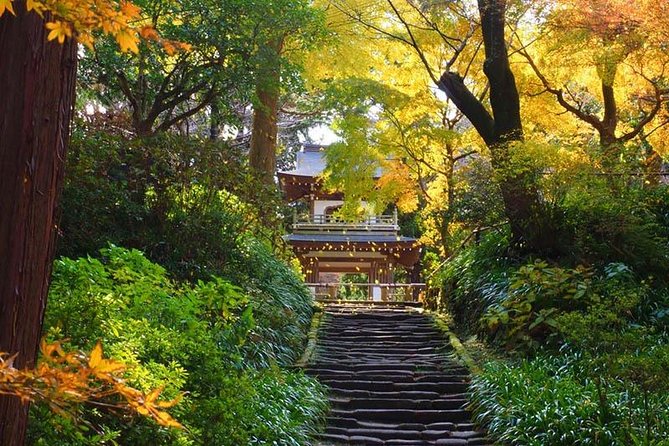
- Kamakura’s best mix: Combine a Zen temple, the Great Buddha, a shrine, and perhaps a bamboo grove or forest trail.
- Extra costs matter: Trains, buses, taxis, admission fees, meals, and personal purchases are separate.
- Walking is central: Pickup means meeting your guide on foot within the designated Kamakura area.
- Good seasonal choices: Meigetsuin is known for hydrangeas, while Hokoku-ji is prized for its small bamboo grove.
Why a private guide helps in Kamakura
Kamakura is close enough to Tokyo for an easy day out, yet its sights are spread among hills, streets, shrine grounds, and temple compounds. You can certainly visit independently, but a private guide saves you from treating the city like a checklist.
The biggest advantage is selection. You can tell your guide if the day should focus on Zen, Buddhist sculpture, gardens, samurai history, photography, hiking, or a mixture. The tour allows three or four sites from the larger menu, so the day has room for explanation instead of becoming a race between gates.
That choice also lets you match the day to the season. Meigetsuin is famous for hydrangeas, Hokoku-ji for bamboo, and the temple gardens have a different mood depending on the time of year. If you want the Great Buddha and Hasedera, you can build the day around Kamakura’s western side. If quiet Zen compounds appeal more, the northern temples make better sense.
The guide’s role goes beyond pointing out buildings. The supplied experience includes a licensed local English-speaking guide, and past guide assignments have included Kei, Kappa, and Seky. Kei helped one group understand architecture, culture, and customs. Kappa also guided a traditional lunch choice, including chilled wheat noodles called hiyashi udon. Those details show the value of asking for help with more than dates and names.
More Garden Tours in Japan:
- Osaka: teamLab Botanical Garden Entry Ticket
★ 4.5 · 1,710 reviews - Imperial Palace East Garden and Edo Castle Walking Tour in Tokyo
★ 5.0 · 510 reviews - Kyoto Zen Meditation & Garden Tour at a Zen Temple with Lunch
★ 5.0 · 441 reviews
The five great Zen temples: Engaku-ji to Jomyo-ji
Engaku-ji is one of Kamakura’s leading Zen temples and ranks second among the city’s five great Zen temples. It was founded in 1282 by Hojo Tokimune, the ruling regent at the time. The listed visit is only 10 minutes, which feels more like a short introduction than a full exploration, so ask your guide about spending longer here if this is a priority.
Kencho-ji ranks first among the five great Zen temples and was founded in 1253 during the Kencho Era by Hojo Tokiyori. It is described as Kamakura’s oldest Zen temple. With a suggested 30-minute visit, you have enough time for a useful orientation, though not an unhurried examination of every part of the grounds.
Meigetsuin, also called Hydrangea Temple, belongs to the Rinzai Zen sect and dates to 1160. Its common name comes from the abundance of hydrangeas on the grounds. This is a strong choice if you want seasonal flowers and a temple setting with a clear visual identity. During peak bloom, the site may be especially appealing, but your guide can help decide if it fits your chosen three or four stops.
Jochiji is the fourth of the five great Zen temples and a branch temple of the Engaku-ji school of Rinzai Zen Buddhism. Its suggested 30 minutes make it a useful companion to Engaku-ji or Kencho-ji if you want to compare different temple grounds without spending the entire day at one complex.
Jomyo-ji is the fifth of the five great Zen temples. It sits in the hills of eastern Kamakura and was founded by the influential Ashikaga family. Choose it if you want a temple setting away from the most obvious city sights. Its eastern location also pairs naturally with Hokoku-ji.
Hokoku-ji’s bamboo and Kamakura’s smaller temples
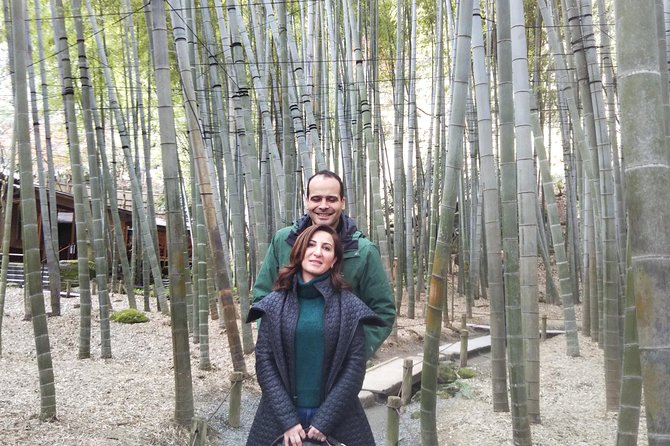
Hokoku-ji is best known for its compact bamboo grove behind the main hall. More than 2,000 dark green bamboo stalks fill the area, with narrow paths running through them. This is one of the easiest stops to picture before booking, but its small size is also worth remembering. You are visiting a focused grove, not a huge forest.
The tour information lists 30 minutes here, a sensible amount for seeing the grove and taking in the setting. If bamboo is your main reason for coming, ask whether the schedule allows enough time for a calm visit rather than a quick stop between larger temples.
Tokeiji is a small branch temple of the Engaku-ji school of Rinzai Buddhism. It is only a few hundred meters from Engaku-ji, making the two useful companions if you prefer a concentrated northern Kamakura route. The listed time is 10 minutes, so this is better as a brief atmospheric stop than the main event.
Jufukuji is the third of the five great Zen temples and belongs to the Rinzai sect’s Kencho-ji school. It was established by order of Minamoto Yoritomo’s wife, Masako. A 10-minute visit gives you a quick look, but the site’s place in Kamakura’s political and religious story makes it worth discussing with your guide.
Eishoji is the only surviving nunnery in Kamakura. It was founded in the early Edo period by a woman connected to the Tokugawa family and is known as a temple associated with flowers. This offers a different angle on Kamakura’s religious sites, especially if you want more than the city’s best-known male-led Zen institutions.
The Great Buddha and Hasedera
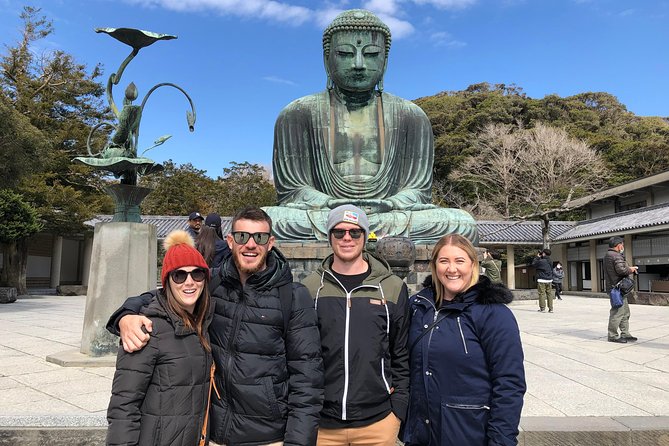
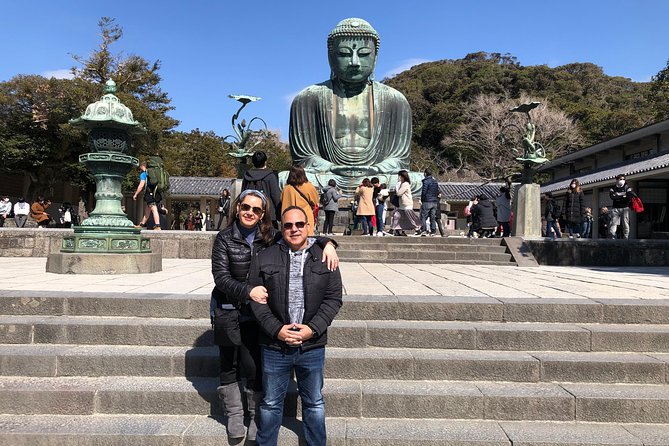
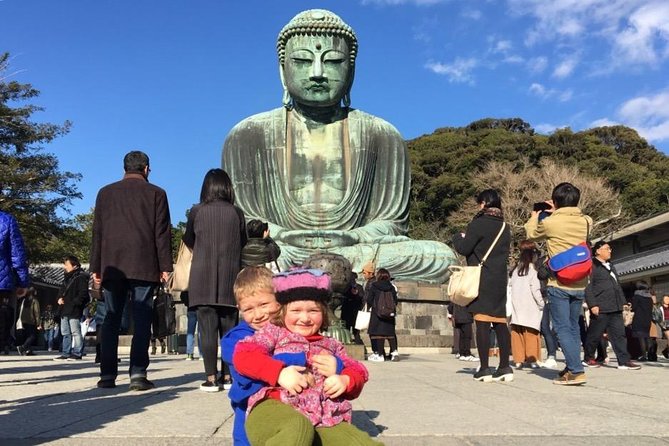
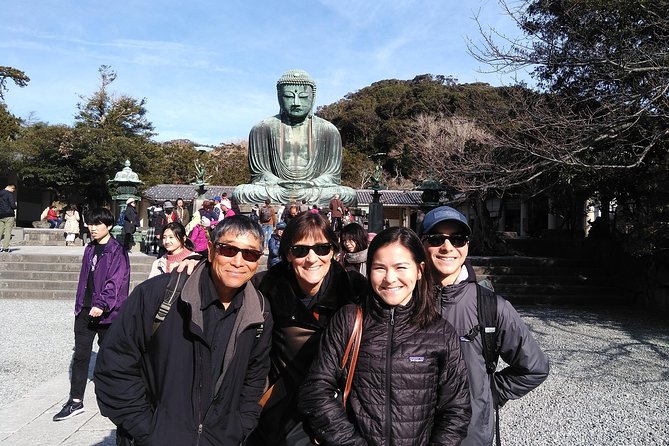
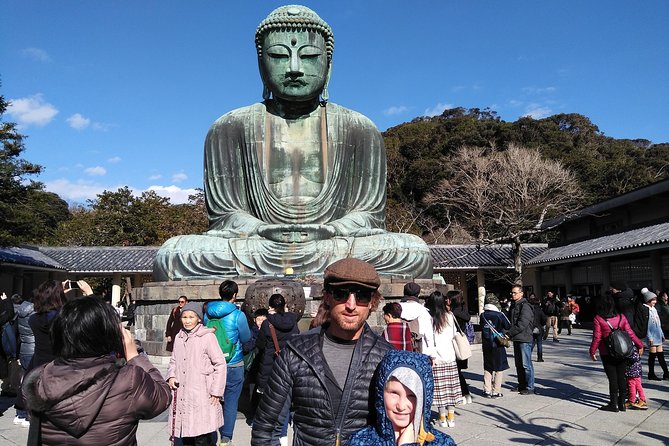
Kotoku-in, home of the Great Buddha of Kamakura, is the most instantly recognizable stop on the menu. The bronze Amida Buddha measures 11.4 meters high and has long been regarded as Japan’s second-tallest Buddha statue. The listed visit is 30 minutes, enough for the main sight and an explanation of its setting.
The statue is outdoors on the grounds of Kotoku-in, which gives the stop a different feel from the enclosed temple halls. I would pair it with Hasedera if sculpture and Buddhist devotion interest you, though you need to remember that both admission fees are extra.
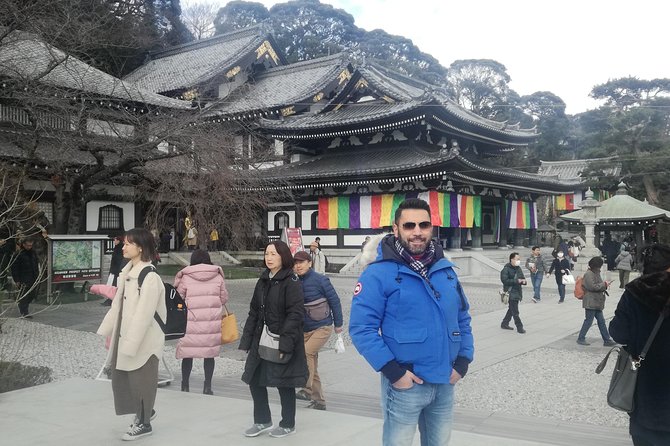
Hasedera belongs to the Jodo sect and is famous for its 9.18-meter gilded wooden statue of Kannon, the goddess of mercy. The eleven-headed figure is one of Japan’s largest wooden sculptures. The listed 10-minute stop is brief, so you should make your wishes clear before the day begins if this is one of your essential sites.
One practical route described by a guide began at the JR Kamakura Station ticket gate, continued by bus to Kotoku-in, and then went to Hasedera. That arrangement shows why a private guide can help: the day is not limited to a fixed walking loop. Still, bus fares and other transportation costs are yours to pay.
Same place, a different sort of green day out:
- Mt. Fuji Day Trip from Tokyo with English Speaking Driver Guide
★ 5.0 · 443 reviews - Kyoto Arashiyama Bamboo forest & Garden Half-Day Walking Tour
★ 5.0 · 413 reviews - Tokyo: Imperial Palace East Gardens Walking Tour
★ 4.8 · 353 reviews - Mt. Fuji, Cherry Blossom & Shiba Sakura Pvt. Day Tour
★ 5.0 · 326 reviews
Shrines, money washing, and old Kamakura
Tsurugaoka Hachimangu Shrine is dedicated to Hachiman, patron deity of the Minamoto family and the samurai in general. It connects Kamakura’s religious life with its warrior past. The suggested visit is only 10 minutes, so consider it an orientation stop unless the shrine is one of your main interests.
Zeniarai Benten Shrine offers one of Kamakura’s more unusual customs. Visitors wash money at the shrine’s spring, based on the belief that washed money will multiply. The suggested 30 minutes gives you time to understand the practice rather than simply pass through.
Ankokuronji Temple is one of the Nichiren temples in the hills of southeastern Kamakura. Nichiren founded it around 1253 when he first came to Kamakura. With only 10 minutes listed, this is a short stop, but it adds a different Buddhist tradition to a day otherwise weighted toward Zen.
Myohonji is another Nichiren temple in the southeastern hills. Hiki Yoshimoto founded it in 1260. Like Ankokuronji, it is scheduled for only 10 minutes, so these sites work best for someone who wants a brief look at Kamakura’s wider religious mix.
Zuisen-ji, hiking trails, and Enoshima
Zuisen-ji is a Zen temple in the far east of Kamakura, at the back of a narrow valley surrounded by wooded hills. It is a branch temple of Engaku-ji and was founded by a Zen priest known for garden design. The 30-minute visit gives this quieter site more room than several smaller stops.
The Kamakura hiking trails run through wooded hills and connect atmospheric temples. The listed 10 minutes likely functions as a short introduction rather than a full hike. If you want real time on the trails, confirm the route and adjust the temple count. You cannot sensibly combine every listed sight with a long walk in six hours.
Enoshima Island lies a short train ride west of Kamakura and connects to the mainland by bridge. It has a shrine and other attractions, with a pleasantly tourist-oriented feel. The 30-minute allocation makes this a quick taste rather than a full island visit. Transportation also costs extra, so choose Enoshima only if its coastal setting matters more to you than another Kamakura temple.
Timing, walking, and extra costs
The advertised duration is about six hours, but the actual feel depends on your choices. Three nearby temples can produce a calm, discussion-filled day. A combination of eastern Kamakura, the Great Buddha, Hasedera, and Enoshima involves more movement and leaves less time at each stop.
This is a walking tour, and pickup is on foot within the designated Kamakura area. The description does not include private transportation. One past arrangement involved a private car and driver, Mikami, meeting a group at its hotel in Yokohama, but that was pre-arranged separately. Do not assume a car is included in the standard price.
At $153.11 per person, the value depends on group size and your priorities. A private guide is easier to justify for a small group that wants cultural context, a tailored route, or help choosing between many sites. It is less attractive if you simply want to see the Great Buddha quickly and can manage local transport and admission fees yourself.
Budget separately for trains or buses, entrance fees, lunch, and personal expenses. The guide’s admission is covered only for sights listed under the tour’s included sites. Ask about the exact plan and expected costs before setting out.
Who should book this private day
I would recommend this experience to a first-time visitor who wants Kamakura explained, not merely photographed. It also suits families or small groups with different interests, since the guide can help build a plan around three or four chosen stops.
It is a good fit for anyone who enjoys temples, gardens, Buddhist art, shrine customs, or a short forest walk. The private format also helps on difficult weather days. Kappa described guiding a group through rain, when the visitors still appreciated the natural setting and continued with the plan.
You should think twice if you want to visit nearly every location listed. The list is extensive, but the tour includes only three or four chosen sites. You should also think twice if you need door-to-door transportation, since the standard arrangement is to meet and move around on foot or by public transport at your own expense.
The cancellation terms are fair: you can receive a full refund by canceling at least 24 hours before the start time. Changes or cancellations within 24 hours are not accepted for a refund. Most people can participate, and service animals are allowed.
Should you book the Kamakura Zen temples tour?
Book it if you value personal planning and explanation more than the lowest possible day-trip price. The best version of this experience is not a frantic sweep through 18 attractions. It is a thoughtful combination, such as Engaku-ji and Kencho-ji for Zen, Hokoku-ji for bamboo, or Kotoku-in and Hasedera for Buddhist sculpture.
Before booking, decide your top three sights and ask the guide to build around them. If you do that, the six-hour format can give you a richer understanding of Kamakura than an independent route built only around famous photographs. If you want a simple, inexpensive visit with no guide and no extra planning, use the train and see one or two major sites on your own.
FAQ
How long does the Kamakura private tour last?
The tour lasts approximately six hours.
How many sights can I visit?
The tour includes a customizable walking tour of your choice of three or four sites from the listed attractions.
Is this a private tour?
Yes. Only your group participates in the activity.
Is an English-speaking guide included?
Yes. A licensed local English-speaking guide is included.
Is transportation included?
No. Transportation fees and private transportation are not included. The standard tour is a walking activity, with pickup on foot within the designated Kamakura area.
Are entrance fees included?
No. Entrance fees are extra. The guide’s entry fees are covered only for sights listed under the tour’s included attraction list.
Is lunch included?
No. Lunch and other personal expenses are not included.
Can I visit the Great Buddha?
Yes. Kotoku-in, home of Kamakura’s 11.4-meter bronze Great Buddha, is one of the available stops.
Can I cancel for a full refund?
Yes. You must cancel at least 24 hours before the experience start time for a full refund. Cancellations or changes made less than 24 hours before the start time are not accepted for a refund.
Just added around Japan
- Private tour – Scenic Fuji Escape: Hakone, Peace Park & More★ 5.0 · 4 reviews
- Tsukiji Food Strolling and Hama Rikyu Garden Walking Tour★ 5.0 · 7 reviews
- Tokyo: Serene Sakura & Sake: An Exclusive Brewery Pairing Lunch★ 5.0 · 2 reviews
- TOKYO: Tailored Gardens tour with Pro Gardener by E-bike -BASIC★ 5.0 · 2 reviews
- Full Guided Mt. Fuji & Shiba-Sakura Festival One Day Pvt.Tour★ 5.0 · 6 reviews
- Tokyo Cherry Blossom Half Day Walking Tour with a Local Guide★ 3.5 · 4 reviews
- Cherry Blossom Highlights, Asakusa, Ueno, Imperial Palace Garden★ 4.5 · 4 reviews
- Licensed Guide Tokyo Meguro Cherry Blossom Walking Tour★ 4.5 · 13 reviews
Japan Garden Tours, compared.
Imperial Palace East Garden and Edo Castle Walking Tour in Tokyo
Read our review →
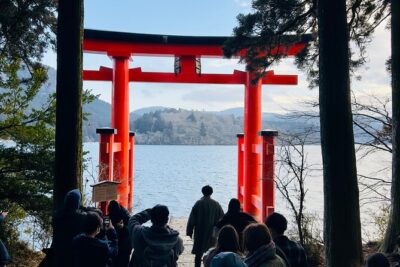
Mt. Fuji Day Trip from Tokyo with English Speaking Driver Guide
Read our review →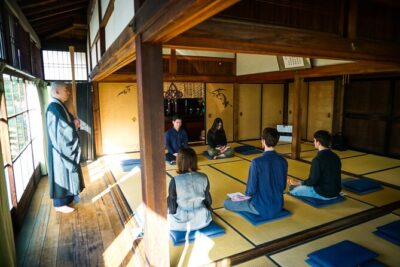
Kyoto Zen Meditation & Garden Tour at a Zen Temple with Lunch
Read our review →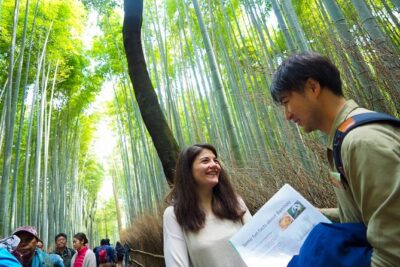
Kyoto Arashiyama Bamboo forest & Garden Half-Day Walking Tour
Read our review →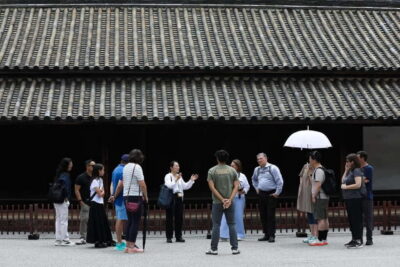
Edo Castle & East Garden of the Imperial Palace Tour
Read our review →Browse the lists this tour appears in