
Review · KYOTO
Kyoto: Shakyo & Matcha in Historic Temple Garden
Slow down in Kyoto’s temple country. This 150-minute visit to Sennyu-ji combines shakyo, the careful copying of a Buddhist sutra, with matcha and seasonal wagashi in a historic temple garden. I like the quiet pace and the small group, limited to 10 people.
I also like that the experience gives you more than a quick temple visit. You walk from Tofukuji Station, learn about Kyoto’s Buddhist culture, and spend real time sitting with a brush and ink. The main consideration is physical: shakyo usually takes 60 to 90 minutes, and you need to sit quietly in a historic setting. It is not suitable for children under 10, wheelchair users, or people with mobility impairments.
Key points to know before booking
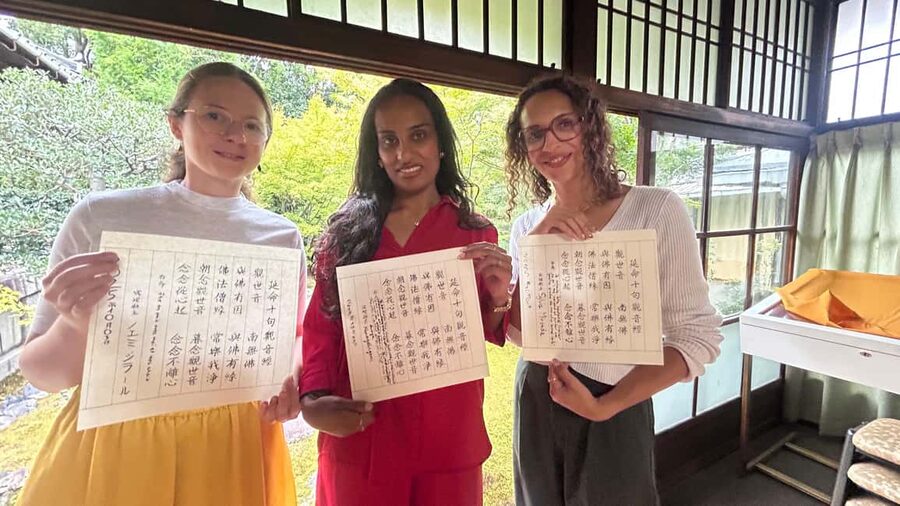
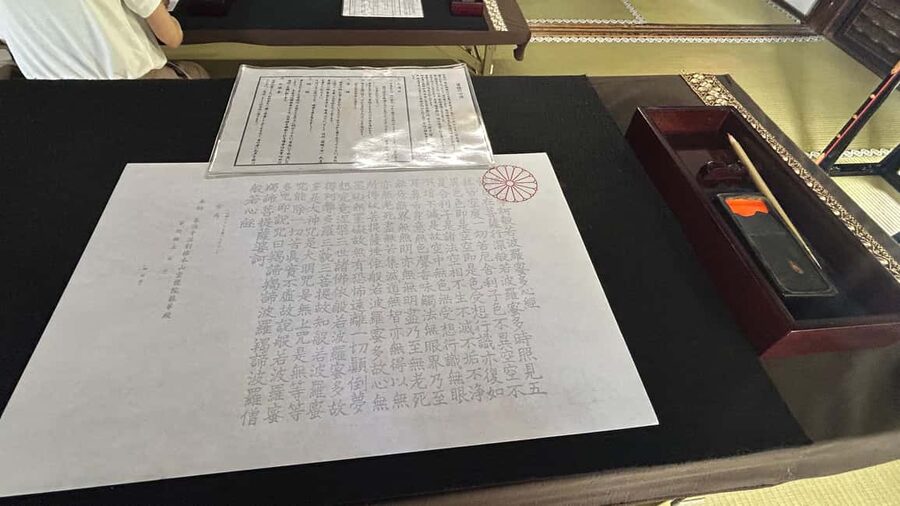
- Shakyo is the heart of the visit: You copy a Buddhist sutra by hand using provided brushes, paper, and ink.
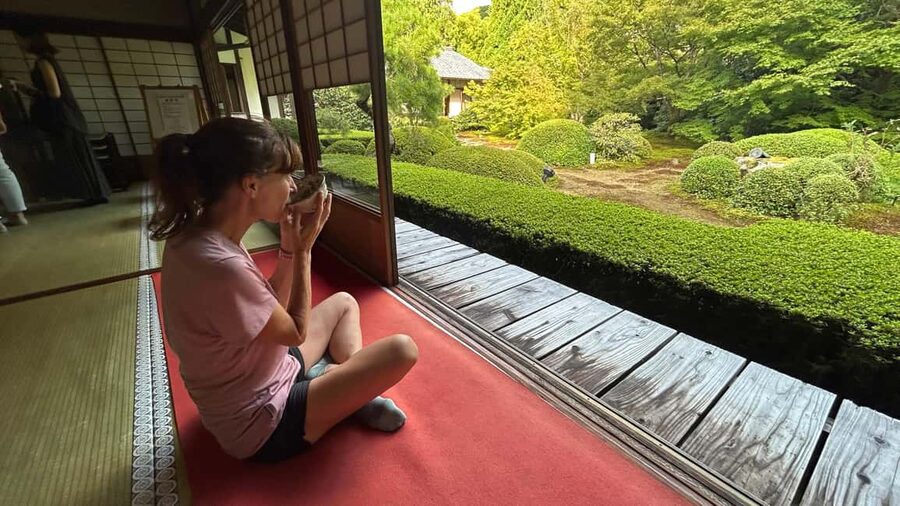
- Sennyu-ji offers a peaceful setting: The temple is an Important Cultural Property, with quiet rooms, incense, birdsong, and a carefully designed garden.
- Matcha comes with seasonal wagashi: The tea and sweet provide a gentle finish after the focused writing session.
- The walk is part of the plan: Allow about 15 minutes on foot from Tofukuji Station to the temple, then another 15 minutes back.
- The group stays small: A maximum of 10 participants makes it easier to follow the English guide and ask questions.
- The pace favors calm over sightseeing speed: This is best for a break from a packed Kyoto schedule, not for ticking off many attractions.
Why this Sennyu-ji experience feels different
Kyoto has plenty of temples where you can enter, take a few photos, and move on. This visit asks you to do something instead: sit down, hold a brush, and copy a Buddhist text one character at a time.
That change matters. Shakyo is not presented as a calligraphy class or a race to produce perfect handwriting. It is a traditional Buddhist practice built around attention and reflection. You follow the text carefully, keep your movements measured, and allow the room to become quieter in your mind.
The setting helps. During the session, you can expect a cozy, peaceful space, the gentle scent of incense, and natural sounds such as birdsong. Photography may be limited in some temple areas, so you should be ready to put your phone away and respect the mood of the place.
Sennyu-ji is designated as an Important Cultural Property, which gives the visit a stronger sense of place than a generic tea-and-crafts activity. You are learning about Kyoto’s Buddhist traditions inside a working historic environment, not in a modern studio designed to look old.
More History Visits in Kyoto:
- Aboriginal Heritage Walk – Royal Botanic Gardens Victoria, Melbourne Gardens
★ 5.0 · 314 reviews - Beijing Historical Tour II including Summer Palace, Lama Temple & Panda Garden
★ 4.0 · 187 reviews - Authentic Amalfi Lemon Tour & Tasting in the Historical Garden
★ 5.0 · 52 reviews
Starting at Tofukuji Station
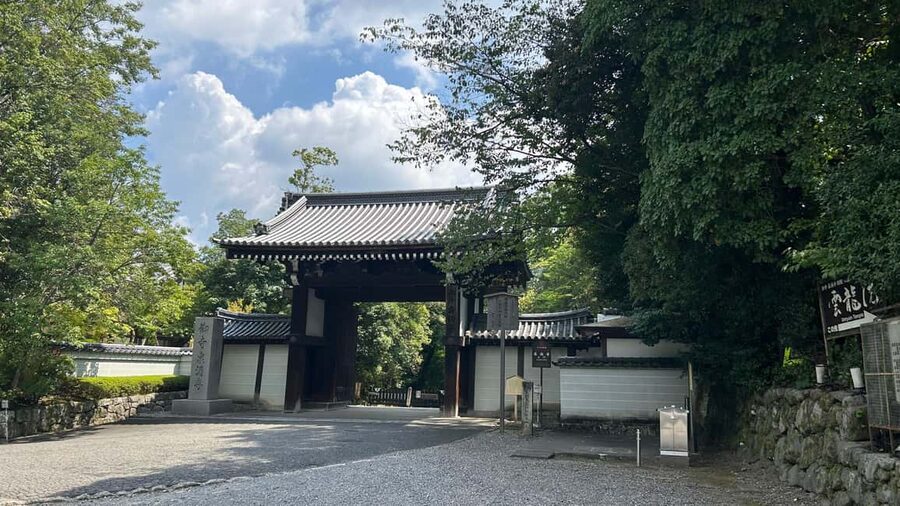
The meeting point is at the East Gate of Keihan Tofukuji Station. Look for the guide with a yellow fluorescent band on their bag. That detail is useful because station exits can be confusing, especially if you are arriving after a full day of sightseeing.
From the station, you walk for about 15 minutes to Sennyu-ji. The walk is short by Kyoto standards, but you should wear comfortable shoes. This is not a door-to-door activity, and the route forms part of the transition from the city to the temple grounds.
The return walk also takes about 15 minutes, bringing the full walking time to roughly 30 minutes. Add that to the 60 to 90 minutes spent copying the sutra and the time for the temple visit, guide talk, garden views, and tea. The advertised duration is 150 minutes, so you should keep the rest of your day reasonably flexible.
The group is limited to 10 participants. That size is a real advantage for a quiet activity. You are less likely to feel lost during the instructions, and there should be a better chance to ask the guide about the temple, the practice, or Kyoto’s cultural background.
Entering a historic temple garden
At Sennyu-ji, the visit combines a guided temple tour with scenic views and the shakyo session. The temple’s designation as an Important Cultural Property gives the stop cultural weight, but the appeal is not only architectural.
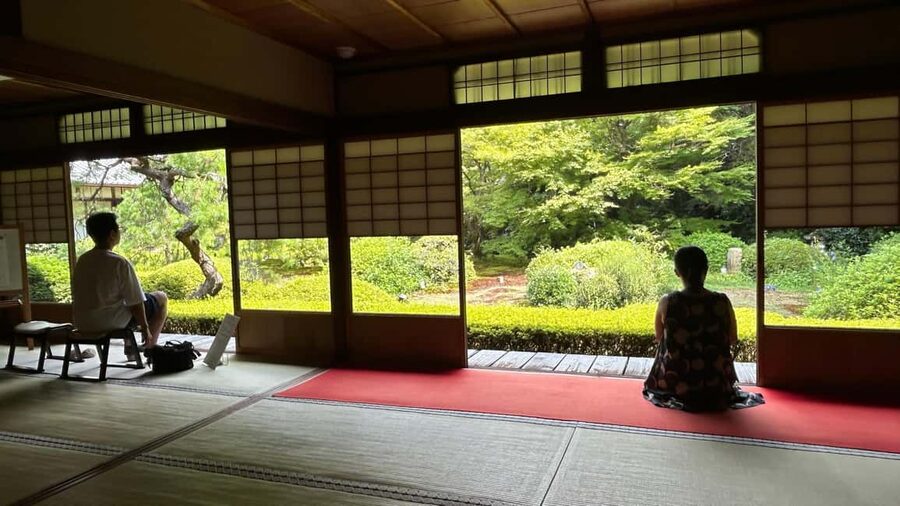
The garden is designed to encourage harmony and calm. After the focused writing, you can look out over the garden while drinking matcha. That pairing makes sense: the writing settles your attention, and the garden gives your eyes somewhere quiet to rest.
The garden visit will appeal most to people who enjoy atmosphere over a long list of sights. You are not being promised a full tour of every corner of the temple complex. Instead, the experience gives you time to notice the design, listen to the surroundings, and learn why the site matters.
Photography can be restricted in certain interior areas. I see that as a small inconvenience rather than a serious flaw. If you want to document every step, this may feel limiting. If you are willing to let the temple set the rules, the restriction helps protect the peaceful character of the room.
What happens during shakyo
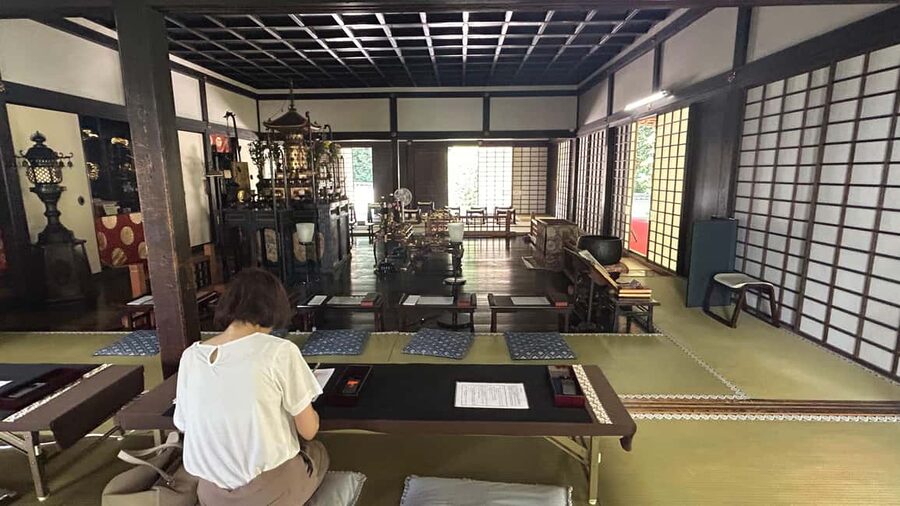
The materials are supplied, including the brush, paper, and ink. You do not need to bring calligraphy equipment or prepare in advance.
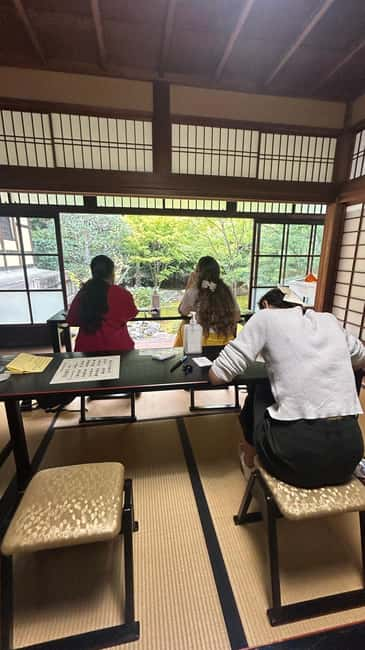
The guide introduces the activity and explains the basic process. You then copy a Buddhist sutra by hand. The session normally lasts between 60 and 90 minutes, depending on your writing speed. That range is important. Someone who writes slowly or carefully may spend much of the experience at the table, while a faster writer may finish sooner.
You do not need to treat this as an exam. The value is in the act of paying attention, not in producing a flawless page. If you have never used a Japanese brush before, the first few strokes may feel awkward. That is part of the experience, and the calm setting gives you room to settle into it.
Wear clothing that is comfortable for sitting quietly. The instructions specifically warn against treating this like a quick standing activity. Anyone with difficulty sitting for an extended time should think carefully before booking.
The practice may also be a welcome pause in a packed itinerary. Kyoto days can involve station platforms, crowded lanes, long walks, and a steady stream of temples. Shakyo gives you a fixed place and a clear task. For some people, that will be the most valuable part of the afternoon.
More Garden Tours in Kyoto:
- Kyoto Zen Meditation & Garden Tour at a Zen Temple with Lunch
★ 5.0 · 441 reviews - Kyoto Arashiyama Bamboo forest & Garden Half-Day Walking Tour
★ 5.0 · 413 reviews - Kyoto Kiyomizu Tea Ceremony with Scenic Garden Views
★ 5.0 · 101 reviews - Kyoto: Private Tea Ceremony with a Garden View
★ 4.9 · 61 reviews
Matcha and seasonal wagashi in the garden
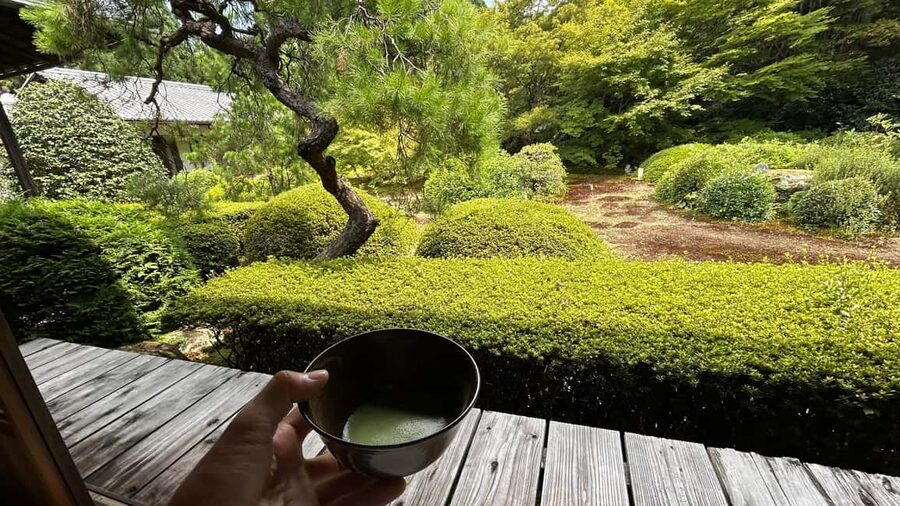
After shakyo, you receive freshly prepared matcha with a seasonal wagashi sweet. The combination is simple but well chosen.
Matcha has a concentrated, slightly bitter flavor. Wagashi provides the sweet balance, and its seasonal nature means the exact offering may vary. You should not book this expecting a large meal. It is a traditional refreshment and a moment to sit, look at the garden, and continue the conversation with the guide.
This portion also gives you a natural break after the writing. You can shift from concentration to observation, taking in the temple surroundings while learning more about Kyoto’s cultural background.
The tea service is included in the $35 price, along with the sweet, temple admission, the guided visit, and all shakyo materials. At that price, the value is strongest if you want a structured cultural activity rather than a simple temple entrance. You are paying for access, instruction, context, and time in a peaceful setting.
If you mainly want to see Sennyu-ji quickly, $35 may feel less attractive. The experience is built around participation. Its value comes from the full sequence: walking to the temple, learning, copying, drinking tea, and reflecting in the garden.
The guide and the cultural background
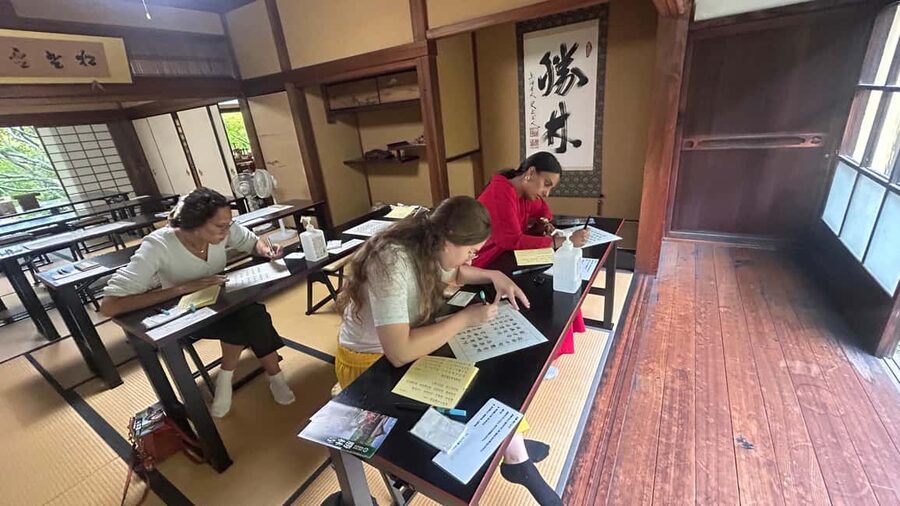
The English-speaking guide explains the temple’s place in Kyoto and provides context about Buddhist culture. The guide is also there to make the activity less intimidating, especially if you are unsure how to approach shakyo.
One useful detail from the feedback is that the guide helped participants with suggestions for planning the rest of their day. That kind of practical local advice can be worthwhile in Kyoto, where nearby temples, stations, and walking routes can be difficult to fit together.
The experience also received praise for its calm and professional guiding. That matters here more than it would on a fast sightseeing tour. A loud, hurried presentation would work against the purpose of the visit. You want someone who can explain the traditions clearly without turning the quiet room into a lecture hall.
The tour is offered in English. If cultural explanation is a major reason you are booking, the small group should make it easier to hear and ask questions. The supplied information does not list other languages, so English is the safe choice when planning.
Who will enjoy the 150-minute format
I would recommend this experience to you if you want a slower cultural activity between more active Kyoto sightseeing days. It suits solo visitors, couples, friends, and adults who enjoy hands-on traditions and quiet spaces.
It is especially useful for:
- People who want to understand a temple rather than only photograph it
- Visitors interested in Buddhist customs and Japanese tea
- Anyone looking for a calm break from a busy itinerary
- First-time visitors who appreciate an English explanation
- Those who enjoy gardens, seasonal sweets, and reflective activities
The format is less suitable if you want constant movement or a long list of attractions. The shakyo session takes up a large share of the time, and the activity depends on sitting quietly.
It is also not suitable for children under 10. Pets, baby strollers, luggage, and large bags are not allowed. Electric wheelchairs and baby carriages are also not permitted. People with mobility impairments and wheelchair users should choose another activity because the experience is not designed for those needs.
Practical timing and what to bring
Plan to meet at the East Gate of Keihan Tofukuji Station, not directly at the temple. Arrive with enough time to find the guide and the yellow fluorescent band on the bag.
Wear comfortable clothing. You may be seated quietly for 60 to 90 minutes, so restrictive clothing could make the session less pleasant. Comfortable walking shoes also make sense because you walk approximately 15 minutes each way.
Leave luggage and large bags elsewhere. The activity does not allow them, and the temple setting is not the place for bulky belongings. You should also expect photography limits in certain areas.
No special shakyo supplies are needed. Brushes, paper, and ink are provided. Matcha and wagashi are included, though the exact sweet may change with the season.
The experience offers free cancellation up to 24 hours before the start time for a full refund. You can also reserve now and pay later, which helps if your Kyoto schedule is still taking shape.
How the reviews match the experience
The feedback is uniformly positive, with a perfect rating from four reviews. The strongest themes are relaxation, the quality of the guide, the traditional garden, and the chance to slow down.
One person described it as a way to rest during a packed itinerary of exciting activities and long trips. That is a useful way to judge the experience. Its strength is not speed or spectacle. It gives you two and a half hours with a clear rhythm and little pressure.
Another participant praised the guide for sharing cultural and historical background, then offering tips for the rest of the day. That suggests the guide can add value beyond the formal schedule.
The feedback also points to the temple itself as a major attraction. Sennyu-ji is not being used as a backdrop for a generic workshop. The temple, the garden, and the quiet surroundings are central to the experience.
Because there are only four published reviews, I would not treat the perfect score as a guarantee for every person. Still, the praise is consistent with what the activity promises: a calm setting, helpful guiding, and a meaningful connection to Japanese tradition.
Is this Kyoto experience worth $35?
At $35 per person, this is a reasonable price for a two-and-a-half-hour guided cultural activity that includes admission, shakyo supplies, matcha, wagashi, and an English-speaking guide.
The strongest value comes from the time spent at the temple. You are not simply buying a cup of tea or a short demonstration. You receive guidance through a traditional practice and time to appreciate the garden afterward.
The price may feel less worthwhile if you are already planning several temple visits and mainly want a quick look at Sennyu-ji. It also may not suit you if sitting quietly for up to 90 minutes sounds tiring rather than restorative.
For the right visitor, though, the cost is modest compared with the chance to take part in a practice that is difficult to replicate through ordinary sightseeing. The experience provides structure, cultural context, and a genuine pause in the day.
Should you book it?
Book this if you want Kyoto to feel slower, quieter, and more personal. You will get the most from it if you are willing to set aside your camera, sit patiently, and treat shakyo as a reflective practice rather than a craft project.
Skip it if you need wheelchair access, are traveling with a child under 10, need to carry luggage, or prefer active sightseeing with frequent stops. For everyone else, this is a strong choice for a calm half-day activity, especially after several busy days in Kyoto.
FAQ
How long does the Sennyu-ji experience last?
The experience lasts 150 minutes, including the walks between Tofukuji Station and Sennyu-ji.
Where is the meeting point?
Meet at the East Gate of Keihan Tofukuji Station. The guide can be identified by a yellow fluorescent band on their bag.
How long is the walk to Sennyu-ji?
The walk from Tofukuji Station to Sennyu-ji takes about 15 minutes. The return walk also takes about 15 minutes.
What is included in the shakyo session?
Brushes, paper, and ink are provided. The session usually takes about 60 to 90 minutes, depending on your writing speed.
Is matcha included?
Yes. The experience includes freshly prepared matcha green tea and seasonal wagashi, or Japanese sweets.
Is the tour available in English?
Yes. The experience includes a live English-speaking guide.
How many people are in the group?
The group is limited to 10 participants.
Can children join the experience?
Children under 10 are not permitted to join.
Is the experience wheelchair accessible?
No. It is not suitable for wheelchair users or people with mobility impairments. Electric wheelchairs are also not permitted.
Just added around Kyoto
- Stunning Private Tea Ceremony: Camellia Garden Teahouse★ 5.0 · 28 reviews
- Kyoto-Nara Adventures Private Tour With Hotel Pick Up★ 4.0 · 5 reviews
- Kyoto Hidden Treasures: Special Temple & Garden Access Tour★ 4.5 · 25 reviews
- Kyoto Japanese Garden Lover’s Private Tour with Government-Licensed Guide★ 4.5 · 10 reviews
- Guided Kyoto City Cherry Blossom One Day Private Tour★ 5.0 · 16 reviews
- Kyoto: Kinkaku-ji Temple & Serene Garden Guided Tour with Tickets★ 5.0 · 9 reviews
- Kyoto ITALIAN GUIDE Golden Pagoda Bamboo Forest Dry Garden★ 4.0 · 2 reviews
- The Art of Mindful Living: Tea Ceremony in Kyoto★ 5.0 · 16 reviews
Historical Tours, compared.
Aboriginal Heritage Walk – Royal Botanic Gardens Victoria, Melbourne Gardens
Read our review →
Beijing Historical Tour II including Summer Palace, Lama Temple & Panda Garden
Read our review →
Authentic Amalfi Lemon Tour & Tasting in the Historical Garden
Read our review →
Amalfi Organic Lemon Tour & Tasting in the Historical Garden
Read our review →
Charming Sintra on Private Guided Tour with History (All Day)
Read our review →
Bangkok Wat Pho and Flower Market Historical Walking Tour
Read our review →
The Limestone Heritage Park and Gardens (Entry Ticket)
Read our review →
Historic Charleston: The Battery, Rainbow Row, St. Michael Church
Read our review →Browse the lists this tour appears in