
Review · TOKYO
Tokyo Japanese Garden Lover’s Private Tour with Government-Licensed Guide
Tokyo hides calm places in plain sight. This six-hour private tour lets you choose three or four gardens and famous sites, with a licensed local guide explaining the rocks, plants, ponds, and Japanese ideas behind them. I like the flexible plan, and I like the chance to compare quiet Edo-era gardens with the Imperial Palace, Meiji Jingu Shrine, or Ueno Park. The main catch is that the $154.84 price does not include transport, entrance fees, lunch, or a private vehicle.
You meet your guide on foot within a designated part of Tokyo, then use the city’s public transport and your own feet to connect the stops. That makes this a more personal experience than a sightseeing bus, but it also means you should choose gardens in the same general area rather than trying to chase all 17 possibilities in one day.
Key points before you book
- Choose only three or four sites: The long list of gardens is a menu, not a promise that you will see every place in six hours.
- Expect a walking and train day: Pickup is on foot, transportation costs are extra, and no private vehicle is provided.
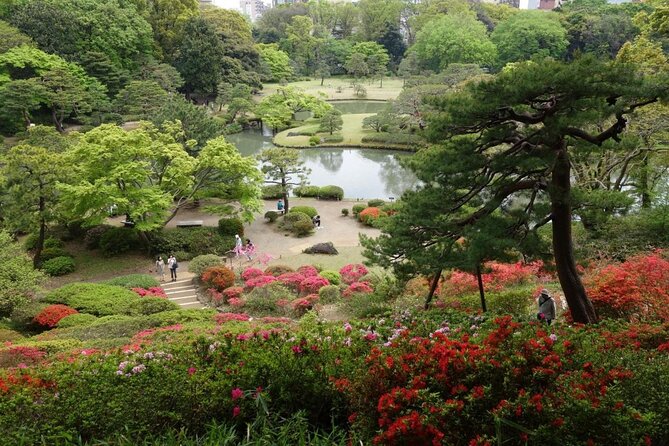
- Learn the meaning behind the scenery: Guides explain how rocks, plants, ponds, and garden layouts express traditional Japanese ideas and spirits.
- Compare very different settings: You can pair formal Edo gardens with Meiji Jingu’s wooded shrine grounds, Yoyogi Park, or the Imperial Palace area.
- Private guiding adds flexibility: Only your own group participates, and the route can be shaped around your interests.
- Guide quality is a major strength: Yuki, Minoru, Steve, Koji, Shuji, Keiko, and Nobuko are praised in customer feedback for clear English, preparation, warmth, and cultural explanation.
What the six-hour format really gives you
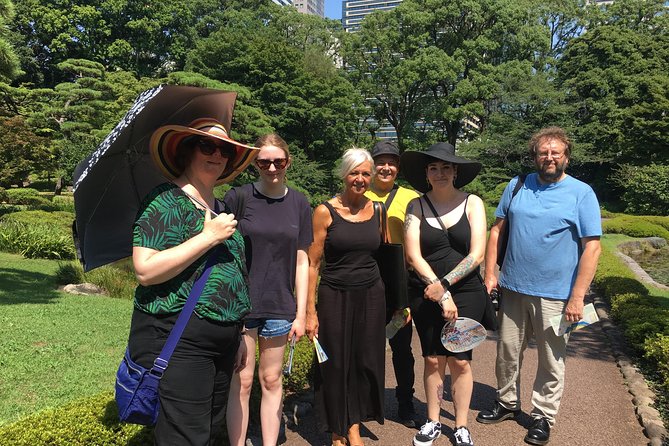
The tour is priced at $154.84 per person. That is not a bargain if you simply want to stroll through one garden and take photographs. It becomes better value when you use the guide’s local help to connect several places, understand what you are seeing, and navigate Tokyo’s transport system without losing half the day.
You are not paying for admission or a vehicle. You pay for a private guide who can adjust the day to your interests. The guide fee covers three or four chosen sites from the available list, but entrance fees and train or other transportation costs remain yours.
The six-hour limit matters. Several gardens are spread across Tokyo, and each deserves more than a quick ten-minute photo stop. The short times shown for some locations are best understood as possible stops during route planning, not a leisurely visit to every garden.
I would choose two or three gardens as the main focus, then add one major Tokyo sight nearby. For example, Rikugien and Koishikawa Korakuen make a strong garden-centered day, while Meiji Jingu can work well with Yoyogi Park and the Nezu Museum area.
More Japanese Gardens in Tokyo:
- Experience Crafting a Flower-Adorned Mini Japanese Garden
★ 4.7 · 15 reviews - Tokyo: Full-Day Japanese Garden Private Guided Tour
★ 4.6 · 13 reviews - Japanese Garden & Western Architecture: Akasaka exploration tour
★ 5.0 · 9 reviews
Imperial Palace East Garden and the former Edo Castle
The Imperial Palace area gives you a useful opening lesson in Tokyo’s past. The present palace occupies the former site of Edo Castle, with moats, huge stone walls, and broad parkland around it.
You cannot go inside the Imperial Palace on this tour. That is important to understand before booking. The value here is the setting, the castle remains, and the contrast between old defensive stonework and modern Tokyo.
The East Garden is especially suitable for a short visit because it gives you formal grounds and historic remnants without requiring a full palace tour. Ask your guide to explain how the site fits into the story of the Tokugawa shoguns and the city once known as Edo.
Shinjuku Gyoen, Meiji Jingu, and Yoyogi Park
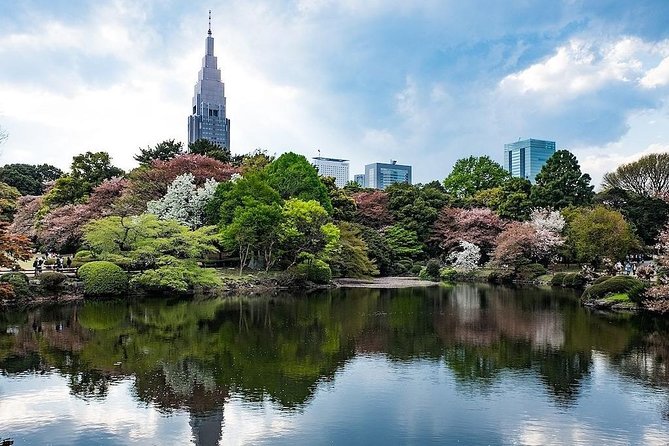
Shinjuku Gyoen National Garden offers a different mood. It is a large public garden with formal and natural sections, and it gives you a break from the dense city around Shinjuku. Admission is not included, so add that cost to your planning.
Meiji Jingu is free to enter and is dedicated to the deified spirits of Emperor Meiji and Empress Shoken. Its location beside Harajuku makes it easy to combine with other central Tokyo sights, but the shrine grounds feel far removed from the nearby shops and rail station.
I like this pairing because it shows two sides of Tokyo in a compact part of the city. Meiji Jingu offers a spiritual setting with wooded paths, while Yoyogi Park is a spacious Western-style public park with lawns, ponds, trees, and room for everyday city life.
Yoyogi Park appears twice in the available choices, but it is one place, not two separate visits. It is free, easy to reach, and particularly noted for its autumn ginkgo color. It is less formal than the paid gardens, so I would use it as a connecting stop rather than the main reason to book the tour.
Koishikawa Korakuen and Rikugien
Koishikawa Korakuen is one of Tokyo’s oldest and finest Japanese gardens. Built in the early Edo period for the Mito branch of the ruling Tokugawa family, it represents famous Japanese and Chinese scenes in miniature.
This is a strong choice if you want a garden with history, careful composition, ponds, bridges, and changing views. The entrance fee is extra. The garden is also listed twice among the possible stops, but it remains one location.
Rikugien is another top pick. Built around 1700 for the fifth Tokugawa shogun, its name refers to the six categories of Chinese poetry. It is often considered one of Tokyo’s most beautiful gardens, alongside Koishikawa Korakuen.
A customer described a day with Minoru that began at the Imperial Palace East Garden, continued to the Kagurazaka neighborhood for lunch, and finished at Rikugien. That gives you a sensible model: pair one major historic site with one intimate garden, and leave time for a meal or a short neighborhood break.
If garden design is your priority, I would select both Koishikawa Korakuen and Rikugien. They offer more depth than trying to collect a string of quick stops.
More Garden Tours in Tokyo:
- Imperial Palace East Garden and Edo Castle Walking Tour in Tokyo
★ 5.0 · 510 reviews - Tokyo: Imperial Palace East Gardens Walking Tour
★ 4.8 · 353 reviews - Tokyo: Edo Castle & East Garden of the Imperial Palace Tour
★ 4.7 · 112 reviews - Tokyo Private Tour! Edo Castle & Imperial Palace East Gardens
★ 5.0 · 105 reviews
Hama Rikyu and Kyu Shiba Rikyu
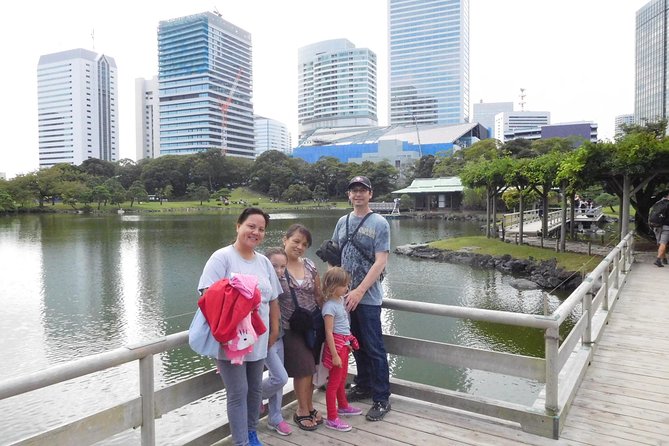
Hama Rikyu is a large garden beside Tokyo Bay. Its seawater ponds change with the tides, and a teahouse adds a traditional detail to the setting. The water connection gives Hama Rikyu a different character from the inland gardens.
It is a good choice if you want a garden that shows how Tokyo’s old estates worked with the bay and tidal water. Admission is extra, and you should not expect the full value of the garden from a rushed ten-minute visit.
Former Shiba Rikyu Garden, also called Kyu Shiba Rikyu, is a smaller green refuge surrounded by tall buildings. It has a pond and man-made hills, and it once belonged to feudal lords before becoming an imperial villa.
This is one of the clearest places to see old garden planning against modern Tokyo. The contrast is the point. If you enjoy intimate gardens more than grand public parks, Kyu Shiba Rikyu may suit you better than Hama Rikyu.
Kiyosumi Teien and the beauty of stones
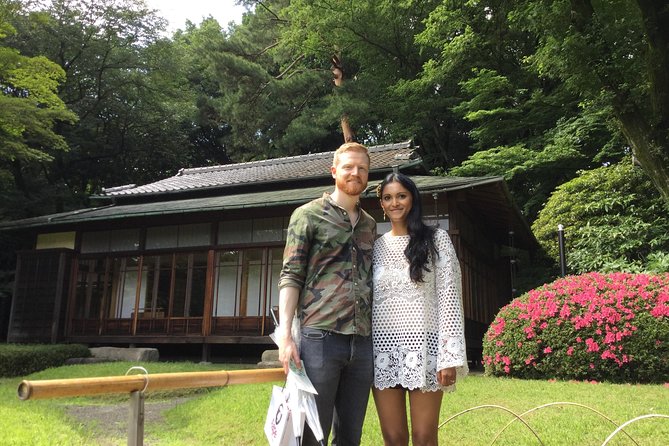
Kiyosumi Teien has walking paths around a central pond, with parts of the route crossing stones set into the water. It is a good choice for anyone interested in how Japanese gardens guide your movement and frame views.
The stones are not random decoration. Your guide can help explain how rocks, water, plants, and borrowed views work together. The tour also presents rocks and plants as representations of traditional Japanese spirits, which adds a cultural layer to what might otherwise look like simple gardening.
Keiko’s guiding style received particular praise for drawing attention to details such as the changing colors of wet stones and koi in the pond. That suggests why a guide can add value here. You may notice the scenery on your own, but an explanation helps you see why the arrangement matters.
Kiyosumi Teien requires an admission fee. Give it enough time to walk around the pond rather than treating it as a quick photograph stop.
Nezu Museum, Happo-en, and Mejiro Garden
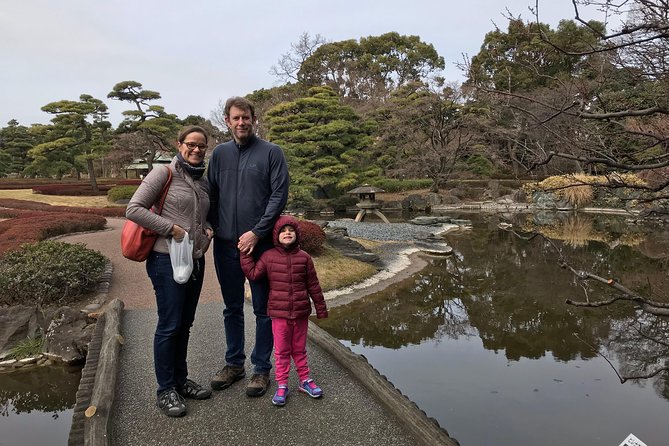
The Nezu Museum in Omotesando combines art and garden scenery. Its garden is described as an urban oasis and was once part of the private residence of Nezu Kaichiro. Admission is not included, and the museum itself may appeal if you want to link Japanese art with garden design.
Happo-en means the Garden of Eight Views, named for its appeal in all seasons and from many angles. The grounds are used as a striking setting for photographs and ceremonies. Its appeal is visual and carefully arranged, so it may suit you if you want a polished garden visit rather than a large public park.
Mejiro Garden is smaller, peaceful, and free. It sits near Ikebukuro Station and offers an easy break from the city. I would choose it if you prefer a quiet oasis and do not need a famous name attached to every stop.
These three choices also show the range of the tour. You can visit a museum garden, a formal photo setting, or a modest neighborhood garden. The guide can help match the choice to your pace and interests.
Ueno Park and Koishikawa Botanical Garden
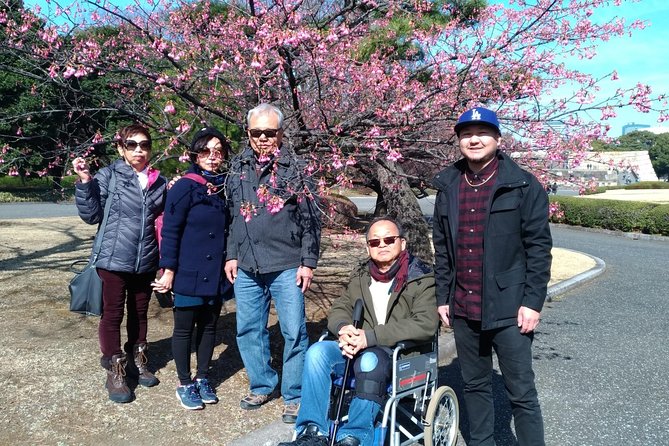
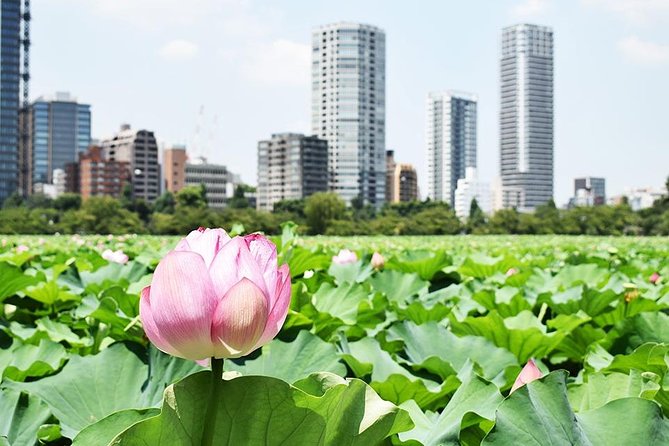
Ueno Park is not a single garden in the formal Japanese sense. It is a large public park with museums, a zoo, Toshogu Shrine, and Shinobazu Pond. It is also famous for cherry blossom parties.
Choose Ueno if you want culture and variety rather than a focused garden study. There is plenty to see, but that can also make it a poor choice if your only goal is quiet garden design. The park itself is free, though museums and other attractions may charge separately.
Koishikawa Botanical Garden is maintained by the University of Tokyo. It contains many tree and plant species and a small Japanese garden. It is especially appealing during cherry blossom season, but admission is extra.
This garden is a useful choice for people who care about plants as much as architecture and ponds. It is less about grand historical display and more about botanical variety. Pair it with Koishikawa Korakuen only if you are happy to spend much of the day in the same general part of Tokyo.
What the guides add to the day
The guides are multilingual National Government licensed local guides with interpreter certification. That matters most when you want cultural explanation, not just directions between gates.
Yuki was praised for clear English and for explaining subtle points in the gardens while discussing Japanese culture along the way. Steve tailored a day closely around a guest’s requests and paid careful attention to the details of the route. Koji was praised for preparation, communication, and explaining the contrast between serene gardens and busy Tokyo.
Shuji brought a personable and informative approach, while Keiko helped with the complicated transport system and led a garden day that included Kiyosumi and Happo-en. Nobuko supplied educational material that made the garden visits easier to understand and connected the day with other cultural activities.
You cannot select all these guides as a guaranteed choice from the information provided. Still, the repeated praise points to a clear strength: the experience depends heavily on the individual guide, and the guide is usually the reason the day feels special rather than like a checklist.
Walking, transport, and practical limits
This is a walking tour with pickup on foot. There is no private vehicle. You pay your own transportation fees, and the guide’s entry fees are covered only for sights listed among the included choices.
Most people can participate, and service animals are allowed. The tour operates near public transportation, which is useful because the gardens are spread across different parts of Tokyo.
Wear comfortable shoes and keep your route realistic. Tokyo’s trains can be efficient, but station transfers and walking between platforms take time. A private tour does not remove the city’s distances.
The tour is for one private group only, and separate tour groups cannot be combined. That gives you room to ask questions and adjust the pace, but group discounts may matter if several people are booking together.
Free cancellation is available up to 24 hours before the start time. Changes or cancellations inside that window are not accepted for a refund.
Who will get the most from this garden tour?
I would recommend it most strongly to first-time Tokyo visitors who want more than famous crossings and shopping streets. It also suits repeat visitors who have already seen the headline sights and want help finding a thoughtful route through Tokyo’s gardens.
Garden enthusiasts will appreciate the range, from Edo-period estates to botanical grounds and shrine precincts. People who enjoy Japanese culture but do not know how to read garden design will benefit from the explanations of rocks, plants, ponds, and symbolism.
It is less suitable if you want a slow full-day visit to one garden, a vehicle-based tour, or a package with entrance fees and lunch included. The price makes sense when the guide’s interpretation and route planning are central to your day.
Should you book it?
Book this tour if you want a private, flexible introduction to Tokyo’s gardens and are willing to walk, use public transport, and pay extra admission costs. Choose three or four sites before the day begins, then ask your guide to build a route that avoids wasting time across the city.
For the strongest garden-focused day, I would start with Rikugien and Koishikawa Korakuen, then add either Kiyosumi Teien or Kyu Shiba Rikyu if the route works. For a broader first look at Tokyo, combine the Imperial Palace area with Meiji Jingu, Yoyogi Park, or Ueno Park.
The tour’s real value is not seeing ten gardens in six hours. It is learning how to look at two or three gardens properly, with a guide who can connect the scenery to Japanese culture.
FAQ
How long does the tour last?
The tour lasts approximately six hours.
How many sites can I visit?
The tour includes a customizable walking route covering three or four selected sites from the available choices.
Can I visit all the listed gardens in one day?
No. The gardens and parks are offered as choices for a custom route, not as a promise that every listed site will be visited during the six-hour tour.
Is transportation included?
No. Transportation fees are not included, and the tour does not provide a private vehicle.
Is pickup provided?
Pickup is offered on foot within a designated area of Tokyo. This is not vehicle pickup.
Are entrance fees included?
Entrance fees are not included. Guide entry fees are covered only for sights listed among the included choices.
Is the Imperial Palace open to tour inside?
No. The tour does not include access to the inside of the Imperial Palace.
Is this a private tour?
Yes. Only your own group participates, and multiple tour groups cannot be combined.
Is lunch included?
No. Lunch and other personal expenses are not included.
What is the cancellation policy?
You can cancel up to 24 hours before the experience start time for a full refund. Cancellations or changes made less than 24 hours before the start time are not accepted for a refund.
Just added around Tokyo
- Private tour – Scenic Fuji Escape: Hakone, Peace Park & More★ 5.0 · 4 reviews
- TOKYO: Tailored Gardens tour with Pro Gardener by E-bike -BASIC★ 5.0 · 2 reviews
- Tsukiji Food Strolling and Hama Rikyu Garden Walking Tour★ 5.0 · 7 reviews
- Tokyo: Serene Sakura & Sake: An Exclusive Brewery Pairing Lunch★ 5.0 · 2 reviews
- Cherry Blossom Highlights, Asakusa, Ueno, Imperial Palace Garden★ 4.5 · 4 reviews
- Full Guided Mt. Fuji & Shiba-Sakura Festival One Day Pvt.Tour★ 5.0 · 6 reviews
- Tokyo Cherry Blossom Half Day Walking Tour with a Local Guide★ 3.5 · 4 reviews
- Licensed Guide Tokyo Meguro Cherry Blossom Walking Tour★ 4.5 · 13 reviews
Japanese Gardens, compared.
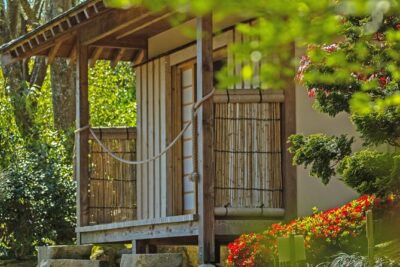
Lafcadio Hearn Japanese Gardens Admission Adult Ticket
Read our review →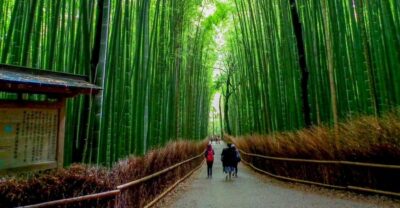

Experience Crafting a Flower-Adorned Mini Japanese Garden
Read our review →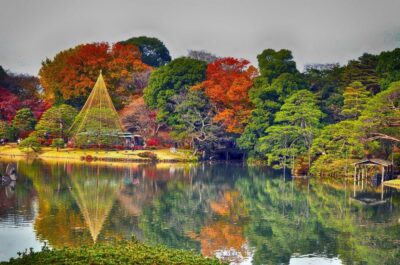
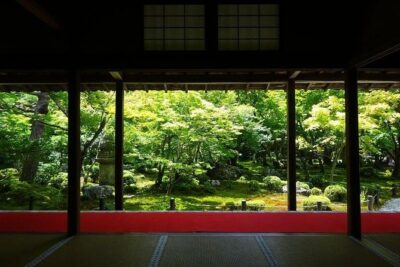
Kyoto Japanese Garden Lover’s Private Tour with Government-Licensed Guide
Read our review →
Japanese Garden & Western Architecture: Akasaka exploration tour
Read our review →
Historic Temple・traditional Japanese garden& Eating around at a shopping strip
Read our review →
Fairy Tale Colmar Tropicale, Japanese Garden, Genting Highlands
Read our review →Browse the lists this tour appears in