

Review · KANAZAWA
Colors of Kanazawa (Traditional Crafts and Gardens)
A small bag can hold a whole city. The Colors of Kanazawa afternoon tour combines Oyama Shrine, Kanazawa Castle, Kenrokuen Garden, and a hands-on Kaga Yuzen painting activity in about three hours. I like the mix of sightseeing and making something with your own hands, and I like that the group is limited to 12 people. The main drawback is that the schedule is fairly compact, so you should not expect a long, unhurried visit inside every site.
I also like the relaxed café break in Kenrokuen, which gives the walking portion a welcome pause. Guides such as Sachiko, Saya, and Ian have been praised for their warm manner, clear English, local suggestions, and ability to adjust the experience. At $64.83 per person, the tour offers solid value if you want a guide, garden admission, a drink, and a take-home craft in one afternoon.
Key points to know before booking
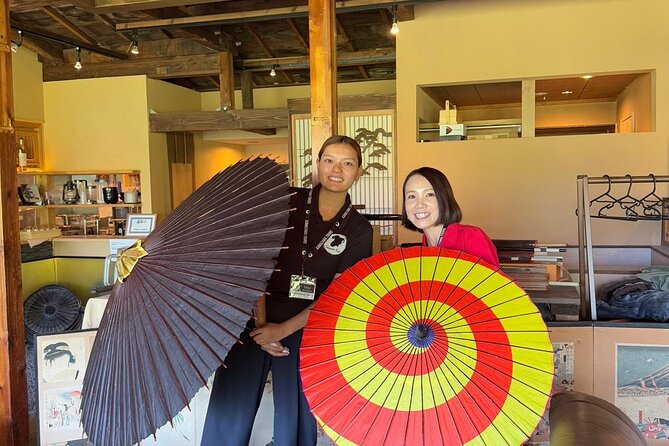
- Start at 1:30 pm: Meet at the Kanazawa Central Tourist Information Center, then walk toward the city’s main cultural sights.
- Three contrasting stops: See Oyama Shrine, Kanazawa Castle, and Kenrokuen Garden, with each place offering a different view of Kanazawa.
- Make your own souvenir: Paint a small traditional bag during a guided Kaga Yuzen textile activity.
- Small group size: The tour accepts no more than 12 people, making it easier to ask questions and receive help during the craft session.
- Ends at Kenrokuen: The tour finishes at the entrance to Kenrokuen Gardens, not back at the starting point.
- Good value for a short outing: The price includes a professional guide, beverage, entrance fees, the craft activity, and your finished tote bag.
Why this short Kanazawa tour works
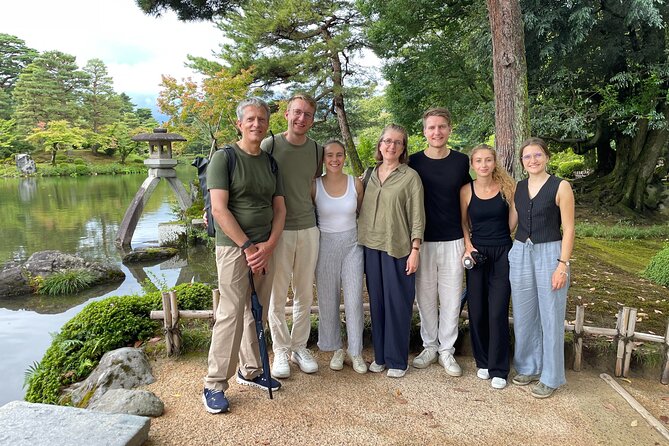
Kanazawa can feel scattered on a first visit. Its castle, garden, shrines, craft traditions, and old neighborhoods are close enough to connect on foot, but not always easy to arrange into a sensible half-day route. This tour gives you that structure without turning the afternoon into a race from one photo stop to the next.
The strongest feature is the balance between seeing and doing. You begin with architecture and samurai-era stories, move into one of Japan’s best-known gardens, take a break with a drink, and finish by creating a personal souvenir. That last step matters. You are not simply buying a craft in a shop. You are trying a small part of the design process yourself.
The three-hour length suits an arrival day, a port call, or a spare afternoon between other plans. It is also useful if you are visiting Kanazawa for the first time and want a quick orientation from someone who knows how the pieces fit together.
The limitation is just as clear. This is an introduction, not a full study of Kanazawa’s art or castle history. The listed stops include about 20 minutes at Oyama Shrine, 20 minutes at Kanazawa Castle, and 45 minutes at Kenrokuen. Walking time and the workshop also need to fit into the afternoon, so anyone hoping to explore every corner of the castle grounds or garden should plan a separate visit.
More Garden Tours in Japan:
- Osaka: teamLab Botanical Garden Entry Ticket
★ 4.5 · 1,710 reviews - Imperial Palace East Garden and Edo Castle Walking Tour in Tokyo
★ 5.0 · 510 reviews - Kyoto Zen Meditation & Garden Tour at a Zen Temple with Lunch
★ 5.0 · 441 reviews
Meeting at Kanazawa Central Tourist Information Center
The tour starts at 1:30 pm at the Kanazawa Central Tourist Information Center, inside the Kanazawa New Grand Building at Minamicho 4-1. This is a sensible meeting point because it is near public transportation and easier to locate than a small street corner.
I would arrive early. A central meeting point sounds simple, but Japanese city addresses can be less obvious than expected, particularly when a building has several entrances or signs. Having the confirmation on your phone should make the start straightforward, since a mobile ticket is provided.
The tour is walking based. Transportation to and from the attractions is not included, so wear shoes that are comfortable for several hours on foot. The route is not presented as a strenuous hike, and most people can participate, but gardens and historic grounds often include uneven paving, steps, and extended periods of standing.
Because the tour ends at the entrance to Kenrokuen, you should think of it as a one-way afternoon route. That is useful if you want to continue exploring the garden or head toward another Kanazawa sight afterward. It is less convenient if you need to return to the tourist information center or collect luggage there.
Oyama Shrine: a quick look at Kanazawa’s samurai past
The first stop is Oyama Shrine, with about 20 minutes set aside for the visit. This is a short introduction, but it gives the guide a place to explain Kanazawa’s samurai connections before you reach the castle.
The shrine is associated with Maeda Toshiie, the founder of the Maeda family’s rule in Kaga. The Maeda domain helped make Kanazawa a major center for arts, crafts, and culture, so this opening stop connects the city’s military past with the artistic traditions you will see later.
The guide’s role is important here. A quick shrine visit can otherwise become little more than a gate, a photograph, and a short walk. With a good explanation, you begin to see why Kanazawa developed such a strong craft culture and why the castle and garden belong in the same story.
Sachiko has been praised for making the experience feel personal and for offering useful local recommendations. Saya has also been praised for explaining Kanazawa’s key sights in an approachable way. Those qualities are especially helpful at a place like Oyama Shrine, where context turns a brief stop into something meaningful.
Still, keep your expectations realistic. Twenty minutes is enough for an introduction, not a full examination of the shrine grounds. If shrine architecture is a major interest, you may want to return independently.
Kanazawa Castle: linking power and design

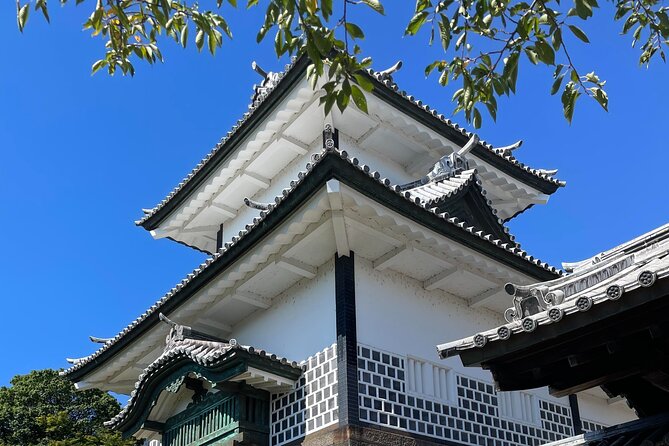
From Oyama Shrine, the route continues to Kanazawa Castle. The listed visit is another 20 minutes, so the purpose is mainly to understand the castle’s place in Kanazawa rather than to inspect every building.
Kanazawa Castle was the political center of the Maeda domain. Its scale helps explain the city’s importance, while its restored structures and open grounds show how defense, authority, and careful design worked together. The castle also helps set up the next stop, Kenrokuen, which was developed in connection with the ruling Maeda family.
I like this pairing with Oyama Shrine. You see the religious site connected with the city’s founder, then move to the seat of regional power. The sequence gives you a basic framework before the tour shifts toward gardens and craft.
The short stop can be a positive if you prefer a brisk introduction. You get the story without spending your entire afternoon inside one complex. But if you want detailed military history, architectural study, or time for photographs, 20 minutes will feel tight.
This is where the guide’s flexibility may improve the experience. Ian has been praised for a relaxed style and strong explanations, while Sachiko has been described as versatile and spontaneous. The official route remains the main plan, but a personable guide can help you focus on the details that interest you most.
Same place, a different sort of green day out:
- Mt. Fuji Day Trip from Tokyo with English Speaking Driver Guide
★ 5.0 · 443 reviews - Kyoto Arashiyama Bamboo forest & Garden Half-Day Walking Tour
★ 5.0 · 413 reviews - Tokyo: Imperial Palace East Gardens Walking Tour
★ 4.8 · 353 reviews - Mt. Fuji, Cherry Blossom & Shiba Sakura Pvt. Day Tour
★ 5.0 · 326 reviews
Kenrokuen Garden: the scenic center of the afternoon
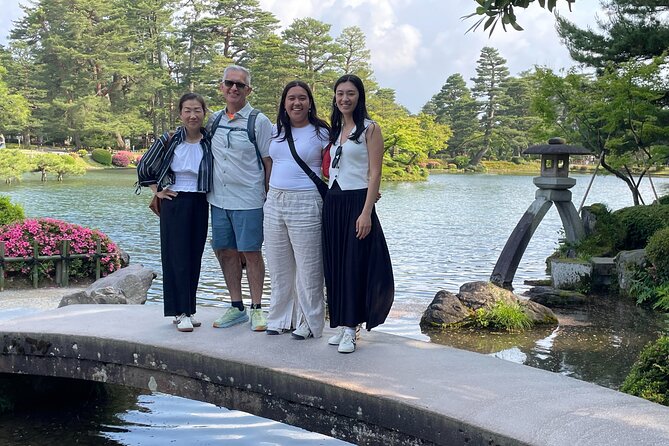
The tour then reaches Kenrokuen Garden, with about 45 minutes for a walk and a café stop. This is the longest sightseeing portion, and rightly so. Kenrokuen is one of Japan’s most celebrated gardens, known for its carefully arranged scenery, seasonal beauty, ponds, trees, bridges, and changing views.
The garden’s name refers to six qualities traditionally associated with an ideal garden: spaciousness, seclusion, artifice, antiquity, water-courses, and panoramas. You do not need to memorize that list to enjoy the place, but it helps explain why Kenrokuen feels less like a single view and more like a series of planned scenes.
The guide can point out how the garden creates contrast. Open spaces give way to enclosed paths. Water, stone, trees, and distant views are arranged so that the scenery changes as you walk. In a short visit, you will not see everything, but you should gain a clear sense of why Kenrokuen is central to a visit to Kanazawa.
The included drink at a traditional café is a welcome touch. After the shrine and castle, you get a chance to sit, take in the surroundings, and ask questions. Several accounts of the tour singled out this small café break as one of the pleasures of the afternoon, and I can see why. A scheduled pause keeps the outing from becoming a continuous march.
The tradeoff is timing. Forty-five minutes must cover the garden walk and the refreshment stop, so you may need to choose between lingering over the view and exploring farther. If Kenrokuen is your main reason for visiting Kanazawa, return on your own when you can give it a full morning or afternoon.
The Kaga Yuzen workshop gives the tour its personal touch
The hands-on textile activity is the feature that makes this tour different from a standard city walk. Under the guidance of a local artisan, you paint your own small traditional bag using bright textile colors. The finished tote is included, so you leave with something you made rather than a generic souvenir.
Kaga Yuzen is one of Kanazawa’s best-known craft traditions. Its designs are associated with careful decoration, detailed patterns, and the use of color on fabric. A short workshop cannot teach the full craft, which takes years to master, but it can show you how much care goes into the process.
This activity is suitable for people who enjoy making things, including families and couples. It also works well for anyone who usually finds museum visits passive. You have to make choices, apply the color, and accept that handmade work may not look perfectly uniform. That is part of the appeal.
The small group limit matters most here. With no more than 12 people, the guide and artisan have a better chance to help each person. A large class could turn the craft into a quick demonstration, but a smaller group should give you more room to ask questions and work at a comfortable pace.
Descriptions of the activity refer to textile dyeing, while one account describes painting the bag with Japanese acrylic. The precise materials may depend on the workshop setup, so book this for the creative experience rather than for a formal lesson in professional Kaga Yuzen technique.
The craft also gives the tour a satisfying ending. You have seen the city’s history, walked through its most famous garden, and then translated some of Kanazawa’s color traditions into your own object.
Guides can shape the whole afternoon
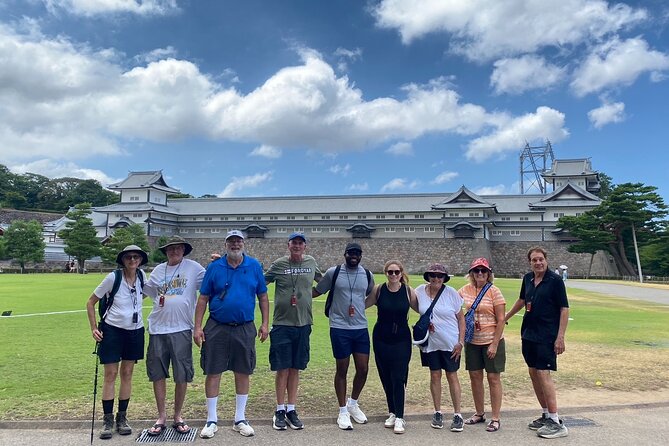
The route is worthwhile on its own, but the guide will largely determine how much you get from it. Sachiko has been praised for being thoughtful, helpful, and generous with restaurant recommendations. She has also been described as making the afternoon feel like exploring the city with a friend.
Saya has been praised for her friendly approach and for making the history and craft activity easy to understand. Ian has been described as relaxed and well informed, with a talent for explaining both the gardens and the work of local artisans.
You should not assume that every departure will include the same guide. The important point is that the experience depends on human explanation, not just on the route. If you want to ask about food, local customs, or other things to do in Kanazawa, use the walking time well and speak up.
The guide also helps families and first-time visitors. Children may remember the painted tote more than the castle lecture, while adults can use the sightseeing stops to place the craft tradition in its social and historical setting.
Is $64.83 a fair price?

At $64.83 per person, the price is reasonable if you intend to use all the included elements. It covers the professional guide, entrance fees, local taxes, a beverage, the textile activity, and your finished tote bag.
The value is strongest when you want a compact introduction rather than separate tickets and an independent craft class. You also avoid spending time planning the walking route between Oyama Shrine, Kanazawa Castle, and Kenrokuen.
The price is less compelling if you only want to see the garden and castle. The sightseeing time is limited, and independent visits may suit you better if you already know the city or prefer to move slowly.
I would compare the tour with the cost of arranging a guide and craft activity separately. Once you account for the workshop and souvenir, the price feels fair, particularly for a small group. The included drink is minor in financial terms, but useful in a three-hour walking tour.
The fact that people book it around 74 days ahead suggests that you should not leave planning until the last minute, especially if your Kanazawa dates are fixed. The maximum group size is 12, and craft activities often have less flexibility than ordinary sightseeing.
Practical details that affect your choice
The tour starts at 1:30 pm and lasts about three hours. That timing leaves the morning free for Omicho Market, Higashi Chaya District, a museum, or a slower start after arriving in Kanazawa.
The tour ends at 1-19 Kenrokumachi, at the entrance to Kenrokuen Gardens. Plan your evening from there rather than from the original meeting point.
A mobile ticket is provided, and confirmation arrives when you book. The tour is near public transportation, service animals are allowed, and most people can take part.
Weather matters. The experience requires good weather, and poor conditions may lead to a new date or a full refund. You can cancel for a full refund up to 24 hours before the 1:30 pm start time. Cancellations or changes inside that 24-hour window are not refunded or accepted.
Who should book this experience?
I would choose this tour if you are visiting Kanazawa for the first time, want a guide who can connect the sites, and like the idea of making a souvenir. It is especially well suited to couples, families, and people who prefer a small group to a large bus outing.
It also suits you if you have only one free afternoon. The route gives you a taste of the city’s samurai connections, castle grounds, garden culture, and craft traditions without requiring a full day.
I would look elsewhere if your priority is a slow, detailed visit to Kenrokuen or Kanazawa Castle. You may also prefer independent sightseeing if you dislike fixed timing or do not want a craft activity.
For most first-time visitors, the combination is the reason to book. The bag will not replace a masterwork from a Kanazawa artisan, but it will remind you of what you saw and give the afternoon a personal finish. At a fair price, with thoughtful guides and a small group, this is a practical way to get acquainted with Kanazawa’s main cultural themes.
FAQ
Where does the tour start?
It starts at 1:30 pm at the Kanazawa Central Tourist Information Center in the Kanazawa New Grand Building, 4-1 Minamicho, Kanazawa.
Where does the tour finish?
The tour ends at the entrance to Kenrokuen Gardens at 1-19 Kenrokumachi, Kanazawa.
How long does the experience last?
It lasts approximately three hours.
What places are visited?
The route includes Oyama Shrine, Kanazawa Castle, and Kenrokuen Garden.
Is the Kaga Yuzen craft activity included?
Yes. The tour includes a textile dyeing activity and a tote bag featuring your own artwork.
Is a drink included?
Yes. A beverage at a traditional café in Kenrokuen is included.
What happens if the weather is poor?
The experience requires good weather. If it is canceled because of poor conditions, you will be offered another date or a full refund.
Just added around Japan
- Private tour – Scenic Fuji Escape: Hakone, Peace Park & More★ 5.0 · 4 reviews
- TOKYO: Tailored Gardens tour with Pro Gardener by E-bike -BASIC★ 5.0 · 2 reviews
- Tsukiji Food Strolling and Hama Rikyu Garden Walking Tour★ 5.0 · 7 reviews
- Tokyo: Serene Sakura & Sake: An Exclusive Brewery Pairing Lunch★ 5.0 · 2 reviews
- Full Guided Mt. Fuji & Shiba-Sakura Festival One Day Pvt.Tour★ 5.0 · 6 reviews
- Tokyo Cherry Blossom Half Day Walking Tour with a Local Guide★ 3.5 · 4 reviews
- Cherry Blossom Highlights, Asakusa, Ueno, Imperial Palace Garden★ 4.5 · 4 reviews
- Licensed Guide Tokyo Meguro Cherry Blossom Walking Tour★ 4.5 · 13 reviews
Kanazawa Garden Tours, compared.
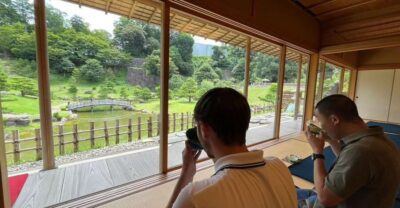
Samurai, Matcha, Gardens and Geisha Full-Day Tour
Read our review →
Full-Day Tour from Kanazawa: Samurai, Matcha, Gardens and Geisha
Read our review →
Kanazawa Private Tour: Highlights of an Old Samurai Town
Read our review →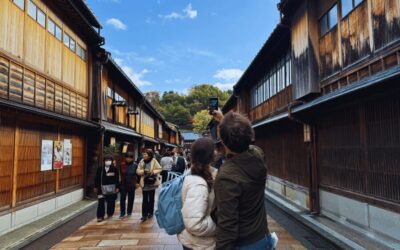
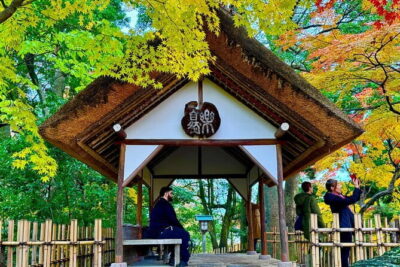
Kanazawa Half Day Private Tour – Castle, Garden, Geisha District
Read our review →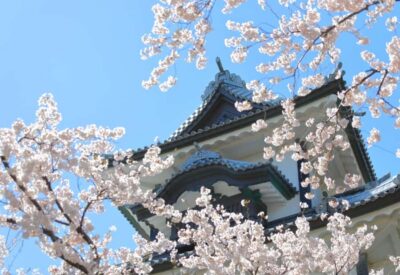
Private & Unique Kanazawa Cherry Blossom “Sakura” Experience
Read our review →Browse the lists this tour appears in