
Review · KANAZAWA
Full-Day Tour from Kanazawa: Samurai, Matcha, Gardens and Geisha
Kanazawa rewards travelers who walk. This nine-hour tour links the city’s old samurai homes, castle grounds, celebrated gardens, tea districts, and a traditional matcha stop in one carefully planned day. I especially like the small maximum of 15 people, which gives the guide room to answer questions, and the chance to see several districts on foot rather than simply passing them by bus. The main caution is simple: this is a long walking day, often around 10 to 12 kilometers, and sometimes closer to 10 miles.
The itinerary also has a useful rhythm. You begin with low-ranking samurai homes, move through Kanazawa’s political center, pause for matcha and sweets, then finish among gardens and geisha houses. Guides such as Mike, Garrett, Lee, Akari, Daniel, Fadir, and Mohamed have earned strong praise for clear explanations and flexible pacing, though your assigned guide may be different.
Key points to know before booking
- Plan for a serious walking day: The route is entirely on foot and can cover roughly 10 to 12 kilometers.
- See two sides of old Kanazawa: The tour moves from modest ashigaru homes to refined geisha houses and tea districts.
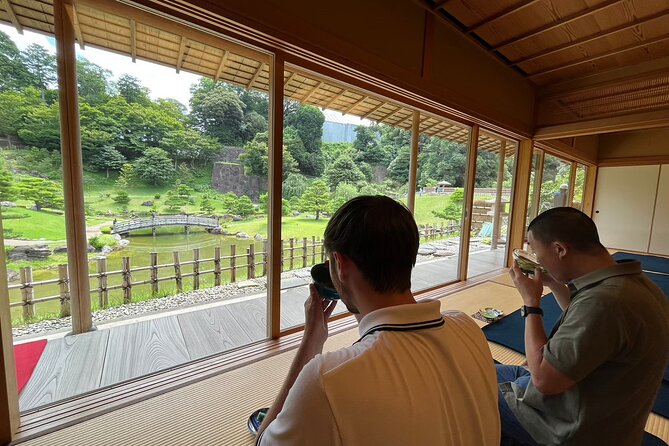
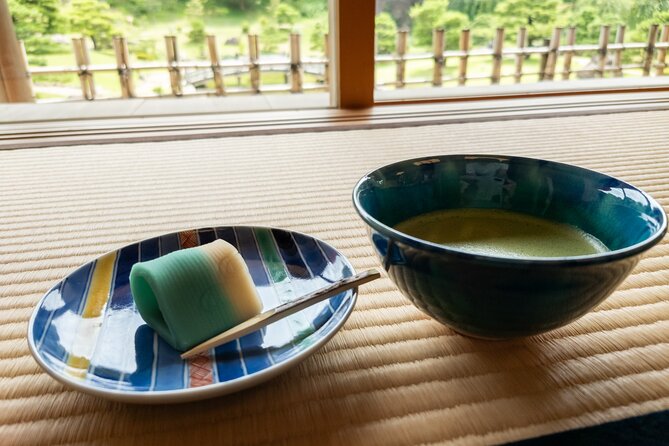
- Matcha comes with a garden view: Gyokusen-an includes tea, wagashi sweets, and time to look out over a traditional garden.
- The group is capped at 15: A smaller party makes it easier to hear the guide and adjust the pace.
- Lunch is independent: A one-hour lunch break is included, but you choose and pay for your own restaurant.
- Good value for a first full day: At $151.30 per person, the price includes the guide, Kenrokuen entry, the preserved geisha house, matcha, and sweets.
Why this walking route works in Kanazawa
Kanazawa’s main sights are spread across several districts. You can reach them by local transportation, but a bus ride gives you little sense of how the city changes from one neighborhood to the next. This route connects those areas in a logical order, with the guide providing the historical links as you walk.
I like that the day is not limited to the famous sights. You see the restored grandeur of Kanazawa Castle and Kenrokuen Garden, but also quieter streets in Nagamachi and Kazuemachi. The transitions matter. A samurai district feels different from a tea district, and the walk lets you notice those changes instead of treating Kanazawa as a list of isolated attractions.
The small-group format is another practical advantage. With no more than 15 people, you should have a better chance of hearing explanations in narrow streets and asking about details that catch your eye. Past guides have been praised for adjusting the pace, helping with lunch suggestions, and tailoring the day for different ages within a family.
Still, do not mistake small-group for easygoing. The itinerary covers a lot of ground. Several people have enjoyed the walk even in rain, hail, or hot weather, but strong sun and long stretches between stops can be tiring. Comfortable shoes, water, and weather protection are essential.
More Full-Day Outings in Japan:
- Kanazawa: Samurai, Matcha, Gardens and Geisha Full-Day Tour
★ 4.9 · 75 reviews - Private Car Full Day Tour of Osaka Temples, Gardens and Kofun Tombs
★ 5.0 · 24 reviews - Tokyo: Full-Day Japanese Garden Private Guided Tour
★ 4.6 · 13 reviews
Ashigaru Museum: Kanazawa’s samurai story begins modestly
The first stop is the Ashigaru Museum, where you enter two homes once occupied by ashigaru families. Ashigaru were low-ranking samurai, so these houses offer a useful contrast to the grander image often associated with Japan’s warrior class.
This is a smart place to begin. You start with ordinary domestic life rather than military spectacle. The homes help show how status shaped daily living, space, and comfort. The guide can place these houses within the wider social order before you move into the more formal samurai district.
Admission is included at no extra charge. The stop lasts about an hour, giving you time to look at the buildings rather than rushing through them. If you are most interested in architecture and social history, this may be one of the most revealing parts of the day.
Nagamachi: samurai streets with time to look around
From the museum, the route continues through Nagamachi, the former samurai district. The streets still retain a handsome, old-fashioned appearance, with walls and traditional buildings that make the area feel separate from modern Kanazawa.
The value here is not one single monument. It is the sequence of streets, walls, and homes. You begin to understand how a district designed for samurai families differs from the compact tea-house neighborhoods visited later.
The guide’s commentary is especially useful in Nagamachi because the buildings alone cannot explain who lived there, how the district functioned, or why Kanazawa developed as an alternative to Kyoto. Akari was praised for explaining that wider story clearly, while Garrett and other guides have been singled out for connecting local places with Japanese history and present-day culture.
This stop is also a reminder that much of the experience happens outdoors. You will be walking on streets, stopping to listen, then continuing through the neighborhood. It is engaging, but anyone looking for a mostly indoor sightseeing day should choose a different format.
Oyama Shrine and the road toward the castle
The route then reaches Oyama Shrine, known for its unusual brick entrance gate. Unlike the more familiar wooden shrine gates found across Japan, this one gives the site a distinct appearance and reflects Kanazawa’s willingness to mix local tradition with outside influences.
The visit lasts about 40 minutes and acts as a bridge between the samurai quarter and the castle grounds. The guide can explain the shrine’s place in Kanazawa’s history while pointing out details that are easy to miss on a quick independent visit.
I appreciate this kind of stop because it breaks up the larger attractions. You are not simply moving from one headline sight to another. Oyama Shrine adds a smaller, more focused pause before the day reaches its grandest settings.
More Garden Tours in Japan:
- Osaka: teamLab Botanical Garden Entry Ticket
★ 4.5 · 1,710 reviews - Imperial Palace East Garden and Edo Castle Walking Tour in Tokyo
★ 5.0 · 510 reviews - Kyoto Zen Meditation & Garden Tour at a Zen Temple with Lunch
★ 5.0 · 441 reviews - Kyoto Arashiyama Bamboo forest & Garden Half-Day Walking Tour
★ 5.0 · 413 reviews
Gyokusen-an: the day’s best pause
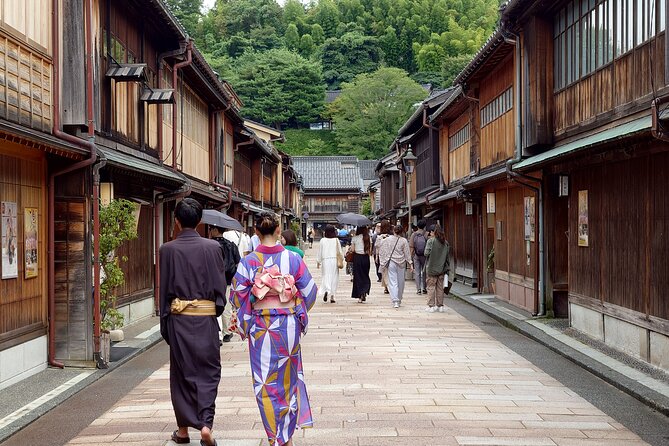
After entering the castle area, you stop at Gyokusen-an for matcha and wagashi sweets. This is included in the price and is one of the tour’s most appealing features.
The tea house looks over a centuries-old garden, giving you a quiet place to sit after the first part of the walk. The matcha experience is served in a traditional Japanese setting, and the sweets provide a small taste of the careful presentation associated with tea culture.
This pause matters for two reasons. First, it gives your feet a break. Second, it adds participation to the day. You are not only looking at historic buildings or listening to explanations. You are taking part in a simple cultural ritual.
The matcha experience may be the highlight for you if you enjoy food, gardens, and small details. It is not a full tea ceremony, based on the information provided, so book it for the setting and tasting rather than expecting an elaborate formal performance.
Kanazawa Castle: restored scale and open grounds
The tour passes through Kanazawa Castle on the way to Kenrokuen Garden. The restored buildings rise over broad lawns, giving you a clear sense of the site’s scale.
The castle stop is relatively brief, around 20 minutes. That is enough to see the grounds and understand the layout, but not enough for a slow, detailed study of every building. This is a tradeoff built into a full-day route that covers many districts.
I think the short visit works because the castle is part of the larger flow rather than the sole purpose of the tour. You see it in relation to the garden and the political center of Kanazawa. If the castle is your main interest, you may want to return independently for more time.
Kenrokuen Garden: the visual centerpiece
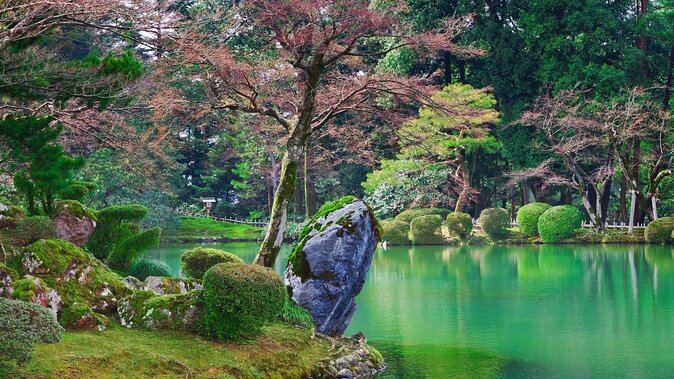
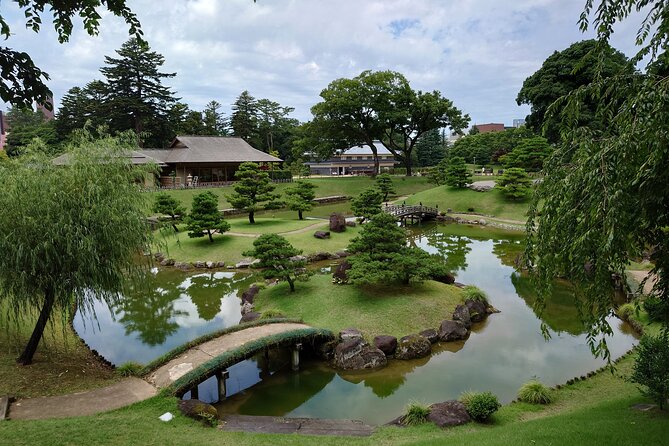
Kenrokuen is the longest major stop, with about an hour and a half to explore. Entry is included, and the tour allows time for ponds, trees, tea houses, garden views, and traditional design features.
This is likely to be the visual high point of the day. Kenrokuen is carefully arranged, but it does not feel like a single viewpoint that you see and leave. The pleasure comes from walking through changing scenes and noticing how water, plants, bridges, buildings, and open views work together.
The garden can also be tiring after several hours on foot. You will have places to pause, but the route continues afterward, so pace yourself. Do not spend every ounce of energy here if you want to enjoy the geisha districts later.
The timing can be especially rewarding during seasonal displays. One guest described seeing early cherry blossoms, though blossom timing naturally depends on the date. The garden is attractive in any season, but weather and plant conditions will shape what you see.
Higashi Chaya: tea houses, crafts, and free time
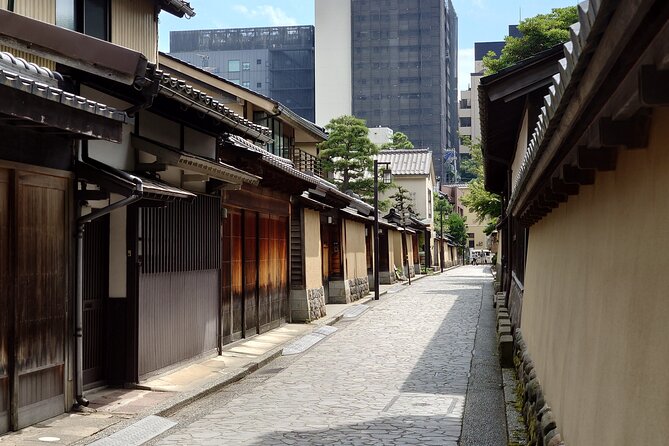
After the garden, the tour heads to Higashi Chaya District. Traditional tea houses line the streets, and the area now includes eateries and craft shops alongside its historic buildings.
You receive about an hour here, including free time. That independence is useful after a day of guided walking. You can look into shops, browse local crafts, take photographs where permitted, or simply absorb the atmosphere without having to follow a running commentary every minute.
The district is also the best place to understand the public face of geisha culture in Kanazawa. The guide can explain how the tea-house districts worked and how they differ from ordinary restaurants or entertainment venues.
The tradeoff is that Higashi Chaya is one of the more popular parts of the route. It may feel busier than Nagamachi or Kazuemachi, particularly at popular times. The included visit to Ochaya Shima provides a more focused historical look.
Ochaya Shima: inside a preserved geisha house
The tour continues into Ochaya Shima, a preserved tea house once used by geisha and wealthy patrons. You can see colorful interiors and musical instruments that reflect the refined setting of this type of establishment.
This 30-minute stop gives context to the streets outside. From the pavement, a tea house can look like a beautiful traditional building. Inside, you begin to understand the rooms, decoration, and objects connected with entertainment for affluent clients.
Admission is included. The visit is short, but it adds substance to the geisha district rather than leaving you with only photographs of façades.
Kazuemachi: a quieter finish by the river
The final sightseeing section passes through Kazuemachi Chayagai on the way back to Kanazawa Station. This tea district is less crowded than Higashi Chaya, and geisha still entertain customers there.
Kazuemachi makes a good ending because it is more subdued. You leave the busier tea-house streets and walk through a district with a calmer feel. If you are lucky, you might catch a glimpse of geisha, but that is not promised and should not be the reason you book the tour.
The route ends back at the meeting point near Kanazawa Station. You finish with a broad sense of how the city’s samurai, castle, garden, shrine, and tea-house districts fit together.
The guides make a real difference
The strongest part of this experience is the guiding. Mike has been praised for humor and clear explanations, Garrett for broad knowledge of Kanazawa, Japanese culture, and history, and Lee for friendly pacing. Daniel was noted for giving people room to enjoy the sights while keeping the group moving.
That variety matters because this is an explanation-heavy tour. You are spending many hours with one guide, so personality and pacing affect the entire day. The best guides will make the walking feel purposeful, answer questions, and adjust for the group rather than reciting facts at every stop.
The provider assigns the guide, so you cannot count on a particular person. Still, the repeated praise for several members of the team is encouraging. Small groups also help the guide respond to individual needs, although the route remains physically demanding.
Price, lunch, and practical value
At $151.30 per person, this is not a cheap walking tour. The price includes an English-speaking guide, matcha and wagashi, Kenrokuen admission, and entry to Ochaya Shima. You are also paying for route planning and a full day of local context.
For a first visit to Kanazawa, I consider the price reasonable if you want one organized day that covers the major cultural districts. Independent sightseeing could cost less, especially if you are comfortable using local transportation and researching each stop. It would also require more planning and would not automatically provide the same historical connections.
Lunch is not included. The schedule contains a one-hour lunch break, and the guide can recommend restaurants, but you choose and pay for your own meal. Treat that break as useful flexibility rather than a missing feature.
The posted duration is about nine hours, starting at 9:00 a.m. The active sightseeing time is roughly one hour shorter because lunch is included within the nine-hour schedule. Check the weather forecast and allow enough energy for the final walk back to the station.
Free cancellation is available up to 24 hours before the start time for a full refund. The experience requires good weather, and if poor weather causes cancellation, you are offered another date or a full refund.
Who should book this Kanazawa day?
I would choose this tour if you are visiting Kanazawa for the first time, want a strong introduction in one day, and prefer walking to arranging several separate visits. It is especially suited to people who enjoy architecture, gardens, Japanese history, food customs, and traditional neighborhoods.
Families can benefit from the guide’s ability to adjust explanations and pacing, though children and older adults must be ready for a long day outdoors. Several people in their seventies completed the route, but one review also noted that seniors became tired by the second half. That is a fair warning, not a reason to dismiss the tour.
You may want another option if you dislike long walks, need frequent transportation, or want extended time inside the castle and garden. One person specifically wished for public transport during the longer stretches, and that is the main weakness of the format.
Should you book it?
Book this tour if you want Kanazawa’s major cultural sights tied together by a guide who can explain the connections. The matcha stop, preserved geisha house, Kenrokuen entry, and small-group format add real value to the $151.30 price.
Skip it if your knees, feet, or schedule cannot handle roughly 10 to 12 kilometers on foot. For everyone else, this is a strong first-day orientation, with enough structure to prevent missed sights and enough free time to keep the day from feeling like a forced march.
FAQ
Where does the tour start?
The tour starts at Kanazawa Station at 9:00 a.m. It ends back at the meeting point near the station.
How long is the tour?
The experience is listed as approximately nine hours. One hour is used for lunch, so active touring is about eight hours.
Is lunch included?
No. The one-hour lunch break is included in the schedule, but you choose and pay for your own restaurant. The guide can provide recommendations.
How much walking is involved?
This is a full walking tour with no listed vehicle transfers. The route can cover roughly 10 to 12 kilometers, and one account described the distance as about 10 miles.
What is included in the price?
The price includes an English-speaking guide, matcha tea and wagashi sweets at a tea house, entry to Kenrokuen Garden, and entry to the preserved Shima Chaya geisha house.
What happens if the weather is poor?
The experience requires good weather. If it is canceled because of poor weather, you will be offered a different date or a full refund. You can also cancel up to 24 hours before the start time for a full refund.
Just added around Japan
- Private tour – Scenic Fuji Escape: Hakone, Peace Park & More★ 5.0 · 4 reviews
- TOKYO: Tailored Gardens tour with Pro Gardener by E-bike -BASIC★ 5.0 · 2 reviews
- Tsukiji Food Strolling and Hama Rikyu Garden Walking Tour★ 5.0 · 7 reviews
- Tokyo: Serene Sakura & Sake: An Exclusive Brewery Pairing Lunch★ 5.0 · 2 reviews
- Tokyo Cherry Blossom Half Day Walking Tour with a Local Guide★ 3.5 · 4 reviews
- Cherry Blossom Highlights, Asakusa, Ueno, Imperial Palace Garden★ 4.5 · 4 reviews
- Full Guided Mt. Fuji & Shiba-Sakura Festival One Day Pvt.Tour★ 5.0 · 6 reviews
- Licensed Guide Tokyo Meguro Cherry Blossom Walking Tour★ 4.5 · 13 reviews
Kanazawa Garden Tours, compared.
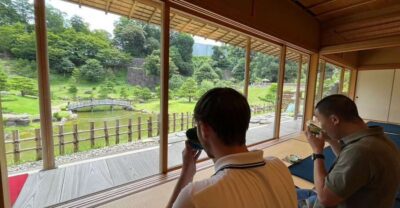
Samurai, Matcha, Gardens and Geisha Full-Day Tour
Read our review →
Kanazawa Private Tour: Highlights of an Old Samurai Town
Read our review →

Colors of Kanazawa (Traditional Crafts and Gardens)
Read our review →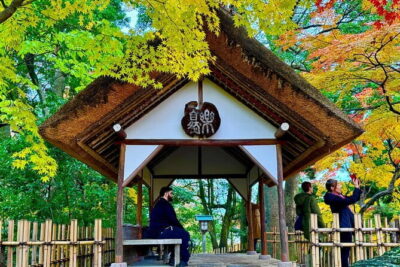
Kanazawa Half Day Private Tour – Castle, Garden, Geisha District
Read our review →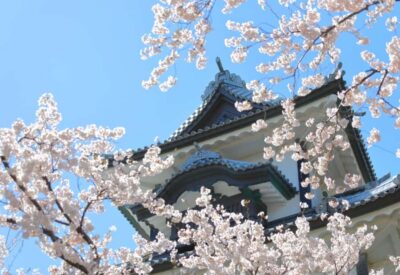
Private & Unique Kanazawa Cherry Blossom “Sakura” Experience
Read our review →Browse the lists this tour appears in